
Andy Burnham's Father Roy Dies, Days Before the Social Care Fight He Made His Own
Downing Street confirmed on 14 September 2026 that Prime Minister Andy Burnham's father, Roy Burnham, had died, and Burnham cancelled two days of engagements, including a cabinet meeting and a speech to the TUC, days into his push to reform social care.
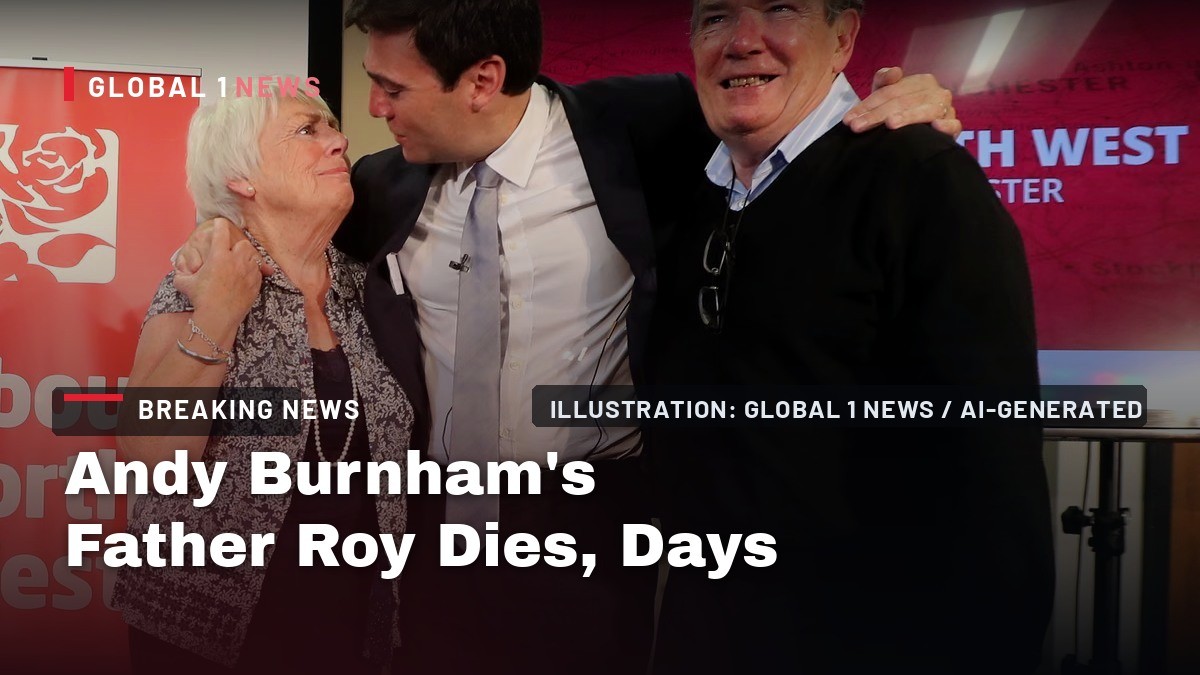
Folks, Andy Burnham made his father the reason for the biggest domestic fight of his premiership. On Monday, the fight and the grief arrived in the same week.
Andy Burnham's Father Roy Dies, Days Before the Social Care Fight He Made His Own
London, United Kingdom — Downing Street confirmed on Monday 14 September 2026 that the prime minister's father, Roy Burnham, had died, and that Burnham had cancelled his engagements for Monday and Tuesday. Among the events cleared from his diary: the weekly cabinet meeting he was due to chair, and a speech to the Trades Union Congress in Brighton.
A Confirmation From Downing Street, and Two Days Cleared
Roy Burnham had Alzheimer's disease and had been living in a care home in the north of England for several years. His full name was Kenneth Roy Burnham, and he was known as Roy. He was a former telephone engineer who worked for BT. Burnham's mother, Eileen, was a GP receptionist. Both parents were staunch Labour supporters, and Burnham has long credited them with shaping his political values.
The prime minister had also been due to host business leaders at 10 Downing Street on Monday afternoon.
The Man Who Shaped a Prime Minister's Politics
Andy Burnham was born in Lancashire and is 56. He began his career as a journalist writing for business publications before moving into politics as a parliamentary researcher for Labour MPs. He was elected MP for Leigh in Greater Manchester in 2001 and represented the seat for 16 years, later serving as health secretary in Gordon Brown's Labour government from 2009 to 2010, as culture secretary, and as chief secretary to the Treasury. He was mayor of Greater Manchester before returning to Westminster by winning a by-election in June 2026.
He was confirmed as Labour leader unopposed on 17 July 2026, with nominations from 379 of the party's 403 MPs, and was sworn in as prime minister on Monday 20 July 2026 after a handover at Buckingham Palace in which Keir Starmer formally resigned and King Charles III invited Burnham to form a government. He is the UK's 59th prime minister and the seventh head of government in ten years. Starmer had announced his resignation after Labour lost more than 1,000 local council seats in the May 2026 elections.
"He Doesn't Know It": What Burnham Said About His Father
To The Times in July 2026, on the eve of taking office, Burnham said his father's condition meant he was unaware his son was about to become prime minister. "That's a sadness because he would be [proud]," he said. "But the way I look at it, it's his achievement as well. A whole family achievement although he doesn't know it."
On Elizabeth Day's How To Fail podcast in August, Burnham recalled visiting his father the Sunday after he was sworn in. Growing tearful, he described a care home manager telling him: "We wanted you to know, we all knew kind of what time you might be coming up Downing Street, so we got Roy in his chair, and we got the telly right in front of him, and six of us stood round him, and all said, 'Look, Roy! Look, look!'" The manager told him that momentarily they thought Roy knew. In one of his first speeches as prime minister, Burnham said it was humbling to see the "skill and the care and the professionalism" of care workers like those looking after his father, and that they should be paid more.
Why This Story Is Not Only Personal
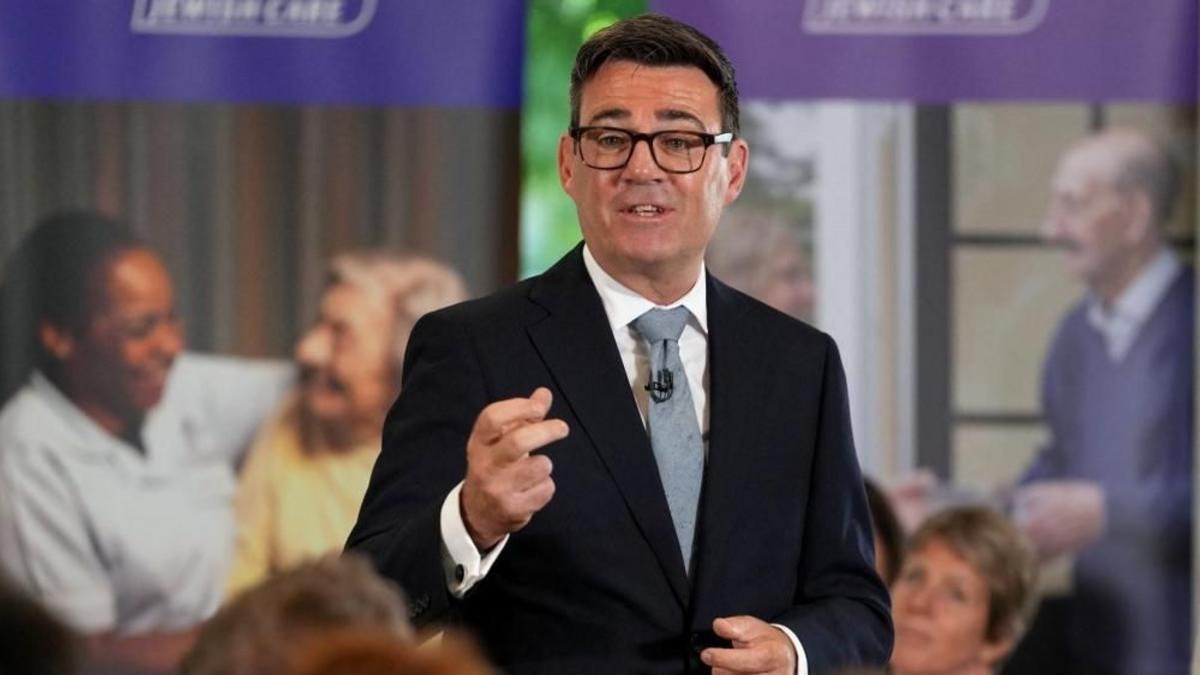
Navigating his father's illness became one of the driving factors in Burnham's aim to reform social care. On 29 July 2026, nine days after taking office, he delivered a speech on the subject at a care home in Golders Green, London, committing to end "decades of political drift" and fix a "broken" system so that it gives people "dignity, security and support". He called it a "major dereliction of public duty" that successive governments had failed to address the crisis, and said there would be "difficult decisions" on funding but that he was determined to "get it right".
"I won't stand by and leave people paying the price for Westminster's refusal to deal with the real issues facing our country," he said. "That's what's happened with our broken social care system, which has been left to decline while politicians pass it back and forth. I just don't accept that this problem is too big to solve." He promised to help "my dad and the millions like him", and spoke of "millions of family carers, people like my mum".
What Burnham Has Actually Promised on Care
Burnham said reform was essential not only for those needing support but for the long-term future of the NHS, and that discharge delays were leading to too many people experiencing corridor care. He noted that at Westminster social care had long been treated as "too big a political risk" to deal with, and said the risks of failing to act were too great.
He said it was almost 30 years since the Royal Commission on Social Care, and went back to what Labour proposed in 2010, when Phil Hope was minister: "a national care service." With Burnham as health secretary, the Labour government of that year produced a plan for one. In the 2024 general election Labour again proposed a national care service, without setting out how it would be funded. After that election, Keir Starmer commissioned Louise Casey to investigate social care reform and report back in 2028. Casey has warned that money alone will not fix the problem.
Three Actions and a Review Brought Forward
Three actions followed the Golders Green speech: a new national care service with more pay and better training for care workers and closer integration with the NHS; bringing forward Baroness Louise Casey's independent review by a year, from 2028 to 2027; and initiating cross-party talks. Burnham also announced the Big Conversation on Care, an online platform giving the public a chance to shape the future of adult social care in England.
A new ministerial group chaired by the Health and Social Care Secretary will accelerate work on the care workforce and the delivery of the commission's first recommendations. A Dementia Tsar was to be appointed later that summer. Burnham said he would immediately focus on the social care workforce, noting a fair pay agreement for social care staff due to come into force from 2028/29, which he called a "massive building block of a national care service". He did not rule out tax rises to pay for it.
What the Numbers Say About the System He Inherited
The Alzheimer's Society says around 1 million people in the UK are living with dementia, projected to rise to 1.4 million by 2040, and that one in three people born today will develop dementia in their lifetime. The charity estimates that 70 per cent of people in care homes in England have dementia or severe memory problems, and that the cost of dementia in the UK was forecast at £42 billion in 2024, rising to £90 billion by 2040.
The Association of Directors of Adult Social Services found in its Spring Survey 2026 that councils collectively overspent their adult social care budgets by £715 million in 2025/26, with a further £909 million of savings planned for 2026/27, and that 409,000 people were waiting for an assessment, for care or direct payments to begin, or for a review of their care package.
Writing in the BMJ on 25 August 2026, Mary Daly, professor emerita of sociology and social policy at the University of Oxford, noted that nearly two million people report unmet care need, and that care in England is heavily reliant on up to five million informal carers. The Health Foundation has estimated that a universal and comprehensive social care system in England would cost around £19 billion a year extra by 2036.
A Congress Waiting for a Speech That Will Not Come
The 158th annual TUC Congress is being held in Brighton from 13 to 16 September 2026. On Monday morning, the day the death was announced, general secretary Paul Nowak addressed delegates from the TUC's 47 affiliated unions, representing 5.3 million workers. "The new Prime Minister has already started to give breathing space to families and businesses," he said. "But to deliver the circuit breaker he has promised the British public, Andy Burnham is going to have to be prepared to face down vested interests."
Nowak also urged the prime minister to stand up to big banks, the super-rich and outsourcing giants: "If union-busting tech billionaires can blast their popstar mates into space, then they can pay more tax." A motion before Congress says the change of leader "means nothing unless there is a change in direction that meets the needs of workers and working-class communities", calls for talks on public sector pay for 2026/27 to be reopened, and backs a national Saturday demonstration this autumn. Burnham had been due to address the Congress on Tuesday.
The Cross-Party Trap That Has Swallowed This Before
Burnham invited Conservative leader Kemi Badenoch and Liberal Democrat leader Sir Ed Davey to the cross-party talks. Badenoch was unavailable because of pre-planned minor surgery, so the Conservatives sent shadow health secretary Stuart Andrew; Davey attended by video call. Reform UK leader Nigel Farage was not invited. Farage said Reform had been excluded because the government "don't want to hear a fresh, reforming voice", that his party would oppose a "death tax", and that adult social care should be delivered by local councils rather than "centralised in Whitehall". Green Party social care spokesperson Ellie Chowns said Burnham must work collaboratively with the Greens and other parties. The Conservatives have previously urged the prime minister to rule out tax rises or increased borrowing to pay for social care changes.
What Comes Next
No family statement has been published, and no funeral or tribute details have been announced. Downing Street has confirmed the death and the cancellation of the prime minister's engagements for Monday and Tuesday, and nothing further. No replacement arrangements have been set out for the cabinet meeting or the TUC address.
What is certain is the collision of calendars. The man who told The Times that his father would be proud but does not know it now mourns him in the week he was to stand before 5.3 million workers and argue that the system which cared for Roy Burnham must be rebuilt. The Casey review brought forward to 2027, the Big Conversation on Care, the ministerial group and the fair pay agreement now all run alongside a grief Burnham had made public long before Monday.
By Jessica Ali, Staff Writer
This article was produced with AI-assisted research and editorial support. Sources: Downing Street, PA Media, The Guardian, Metro, BBC News, the BMJ, Alzheimer's Society, the Association of Directors of Adult Social Services, the Health Foundation, GOV.UK, and the Trades Union Congress.
What's Your Reaction?
 Like
0
Like
0
 Dislike
0
Dislike
0
 Love
0
Love
0
 Funny
0
Funny
0
 Wow
0
Wow
0
 Sad
0
Sad
0
 Angry
0
Angry
0

Editor-in-Chief at Global1.News. Atlanta-based journalist who cuts through the BS and tells it like it is. Lead anchor, host, and the voice you hear when the spin stops and the truth starts.












Comments (0)