
Now BYD’s aiming at the van and truck market
BYD, the Chinese automotive giant that has spent recent years filling European showrooms with electric cars, is now turning its attention to the workhorse of the road – the van and truck.
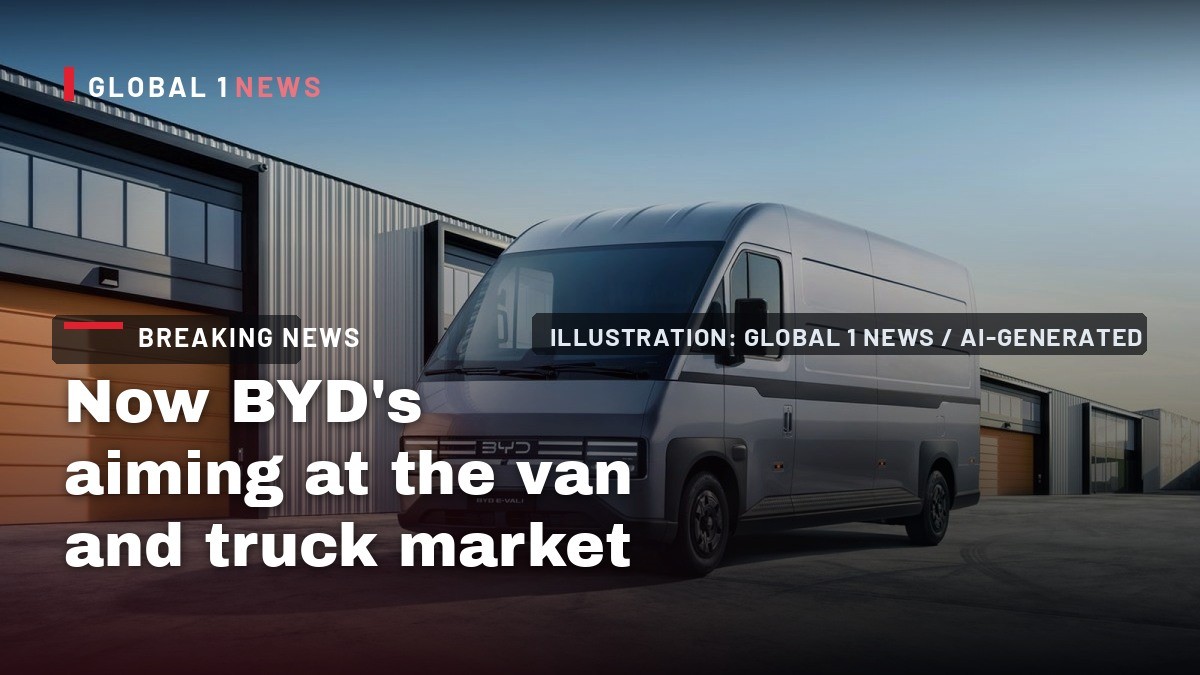
BYD, the Chinese automotive giant that has spent recent years filling European showrooms with electric cars, is now turning its attention to the workhorse of the road – the van and truck. At the IAA Transportation exhibition in Hanover, the company unveiled a comprehensive electric commercial‑vehicle portfolio that stretches from lightweight delivery vans to a 44‑tonne tractor unit, signalling a clear ambition to capture a larger slice of the continent’s freight and logistics market.
From city streets to motorways: the scope of BYD’s new range
The new line‑up covers a weight spectrum of 3.5 to 44 tonnes, a breadth that BYD says is designed to serve everything from parcel deliveries in congested city centres to long‑haul freight on the motorways. The lighter end of the range is anchored by the E‑Vali van, a model first introduced at the same show in 2024. BYD positions the E‑Vali as a purpose‑built solution for the “last‑mile” and courier sector, offering versions at 3.5 and 4.25 tonnes.
At the opposite extreme sits the ETT 44, a flagship electric tractor unit capable of pulling a combination of up to 44 tonnes. BYD frames the ETT 44 as the workhorse for long‑distance routes, complementing a suite of 4×2 and 6×2 rigid trucks that sit between the van and the tractor in terms of capacity and intended application.
The E‑Vali van: quiet but potentially pivotal
The E‑Vali builds on BYD’s Blade battery technology and is equipped with a suite of driver‑assistance systems, reflecting the company’s broader strategy of integrating advanced safety features across its electric portfolio. The van is offered in two weight classes – 3.5 tonnes and 4.25 tonnes – with BYD claiming a range of between 137 and 155 miles depending on the version. While these figures suggest suitability for urban and suburban routes, the announcement omitted key commercial details such as price, payload capacity, order dates and any firm commitment to UK availability.
Despite the lack of concrete commercial data, the E‑Vali’s European‑specific development signals BYD’s intent to tailor its products to local market requirements, a departure from the more generic offerings that have characterised some earlier Chinese entrants. The van’s quiet presence at the show may reflect a strategic decision to focus attention on the more headline‑grabbing tractor unit, yet its role in BYD’s broader commercial strategy should not be underestimated.
The ETT 44 tractor unit: power, range and rapid charging
BYD’s flagship electric tractor, the ETT 44, is a 4×2 vehicle with a high‑roof, flat‑floor sleeper cab. Its dimensions – 6,400 mm long, 2,530 mm wide and 3,820 mm tall – place it firmly in the class of conventional long‑haul trucks, while its top speed is limited to 56 mph, aligning with typical regulatory limits for heavy goods vehicles in Europe.
Under the bonnet sits a massive 651 kWh Blade battery that powers a system capable of delivering 733 bhp in normal operation and surging to 986 bhp at peak. BYD claims a maximum range of 372 miles on a full charge, a figure that, if realised in real‑world conditions, would position the ETT 44 competitively against diesel equivalents on long‑distance routes.
Charging strategy: flash power for fleet operators
Charging time is a critical factor for commercial operators, and BYD has paired the ETT 44 with its 1.5 MW Flash Charger. The company states that a top‑up from 20 to 80 per cent can be achieved in no more than 20 minutes, delivering an additional 248 miles of range. For operators with less access to high‑power infrastructure, a more conventional 420 kW connection is also offered, with a full 20‑to‑80 per cent charge quoted at up to an hour.
Stella Li, BYD’s executive vice‑president, summed up the proposition: “Less time charging. More time on the road.” The emphasis on rapid charging reflects a broader industry trend where downtime is increasingly viewed as the biggest cost driver for freight operators, and BYD’s dual‑charging approach aims to provide flexibility across different depot capabilities.
Beyond the vehicle: an integrated fleet ecosystem
BYD is positioning itself not merely as a vehicle supplier but as a full‑service partner for fleet operators. In addition to the trucks and vans, the company is promoting a suite of ancillary services, including charging infrastructure, energy storage solutions, electricity management platforms, servicing, and finance options. This holistic approach mirrors strategies employed by established European manufacturers who bundle hardware with after‑sales and energy services to lock in long‑term contracts.
The company also highlighted a 10‑year or roughly 746,000‑mile warranty on the Blade battery, a term that BYD claims exceeds the typical coverage offered in the European truck market, where extended protection often incurs additional cost. If the warranty holds up under real‑world stress, it could become a compelling differentiator for operators weighing the total cost of ownership between electric and diesel powertrains.
Market positioning and competitive landscape
BYD’s entry into the European commercial‑vehicle sector arrives at a time when the market is undergoing rapid electrification. Traditional manufacturers such as Volvo, Daimler and Scania have already launched electric trucks, while newer entrants like Rivian and Tesla are also vying for a share of the freight market. BYD’s competitive edge lies in its vertically integrated battery technology and the scale of its manufacturing capacity, which has allowed it to price‑competitively in the passenger‑car segment.
However, the absence of disclosed pricing, payload capacities and definitive UK launch dates for both the E‑Vali and the ETT 44 leaves a degree of uncertainty. Fleet operators will be watching closely for concrete commercial terms, especially given the capital intensity of replacing diesel fleets and the need for reliable after‑sales support across the UK and wider Europe.
Looking ahead: what the E‑Vali and ETT 44 could mean for UK logistics
For the UK logistics sector, BYD’s announcements could herald a new wave of electric options that span the full spectrum of freight needs. The E‑Vali’s range and payload characteristics, once clarified, may offer a viable alternative for urban delivery firms seeking to meet tightening emissions regulations in city centres. Meanwhile, the ETT 44, with its claimed 372‑mile range and rapid‑charge capability, could challenge diesel dominance on long‑haul routes, provided that infrastructure investments keep pace.
The next few months will be crucial as BYD moves from exhibition floor to market launch. Operators will be looking for firm UK availability dates, detailed specifications and pricing structures that allow them to assess total cost of ownership against existing diesel fleets. If BYD can deliver on its performance promises and back them with robust service and financing packages, the company could become a significant new player in the UK’s transition to zero‑emission freight transport.
This article was produced with AI-assisted research and editorial support. Reporting is based on the source material cited below. Sources: The Independent; independent.co.uk; Global1.News (14 September 2026).
By Erica Thornton, Staff Writer
What's Your Reaction?
 Like
0
Like
0
 Dislike
0
Dislike
0
 Love
0
Love
0
 Funny
0
Funny
0
 Wow
0
Wow
0
 Sad
0
Sad
0
 Angry
0
Angry
0

US Politics and Policy Correspondent at Global1.News. Based in Washington DC, covering American politics, policy, elections, and the courts. Knows how the system works and tells you what it actually means.















Comments (0)