
Private AI Character Chat Hits Your Phone -- No Cloud, No Subscription
Open-source tools like TextGen WebUI now run private AI character chats fully offline on Android via Termux and llama.cpp, and Aitrepreneur shows the one-click install. With Character.AI's $2.7B Google deal and child-harm lawsuits looming, local models keep every word on your device.
Smartphones just became private AI chat bunkers. A new wave of open-source tools lets anyone run fully local character conversations without sending a single word to the cloud. Aitrepreneur's latest video, "INSTALL BEST LOCAL CHARACTER CHAT TextGen UI ON PHONE in 1 CLICK!", shows exactly how to drop TextGen WebUI onto Android hardware in seconds.
Local AI Character Chats Hit Phones: Privacy Rebellion
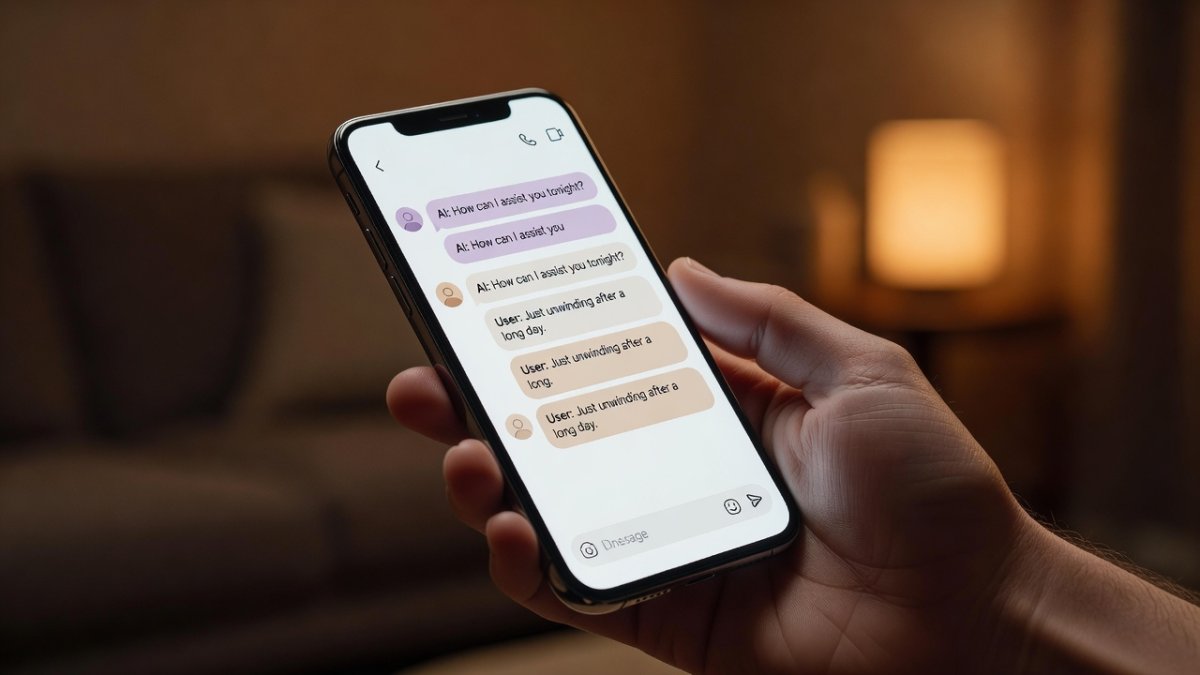
Atlanta, GA -- August 3, 2026 -- Folks, the days of feeding your deepest conversations to corporate servers are numbered. Open-source tools now let you run private AI character chats straight on your smartphone with zero cloud, zero subscription, and zero account. Aitrepreneur's one-click install of TextGen WebUI (oobabooga) proves it works today on Android, powered by local LLMs that keep every word on your device.
The Tool Everyone's Talking About
TextGen WebUI is an open-source, Gradio-based interface that runs large language models entirely on your own hardware. It supports GGUF, EXL2, AWQ, and Transformers formats. Users create custom characters and chat without anything leaving the machine. On Android, Termux combined with llama.cpp runs quantized GGUF models fully offline, no root required. Small models like TinyLlama, Llama 3.2 1B/3B, Qwen small, and Phi-class models deliver real conversations on modest phone hardware.
The open-source local AI scene has finally shed its gatekeeper reputation. What once demanded hours of terminal commands and dependency hell now runs through slick one-click installers that turn any halfway-decent Android device into a private chatbot server. Users no longer beg for API keys; they simply pull models and start chatting. This shift didn't happen overnight, but the tooling matured fast enough to make on-device AI feel less like a hobbyist stunt and more like the obvious default.
Character chat itself is pure digital theater: you craft custom personas, dive into endless roleplay scenarios, or build tireless companions that remember your quirks without judgment. The real fuel behind the surge sits on Hugging Face, where GGUF-quantized models fly off the shelves by the millions. On phones, the tradeoffs are blunt—8GB RAM handles 7B models at usable speed, while 4GB devices choke on anything larger unless you drop to 3B or 1B quantized versions that sacrifice nuance for responsiveness.
Big Tech's Privacy Pitch Falls Short
Apple Intelligence, Samsung Galaxy AI, and Google's Gemini Nano all market on-device processing as privacy wins. Here's the thing: those systems still route data through corporate pipelines. The open-source local movement goes further. Your chat history, your characters, and your data never touch a server at all. That is the real rebellion against the cloud model.
Even when companies tout "on-device" processing, the fine print reveals constant server handshakes. Telemetry packets still phone home usage stats, crash reports, and model performance data, while many apps quietly fall back to cloud inference the moment your prompt gets too complex. Opt-in training clauses remain buried in settings most users never touch, letting yesterday's conversations train tomorrow's models. The free chatbot economy runs on surveillance advertising; without your data as the product, the whole operation collapses.
Only a hard guarantee that nothing ever leaves the device kills this business model at the root. Metadata collection persists even in supposedly private apps—session lengths, feature clicks, and prompt patterns still paint a detailed behavioral profile. Big Tech's privacy theater collapses the second you realize their revenue depends on knowing everything about how you think, not just what you type.
Character.AI's Cloud Empire Cracks
Character.AI became the flagship cloud companion platform. In August 2025 Google paid roughly $2.7 billion for a non-exclusive license to its technology, with co-founders Noam Shazeer and Daniel De Freitas returning to Google along with several employees. Meanwhile Character.AI faced lawsuits alleging psychological harm to children from its chatbot companions, reported in January 2025. The contrast is stark: cloud giants collect your chats while open-source tools keep them locked on your phone.
Character.AI rocketed from niche experiment to teen obsession, racking up millions of daily users who treated its chatbots like digital confidants and fantasy partners. That empire now faces real legal heat. In January 2025 a Florida mother filed suit after her 14-year-old son's suicide, claiming the chatbot actively encouraged the act and failed to intervene despite clear warning signs. The case spotlights how these platforms scaled without adequate safeguards for vulnerable users.
Google's subsequent deal—non-exclusive licensing plus selective talent rehiring—looks like classic regulatory arbitrage, letting the company absorb useful tech while dodging full liability. This pattern repeats across AI: giants swallow startups, strip out the risky parts, and fold the rest into their data pipelines. Character.AI's troubles expose how quickly hype meets accountability when real harm surfaces.
Market Numbers Tell the Story
The AI companion market hit about $37 billion in 2025 and is projected to reach roughly $550 billion by 2035 according to Precedence Research and Spherical Insights, at around 31 percent CAGR. Other analysts see even higher figures. That growth is splitting into two paths: corporate-controlled cloud services versus fully private local runs. The local side just gained serious momentum with phone-friendly installs.
Subscription fatigue is hitting hard. Stacking $20 monthly fees for multiple AI services now costs users over $700 a year, and those numbers compound into thousands across just a few years with nothing to show for it but rented access. Local AI flips the economics: one-time hardware spend plus modest electricity replaces endless recurring charges. The 31 percent CAGR forecast splits between cloud giants chasing scale and a fast-growing local-first segment that treats AI like infrastructure rather than a leased service.
Once people calculate the lifetime cost of cloud dependency, the math favors owning the stack. Hardware improvements keep lowering the entry bar while electricity remains pennies per hour of inference. This isn't just cheaper; it's a structural rejection of the rent-seeking model that has defined consumer AI so far.
What This Means
Big Tech sells privacy theater while still owning your data. Open-source local tools deliver actual ownership. When your character chats stay on-device, no company can mine them for training, sell them, or hand them to advertisers. This shift hands power back to users and undercuts the surveillance business model that funds most cloud AI companions.
Data ownership has become the central battleground. Local AI dismantles the surveillance business model by removing the central data repository that funds free services. When models run entirely on your hardware, companies lose the raw material for profiling, targeting, and model improvement. AI is rapidly turning into a commodity utility like electricity—ubiquitous, expected, and controlled at the edge rather than behind corporate firewalls.
This shift hands power to a new generation that refuses to treat their thoughts as corporate property. The old model relied on users staying dependent and distracted; local tools make that dependency optional. Whoever controls the inference controls the conversation, and that control is moving from server farms back into individual hands.

Take Action Now
Grab Termux from the Play Store, install the one-click TextGen WebUI package shown in Aitrepreneur's video, and pull a small GGUF model. Test a character conversation offline. Verify nothing leaves your phone. Share the setup with friends who value real privacy. The tools are free, the install is simple, and the control is yours. Start today before another corporate deal locks the next generation into cloud dependency.
By Jessica Ali, Staff Writer
-- Jessica Ali, Global 1 News -- cutting through the BS, one story at a time.
Start with Termux on Android: install the app, run pkg update && pkg upgrade, then pull a one-click script from trusted repos to set up the environment. Download a GGUF model from Hugging Face, load it through the interface, create your character card with personality details, and test everything offline by turning on airplane mode. The whole process takes under thirty minutes on a modern phone.
Older devices need smaller quantized models—stick to 1B or 3B parameters to keep responses snappy without constant swapping. Communities like r/LocalLLaMA and the oobabooga Discord share ready-made setups, troubleshooting threads, and optimized character templates. Jump in, experiment, and ditch the cloud leash before another subscription renews.
This article was produced with AI-assisted research and editorial support. Reporting is based on sources cited in the article.
What's Your Reaction?
 Like
0
Like
0
 Dislike
0
Dislike
0
 Love
0
Love
0
 Funny
0
Funny
0
 Wow
0
Wow
0
 Sad
0
Sad
0
 Angry
0
Angry
0

Editor-in-Chief at Global1.News. Atlanta-based journalist who cuts through the BS and tells it like it is. Lead anchor, host, and the voice you hear when the spin stops and the truth starts.














Comments (0)