
2027: Peter Obi next president, will cause biggest political upset in Nigeria’s history – NDC
In a bold proclamation that reverberated across Lagos, Abuja and the wider Nigerian polity, the Nigeria Democratic Congress (NDC) has positioned its presidential hopeful, Peter Obi, as the forthcoming head of state.
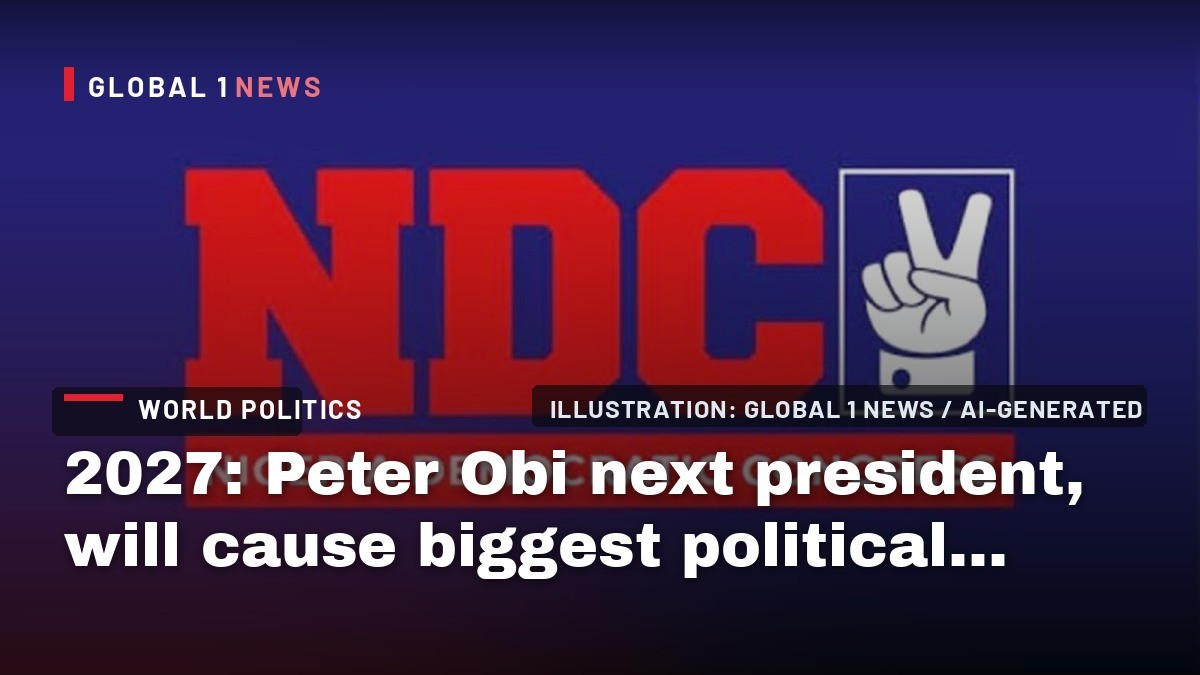
In a bold proclamation that reverberated across Lagos, Abuja and the wider Nigerian polity, the Nigeria Democratic Congress (NDC) has positioned its presidential hopeful, Peter Obi, as the forthcoming head of state. The statement, delivered by the party’s Director of New Media and Strategic Communications, Theo Abu Agada, frames the 2027 election as a watershed moment – one that could deliver “the biggest political upset in our modern history.” The language of destiny, divine grace and collective participation underscores the NDC’s strategy to rally a broad coalition of supporting movements while signalling a decisive break from the entrenched two‑party dominance that has characterised Nigeria’s post‑military era.
From Support Groups to a Unified Front
Obi’s recent remarks, echoed on the social platform X, articulate a clear hierarchy within the NDC’s ecosystem. He affirmed that the OK Movement, the Obidient Movement and the Kwankwasiyya bloc are “supporting groups” whose mandate is to buttress the party rather than to assume its central role. By delineating the functions of these groups, Obi seeks to consolidate disparate regional and ideological currents under a single political banner, thereby avoiding the fragmentation that has often weakened opposition coalitions.
This positioning resonates with the NDC’s broader narrative of inclusivity. By acknowledging the contributions of each movement while insisting they remain auxiliaries, the party attempts to harness their grassroots energy without ceding strategic control. The emphasis on “playing their role in supporting the party” suggests a disciplined coordination that could translate into a more coherent campaign apparatus as the 2027 ballot approaches.
The Significance of the “Biggest Political Upset” Claim
Agada’s assertion that Nigerians will witness “the biggest political upset in our modern history” carries both rhetorical weight and strategic intent. The phrase frames the upcoming election as a historic rupture, implicitly casting the incumbent political order as vulnerable. By invoking “the special grace of God and the votes of the Nigerian people,” the party intertwines spiritual legitimacy with democratic mandate, a combination that often resonates deeply in the Nigerian sociopolitical context.
From an analytical perspective, the claim functions as a rallying cry. It seeks to galvanise not only the NDC’s base but also undecided voters who may be yearning for change after years of perceived stagnation. The language of upset also hints at the party’s confidence in its electoral prospects, positioning Obi as a credible alternative to the traditional powerhouses that have dominated presidential contests since the return to civilian rule.
Leadership Dynamics Within the NDC
The internal hierarchy of the NDC, as revealed in Obi’s statement, places Senator Henry Seriake Dickson at the apex as the National Leader. Obi’s acknowledgment of the senator’s position underscores a structured chain of command that may reassure party members and external observers of organizational stability. This clarity of leadership is crucial for a party seeking to expand its national footprint while managing the expectations of various supporting groups.
Moreover, Agada’s role as Director of New Media and Strategic Communications highlights the party’s emphasis on digital outreach. By leveraging platforms like X for real‑time messaging, the NDC demonstrates an awareness of contemporary communication channels that can amplify its narrative, especially among younger, digitally‑savvy electorates. The strategic use of social media also allows the party to bypass traditional media gatekeepers and directly engage voters with its vision of a unified political front.
Historical Context of Opposition Coalitions
Historically, Nigerian opposition movements have struggled to coalesce around a single candidate, often splintering along ethnic, regional or ideological lines. The OK Movement, Obidient Movement and Kwankwasiyya each emerged from distinct socio‑political grievances, ranging from calls for good governance to regional autonomy. By insisting these groups remain “supporting” rather than “leading,” the NDC attempts to sidestep the pitfalls that have plagued past alliances, such as competing leadership ambitions and fragmented messaging.
This approach mirrors successful coalition‑building strategies observed in other African democracies, where umbrella parties have effectively integrated diverse factions under a common platform while preserving a clear central command. If the NDC can maintain discipline among its supporting groups, it may set a precedent for opposition unity that could reshape Nigeria’s partisan landscape.
Implications for Voter Mobilisation
The framing of the 2027 election as a historic upset is likely to influence voter mobilisation efforts. By casting the contest as a moment of collective destiny, the NDC invites Nigerians to view their ballot as a decisive act in a larger narrative of transformation. The invocation of “the votes of the Nigerian people” underscores the party’s reliance on mass participation rather than elite patronage.
In practical terms, this narrative may translate into intensified grassroots campaigns, door‑to‑door canvassing and targeted outreach in swing states. The party’s emphasis on supporting groups could also mean that each movement will mobilise its own networks, thereby expanding the overall reach of the campaign without over‑centralising resources. Such a distributed mobilisation model could prove advantageous in a country as geographically and demographically diverse as Nigeria.
Potential Challenges and Risks
While the NDC’s strategy appears cohesive on paper, several challenges loom. The insistence that supporting groups refrain from “playing the role of the party” may breed tension if those groups feel constrained or under‑utilised. Historical grievances, especially in regions where movements like Kwankwasiyya have strong local identities, could surface if the central party leadership is perceived as marginalising their influence.
Additionally, the bold claim of a “biggest political upset” raises expectations that, if unmet, could erode credibility. The party must translate rhetoric into tangible electoral gains, navigating a political environment where incumbents wield significant resources and patronage networks. Managing these dynamics will require careful balancing of central authority with the autonomy of allied movements.
Looking Ahead: The 2027 Electoral Landscape
As September 2026 unfolds, the NDC’s narrative is gaining traction across social media and within political circles. The party’s clear articulation of leadership, its disciplined approach to supporting groups, and its evocative framing of the upcoming election set the stage for a potentially transformative contest. Whether Peter Obi will indeed become “the next President of Nigeria” remains to be decided at the ballot box, but the NDC’s strategic positioning suggests that the 2027 election will be watched closely not only in Abuja but across the continent.
For observers of African democracy, the unfolding drama offers a case study in how opposition parties can harness digital platforms, coalition dynamics and visionary rhetoric to challenge entrenched power structures. As Nigerians prepare to cast their votes, the promise of “the biggest political upset in our modern history” will likely shape both the campaign trail and the post‑election discourse, marking 2027 as a year that could redefine the nation’s political trajectory.
This article was produced with AI-assisted research and editorial support. Reporting is based on the source material cited below. Sources: Daily Post Nigeria; dailypost.ng; Global1.News (25 September 2026).
By Sarah Okafor, Staff Writer
What's Your Reaction?
 Like
0
Like
0
 Dislike
0
Dislike
0
 Love
0
Love
0
 Funny
0
Funny
0
 Wow
0
Wow
0
 Sad
0
Sad
0
 Angry
0
Angry
0
Africa Correspondent at Global1.News. Based in Lagos, covering politics, business, technology, and culture across the continent. Focused on telling African stories beyond the headlines — the innovation, entrepreneurs, and communities shaping the region's future.













Comments (0)