
Xi'an Convening Signals China's Bid to Shape Global AI Governance Agenda
UN Deputy Secretary-General Amina J. Mohammed's AI and Human Development Convening in Xi'an signals China's bid to co-lead global AI governance. The development-first dialogue, building on Cairo and Mexico City gatherings, offers the Global South an alternative to EU regulatory and US export-control frameworks.
In a recent CGTN exclusive interview, UN Deputy Secretary-General Amina J. Mohammed sat down with CGTN's Tian Wei to discuss the intersection of human development and artificial intelligence, framing the conversation around a central thesis: the trajectory of AI is not predetermined but is, fundamentally, a choice for humanity. The interview, conducted on the margins of the AI and Human Development Convening held in Xi'an, northwest China, in late August 2026, served as a platform for the UN's development-first approach to a technology that is rapidly reshaping geopolitical and economic landscapes.
The Xi'an convening, held under the leadership of Mohammed and in collaboration with the Government of China and the United Nations Secretariat, represents a notable milestone in the evolving diplomacy of global AI governance. It is the third in a series of gatherings organized with the UN Office for Partnerships (UNOP), following earlier sessions in Cairo in June and Mexico City in July of the same year. The choice of Xi'an as a host city is strategically significant, signaling Beijing's intent to position itself not merely as a participant in global AI rulemaking, but as a co-convenor and agenda-setter in the multilateral dialogue.
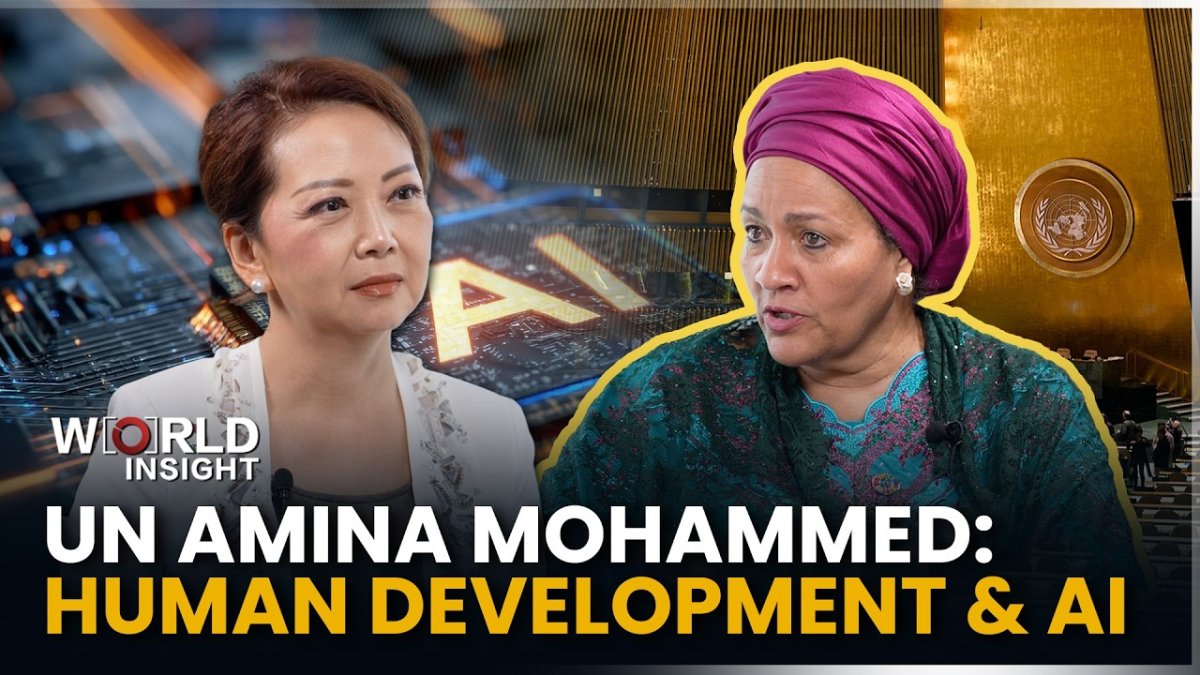
The Xi'an Convening: A Development-First Agenda
The convening brought together representatives from government, business, and academia, creating a tripartite platform that the UN has increasingly favored for complex technological issues. The discussions in Xi'an were anchored in a pragmatic assessment of AI's potential, with Mohammed highlighting its capacity to make healthcare more efficient, education more accessible, and agriculture more sustainable. These are not abstract aspirations; they are concrete applications that resonate deeply with the development priorities of the Global South, where infrastructure gaps and resource constraints often amplify the potential impact of leapfrog technologies.
The choice of Xi'an, a city more historically associated with the Silk Road than with cutting-edge technology summits, is itself a deliberate message. It moves the conversation away from the traditional Western capitals of tech governance—Brussels, Washington, Geneva—and into the heart of China's interior. This geographic symbolism aligns with Beijing's broader narrative of a multipolar world order, where governance frameworks must reflect the interests and realities of a diverse range of nations, not just the established technological powers. The convening's focus on human development, rather than purely on risk mitigation or market access, suggests a deliberate attempt to reframe the AI governance debate around the question of what AI can do for people, rather than what it might do to them.
Amina Mohammed's Core Message: AI as a Choice
The central theme of Mohammed's interview and the convening itself was the assertion that AI's future is humanity's choice. This framing is a subtle but powerful counter-narrative to the technological determinism that often dominates discussions of AI, where the pace of development is seen as an unstoppable force to which societies must simply adapt. By emphasizing choice, the UN Deputy Secretary-General is injecting a moral and political agency back into the equation, arguing that the outcomes of AI deployment—whether they exacerbate inequality or reduce it—are not inevitable.
This development-first framing is critical for understanding the UN's approach. It suggests that the primary metric for evaluating AI governance should not be solely about preventing harm, but also about actively promoting good. This is a distinct departure from regulatory frameworks that are primarily reactive, focusing on compliance and prohibitions. The UN's angle, as articulated by Mohammed, is proactive: how can we steer AI to meet the Sustainable Development Goals (SDGs)? This positions the UN track as a complement to, and sometimes a counterweight to, the more risk-averse approaches emerging in other parts of the world. It is a call to action for governments and corporations to consider the equity implications of their AI investments, not just their efficiency gains.
China's Strategic Role: Hosting as a Form of Leadership
China's role in hosting this convening is far from passive. It aligns with Beijing's broader diplomatic push, which includes the Global AI Governance Initiative proposed in 2023. That initiative, which has been presented as a policy direction rather than a binding treaty, calls for a governance framework that is inclusive, development-oriented, and respects national sovereignty. By co-hosting the UN convening in Xi'an, China is operationalizing these principles on a multilateral stage, demonstrating a willingness to lead the conversation on how AI should be governed in a way that is consistent with its own strategic interests.
The hosting diplomacy is a key component of China's soft power strategy. It allows Beijing to shape the agenda by setting the venue, the themes, and the guest list. For many nations in the Global South, China's approach—which emphasizes the need for AI to bridge the digital divide and support economic development—is more immediately relevant than the prescriptive regulations being drafted in Brussels or the security-focused export controls emanating from Washington. China's position as a co-convenor with the UN elevates its status as a responsible stakeholder in the global tech order, a narrative that directly counters the perception of it as a revisionist power seeking to dominate emerging technologies.
Competing Frameworks: Brussels, Washington, and the UN Track
The Xi'an convening highlights the increasingly fragmented landscape of global AI governance. The European Union, through its AI Act, has pursued a regulatory-first approach, categorizing AI applications by risk and imposing strict compliance requirements on developers and deployers. This model is comprehensive and rights-based, but it is also seen by some as potentially stifling innovation and imposing European standards on the rest of the world. In contrast, the United States has largely adopted an export-control-driven strategy, focusing on restricting the flow of advanced chips and technology to strategic rivals, particularly China. This approach is less about establishing a global governance framework and more about maintaining a technological edge.
The UN track, as exemplified by the Cairo-Mexico City-Xi'an convening series, offers a third path. It is neither a binding regulatory regime nor a tool of strategic competition. Instead, it functions as a diplomatic platform for consensus-building, particularly among nations that feel excluded from the EU-US dialogue. The UN's push for an international scientific panel on AI, which has been described as a policy direction to be explored, mirrors the Intergovernmental Panel on Climate Change (IPCC) model. Such a panel would aim to provide a shared, evidence-based understanding of AI's risks and benefits, which could then inform national and international policymaking. This is a slower, more deliberative process, but it has the potential to create a more legitimate and widely accepted foundation for future governance than frameworks imposed by a single bloc.
Implications for the Global South and the Road Ahead
The strategic implications of the Xi'an convening for the Global South are profound. For many developing nations, AI presents a dual-edged sword: the potential for accelerated development versus the risk of increased dependency on a handful of tech powers. The UN track, with its emphasis on human development and inclusivity, offers a potential avenue for these nations to have a stronger voice in shaping the rules of the game. The convening series itself—moving from Africa to Latin America to Asia—is a deliberate effort to ensure that the conversation is truly global and not confined to the corridors of power in the West.
What to watch for in the coming months is whether this diplomatic track can translate into tangible outcomes. The key question is whether the consensus-building in Xi'an can lead to concrete commitments on issues like AI capacity-building for developing countries, the sharing of AI benefits in healthcare and agriculture, and the establishment of common standards for transparency and accountability. The UN's role as a neutral convenor is crucial, but it faces the challenge of competing with the more immediate and coercive levers of power held by Washington and Brussels. The choice that Mohammed refers to is not just a choice for humanity, but a choice for the international community: whether to build a fragmented, competitive AI landscape or a cooperative, development-oriented one. The convening in Xi'an has put a marker down, but the path forward remains a complex negotiation between competing visions of the future.
By Prof. Marcus Chen, Staff Writer
This article was produced with AI-assisted research and editorial support. Reporting is based on sources cited in the article.
What's Your Reaction?
 Like
0
Like
0
 Dislike
0
Dislike
0
 Love
0
Love
0
 Funny
0
Funny
0
 Wow
0
Wow
0
 Sad
0
Sad
0
 Angry
0
Angry
0
World Politics Analyst at Global1.News. Based in Beijing, covering US-China relations, global trade, and geopolitical strategy. Brings deep analytical perspective to the power dynamics shaping international affairs.












Comments (0)