
US-Iran Pause Holds as Hormuz Dispute and Gulf Diplomacy Collide
The US-Iran pause is a temporary opening, not a settlement: Trump demands a deal or "total surrender" over the Strait of Hormuz, Pezeshkian insists Tehran seeks stability, and Egypt, Saudi Arabia, Kuwait and Turkey push de-escalation amid energy security fears.
The pause in direct United States-Iran military exchanges is a temporary diplomatic opening, not a settlement — and the dispute over the Strait of Hormuz remains the hinge on which Gulf stability turns. President Donald Trump frames the standoff as one Washington already controls, while Iranian President Masoud Pezeshkian insists Tehran will defend its interests without seeking escalation. For the Gulf states caught between the two, the question is how long the restraint on both sides can hold before the region's energy arteries are disrupted again.
US-Iran Pause Holds as Hormuz Dispute and Gulf Diplomacy Collide
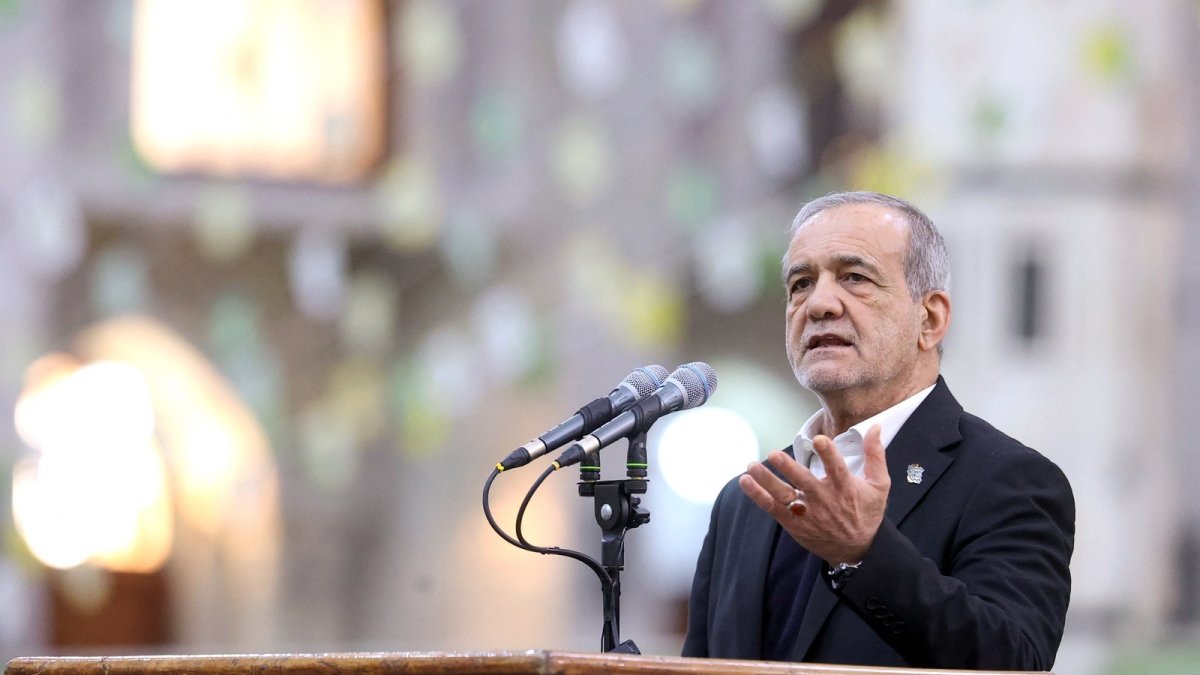
Beirut, Lebanon – Aug. 4, 2026 — The current lull in the US-Iran confrontation grew out of a last-minute decision, not a breakthrough. Trump said he canceled a planned military strike after Tehran and other Middle Eastern countries requested time to finalize the framework of a peace deal, adding that Israel had joined the commitment. Iran's leadership, for its part, has signaled that it wants stability — on its own terms. Pezeshkian said Tehran "does not seek to escalate tensions or instability in the region," while vowing that Iran "will act with its full capabilities to defend the country's security, national interests, and territorial integrity."
A Pause, Not a Settlement: Anatomy of the Truce
The current pause follows a cycle that began in February, when the United States and Israel launched attacks on Iran, triggering Iranian retaliatory strikes targeting several countries across the region. An April ceasefire created space for a Pakistan-mediated memorandum of understanding signed in Islamabad in June, which aimed to end the military conflict and open the road to a lasting peace agreement. That deal collapsed last month, producing nearly two weeks of renewed exchanges between Washington and Tehran before the latest lull took hold.
Pakistani government sources confirmed to Anadolu that "no date or venue" has yet been finalized for resuming the long-stalled direct talks, despite Trump's earlier announcement that new negotiations would begin Monday afternoon. Iranian Foreign Ministry spokesperson Esmaeil Baqaei has said Tehran is not engaged in negotiations with Washington. The gap between the American narrative of imminent talks and the Iranian public position underscores how fragile the diplomatic space remains.
The Islamabad Memorandum: One Document, Two Agreements
The dispute over the Islamabad MoU is more fundamental than a disagreement over implementation. Washington entered the agreement viewing it primarily as a mechanism for converting military pressure into Iranian restraint — a diplomatic extension of coercion. Tehran regarded the same document as a reciprocal security bargain, exchanging Iranian restraint for protection against further attacks and tangible economic relief. These differing assumptions shape what each side considers compliance.
From Washington's perspective, months of military attacks, economic pressure and infrastructure losses have reduced Tehran's room for maneuver; Iran accepted the MoU, in this reading, because it needed an exit from an increasingly costly conflict. Iran must therefore restore freedom of navigation, suspend attacks on commercial shipping and accept meaningful nuclear limitations before sanctions relief and reconstruction support flow. Tehran's reading is almost the opposite: endurance itself constitutes a form of success, and the MoU is evidence that resistance generated diplomatic leverage, not the document of a defeated party. Iran insists that restrictions on its nuclear program and maritime activities must proceed alongside the suspension of attacks, restored oil exports and access to frozen assets — otherwise it would relinquish the instruments that brought Washington to the table.
Hormuz as Leverage: The Strategic Calculus
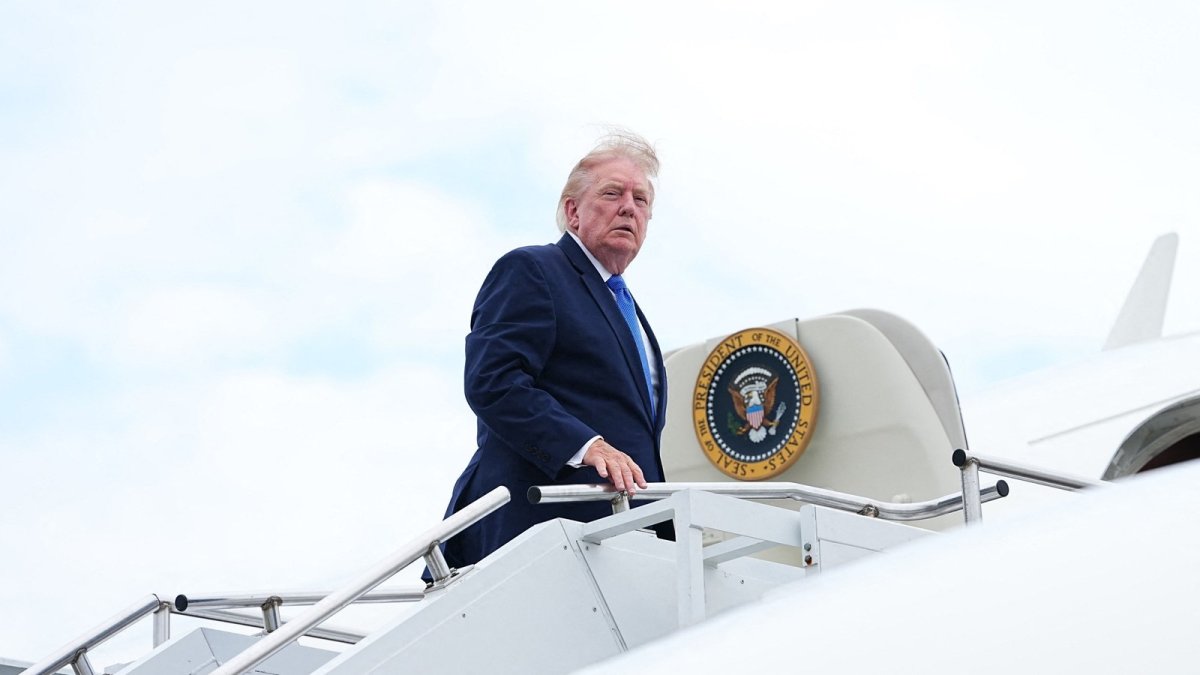
Nowhere is this competition more visible than in the Strait of Hormuz, through which a significant share of global energy trade passes. Trump dismissed Iranian assertions of control over the waterway, claiming it is "already completely controlled by the United States Navy and our 'Blockade,' or, as some say, 'The United States Wall of Steel!'" He warned that nothing would get through to Iran unless a deal — or what he termed "total surrender" — is accomplished, and repeated his core red line: "Iran will never have a nuclear weapon!"
Tehran treats the strait not as a bargaining chip to be surrendered but as leverage tied to the cessation of attacks, the removal of the naval blockade and the delivery of promised economic relief. Iranian officials place the waterway within a longer story of Persian presence and sovereignty in the Gulf, resisting what they frame as external intervention. Washington, by contrast, treats freedom of navigation as a universal principle rather than a negotiable bilateral issue. The result is a contest in which each side sees its own actions as defensive enforcement and the other's as offensive revision.
Gulf Diplomacy: Cairo and Riyadh's Coordinated Push
Egypt and Saudi Arabia have moved to the center of the diplomatic effort. Egyptian Foreign Minister Badr Abdelatty and Saudi Foreign Minister Prince Faisal bin Farhan spoke by phone Monday, discussing "the latest developments in the region and efforts to contain the escalation and prevent the expansion of tensions." The two ministers stressed "the importance of immediately halting the military escalation and prioritizing political and diplomatic solutions as the optimal means of addressing regional crises," and agreed on the need for close coordination between Cairo and Riyadh to support regional security.
The Egyptian-Saudi alignment reflects a broader Gulf consensus that the conflict is already too costly. Iranian retaliatory strikes have targeted US military facilities and equipment in several Arab countries, particularly Jordan, Bahrain and Kuwait — putting Gulf states on the front line of a war they did not choose. For Cairo and Riyadh, the priority is preventing the expansion of tensions before the spillover reaches their own territory and economies.
Kuwait and Turkey: The Front-Line States
Kuwait has experienced the war's fallout directly. On Saturday, Kuwait's army destroyed Iranian drones after attacks targeted a government facility and civilian vehicles on Bubiyan Island, causing material damage but no casualties. Defense Ministry spokesman Saud Al Atwan said the armed forces detected "hostile drones" in Kuwaiti airspace and destroyed them, describing what he called "Iranian aggression" against vital installations. The episode illustrates how Gulf states hosting US assets have become targets in the exchange.
Turkey has responded with active shuttle diplomacy. Foreign Minister Hakan Fidan discussed the war and its regional repercussions in a call with Kuwaiti Foreign Minister Jarrah Jaber Al Ahmad Al Sabah. President Recep Tayyip Erdoğan separately spoke with Saudi Crown Prince Mohammed bin Salman, expressing sorrow over recent attacks targeting the kingdom and reaffirming Ankara's commitment to lasting peace and stability. Turkey's engagement reflects both its interest in preventing a wider regional conflagration on its southern flank and its broader ambition as a diplomatic broker in the Gulf.
The Gaza Track Runs in Parallel
While the Gulf absorbs the US-Iran fallout, the Gaza mediation track continues alongside it. Türkiye, Egypt and Qatar — the truce mediators — jointly condemned what they called ongoing Israeli violations in the Gaza Strip, particularly the targeting of healthcare facilities, which they said constitute a breach of the ceasefire agreement and undermine efforts to implement its second phase. Since the ceasefire declared in October, Israel has violated it with near-daily attacks that mediators say have killed hundreds of people.
Hamas has said it is awaiting "a clear and official response" from Trump-backed Board of Peace envoy Nickolay Mladenov and the mediators on implementing the second phase, which includes provisions on the confinement of weapons. Pezeshkian spoke by phone with new Hamas chief Khalil al-Hayya, who was elected July 20 to succeed Yahya Sinwar, reaffirming Iranian support for Palestinian rights. Trump has described the consensus on the second-phase roadmap as a "historic agreement," and Erdoğan has stressed to bin Salman that Israel's full adherence to the roadmap is essential for the initiative to succeed. The Gaza track remains vulnerable, however, to any renewed US-Iran escalation that would divert attention and resources.
Regional Implications: Energy Markets and Alliance Politics
The pause leaves energy markets exposed to sudden disruption while Hormuz access remains contested. Gulf producers face continued uncertainty over export routes, and OPEC+ diplomacy must now account for the risk of renewed Iranian responses targeting facilities in Jordan, Bahrain and Kuwait. Any significant interruption in the strait would ripple through global prices within hours, testing the credibility of both Washington's blockade claims and Tehran's ability to enforce its leverage.
The episode also tests the region's alliance architecture. Arab states continue to balance their security relationships with Washington against the practical need to manage a neighbor with the capacity to strike their territory. Sunni-Shia geopolitical competition adds another layer to the calculation, as does the Abraham Accords-era normalization that many Gulf capitals still treat as their long-term strategic horizon. For China and Russia, watching from the sidelines, the spectacle of American military pressure producing a contested and unstable outcome offers openings of its own.
Without concrete movement on reopening the strait and addressing Iran's nuclear program, the current pause risks collapsing into another cycle of strikes. The diplomatic space Trump's decision created is real, but it is also narrow — and the Gulf states pressing for de-escalation know better than anyone how quickly it can close.
By Malik Hassan, Staff Writer
This article was produced with AI-assisted research and editorial support. Reporting is based on sources cited in the article.
What's Your Reaction?
 Like
0
Like
0
 Dislike
0
Dislike
0
 Love
0
Love
0
 Funny
0
Funny
0
 Wow
0
Wow
0
 Sad
0
Sad
0
 Angry
0
Angry
0
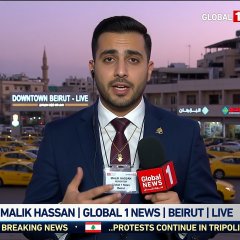
Middle East Correspondent at Global1.News. Based in Beirut, covering politics, conflict, energy, and society across the Middle East. Brings context and depth to a region often reduced to headlines.









Comments (0)