
US Air Force signs $1.84 billion contract with Northrop Grumman for Rafael Litening targeting pods
A Record Vote of Confidence in Israeli Defense Tech The United States Defense Department has awarded Northrop Grumman a $1.84 billion contract to supply Litening targeting pods to the US Air Force and to upgrade and maintain existing systems.
A Record Vote of Confidence in Israeli Defense Tech
The United States Defense Department has awarded Northrop Grumman a $1.84 billion contract to supply Litening targeting pods to the US Air Force and to upgrade and maintain existing systems. This framework contract will remain in effect until 2035, with the US Air Force placing individual orders under its terms. From an Israeli perspective, the scale of this agreement underscores the deep integration of Rafael Advanced Defense Systems technology into American military operations across multiple branches and platforms.
The deal highlights how Israeli innovation continues to shape global defense capabilities even as the United States maintains its own production lines. Northrop Grumman manufactures the Litening pod in the US in partnership with the Israeli company for branches of the US military and foreign customers. Such arrangements strengthen economic ties between the two nations while ensuring that Israeli defense firms remain central to high-value contracts that extend well into the next decade.
Israeli officials and industry leaders view this long-term commitment as validation of decades of investment in precision targeting systems. The contract does not specify how many pods the Pentagon will purchase, which models it will acquire, or whether it will upgrade to the fifth generation of Litening. Northrop Grumman has initially received a $43 million contract as the first expenditure under the broader agreement, signaling steady future demand from American forces.
What Is a Targeting Pod, and Why It Matters
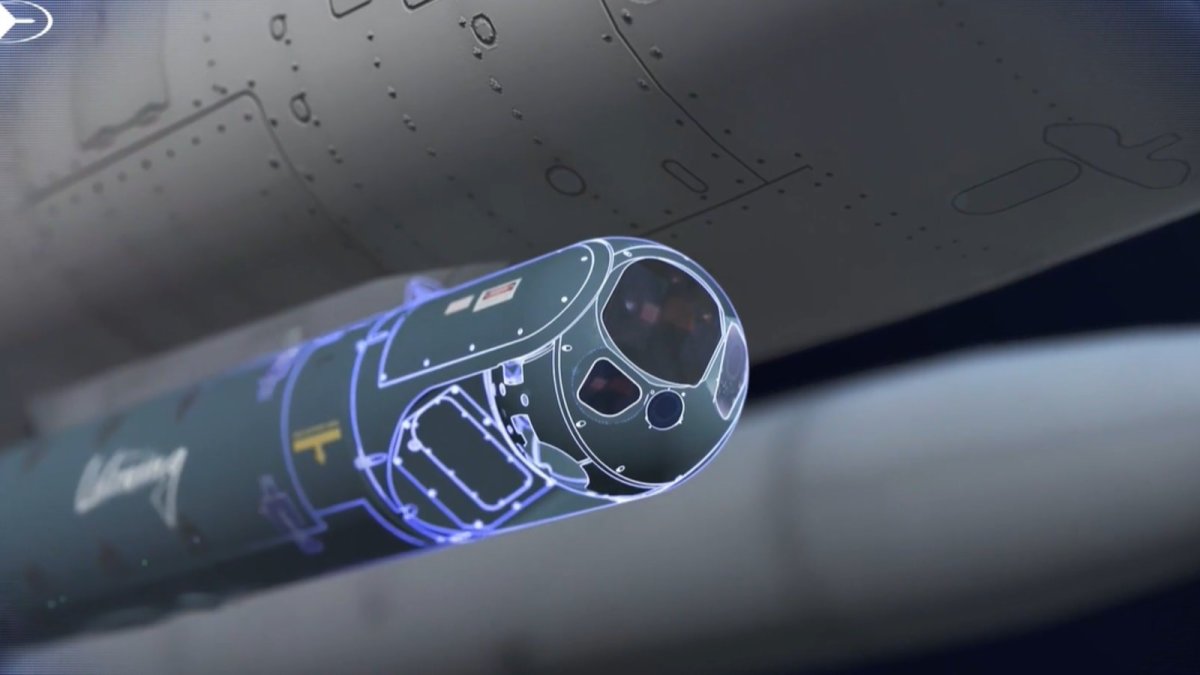
A targeting pod resembles a missile and is mounted on a dedicated hardpoint beneath an aircraft. It is equipped with a camera, additional sensors, and a laser for guiding weapons, allowing pilots and navigators to locate distant ground targets during the day or at night and in all weather conditions. This capability transforms standard aircraft into precision strike platforms capable of operating effectively regardless of visibility challenges.
In the context of Israel's defense ecosystem, such systems enhance situational awareness for pilots flying missions over varied terrain and under complex threat environments. The technology supports both offensive operations and defensive reconnaissance, providing real-time data that integrates with other onboard systems. Israeli companies like Rafael Advanced Defense Systems have refined these pods to meet the specific operational needs of the Israel Defense Forces while also exporting them through trusted partners.
The importance extends beyond traditional air-to-ground roles. Targeting pods deliver reliable performance in demanding conditions, contributing to mission success rates and pilot safety. Their modular design allows integration with various aircraft types, making them versatile assets for air forces seeking cost-effective upgrades to existing fleets without requiring entirely new platforms.
From American Refusal to Israeli Independence — the LANTIRN story
In an ironic twist, Rafael developed Litening 40 years ago with funding from the Defense Ministry after the US refused to sell the Israeli Air Force its equivalent American system, LANTIRN, long before the era of efforts to achieve greater weapons independence. This refusal prompted Israeli engineers to create a domestic alternative that would eventually surpass the original in both capability and affordability for many users.
The development path reflects Israel's broader strategy of building self-reliant defense industries capable of responding to shifting geopolitical realities. What began as a necessity-driven project evolved into a globally competitive product line that now serves multiple nations. The story illustrates how early setbacks can catalyze technological breakthroughs that strengthen national security and open export opportunities.
Today, the Litening pod stands as evidence of Israel's ability to innovate under constraint. The original decision by the United States to withhold LANTIRN ultimately led to a system that the Pentagon itself has embraced in large numbers, demonstrating the long-term value of supporting indigenous defense research even when international partnerships face temporary obstacles.
A Quiet Partnership: Rafael and Northrop Grumman
Northrop Grumman manufactures the Litening pod in the US in partnership with Rafael Advanced Defense Systems for branches of the US military and foreign customers. This collaboration allows American production while preserving Israeli technological input and intellectual property. The arrangement supports jobs in both countries and ensures supply chain resilience for critical defense components.
From Israel's viewpoint, such partnerships provide access to the vast US defense market without requiring full-scale domestic manufacturing capacity for every system. Rafael Advanced Defense Systems benefits from Northrop Grumman's established infrastructure and customer relationships, while the American company gains a proven, battle-tested product. The framework contract running until 2035 formalizes this ongoing cooperation at a significant financial scale.
The initial $43 million allocation under the $1.84 billion agreement marks the practical beginning of renewed orders. This structure enables flexible procurement as operational needs evolve, giving both companies visibility into long-term planning. Israeli defense firms increasingly rely on these transatlantic ties to sustain research and development pipelines that benefit both national and allied forces.
Five Generations of Innovation
Rafael has since developed five generations of the pod, offering improved range and resolution, as well as the option of integrating radar manufactured by Israel Aerospace Industries, in a collaboration between the two competing Israeli defense companies. This progression demonstrates sustained investment in iterative improvements that keep the system relevant across changing mission requirements.
Each generation has addressed specific operational feedback from users, enhancing sensor performance and reliability. The ability to incorporate Israel Aerospace Industries radar reflects pragmatic cooperation between Israeli firms that might otherwise compete, prioritizing national technological advancement. Such integration expands the pod's utility in diverse combat scenarios.
The evolution from the original design to current versions underscores Israel's commitment to continuous innovation in defense electronics. Upgrades have focused on extending effective engagement distances and sharpening image clarity, directly supporting pilot decision-making. These advancements maintain Litening's competitive edge even as newer aircraft platforms enter service worldwide.
The Drone-Era Relevance
In recent years, it has also become increasingly important for the equally crucial task of identifying unmanned aerial vehicles and drones, small aircraft that onboard radars sometimes struggle to detect. This expanded role aligns with growing regional threats from low-cost aerial systems that require precise identification before engagement.
Israeli forces have extensive experience countering drone incursions, making the Litening pod's enhanced detection capabilities particularly valuable. The system's electro-optical sensors complement traditional radar by providing visual confirmation in cluttered airspace. This dual capability supports both offensive targeting and defensive air surveillance missions.
As drone technology proliferates across the Middle East, the demand for reliable identification tools continues to rise. Litening's proven performance in this domain reinforces its position within the Israeli defense portfolio and strengthens export prospects to nations facing similar challenges. The pod's all-weather, day-night operation ensures consistent utility regardless of environmental conditions.
The F-35 Question
The F-35 aircraft being purchased by the Air Force, Navy, and Marine Corps are equipped with an integrated weapons guidance system, eliminating the need for external systems such as Litening. The F-35's entry into service raised concerns that Litening would lose an important customer, but the US military will continue using the system on its other aircraft.
Israeli planners note that the F-35 represents only one segment of the broader American fleet. Legacy platforms such as F-15E, F-16, and A-10 aircraft, along with Navy F/A-18 fighter jets, Marine Corps Harrier aircraft, and even B-52 bombers and Hercules transport aircraft, will retain the need for external targeting pods for years to come. This diversity of platforms ensures sustained demand.
Northrop Grumman reported that the system has an operational availability rate of 95%, indicating a high level of reliability. Such performance metrics support continued investment in Litening even as fifth-generation fighters enter service. The Israeli Air Force itself operates a mixed fleet that benefits from proven external pods alongside newer integrated solutions.
Germany and the Fifth Generation
The contract does not specify how many pods the Pentagon will purchase, which models it will acquire, or whether it will upgrade to the fifth generation of Litening. That version was purchased last year by the German government for Luftwaffe Typhoon aircraft in a deal worth €350 million. This European adoption signals growing international confidence in the latest iteration.
From an Israeli standpoint, foreign sales of advanced Litening variants validate the research investments made by Rafael Advanced Defense Systems. The German purchase demonstrates that fifth-generation enhancements meet the requirements of sophisticated air forces operating modern fighter jets. Such deals also generate revenue that supports further domestic development.
The framework agreement with Northrop Grumman leaves room for future upgrades should the US Air Force choose to modernize its existing inventory. While the current contract focuses on supply, upgrades, and maintenance, the option to incorporate newer generations remains available. This flexibility benefits both the manufacturer and the customer over the contract's duration through 2035.
What This Means for Israel's Defense Economy
Since 1996, the Pentagon has purchased 900 Litening pods, which proved cheaper and more effective than LANTIRN. The new $1.84 billion contract extends this relationship significantly, providing long-term revenue visibility for Rafael Advanced Defense Systems and its American partner. Such sustained orders contribute to Israel's defense export economy and support high-skilled employment in the sector.
The partnership model with Northrop Grumman allows Israeli technology to reach global markets while complying with US production requirements. This approach strengthens bilateral defense industrial cooperation and positions Israeli firms as essential contributors to American military readiness. The framework running until 2035 offers predictability that aids long-range planning and research funding.
Overall, the agreement reinforces Israel's role as a key innovator within the international defense supply chain. Continued demand for Litening pods across multiple US platforms and allied nations underscores the economic and strategic value of Israel's defense technology sector. This contract represents both a commercial success and a testament to the enduring relevance of Israeli-engineered systems in modern warfare.
By Hannah Berg, Staff WriterThis article was produced with AI-assisted research and editorial support. Reporting is based on sources cited in the article.
What's Your Reaction?
 Like
0
Like
0
 Dislike
0
Dislike
0
 Love
0
Love
0
 Funny
0
Funny
0
 Wow
0
Wow
0
 Sad
0
Sad
0
 Angry
0
Angry
0

Israel Correspondent at Global1.News. Based in Tel Aviv, covering Israeli politics, security, technology, and society. Provides balanced, deeply-sourced reporting on one of the most closely-watched regions in the world.















Comments (0)