
U.S. Ambassador Michelle Steel Arrives in Seoul with Personal Outreach
Steel Launches Ground-Level Engagement Before Formal Credentials Seoul, South Korea – August 3, 2026 — U.S. Ambassador Michelle Steel has initiated her posting through direct public interactions across Seoul, including visits to historic markets and churches, before formally presenting credentials to the Ministry of Foreign Affairs.
Steel Launches Ground-Level Engagement Before Formal Credentials
Seoul, South Korea – August 3, 2026 — U.S. Ambassador Michelle Steel has initiated her posting through direct public interactions across Seoul, including visits to historic markets and churches, before formally presenting credentials to the Ministry of Foreign Affairs.
Arrival Marks End of Extended Vacancy
The arrival of Michelle Steel at Incheon International Airport on July 30, 2026, closed an unusually long chapter in the U.S.-Republic of Korea alliance. The ambassadorial post had remained vacant for roughly eighteen months after President Trump returned to office in January 2025. Such extended gaps are rare in a relationship that has anchored Northeast Asian security since the 1953 armistice. Steel’s nomination under the second Trump administration therefore carried immediate symbolic weight, signaling renewed attention to a partnership tested by North Korean missile advances, supply-chain realignments, and shifting U.S. priorities in the Indo-Pacific. Her first public remarks at the airport stressed continuity rather than rupture, underscoring that the alliance remains the linchpin of regional stability even amid leadership transitions on both sides of the Pacific. Observers in Seoul noted that the prolonged vacancy had not halted day-to-day coordination on deterrence or economic issues, yet it had left certain high-level channels underutilized. Steel’s prompt arrival thus reopened those channels at a moment when South Korea’s new administration under President Lee Jae Myung seeks to recalibrate relations with Washington while managing economic interdependence with China. The timing also coincides with preparations for follow-up work on the October 2025 summit fact sheet, giving the new envoy an immediate substantive docket.
Personal Background Shapes Approach
Steel’s biography supplies distinctive assets for the Seoul posting. Born in Seoul in 1955 to a family displaced from the North, she emigrated to the United States in 1975 and retains fluent Korean. This personal history links her directly to the postwar refugee experience that shaped institutions such as Youngnak Presbyterian Church, founded in 1945 by North Korean Christian refugees. Her parents were known attendees, situating Steel within a living community memory of division and migration. As the second Korean American ambassador after Sung Kim (2011–2014) and the first Korean American woman in the role, she embodies a demographic shift in U.S. diplomatic representation that resonates with Korea’s own transnational communities. Prior service as a two-term Republican congresswoman from California, together with earlier roles on the Board of Equalization and as an Orange County supervisor, equips her with legislative experience and domestic political networks close to President Trump. These credentials matter in an alliance where chaebol regulatory concerns, defense cost-sharing, and technology export controls frequently intersect with U.S. domestic politics. Her devout Christian faith further aligns with influential segments of South Korean civil society, offering informal avenues for trust-building that formal diplomacy alone cannot replicate. In a region where historical memory and personal narrative still inform policy debates, Steel’s background provides a reservoir of cultural fluency that predecessors without Korean lineage had to cultivate over time.
Early Public Engagements Set Distinct Tone
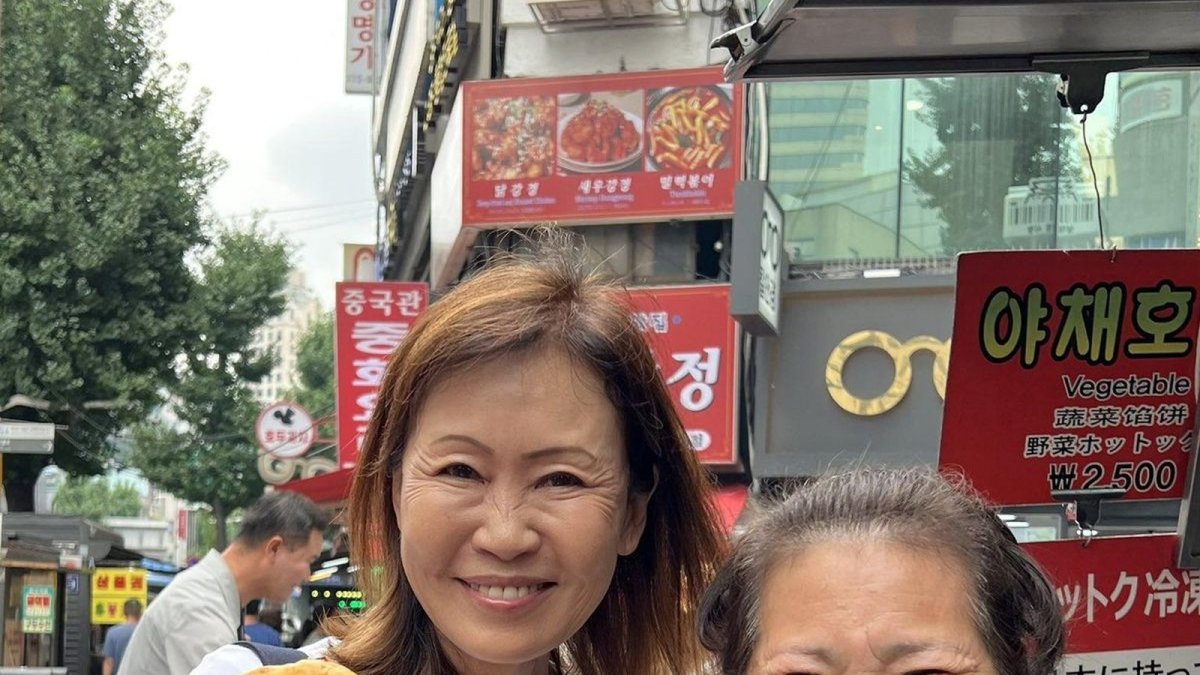
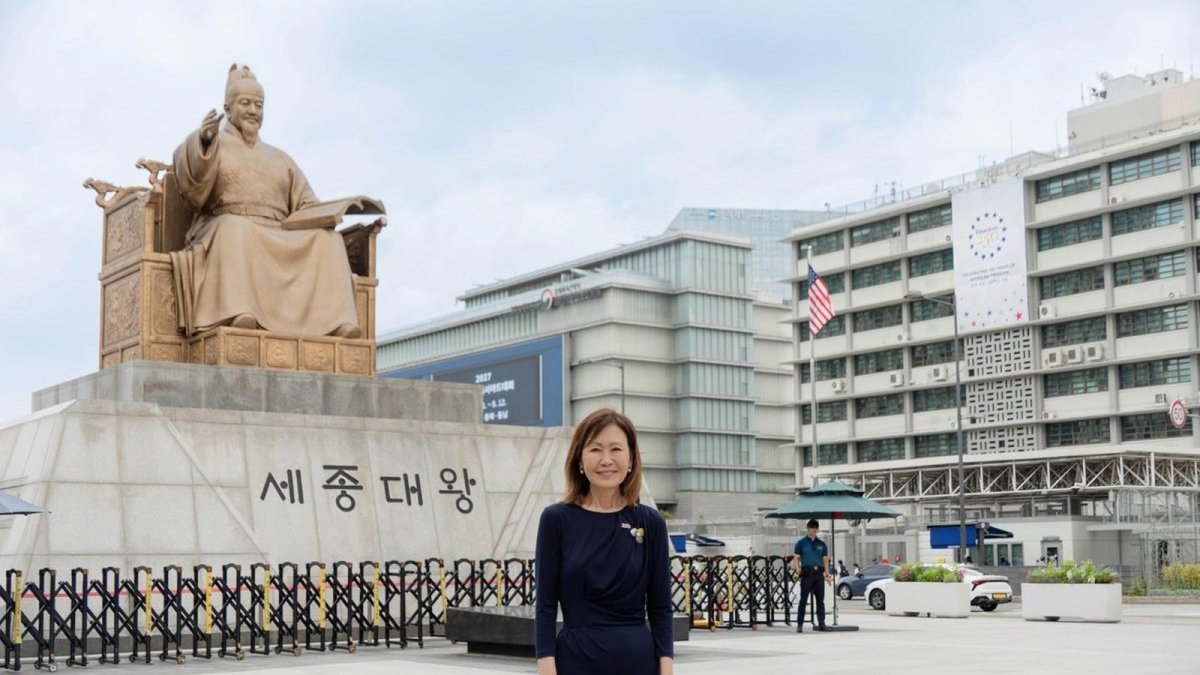
Steel moved quickly into visible outreach. On July 31 she raised the American flag at the embassy with Marine Security Guards, describing the act as a symbolic and meaningful start. Her first X post, issued before the King Sejong statue at Gwanghwamun Square, placed Korean text first in bilingual captions and invoked Korea’s legacy of innovation. The following day she visited Namdaemun Market with her husband, attorney Shawn Steel, posing with a hotteok vendor and exchanging finger-heart gestures. A subsequent post recalled personal memories of the market’s enduring energy. On August 2 she attended services at Youngnak Presbyterian Church. These steps preceded her scheduled August 4 meeting with Foreign Minister Cho Hyun and contrasted with the more restrained public posture adopted by recent predecessors Harry Harris and Philip Goldberg before credential presentation. The sequence reflects a deliberate choice to re-engage Seoul as both familiar and transformed, leveraging linguistic and cultural familiarity to signal accessibility. In the context of inter-Korean relations, such gestures also carry subtle resonance: visits to sites tied to refugee memory and royal-era innovation quietly affirm continuity across division. Whether these early moves translate into durable public support remains an open question, yet they establish a baseline of personal diplomacy that may prove useful when contentious alliance issues surface.
Timeline for Formal Assumption of Duties
Steel is expected to submit credential copies to chief of protocol Kang Sang-wook on or after August 4 and later present originals to President Lee Jae Myung. The schedule slipped because Cho Hyun and Kang accompanied Lee on state visits to the United States and South America that concluded only on August 2–3. Once credentials are accepted, she will assume full authority to conduct negotiations and represent U.S. policy. The compressed interval between arrival and formal duties distinguishes her tenure from recent norms and underscores the Trump administration’s interest in rapid operational continuity. In practical terms, the delay allowed Korean officials to complete their travel commitments without interruption, while Steel used the interim for informal familiarization. This sequencing illustrates the procedural interdependence of the alliance: even symbolic acts such as credential presentation require synchronized calendars at the highest levels. It also highlights the logistical realities of managing an embassy during leadership transitions on both sides. Observers expect that once installed, Steel will confront an agenda already in motion rather than one she can shape from scratch.
Pressing Bilateral Agenda Awaits
Regulatory friction over U.S.-incorporated e-commerce firm Coupang, including scrutiny following a data breach affecting roughly 33.7 million customer accounts, heads the docket. Implementation of the joint fact sheet from the October 2025 Lee-Trump summit remains incomplete, while the long-discussed transition of wartime operational control (OPCON) continues as a core security matter. These issues intersect with persistent North Korean tensions and Korea’s deep economic links with China, requiring coordinated management through established alliance channels. Steel’s arrival therefore occurs at a juncture where technical expertise and political access must operate in tandem. The OPCON question, in particular, touches sensitive questions of sovereignty and burden-sharing that have animated alliance debates for two decades. Meanwhile, data-governance disputes involving Coupang illustrate how commercial platforms now sit at the intersection of consumer protection, national security, and bilateral regulatory harmonization. Steel’s congressional background may prove relevant in navigating these overlapping domains, yet success will also depend on her ability to sustain working relationships with Korean counterparts amid domestic political pressures on both sides.
Hotteok Diplomacy and Public Perception
Columnist Jin-an Kim, former head of Samsung Electronics Central Europe, praised Steel’s casual style at the airport arrival, noting how she set her bag on the floor to put on glasses and greet Koreans in fluent Korean—an echo of former Ambassador Kathleen Stephens’ 2008 “bag drop.” Such gestures contrast with the elaborate entourages common among Korean public officials and have prompted commentary on whether “sweet hotteok diplomacy” can soften critics. In a media environment where symbolic acts often shape early narratives, these moments risk being dismissed as performative or, conversely, welcomed as refreshingly direct. The question is whether personal warmth can generate political capital sufficient to address the technical complexities of regulatory enforcement, OPCON timelines, and summit follow-through. Historical comparisons suggest that ambassadors who combined cultural fluency with substantive command of policy details have sometimes accelerated trust, yet structural alliance frictions ultimately require governmental decisions beyond any single envoy’s reach.
Reception and Strategic Implications
Steel’s background positions her to navigate both cultural familiarity and policy substance in a relationship central to Northeast Asian stability. Her rapid public schedule signals an intent to shorten the traditional acclimation period, yet the real test will come when she must defend U.S. positions on contentious files. The alliance remains the indispensable framework for managing North Korean risk and regional power shifts, even as South Korea deepens economic ties with China. Steel’s appointment therefore arrives at a moment when personal diplomacy and institutional coordination must reinforce each other. Whether her distinctive profile ultimately strengthens or complicates that balance will depend less on symbolic outreach than on the concrete outcomes she helps produce in the months ahead.
By Prof. David Park, Staff Writer
This article was produced with AI-assisted research and editorial support. Reporting is based on sources cited in the article.
What's Your Reaction?
 Like
0
Like
0
 Dislike
0
Dislike
0
 Love
0
Love
0
 Funny
0
Funny
0
 Wow
0
Wow
0
 Sad
0
Sad
0
 Angry
0
Angry
0

East Asia/Technology Correspondent at Global1.News. Seoul-based voice covering Korean politics, technology, business, and culture. Analyzes how technology and geopolitics intersect across East Asia.











Comments (0)