
Xuzhou Coal-Mine Water Cools Homes in Green Pilot Project
Xuzhou's pilot uses 19 C groundwater from the closed Woniushan coal mine, circulated through existing underfloor pipes, to cool nearly 100 households below 26 C without air conditioners, cutting energy use by about 50 percent and around 50 tonnes of annual CO2 emissions.
Xuzhou cools homes with abandoned coal-mine water in green pilot
Beijing/Xuzhou, China - August 3, 2026 - As summer temperatures in Xuzhou exceeded 35 degrees Celsius, a pilot project began channeling 19 degrees Celsius groundwater from the abandoned Woniushan coal mine to cool nearly 100 households. The system circulates the water through existing underfloor pipes, holding indoor temperatures below 26 degrees Celsius without air conditioners or refrigerants. City departments reported the approach cut energy use by about 50 percent and is projected to reduce annual carbon emissions by around 50 metric tonnes for the pilot community.
The Development of Xuzhou's Pilot Project
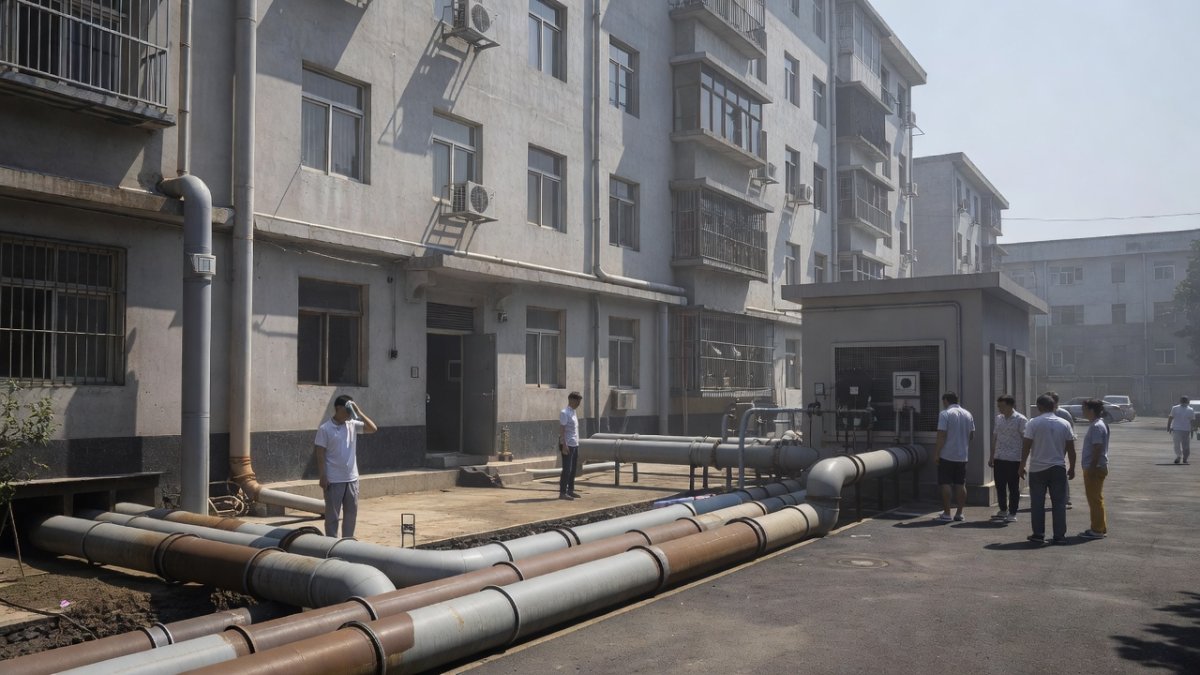
Xuzhou, a former coal-mining center in Jiangsu Province, launched the pilot to repurpose water from the closed Woniushan mine. Over recent days when outdoor readings topped 35 C, residents in the downtown pilot community reported stable indoor conditions. A local company pumps the mine water to a heat-exchange station serving residential buildings, then returns the water underground through closed loops. The project targets nearly 100 households and draws on infrastructure originally built for winter heating. City departments have stated that successful results could lead to larger-scale promotion across suitable districts. The effort aligns with ongoing efforts to find new uses for thousands of closed coal mines across China after years of capacity reductions.
This initiative reflects Xuzhou's broader shift since the 2010s away from coal dependence toward sustainable urban solutions. By leveraging legacy mine infrastructure, the city addresses immediate summer cooling needs while supporting China's dual-carbon goals of peaking emissions by 2030 and reaching neutrality by 2060. The approach demonstrates how post-mining regions can convert environmental liabilities into assets that ease electricity demand during heatwaves, contributing to the Green Transformation without requiring new fossil-fuel generation capacity. The pilot's focus on closed shafts like Woniushan underscores a targeted response to the surplus of such sites nationwide, where water temperatures remain stable at 19 C year-round.
How the System Works
The cooling process reverses the winter heating cycle already installed in the buildings. In winter, 40 C hot water flows through the pipes to warm homes. In summer, water at approximately 20 C circulates slowly to absorb indoor heat. The mine water itself stays near 19 C year-round and never enters living spaces. After passing through the heat-exchange station, it returns to the mine via sealed pipelines, so no water is consumed. Residents need only minor ceiling and wall modifications plus dehumidifiers; no floor renovation or new piping is required. The system operates without compressors or chemical refrigerants, relying solely on the natural temperature difference of the groundwater.
The closed-loop design ensures the groundwater functions purely as a heat-transfer medium, preserving the resource for repeated seasonal use. This method avoids the environmental drawbacks of conventional cooling while maximizing efficiency through existing pipes. In China's context of rising summer electricity peaks driven by air conditioning, such systems offer a low-impact alternative that aligns with energy-intensity reduction targets during high-demand periods in coal-transition regions. The absence of any water consumption further supports sustainability in areas where mine resources must be managed carefully after closures.
The Pilot Economics for Residents
Resident Wang, living in the pilot area, previously spent more than 400 yuan per month on air-conditioning electricity during summer. Long use of air conditioners also caused neck discomfort for her husband. Under the new system, the couple pays a flat 410 yuan for the entire four-month cooling season. The cooling fee is charged quarterly at 4 yuan per square meter. Initial installation costs are described as substantially lower than those for conventional air-conditioning units because the existing pipe network is reused. Operation produces no noise or direct airflow, and the home maintains a steady temperature around the clock. These figures apply specifically to the pilot community and reflect the current limited scale.
Cost predictability stands out as a key advantage for households facing variable summer bills. By reusing winter infrastructure, the pilot lowers upfront barriers compared with installing new air-conditioning systems. This economic model supports wider adoption in suitable districts, helping residents manage expenses while advancing China's push to cut energy consumption and emissions in urban cooling applications. The quarterly fee structure at 4 yuan per square meter provides transparency that contrasts with fluctuating electricity rates tied to heavy air-conditioner use.
Why the Project Matters for Cooling Demand
Summer heatwaves have increased electricity demand across eastern China, with air conditioning contributing heavily to peak loads. Xuzhou's approach offers one localized method to ease that pressure by tapping a stable underground resource. The city's shift from coal mining since the 2010s has left numerous closed shafts whose water can now serve new purposes. By using infrastructure already present for central heating, the pilot avoids duplicating capital investment. If expanded, such projects could reduce summer electricity strain in districts where similar geological conditions exist, supporting broader goals of lowering energy intensity during high-demand periods.
The pilot illustrates a practical response to growing cooling needs tied to climate patterns and urbanization. It repurposes assets from the coal transition to mitigate peak-load pressures without additional generation. This localized strategy contributes to national efforts under the dual-carbon framework by demonstrating how former mining areas can deliver efficiency gains that ease grid stress during extreme heat events. The 50 percent energy-use reduction observed here directly addresses the contribution of air conditioning to summer peaks in regions like Jiangsu.
Expert Perspective and Limits
Lin Boqiang, chair professor and dean of the China Institute for Studies in Energy Policy at Xiamen University, noted that the technology requires special conditions and will likely remain a niche application. He told the Global Times that utilizing such resources can save energy and reduce emissions where available, yet most locations lack the necessary combination of abandoned mines and existing pipe networks. Lin added that centralized cooling is still uncommon in Chinese households compared with individual air conditioners. On Weibo, some users expressed interest while others questioned scalability. City departments have indicated expansion will proceed only after the pilot demonstrates reliable performance under local conditions.
Lin's assessment underscores the geographic constraints that limit replication, emphasizing that success hinges on specific legacy infrastructure. While the approach offers clear benefits in targeted settings, its niche status highlights the need for complementary cooling strategies across China's diverse urban landscape. Continued monitoring will clarify whether performance data supports measured rollout in comparable former coal hubs. The rarity of matching conditions, including 19 C groundwater paired with underfloor networks, explains why the project remains confined to select sites like the Woniushan area for now.
Implications for China's Energy Transition
China's dual-carbon targets call for peaking emissions by 2030 and achieving neutrality by 2060. Repurposing groundwater from closed coal mines represents one small but concrete step in the Green Transformation, particularly in regions transitioning away from coal. Xuzhou's pilot shows how legacy mining assets can support summer cooling without additional fossil-fuel generation. The absence of refrigerants further reduces environmental impact. While the method cannot be replicated everywhere, it illustrates a practical way to extract value from infrastructure that would otherwise remain unused after mine closures.
This example ties directly into broader coal-phase-down efforts by turning closed shafts into cooling resources. It advances energy-efficiency objectives during peak summer demand while aligning with national goals to lower carbon intensity. The pilot's refrigerant-free operation adds an extra layer of environmental benefit consistent with sustainable development priorities in post-mining economies. The projected annual reduction of around 50 metric tonnes of carbon emissions for the pilot community contributes incrementally to the 2060 neutrality target in former coal hubs.
What to Watch for in Scale-Up
City departments have said larger promotion will follow confirmed success of the current pilot. Observers will monitor whether other former coal cities in Jiangsu and neighboring provinces adopt similar systems where mine water and heating networks coincide. Policy support for mine repurposing and energy-efficiency upgrades could influence the pace of rollout. Continued data on actual energy savings, maintenance needs, and resident satisfaction will determine whether the 50 percent reduction observed in the pilot holds at greater scale. The project remains an early example rather than a universal solution.
Scalability depends on verifying consistent performance and identifying matching geological and infrastructure conditions elsewhere. Policy incentives could accelerate adoption in suitable areas, yet the emphasis on pilot validation reflects a cautious approach to integration within China's wider energy-transition strategy. Ongoing evaluation will clarify the role of such projects in meeting dual-carbon milestones. Interest on platforms like Weibo indicates public attention to whether the closed-loop method can extend beyond the nearly 100 households currently served.
By Kenji Tanaka, China Correspondent
This article was produced with AI-assisted research and editorial support. Reporting is based on sources cited in the article.
What's Your Reaction?
 Like
0
Like
0
 Dislike
0
Dislike
0
 Love
0
Love
0
 Funny
0
Funny
0
 Wow
0
Wow
0
 Sad
0
Sad
0
 Angry
0
Angry
0

Japan Correspondent at Global1.News. Tokyo-based voice covering Japanese politics, technology, economy, and culture. Tracks the intersection of tradition and innovation in one of the world's most dynamic societies.














Comments (0)