
Ukraine's 'Da Vinci Wolves' Race to Save Drone Attack Victim as Evacuation Crisis Deepens
Channel 4 News follows Ukraine's elite Da Vinci Wolves medics racing to save a drone attack victim at a secret frontline field hospital, as FPV drones turn evacuation into a kill zone. With the UK pledging 150,000 drones, the cost of the drone war is measured in blood.
The Channel 4 News investigation into Ukraine's frontline medics exposes a battlefield transformed by drones, where the act of rescue itself has become lethal. That transformation matters in Britain because the Ministry of Defence has committed £752 million to supply 150,000 drones to Kyiv by the end of 2026 — binding UK taxpayers to the same technology now reshaping how the wounded are saved, or lost, under fire.
Ukraine's 'Da Vinci Wolves' Race to Save Drone Attack Victim as Evacuation Crisis Deepens
London, UK – 2 August 2026 — Channel 4 News has released footage from a field hospital at a secret location close to the front line, showing the elite medical unit of the 108th Separate Assault Battalion "Da Vinci Wolves" fighting to stabilise a soldier wounded in a drone attack. The report, which carries a warning for graphic images of blood and injuries, spent 24 hours with medics working under the constant threat of Russian first-person-view (FPV) drones.
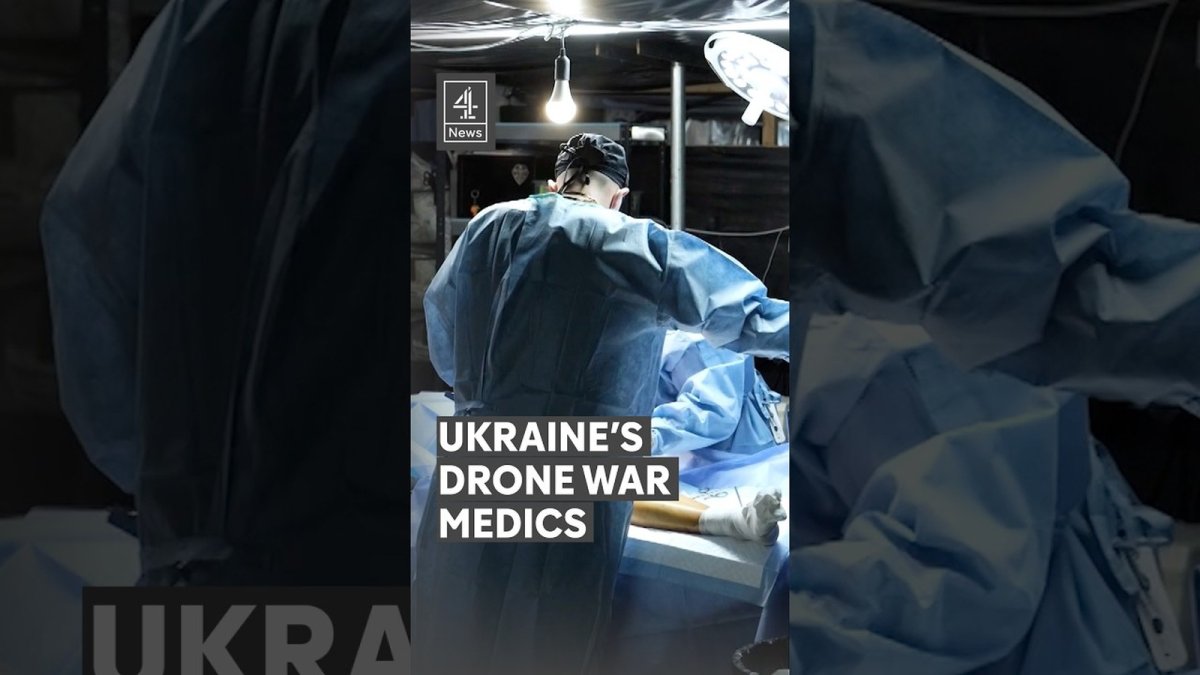
The Channel 4 Report
The report, part of the programme "48 Hours with Ukraine's Frontline Medics", follows the Da Vinci Wolves medical team as Russian glide bombs, drone strikes and artillery pound positions in the Pokrovsk direction. It documents how medics now operate in a war in which Ukraine's mastery of drone warfare has helped slow Russia's advance and damage its economy — yet Ukrainian soldiers remain under constant attack from Russia's own swarms of drones. The Channel 4 team spent 24 hours inside the facility, capturing the moment a casualty from a drone-dropped explosive arrives for stabilisation, and the unglamorous, high-stakes work of keeping soldiers alive long enough to reach a hospital further back.
The report's warning — that it shows blood and injuries from the start — reflects a reality in which medics no longer have the luxury of distance. In the early months of Russia's full-scale invasion, evacuation vehicles could reach almost to the front line, giving the wounded a far better chance of survival. Now, the ubiquity of FPV drones has collapsed that safety margin, and the stabilisation point itself has become a target.
The timing is stark. On the night of 1 August 2026, Russian ballistic missiles struck Kyiv, killing nine people and wounding 28, among them four children, according to Mayor Vitali Klitschko, with destruction reported across five districts. Twenty-four hours earlier, a Russian barrage of 74 missiles and 284 drones killed eight civilians across Ukraine, including six members of a single family. The frontline medical crisis unfolds against a backdrop of intensifying strategic strikes on both sides.
The Da Vinci Wolves Battalion
The 108th Separate Assault Battalion "Da Vinci Wolves", part of the 59th Assault Brigade within Ukraine's Unmanned Systems Forces and based in Haisyn, traces its origins to the volunteer mobilisation of 2014. It is named after Dmytro "Da Vinci" Kotsiubailo, born on 1 November 1995, a volunteer fighter awarded the title Hero of Ukraine who commanded the 1st Mechanised Battalion until he was killed near Bakhmut on 7 March 2023. The unit he helped build liberated dozens of settlements and defended the "Road of Life" into Bakhmut during some of the war's bloodiest fighting.
The battalion has evolved from an ad-hoc volunteer corps into a structured assault formation, and has established a dedicated unmanned ground systems subunit, documented by CSIS analysts, marking a shift toward robotic platforms for reconnaissance and logistics. Its current commander, Serhii Filimonov, has overseen that modernisation while facing direct threats: in July 2025, Ukraine's SBU security service foiled an FSB plot to assassinate him, using false-flag tactics to recruit a Ukrainian national who believed he was helping his own intelligence service. The suspect had tracked Filimonov's movements and received a Kalashnikov from a weapons cache on the outskirts of Kyiv before SBU operatives arrested him.
The Wolves' evolution mirrors the wider transformation of Ukraine's military: from a force of volunteers holding lines with rifles to an institution where unmanned systems — airborne, ground-based and naval — are now a formal branch of the armed forces. For the medics embedded with the battalion, that transformation has a double edge: the same drones that protect Ukrainian positions are answered by Russian swarms that hunt evacuation routes.
The Drone Kill Zone and Evacuation Crisis
FPV drones have turned areas up to 20 kilometres from the front line into kill zones. Anaesthetist Daryna Boiko of the "Ulf" medical service of the 108th battalion put it plainly: "Because of drones … that can reach far, the danger is there for the wounded themselves and now for the crews working to get them out. That's why the main difficulty now is transport."
Medics report they have not treated gunshot wounds for months; almost all injuries now come from FPVs. Commander "Buhor" of the 59th Brigade medical unit said: "Everything burns from those FPVs — everything, even tanks." Asked whether conditions had increased mortality among the wounded, he replied: "Significantly." His stabilisation point has relocated 17 times in two and a half years, each move prompted by encroaching drone activity. Evacuation crews now go out only in body armour and helmets, with every vehicle fitted with electronic warfare systems.
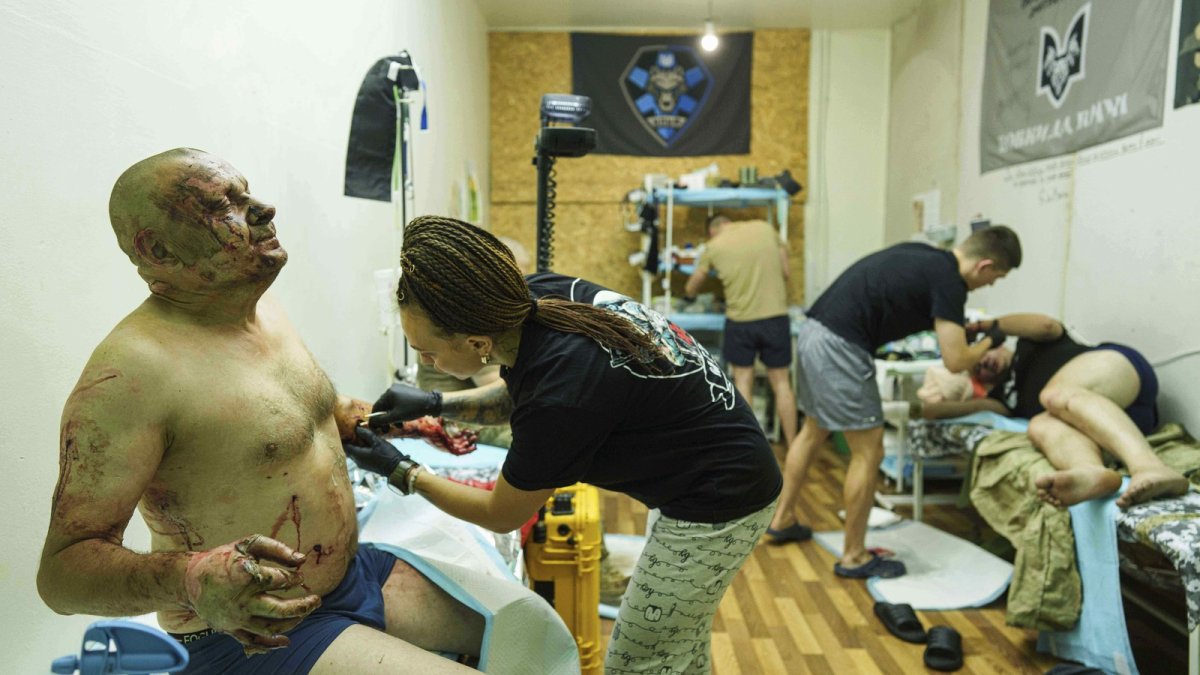
The human cost is written in individual stories. Artem Fursov, 38, was wounded on 4 August by an explosive dropped from a drone and spent five days walking several kilometres to reach a medical post. "You can't even lift your head there. This is already a robot war," he said. Valentyn Pidvalnyi, 25, an assault soldier wounded in the back by shrapnel, described the sector as "a very hard sector, but if you don't destroy them, they'll take the tree line, then the town, then the whole region."
The UK Connection
At the Ukraine Defence Contact Group meeting in Brussels on 18 June 2026, the UK announced a £752 million package including 150,000 drones for Ukraine by the end of the year, more than 350 air defence missiles and ground-based radar systems. Of those drones, 120,000 are British-built, with deliveries beginning in June 2026. The commitment forms part of the UK-Ukraine Defence Partnership, aimed at countering the global proliferation of low-cost, high-tech military hardware through expanded production capacity.
Alongside equipment, the Ministry of Defence has organised battlefield trauma training programmes for Ukrainian medics, with approximately 50 personnel per session across three planned courses. These programmes transfer skills developed within the NHS and the armed forces to units facing drone-induced injuries near Pokrovsk and Haisyn — linking British taxpayers directly to the medical operations shown in the Channel 4 report.
What This Means for Britain
The Ministry of Defence's investment in low-cost unmanned systems mirrors the proliferation that has forced Ukrainian crews to wear body armour and fit electronic warfare equipment on every vehicle. Any future NATO commitment involving British forces would encounter the same medical evacuation constraints — a point Whitehall planners are increasingly forced to confront as drone technology spreads beyond Ukraine to conflicts worldwide.
President Zelensky continues to press allies, including the UK, for enhanced air defence systems while negotiating with the United States over licences to manufacture Patriot interceptor missiles domestically. Ukrainian Unmanned Systems Forces have meanwhile struck 14 energy facilities in occupied Crimea and targeted Russian oil refineries and warehouses, demonstrating how drone units now operate far beyond the immediate frontline — and how the escalation loop places additional pressure on every medical evacuation chain.
Deeper Analysis of Drone Warfare
The shift to mass FPV and cargo drone use has created a battlefield where traditional ground movement is almost impossible. Ukraine has begun experimenting with large cargo drones capable of carrying roughly 180 kilograms up to 69 kilometres to evacuate wounded soldiers — reportedly a first on any battlefield. Russia has responded by targeting these platforms, including a documented strike on a ground robot evacuating a casualty in December 2025, and the destruction of the Terminal Autonomy drone factory in Kyiv on 30 July 2026.
The result is a closed loop of technological escalation that increases risk for every medical intervention. As one Ukrainian anaesthetist put it, the main difficulty is no longer the medicine — it is transport. For NATO militaries, including Britain's, the lesson of the Da Vinci Wolves is that medical evacuation has become a core vulnerability requiring dedicated investment in electronic warfare protection, robotic platforms and rapid trauma response.
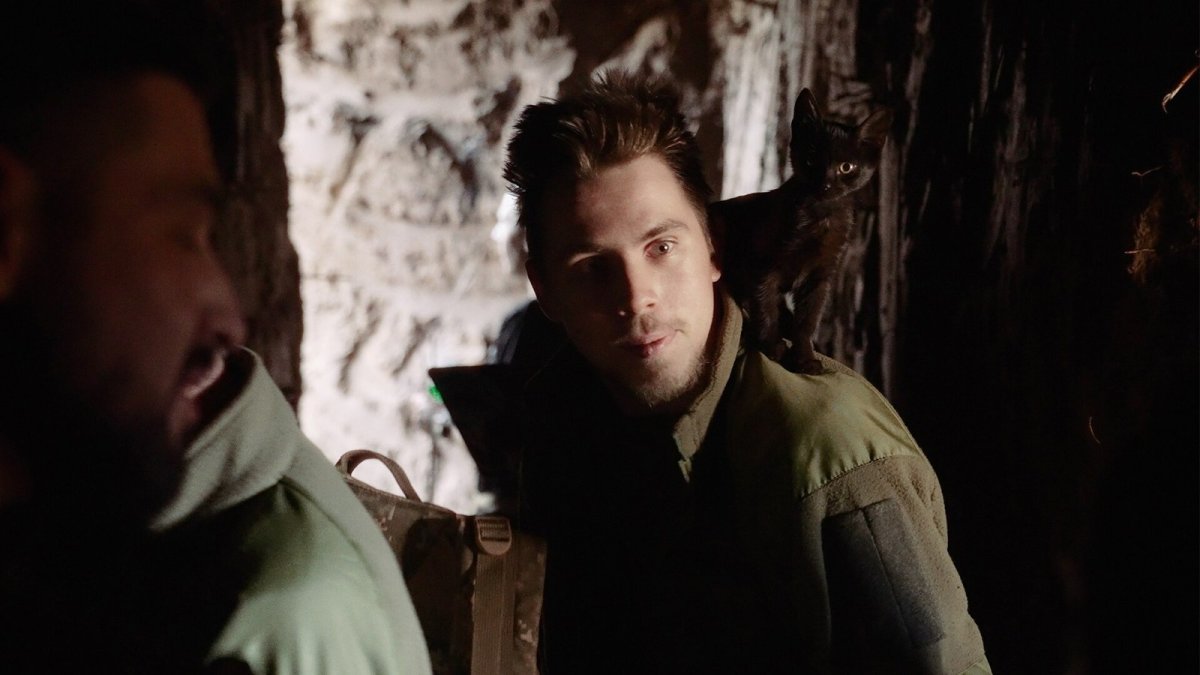
Reaction and The Bottom Line
Ukrainian officials continue to press allies for additional air defence while the Channel 4 footage makes plain the human reality behind Britain's drone deliveries: the same technology that bolsters Ukraine's defensive capability also intensifies the conditions that now dominate frontline medicine. The human cost of that escalation is measured not only in territory but in the repeated relocation of stabilisation points and rising mortality among the wounded.
For the medics of the Da Vinci Wolves, the war has become a race against the drone — and against time. The British-trained trauma teams returning to units like the 108th battalion will carry these lessons into whatever comes next, shaping doctrine for any allied deployment where low-cost unmanned systems proliferate. The question for Whitehall is whether the investment in drones is matched by investment in the people who must rescue those they protect.
By Erica Thornton, Staff Writer
This article was produced with AI-assisted research and editorial support. Reporting is based on sources cited in the article.
What's Your Reaction?
 Like
0
Like
0
 Dislike
0
Dislike
0
 Love
0
Love
0
 Funny
0
Funny
0
 Wow
0
Wow
0
 Sad
0
Sad
0
 Angry
0
Angry
0

US Politics and Policy Correspondent at Global1.News. Based in Washington DC, covering American politics, policy, elections, and the courts. Knows how the system works and tells you what it actually means.














Comments (0)