
WestJet Cancels 81 Flights as Sunday Strike Deadline Looms
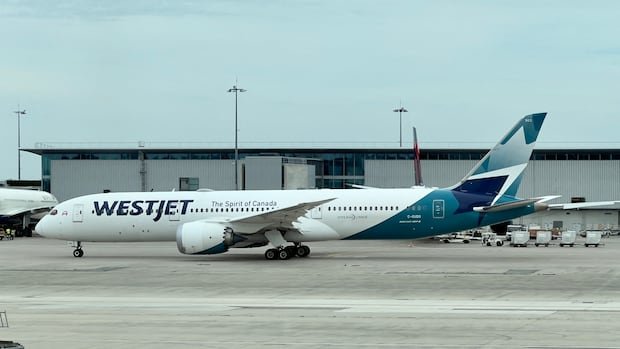
In a recent CBC News report, WestJet announced early Saturday morning that 81 of the day's scheduled flights were cancelled ahead of the strike deadline set for early Sunday. The airline says the move is meant to prevent crew and passengers from being stranded, and travellers should check their flight status before leaving for the airport.
In a recent CBC News report, WestJet announced early Saturday morning that 81 of the day's scheduled flights were cancelled ahead of the strike deadline set for early Sunday. The airline says the move is meant to prevent crew and passengers from being stranded, and travellers should check their flight status before leaving for the airport. The cancellations come as the Canadian Union of Public Employees Local 8125 prepares for a potential work stoppage involving 4,400 flight attendants.
WestJet cancels 81 flights as Sunday strike deadline looms
Calgary, Alta. – Saturday — WestJet cancelled 81 flights on Saturday as the 72-hour strike notice issued by the Canadian Union of Public Employees Local 8125 nears its end just after midnight Sunday at the airline's Calgary headquarters. The union represents 4,400 flight attendants and has identified hourly wages and ground pay as central issues in the stalled talks. WestJet also issued a lockout notice on the same timeline, leaving passengers across Canada facing uncertainty during the August civic holiday long weekend.
Negotiations Continue Amid Strike Threat
WestJet and CUPE Local 8125 remain at the bargaining table in Calgary with federal mediators who have supported talks since May. The union triggered the 72-hour strike notice on Wednesday, and the airline responded with its own lockout notice covering the identical period. No agreement had been reached by Saturday morning despite multiple sessions focused on compensation structures.
Federal mediators have remained engaged since May to facilitate structured dialogue between the parties, reflecting the Canada Labour Code's emphasis on voluntary resolution before any escalation. WestJet, as Canada's second-largest airline, operates a network that directly affects connectivity across multiple provinces, making sustained talks critical to avoiding broader service gaps. Both sides have confirmed ongoing weekend sessions, underscoring the compressed timeline ahead of the midnight Sunday deadline.
The presence of mediators has allowed incremental exploration of wage structures and scheduling, though core disagreements persist. This process aligns with established federal practices that prioritise conciliation over immediate intervention in aviation disputes.
Union Demands Comprehensive Contract
CUPE WestJet Component president Alia Hussain said the union seeks a full contract that addresses all member priorities rather than isolated adjustments. She acknowledged some progress in recent days but emphasised that outstanding matters must be settled before the deadline. The union has rejected WestJet's latest offer because it failed to resolve every identified concern.
Former flight attendant Calleigh Gingras has publicly criticised the current credit-hour system, which pays between $28.88 and $53.61 per credit hour and combines flight time with ground duties. At 80 credit hours per month, this produces monthly earnings between $2,300 and $4,300. Gingras described the arrangement as unsustainable given the volume of unpaid ground work.
WestJet's own description of its credit-hour system combines flight time, ground duties, delays and other labour into a single, higher rate of pay credited across the workday. Union members argue this model undervalues extended periods spent at airports preparing for flights or managing irregular operations. Hussain has stressed that any settlement must fully account for these realities to prevent ongoing attrition among experienced attendants.
WestJet's Proposed Agreement
WestJet described its most recent proposal as a transformative, industry-leading package that directly tackled the union's stated priorities. The offer includes a cumulative 36 per cent wage increase over four years, duty premium payments for ground work, scheduling improvements, and enhanced travel and hotel provisions. The airline maintains that these elements respond to the core issues raised during negotiations.
The union countered that the proposal left key elements unaddressed. Hussain stated that members expect compensation that fully recognises all hours worked from arrival at the airport until departure. WestJet has not altered its position that the current credit-hour model already incorporates ground duties into a single rate.
WestJet has highlighted duty premium payments as a direct response to ground-work concerns, yet the union maintains these additions fall short of comprehensive recognition. The airline's offer also includes scheduling adjustments intended to improve predictability for crews operating across Canadian routes.
Federal Government Urges Resolution
Minister Patty Hajdu met with both parties in Calgary and reiterated that the best outcomes emerge from direct bargaining supported by federal mediators. She noted that the Canada Labour Code framework encourages negotiated settlements over imposed solutions. Hajdu added that continued service reliability matters for families and businesses planning travel over the long weekend.
Conservative Leader Pierre Poilievre called for airlines to compensate workers for every minute on duty, from the moment they report to the airport until they complete their shifts. His statement aligns with broader calls for reform of ground-pay practices that have persisted across Canadian carriers.
The Minister's statements reflect ongoing federal efforts to maintain stability in essential transportation sectors without immediate legislative overrides. Hajdu has emphasised that mediators remain available to bridge remaining gaps before the deadline.
Passenger Protections and Travel Disruptions
WestJet has permitted passengers travelling between July 30 and Aug. 4 to make one-time changes or cancellations without fees. Only PremiumFlex, BusinessFlex, and premium or business passengers on Canada-Asia routes qualify for cash refunds; others receive travel credits. Under the Air Passenger Protection Regulations, affected travellers must be rebooked within 48 hours or receive refunds if disruptions occur.
Passenger Alyesha Singh, waiting at Toronto Pearson International Airport, expressed concern about missing a 15-person family reunion in the Dominican Republic. She said her group hopes for a resolution before their return flight. The strike deadline coincides with one of the busiest travel periods of the summer, amplifying the potential for widespread cancellations if no deal is reached.
Under Canada's Air Passenger Protection Regulations, if the airline cannot reschedule within 48 hours it must try a competitor's flight, possibly from another airport. WestJet said travellers who booked directly will be notified through their booking contact; those who booked through a third party must make changes through that third party. Passengers are advised to confirm status online or via the airline app well before heading to the airport to reduce last-minute anxiety at check-in counters.
What This Means for Travellers
Travellers face heightened check-in anxiety as they monitor real-time updates amid the looming deadline, particularly those with connections or time-sensitive itineraries. Rebooking logistics become complex for anyone holding third-party bookings through travel agents, who must handle all modifications directly rather than through WestJet channels. Before leaving for the airport, passengers should verify flight status, prepare alternative plans, and understand that the August civic holiday weekend represents one of the busiest travel periods of the summer in Canada.
Those affected by cancellations may encounter extended wait times at rebooking desks or through call centres, especially if the strike deadline passes without resolution. The regulations require airlines to explore competitor options when internal rebooking exceeds 48 hours, adding further layers to recovery efforts for stranded travellers.
Economic Ripple Effects in Calgary
The Calgary Chamber of Commerce warned that any labour disruption would harm tourism and supply chains that depend on predictable air service. Chamber representatives stressed that businesses require reliable transportation links to maintain operations and visitor traffic. A prolonged stoppage could affect hotel bookings, restaurant revenue, and cargo movements through Calgary International Airport.
WestJet's headquarters location in Calgary places the city at the centre of the dispute. The airline's operations support thousands of direct and indirect jobs in the region, and any work stoppage would immediately reduce activity at the airport and connected sectors.

Industry Comparisons and Political Responses
Compensation for ground work emerged as the central issue less than a year after Air Canada flight attendants secured increases following their own work stoppage. Delta Air Lines introduced ground-pay reforms in 2022, followed by American Airlines and Alaska Airlines at 50 per cent of regular rates. WestJet's current system remains distinct from these models.
The strike notice does not automatically trigger job action, yet passengers remain uncertain about weekend departures. Either side could initiate a stoppage after midnight Sunday, potentially cancelling hundreds of flights during peak summer travel. Federal mediation continues in an effort to avoid that outcome.
Air Canada's flight attendants won compensation increases after their work stoppage less than a year ago, setting a recent precedent that has influenced expectations among other Canadian aviation unions. Pressures across the sector include rising operational costs and recruitment challenges, all operating under the Canada Labour Code's provisions for essential services.
The Broader Labour Picture in Canadian Aviation
Recent disputes highlight ongoing tensions in Canadian aviation labour relations, where ground-pay structures and overall compensation have become flashpoints following Air Canada's precedent. Federal labour law under the Canada Labour Code governs these negotiations, with conciliation processes designed to address essential service considerations without immediate back-to-work legislation.
Aviation workers across carriers face similar pressures related to irregular schedules and unpaid duties, prompting calls for standardised reforms that recognise full duty periods. The current WestJet talks illustrate how these issues intersect with peak travel seasons and broader economic dependencies on reliable air service.
What Happens Next
The midnight Sunday deadline marks a critical juncture, with the possibility of federal intervention if talks collapse during the August long weekend travel peak. Travellers should monitor official updates closely, as either a strike or lockout could trigger further cancellations across WestJet's network.
Both parties continue to engage with mediators, but the compressed timeline leaves limited room for last-minute breakthroughs. Passengers are encouraged to review rebooking options and travel insurance coverage in advance of any potential escalation.
By Alex Thompson, Staff WriterThis article was produced with AI-assisted research and editorial support. Reporting is based on sources cited in the article.
What's Your Reaction?
 Like
0
Like
0
 Dislike
0
Dislike
0
 Love
0
Love
0
 Funny
0
Funny
0
 Wow
0
Wow
0
 Sad
0
Sad
0
 Angry
0
Angry
0

Canada Correspondent at Global1.News. Based in Toronto, covering Canadian politics, energy, trade, and US-Canada relations. Provides the Canadian perspective on North American and global affairs.















Comments (0)