
Ukraine Marks 35 Years of Independence as World Leaders Gather in Kyiv
World leaders gather in Kyiv on Aug. 24 as Ukraine marks 35 years of independence. The Coalition of the Willing meets with UK PM Andy Burnham, EU Council chief Antonio Costa and Nordic-Baltic leaders on air defense, security guarantees and 30 billion euros in funding.
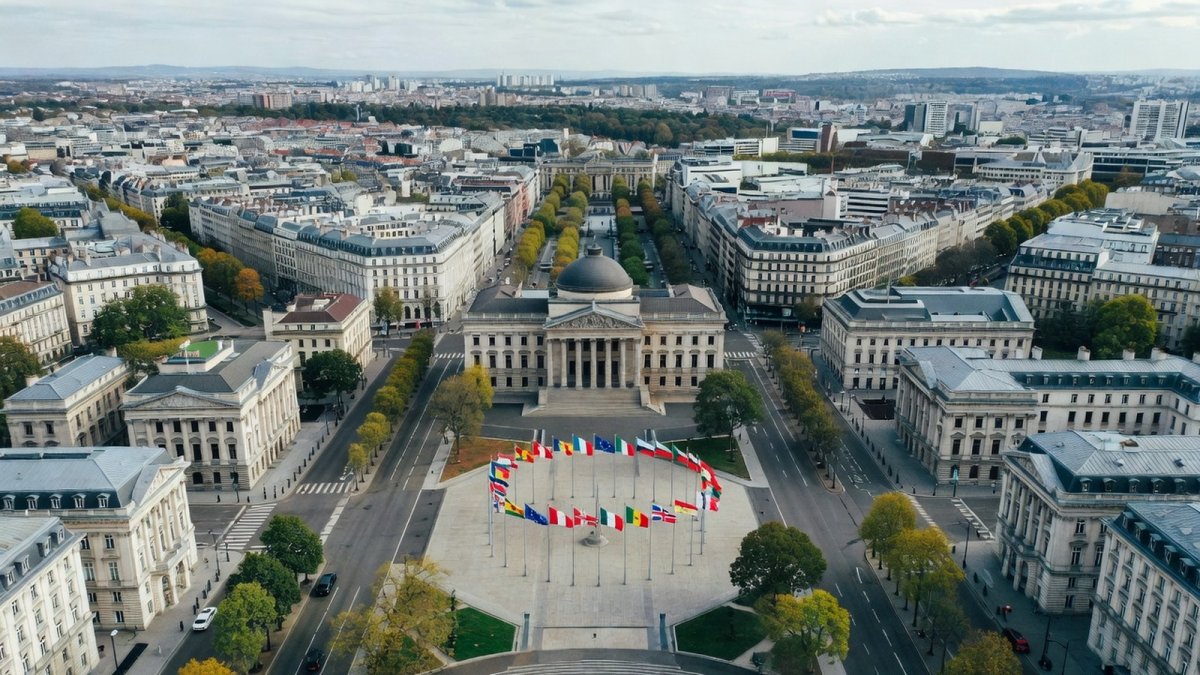
Folks, pull up a chair — or don’t, because you won’t want to sit still for this one. Monday, August 24th, 2026. Thirty-five years since Ukraine told the Soviet Union to take a hike. And what does the world do to celebrate? It shows up — with prime ministers, presidents, and a whole lot of firepower talk. The Coalition of the Willing is descending on Kyiv for a summit that isn’t about birthday cake; it’s about survival. This is Global 1 News, and I’m Jessica Ali. Let’s get into it.
This isn’t a commemoration. This is a war council. While much of the world plans a quiet weekend, the leadership of Europe is hunkering down in a city pounded by ballistic missiles for weeks. They are there to answer one question: How do we keep this country standing? We’ve got a new British PM making his maiden voyage, a Nordic bloc that looks like a NATO convention, and a funding fight that could make or break the front line. Here’s what happened in Kyiv, and why this Independence Day feels heavier, more urgent, and frankly, more defiant.
The Big Table: Inside the Coalition of the Willing Summit
Let’s set the scene. The Coalition of the Willing—the roughly 34-nation alliance spearheaded by London and Paris back in March 2025—has rolled into Kyiv for the third time. This is the group that is supposed to be the security backbone for a post-ceasefire Ukraine. And they’ve chosen the 35th anniversary of independence to hammer out the details. It’s a hybrid affair: several leaders are physically in the room with President Volodymyr Zelensky, but the majority are beaming in via video link.
Who’s holding the gavel? It’s a heavy-hitting trio. British PM Andy Burnham is there in person, co-chairing alongside French President Emmanuel Macron (joining virtually) and German Chancellor Friedrich Merz. European Council President Antonio Costa is confirmed in the building, with Finnish President Alexander Stubb and Luxembourgish PM Luc Frieden also on the ground. This isn’t a photo op; it’s the machinery of Western defense trying to lock down security guarantees that will hold water when the shooting stops.
Burnham’s Baptism by Fire: The UK’s New Sheriff in Town
Folks, let’s talk about Andy Burnham. He took office on July 20th, 2026—barely a month in the top job. And where does he go for his first international trip? Not Paris. Not Brussels. Kyiv. Downing Street says the trip is "to reiterate the UK's unwavering commitment to Ukraine," and frankly, they need to do more than reiterate—they need to deliver. Burnham has been vocal that the friendship between the UK and Ukraine "will long outlast Russia's illegal war."
Remember, Zelensky was Burnham’s first international guest in London back in late July. Now Burnham is returning the favor, and he didn’t come empty-handed. The UK has announced that defense giant MBDA can release classified information regarding UK components for the long-range SCALP missile—to establish local assembly lines in Ukraine. That is a game-changer. We aren’t just sending weapons anymore; we are helping them build the damn things.
The Nordic-Baltic Wall: NB8 Shows Up and Shows Out
If you want to know who actually gets it, look north. The Nordic-Baltic Eight—Denmark, Estonia, Finland, Iceland, Latvia, Lithuania, Norway, and Sweden—rolled into Kyiv on August 23rd, pulling up to the Kyiv Railway Station like a squad of avenging angels. Ukrainian Foreign Minister Andrii Sybiha was there to greet them: "We feel we are not alone. Our allies are with us."
This isn’t just diplomatic courtesy. These countries share a border with Russia or sit in its shadow. Estonian PM Kristen Michal nailed the sentiment: "35 years have passed since Estonia restored its independence and Ukraine proclaimed its own. Today we celebrate Ukraine's National Flag Day and meet at the NB8-Ukraine Summit." Lithuanian President Gitanas Nauseda was equally blunt: "Standing with Ukraine today — as it marks National days — and always."
They aren’t just there for the flag-raising. They are sitting in on the NB8-Ukraine Summit and the Coalition meetings, talking defense industry cooperation—Zelensky and Finnish President Stubb had a roundtable on that very topic on the 23rd. This bloc is the tip of the spear when it comes to moral clarity. They don’t need a PowerPoint presentation to understand the threat. They live it.
The 30 Billion Euro Elephant in the Room
Let’s talk cash, because wars aren’t won on vibes alone. European Council President Antonio Costa stood in Kyiv and delivered the line: "We will continue to provide as much support as necessary, for as long as necessary — during the war, in peace negotiations and in reconstruction." He also threw in the membership carrot: "Ukraine's future in the European Union is the best guarantee of security and long-term democratic stability — for Ukraine and for Europe as a whole."
But here is the rub, folks. There is a massive pot of money—30 billion euros—sitting in limbo. Zelensky is practically begging the European Parliament to pass the legislation to unlock it. "We are supposed to receive 30 billion euros in European funding.... It is tied to the adoption of the relevant legislation," he said. "It is very important here that parliament works — the entire parliament, including the opposition."
Read between the lines. This isn’t a technicality; it’s a political football. Zelensky is calling out the internal bickering in Europe delaying life-saving cash—money needed for the defense of the entire country, and needed now. The UN Security Council holds a special session on Ukraine later Monday, but we all know how much hot air gets expelled in that chamber. We need action, not speeches.
Why the Urgency? The Air Defense Crisis
Why is everyone moving with such haste? Because the sky is falling—literally. Russia has been pounding Kyiv with ballistic missiles in recent weeks, ripping open apartment blocks and killing dozens. The civilian death toll has spiked to levels we haven’t seen since the first months of the 2022 invasion. After almost every attack, tens of thousands hunker down in the Kyiv metro, while many more cram into basements and shelters.
Zelensky has issued public pleas for more air-defense support, and the Coalition has heard the call. In July, members discussed a significant reinforcement of Ukraine’s air-defense capabilities: additional missiles for the Patriot systems, faster deliveries of SAMP/T batteries, and expanded joint production of defense equipment. But talk is cheap when a ballistic missile is inbound. Every day that passes without those Patriots is a day that ends with funerals.
Ground Truth: Strikes, Drones, and a Train Under Fire
While the politicians were shaking hands, the military was doing the actual work. On August 23rd, Ukrainian Unmanned Systems Forces commander Robert 'Magyar' Brovdi reported a spectacular hit. Ukrainian drones struck two Russian fighter jets—a Su-33 and a MiG-29—plus a large Orion strike drone at the Vityazevo airfield in Krasnodar Krai. They also took out S-400 and Pantsir air defense systems and eight high-value radars across Krasnodar Krai, Rostov Oblast, and occupied Crimea.
And they didn’t stop there. On August 24th, Ukrainian forces hit two logistics centers belonging to Russian e-commerce giant Ozon for the third consecutive night, plus another retail warehouse in Krasnodar. Why does that matter? Because logistics win wars—you hit the supply chain, you starve the beast. Zelensky also confirmed that Ukrainian forces struck an Iskander ballistic missile launcher near Ukraine’s borders on August 22nd. His quote? "Hunting their launch sites."
But let’s not forget the cost. Overnight on August 22-23, Russian attacks killed 5 and injured 44 across Ukraine. A jet-powered drone hit a passenger train in Odesa Oblast. A passenger train, folks. That is terrorism, plain and simple. And in a brazen move, Russia struck a factory belonging to U.S. multinational food company Mondelez International in Sumy Oblast on August 23rd—Foreign Minister Sybiha confirmed it. They are hitting international business interests now, trying to scare off investment.
The Elephant in the Room: Where is Washington?
Here is the part that is going to get me in trouble, but I don’t care. According to RFE/RL, "No US representative was identified as a participant in the upcoming meeting." Let that sink in. The Coalition of the Willing is a European-led format, sure. But the United States is the arsenal of democracy. On the 35th anniversary of Ukraine’s independence, during a summit to decide the future of European security, there is no American at the table?
We had US senators visit Kyiv earlier, per RFE/RL, but that’s not the same as having an administration official in the room. Meanwhile, Russia is striking US-owned factories. This vacuum of leadership is dangerous—it sends a signal of ambivalence. We cannot expect Europe to carry the entire load while we sit on the sidelines. It is time for the US to step up and reassert its role as a leader of the free world, not just a spectator.
35 Years: A Third of It Under Fire
Let’s take a step back. Ukraine declared independence on August 24, 1991, and confirmed it with a referendum on December 1st, where 92% voted yes. Fast forward 35 years, and this nation has spent roughly a third of its independent existence under direct Russian attack—starting with the Crimea annexation and Donbas war in 2014, and exploding into the full-scale invasion in February 2022. This is the fifth wartime Independence Day observance since that escalation.
Zelensky is acutely aware of the fragility of it all. On elections, he made a stunning statement: "Elections right now are a tsunami for the state that will split Ukraine. My strategy is to bring the country to the end of the war and preserve an independent and sovereign state." He also warned that Russia is planning a "peripheral" mobilization of 300,000 men after their September elections, because voluntary recruitment is failing to make up losses. The next few months will be critical.
What to Watch Next & How You Can Help
So, what’s the takeaway? The Coalition is meeting, but the clock is ticking. Watch for concrete announcements on the 30 billion euros, Patriot missile deliveries, the UK’s SCALP production lines—and the US finally showing up. The next 48 hours will tell us if this summit is just another talking shop or a genuine turning point.
And for you, folks, sitting at home? Don’t think you’re powerless. Call your representatives. Ask them why the US wasn’t in Kyiv. Ask them why the 30 billion euros is being held up by bureaucracy. Donate to reputable organizations providing air defense and humanitarian aid. Support Ukrainian businesses. Keep the story alive. Russia is counting on us getting tired and looking away. Don’t let them win. Stay loud. Stay informed. Stay engaged.
This article was produced with AI-assisted research and editorial support. Sources: DW, AFP, Reuters, Kyiv Independent, Kyiv Post, RFE/RL.
By Jessica Ali, Staff Writer
What's Your Reaction?
 Like
0
Like
0
 Dislike
0
Dislike
0
 Love
0
Love
0
 Funny
0
Funny
0
 Wow
0
Wow
0
 Sad
0
Sad
0
 Angry
0
Angry
0

Editor-in-Chief at Global1.News. Atlanta-based journalist who cuts through the BS and tells it like it is. Lead anchor, host, and the voice you hear when the spin stops and the truth starts.












Comments (0)