
Trump Weighs Strikes on Iran as Hamas Accepts Gaza Disarmament Plan
The White House is weighing additional strikes on Iran as Hamas accepts a U.S.-backed disarmament plan for Gaza. With Hormuz shipping disrupted and Gulf states on alert, analysts assess the strategic calculus behind Washington's dual-track pressure campaign and what it means for regional stabilit...
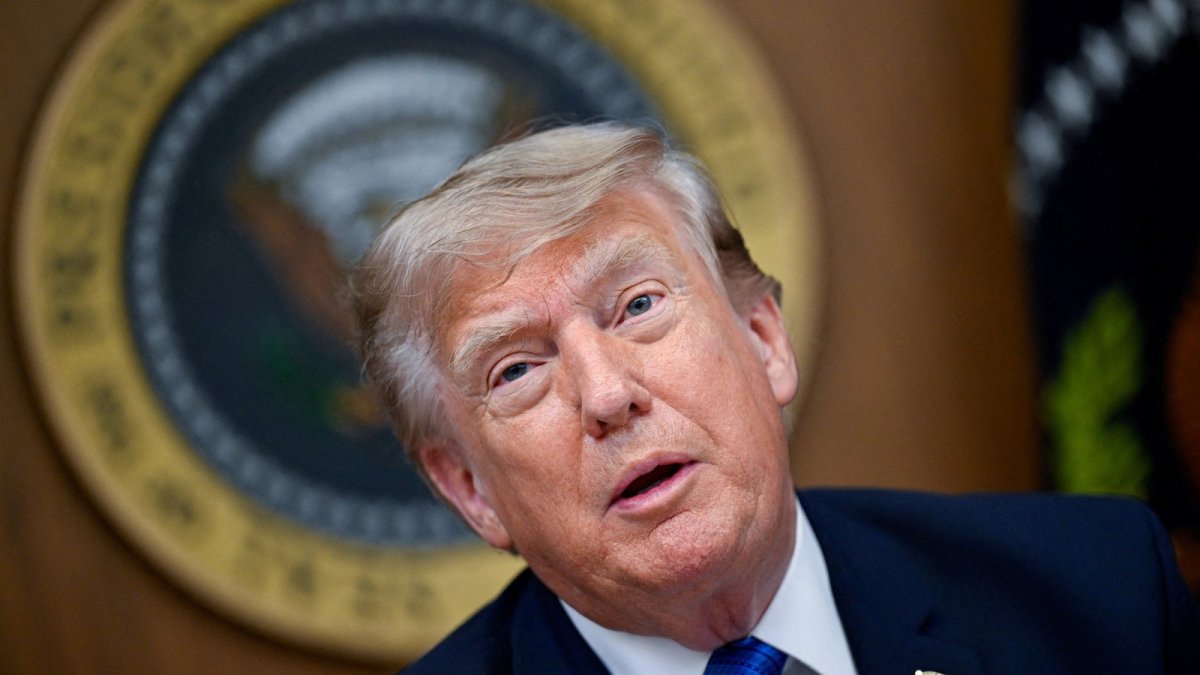
The Trump administration is simultaneously escalating military pressure on Iran over the Strait of Hormuz and advancing a U.S.-backed disarmament plan in Gaza, a dual-track strategy that is testing the limits of American leverage across the Middle East. With Washington weighing fresh strikes on Iranian energy infrastructure and Hamas signaling readiness to surrender its weapons, the region faces its most consequential diplomatic and military crossroads since the conflict with Iran began in February.
Trump Weighs Strikes on Iran as Hamas Accepts Gaza Disarmament Plan
Beirut, Lebanon – August 1, 2026 —
US Warns of Further Action Against Iran Over Shipping Disruptions
The White House stated Friday that President Donald Trump is considering additional military strikes on Iran to force compliance with reopening the Strait of Hormuz and upholding a cease-fire that collapsed after last month's memorandum of understanding. Press secretary Karoline Leavitt accused Iran of violating the truce through attacks on commercial shipping and American service members. Trump, speaking at a Cabinet meeting at Camp David, indicated the campaign would continue until Tehran signals it can no longer sustain the pressure.
The conflict's origins trace to February when the United States and Israel launched operations against Iran, initially described as lasting only weeks before a June cease-fire unraveled over renewed Hormuz clashes. This timeline echoes the October 7, 2023 Hamas incursion that killed about 1,200 people and took 251 hostages, prompting Israel's campaign that has since killed more than 73,000 Palestinians according to Gaza's Health Ministry. Kuwait's interception of Iranian drones targeting its airspace after U.S. strikes highlights spillover risks for Gulf allies hosting American forces.
The February launch of the U.S.-Israeli campaign against Iran set the stage for a temporary June memorandum of understanding that quickly collapsed amid renewed Hormuz clashes, while the October 2023 Hamas incursion remains the foundational trigger for subsequent Gaza developments and the later October cease-fire framework.
Reported Planning for Strikes on Iranian Energy Infrastructure
CBS News reported Friday that the United States and Israel are preparing a potential bombing campaign against Iran's energy infrastructure, with strikes discussed for as early as this weekend. Sources indicated Trump has not yet issued final approval, though talks included completing any operations before markets open Monday. The proposed campaign would target facilities amid the broader U.S.-Israeli operations that began in February and paused briefly under a June cease-fire now undermined by renewed Hormuz fighting.
A drone strike on gas vessels at Egypt's Mediterranean port of Damietta has already raised fears of wider threats to Suez Canal shipping, while Houthi naval blockade declarations on Saudi Arabia further endanger Red Sea alternatives for Asian oil routes. These moves reflect Iran's strategy to leverage proxy networks and Hormuz control amid the phased implementation of pressure tactics by Washington and its partners.
The war's February origins, when U.S. and Israeli forces initiated the bombing campaign that Trump indicated would last only weeks, directly inform current strike planning, as Iran asserts control over the Strait of Hormuz to leverage energy disruption against U.S. and Israeli objectives.
Hamas Accepts Phased Disarmament Under U.S.-Backed Framework
Hamas confirmed Friday its readiness to begin disarming under the Trump-proposed agreement, starting with lighter weapons while linking heavier systems to the future establishment of an independent Palestinian state. The group stated that the National Committee for Administration of Gaza would oversee storage, with mediators ensuring Israeli withdrawal. Israeli political sources told AFP the proposal fell short on demands for complete demilitarization before any force withdrawal.
Ghazi Hamad of Hamas's negotiating team described the steps as concessions to protect Gaza residents from further displacement, with the National Committee for Administration of Gaza handling the process without Israeli involvement. A Hamas source noted amendments submitted to mediators removed certain weapons points in favor of alternatives, awaiting Israeli response amid the October cease-fire framework.
An Israeli political source noted that the Gaza issue did not come up at all during this week's meeting between Israeli Prime Minister Benjamin Netanyahu and Trump in Washington, underscoring how the October cease-fire framework's implementation hurdles persist independently of high-level bilateral discussions.
Strategic Calculus Behind Simultaneous Escalation and De-escalation
The Trump administration is applying direct military and economic pressure on Iran while advancing a separate diplomatic track in Gaza. Tehran seeks to retain leverage through control of the Strait of Hormuz and proxy operations, calculating that sustained disruption of oil flows will raise global costs and limit U.S. options. Washington aims to restore shipping access and extract concessions without triggering wider Gulf involvement, using the threat of energy infrastructure strikes as leverage. In Gaza, Hamas views partial disarmament as a means to halt further losses and secure an eventual state framework, while Israel prioritizes full demilitarization to prevent rearmament.
Nickolay Mladenov of the Board of Peace emphasized that withdrawal must move in lockstep with decommissioning after months of negotiations, with verification mechanisms ensuring compliance. Egypt's state-linked reporting indicates Cairo will soon host mediators including the United States, Qatar and Türkiye to advance the second phase, focusing on a balanced roadmap for full authority transfer to a technocratic government without exceptions for certain weapons.
Iran's claim of now controlling the Strait of Hormuz provides asymmetric leverage over global energy routes, while the U.S. and Israel hold superior air and naval capabilities; the proposed International Stabilization Force alongside a new Palestinian police force would support phased authority transfer under the October cease-fire framework once disarmament advances.
Energy Market Pressures and Gulf State Positions
Iranian Revolutionary Guard claims of striking two oil tankers in the Strait of Hormuz, with four others reportedly turning back, have heightened concerns over crude and natural gas supplies. Kuwait reported intercepting Iranian drones that entered its airspace, causing material damage but no casualties, after Iran described the action as retaliation for prior U.S. strikes. These developments follow Houthi declarations of a naval blockade on Saudi Arabia, threatening alternative Red Sea routes. Gulf states hosting U.S. forces face increased risks of spillover while monitoring impacts on their own energy exports and diversification plans.
The ongoing Hormuz disruptions, compounded by the Damietta port incident, have begun to apply pressure on global supplies as OPEC+ members assess output adjustments. Regional actors including Kuwait continue to navigate direct exposure while seeking to contain escalation that could affect their diversification timelines.
Kuwait's role hosting U.S. forces exposes it to direct spillover from Iranian drone activity, while Saudi Arabia faces Houthi blockade threats to Red Sea routes; Qatar and the UAE hedge diplomatically amid OPEC+ output considerations, and Egypt's mediator position is complicated by the Damietta port strike affecting Suez shipping alternatives.
Regional Stability and Implementation Challenges Ahead
U.N. Secretary-General Antonio Guterres described Hamas's disarmament announcement as the sole positive development amid spreading violence, urging full adherence to the October cease-fire framework. Implementation remains stalled over sequencing: Israel requires complete disarmament first, while Hamas conditions heavier weapons handover on statehood recognition. Continued Israeli strikes in Gaza, which killed at least one Palestinian and injured four others on Friday, underscore the fragility of both tracks. The parallel U.S. approach of pressuring Iran while brokering Gaza terms tests whether limited de-escalation in one arena can offset escalation risks in another, with outcomes likely to shape OPEC+ dynamics and great-power positioning across the region.
The Board of Peace confirmed on X that Hamas agreed to a detailed roadmap for next phases, shifting focus to implementation and verification with the National Committee for Administration of Gaza beginning a phased transition. A diplomatic source stressed the process would eliminate tunnels, weapons depots and production facilities through a single authority and law, with mediators advancing the balanced path forward.
Türkiye joins the United States and Qatar as a mediator in the upcoming Cairo meeting to advance the second phase, where the roadmap envisions the International Stabilization Force coordinating with a new Palestinian police force to secure Gaza following full decommissioning of tunnels, depots and production facilities.
By Malik Hassan, Staff Writer
This article was produced with AI-assisted research and editorial support. Reporting is based on sources cited in the article.
What's Your Reaction?
 Like
0
Like
0
 Dislike
0
Dislike
0
 Love
0
Love
0
 Funny
0
Funny
0
 Wow
0
Wow
0
 Sad
0
Sad
0
 Angry
0
Angry
0

Middle East Correspondent at Global1.News. Based in Beirut, covering politics, conflict, energy, and society across the Middle East. Brings context and depth to a region often reduced to headlines.












Comments (0)