
Trump Wavers on Patriot Missile Licence for Ukraine
In a recent BBC News report on President Donald Trump's meeting with Volodymyr Zelensky at the White House, the Ukrainian leader arrived hoping to firm up American commitments to Kyiv's air defences at a moment when Russian ballistic missiles are battering Ukrainian cities.
In a recent BBC News report on President Donald Trump's meeting with Volodymyr Zelensky at the White House, the Ukrainian leader arrived hoping to firm up American commitments to Kyiv's air defences at a moment when Russian ballistic missiles are battering Ukrainian cities. Days after that meeting, Mr Trump declared he was "not sure" and "we have not agreed" to letting Ukraine build Patriot interceptor missiles — a sharp retreat from the production licence he offered Zelensky at the NATO summit in Ankara just three weeks earlier.
Trump Wavers on Patriot Missile Licence as Russian Strikes Deepen Ukraine's Air Defence Crisis
Washington, DC – 1 August 2026 — President Donald Trump has cast doubt on his promise to let Ukraine produce Patriot interceptor missiles, telling reporters at a cabinet meeting on Friday that the United States had "not agreed" to the arrangement, even as Russia intensified its missile and drone bombardment of Ukrainian cities. The comments mark a significant retreat from the licence he pledged to Volodymyr Zelensky at the NATO summit in Ankara three weeks ago, and they land at a moment when Kyiv's air force says a shortage of interceptors is hampering its ability to shoot down Russian ballistic missiles.
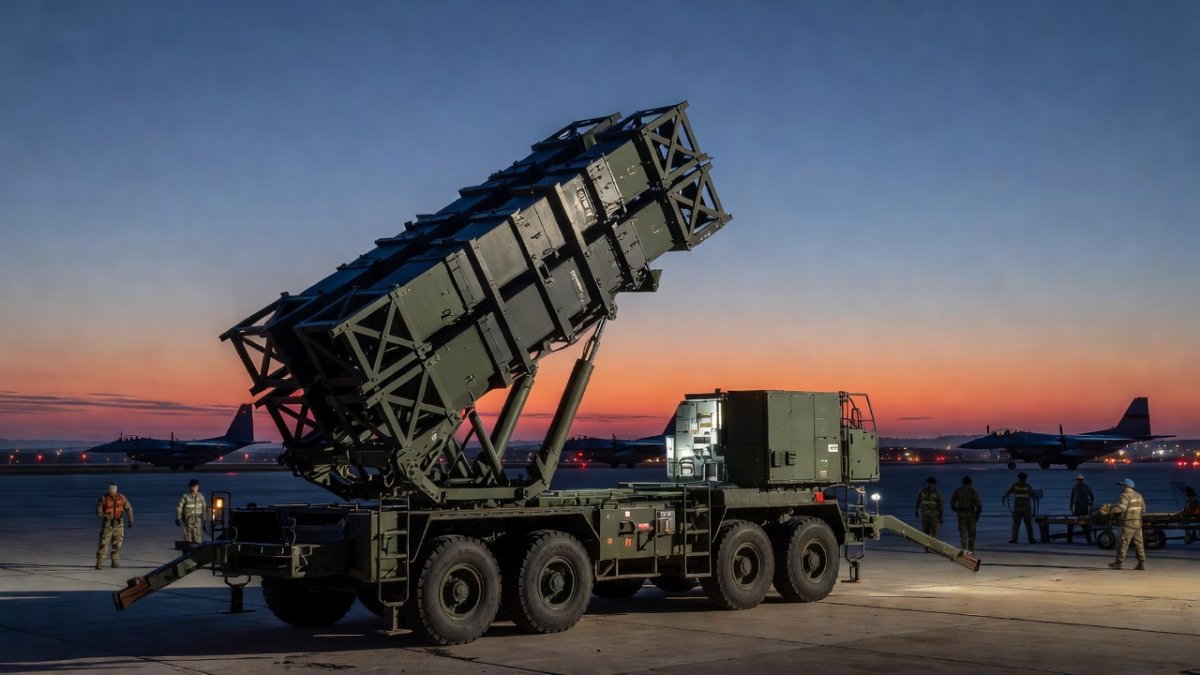
What Trump Said and Why It Matters
President Donald Trump delivered his clearest public retreat during a Friday cabinet meeting, stating directly: "We have not agreed to that. We're talking about it. But it's a hard thing to give away, that kind of technology." He continued, "These weapons are incredible. We have to be very careful about letting somebody build them," and added, "I don't think this would ever happen, but, you know, those people that you give that technology, they can someday turn on you." In remarks to the Financial Times he said he was "not sure" and "we're looking into it," adding "It's a very extraordinary weapon, and... we have to be a little bit careful of who we licence to. We don't really licence equipment." These statements came hours after Ukrainian officials had begun planning around the earlier commitment, exposing a widening gap between White House rhetoric and operational follow-through.
At the NATO summit in Ankara three weeks earlier, Trump had told President Volodymyr Zelensky, "We are gonna give you a licence to make Patriots... I think they can produce them very quickly once we explain it." Zelensky left the subsequent White House meeting convinced the pledge stood, telling Fox News that "He accepted that he will give us licences." Zelensky also met Lockheed Martin leaders during the Washington visit, while a Raytheon delegation arrived in Kyiv last week; Zelensky later noted the manufacturer had expressed "readiness to take our partnership to an even higher level." Vice President JD Vance received a follow-up call from Zelensky, after which the Ukrainian leader posted on X that air defence, specifically Patriot interceptors against ballistic missiles, remains a top priority.
The reversal carries immediate consequences for Ukrainian planning. Without a firm production licence, Kyiv cannot accelerate interceptor output or reduce reliance on finite U.S. stockpiles. Ukrainian air force commanders have already warned that current shortages limit their ability to engage incoming Russian ballistic missiles. European NATO members, already stretched by their own commitments, now face renewed pressure to fill gaps while Washington reconsiders technology transfer. The episode also tests the credibility of future U.S. pledges at a time when Russian strikes continue to target energy infrastructure and civilian districts across multiple oblasts.
The Human Cost: The Voronov Family and Russia's Bombardment
President Volodymyr Zelensky condemned as a "horrific crime" the Russian missile strike that killed five members of the Voronov family in Radushne near Kryvyi Rih. The victims were parents Artem and Olena together with their children Mark, Azariah Ilay and Emilia. The family's other children Zakhar, Dominika, Viorika and Federica, along with grandson Artem, remain missing after the overnight barrage. Local defence council chief Oleksandr Vilkul confirmed that rescue teams continued searching rubble into the following day. The attack formed part of a larger Russian operation that launched more than 70 missiles and over 280 drones; eight people were killed and eight wounded, including an 84-year-old woman. Two children were pulled alive from collapsed buildings.
Zelensky stated, "This Russian evil can only be stopped by the entire world... when we say that Ukraine needs missiles for 'Patriots', when we seek capabilities to defend against Russian ballistics, we are not talking about abstractions." The same night, a Russian Kh-101 cruise missile crossed into Polish airspace, creating a 10-metre crater near Tarnawa-Kolonia roughly 100 kilometres from the Ukrainian border. Polish Prime Minister Donald Tusk said all indications pointed to a Russian origin, and Polish armed forces scrambled fighter jets. Ukraine's acting Foreign Minister Andriy Sybiha confirmed the violation of NATO airspace. Kyiv Mayor Vitali Klitschko reported damage to residential districts in the capital, while strikes also hit Poltava and Lviv regions.
These attacks illustrate the daily reality for Ukrainian civilians who must decide each evening whether to shelter in basements or risk remaining above ground. The shortage of reliable interceptors directly shapes those choices. When batteries run low, commanders conserve missiles for the most threatening trajectories, leaving some areas exposed. The human cost accumulates in destroyed homes, lost generations within single families, and the steady erosion of normal life across central and western Ukraine.
Why the Patriot Matters: Air Defence Mathematics
The Patriot remains one of the few systems capable of intercepting ballistic missiles with flight ranges up to 1,000 kilometres. One battery can simultaneously track up to eight targets while detecting more than 100. Each interceptor missile costs an estimated $3 million to $5 million. President Zelensky and Ukrainian army planners have stated that the country requires 25 Patriot systems to establish credible coverage against current Russian ballistic threats. Ukraine's air force has repeatedly noted that interceptor shortages already hamper efforts to engage incoming Russian ballistic missiles, forcing difficult prioritisation decisions during massed attacks.
Granting a production licence would represent only the first step in a lengthy political, legal and technical process. Co-production of the sophisticated PAC-2 and PAC-3 interceptors on Ukrainian soil would require secure facilities, trained personnel, and sustained supply chains. The recent Raytheon delegation visit to Kyiv signalled preliminary industry interest, yet converting that interest into licensed manufacturing depends on sustained political will in Washington. European allies have watched the debate closely, aware that any reduction in U.S. commitments would shift greater responsibility onto their own depleted stocks.
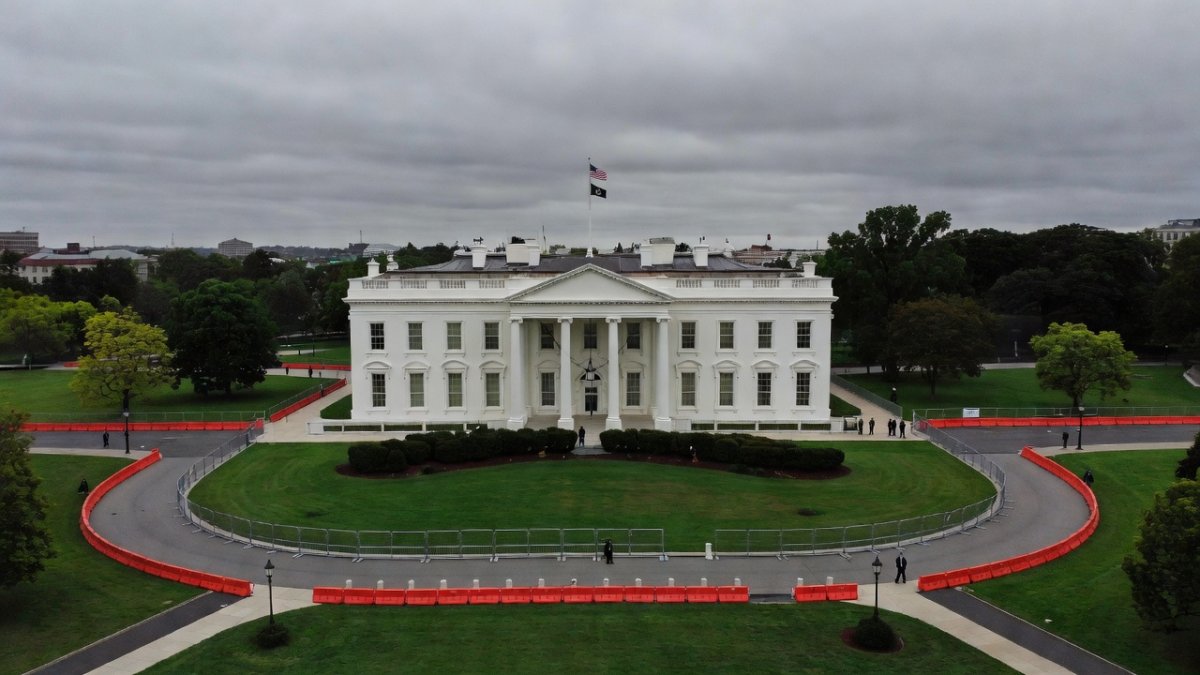
The Kremlin's Calculus
The Kremlin reacted with restraint to the earlier Patriot licence signals but warned that expanded Western weapons production in Ukraine could complicate negotiations and prolong the conflict, according to The Washington Post. President Vladimir Putin separately cautioned that any supply of Tomahawk missiles would further strain U.S.-Russian relations. Kremlin spokesman Dmitry Peskov has framed all Western military assistance as NATO escalation, a consistent line that Moscow uses to justify its own strikes on Ukrainian infrastructure. Trump spoke with Putin by telephone and agreed to meet him in Hungary in the coming weeks, a channel the Kremlin continues to cultivate even as Russian forces maintain pressure on Ukrainian cities.
Inside Russia, the war's economic effects are visible in regions far from the front. A recent attack on a Wildberries warehouse in Penza injured one worker, according to Governor Oleg Melnichenko; the facility belongs to the company often described as Russia's Amazon. Ukrainian long-range strikes on logistics hubs have added to supply-chain disruptions already caused by sanctions. Ordinary Russians face rising prices and restricted access to imported goods, yet state media continues to present the conflict as a defensive necessity against NATO expansion. This narrative sustains domestic support while the Kremlin monitors Washington's shifting signals on technology transfers.
Analysis: A Reversal With Global Consequences
President Trump's reversal on the Patriot licence suggests the administration views sensitive technology transfer as a bargaining chip rather than an immediate commitment. Trump announced that envoys Jared Kushner and Steve Witkoff would visit Ukraine in the coming days and stated, "Very simply put, we want the war in Ukraine with Russia ended." The tension between Kyiv's urgent air-defence requirements and Washington's caution over sharing advanced systems now sits at the centre of allied calculations. European governments must decide whether to accelerate their own production programmes or press Washington for clearer guarantees before the planned Trump-Putin meeting in Hungary.
The episode also tests NATO cohesion at a moment when Russian forces continue to probe alliance airspace, as demonstrated by the Kh-101 incursion into Poland. Analysts suggest this could indicate that earlier licence language served diplomatic signalling rather than operational planning. If the United States withholds co-production rights, Kyiv will remain dependent on donor stockpiles that have already proven insufficient during sustained Russian barrages. European NATO members, facing their own fiscal and industrial constraints, may interpret the shift as a signal to hedge against further U.S. retrenchment.
What happens next will shape both battlefield realities and the broader post-Soviet security order. With Kushner and Witkoff preparing to travel and Russian strikes continuing, Ukrainian families sheltering from nightly attacks depend on whether Western capitals treat air-defence resupply as an urgent priority or a negotiable concession. The outcome will influence not only Ukraine's survival but also the credibility of future U.S. security assurances across the region.
By Irina Volkov, Staff Writer
This article was produced with AI-assisted research and editorial support. Reporting is based on sources cited in the article.
What's Your Reaction?
 Like
0
Like
0
 Dislike
0
Dislike
0
 Love
0
Love
0
 Funny
0
Funny
0
 Wow
0
Wow
0
 Sad
0
Sad
0
 Angry
0
Angry
0

Russia/Eastern Europe Correspondent at Global1.News. Covering Russian politics, energy, security, and the shifting dynamics of the post-Soviet space. Provides clear-eyed analysis on one of the world's most opaque regions.










Comments (0)