
Trump and Xi come face-to-face as US and China battle to win the AI race
As President Donald Trump prepares to meet Chinese President Xi Jinping this Thursday, the agenda will be dominated by a contest that extends far beyond trade balances or diplomatic protocol: the race for artificial intelligence supremacy.
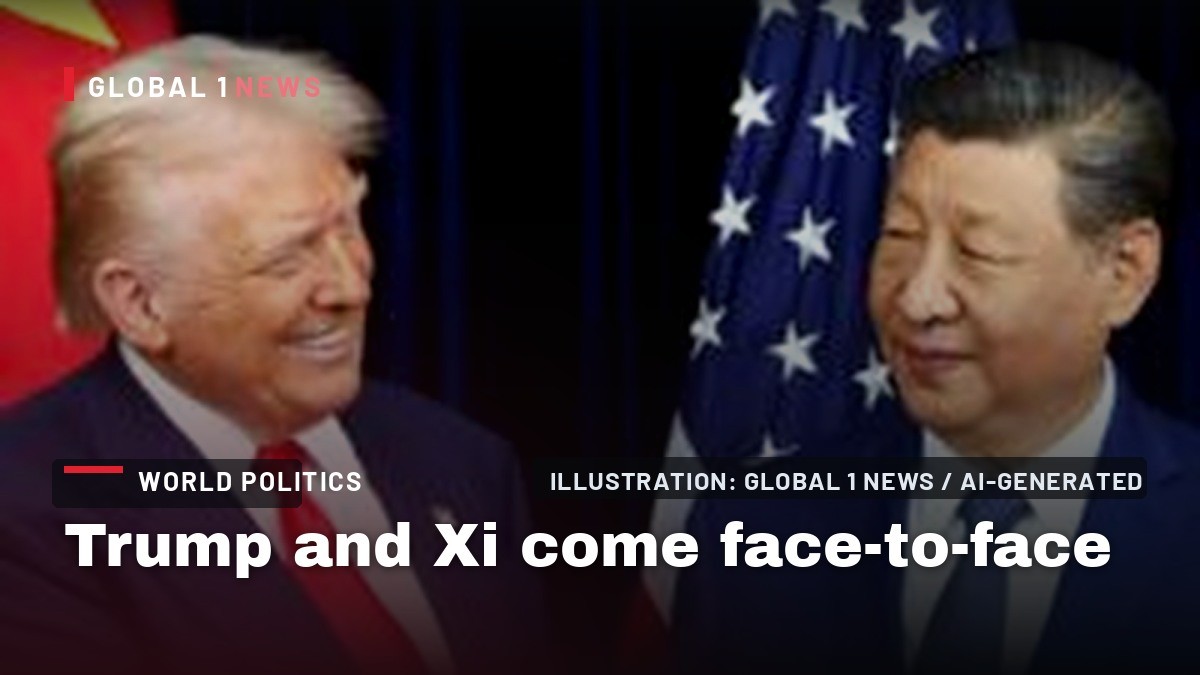
As President Donald Trump prepares to meet Chinese President Xi Jinping this Thursday, the agenda will be dominated by a contest that extends far beyond trade balances or diplomatic protocol: the race for artificial intelligence supremacy. Both Washington and Beijing view AI not merely as a commercial technology but as a strategic lever that can amplify national power, reshape economies, and redefine the parameters of future conflict. The encounter therefore offers a window into how each side plans to marshal state resources, manage security concerns, and project influence in a world where algorithmic decision‑making increasingly underpins military, economic, and societal outcomes.
Strategic framing of the AI race
The United States and China have each articulated AI as a cornerstone of their long‑term national strategies. In Washington, President Trump has repeatedly framed AI as the decisive factor in maintaining U.S. preeminence, describing any notion that the technology poses an existential threat as “a hoax.” This rhetoric underscores a belief that the competitive advantage derived from AI outweighs potential risks, a view that aligns with the administration’s broader emphasis on rapid innovation and deregulation to keep American labs “ahead.”
Beijing, while less flamboyant in public statements, shares a similarly expansive vision. Analysts note that Chinese leadership regards AI as a “power maximiser,” a tool that can be deployed across the entire economy. The foreign ministry’s warning that “narratives of threat” hinder global AI governance reflects a diplomatic strategy that seeks to portray China as a responsible stakeholder while simultaneously advancing a domestic agenda of widespread, low‑cost AI deployment.
Measuring progress: frontier versus open‑weight models
Assessments of which nation leads the AI race depend heavily on the metrics applied. In the United States, private firms such as Anthropic, Google, and OpenAI dominate the development of frontier models—large, proprietary systems that achieve the highest scores on benchmark tests. As of March 2026, Stanford researchers reported that Anthropic’s top model outperformed rivals by a margin of 2.7 percent, indicating a modest but measurable edge over competitors.
China’s approach diverges by emphasizing open‑weight models that are freely downloadable and modifiable, mirroring the open‑source software paradigm. Companies like Moonshot AI have released models such as Kimi K3, which, while trailing U.S. frontier systems by only a few months, offer the advantage of accessibility and rapid adaptation. This strategy reflects a broader Chinese objective of embedding AI into everyday applications, making the technology cheap, ubiquitous, and integrated into the fabric of the national economy.
Industrial underpinnings: chips, energy, and robotics
The divergent trajectories of U.S. and Chinese AI development are shaped by underlying industrial capacities. U.S. firms benefit from substantial private investment that fuels the construction of massive data centers and the procurement of cutting‑edge microchips. By contrast, American export controls have restricted the flow of advanced semiconductors to Chinese AI firms, creating a material bottleneck for domestic model training.
China mitigates this constraint through two notable advantages. First, its energy costs are lower, enabling AI companies to run power‑intensive training workloads more economically, as highlighted by experts from the Mercator Institute. Second, China commands a dominant position in robotics manufacturing, supplying over two million industrial robots and accounting for more than nine‑tenths of global humanoid robot shipments in the first half of the year. This manufacturing base not only supports AI‑driven automation domestically but also offers a platform for exporting AI‑enhanced robotics to the developing world.
Policy architectures: regulation versus coordination
Regulatory philosophies further differentiate the two powers. The United States has adopted a hands‑off stance, with officials such as information security officer Jayant Dave emphasizing the need to “keep American labs ahead” by reducing regulatory burdens. President Trump’s assertion that existing rules are sufficient, coupled with his confidence in the president’s own “high IQ” as a safeguard, illustrates a belief that market forces and existing oversight can manage AI risks without stifling growth.
China, meanwhile, has pursued a centrally coordinated framework that, while not legally binding, establishes guidelines on data usage and algorithmic transparency. Analysts note that this approach allows the state to set expectations and maintain a degree of oversight while still granting developers flexibility. The foreign ministry’s call for “extensive consultation and joint contribution for shared benefit” signals an intent to shape international norms around AI governance in a manner that aligns with Chinese strategic interests.
Geopolitical implications of AI diffusion
The divergent models of AI development carry profound geopolitical consequences. The United States’ focus on proprietary frontier models consolidates commercial power within a handful of firms, creating a concentration of influence that can be leveraged in diplomatic negotiations and export controls. Conversely, China’s open‑weight strategy lowers barriers to adoption, potentially accelerating the diffusion of capable AI tools across emerging economies and within its own vast domestic market.
By making AI technology inexpensive and adaptable, China can embed its standards and platforms into critical infrastructure abroad, thereby extending its soft power. At the same time, the United States’ leadership in high‑performance models reinforces its position as the primary source of cutting‑edge AI talent and intellectual property, a leverage point that can shape global supply chains and research collaborations.
Security dimensions: from existential risk to cyber‑war concerns
Security narratives also diverge. In Washington, a segment of the AI community warns of existential threats posed by artificial general intelligence (AGI), prompting calls for robust safety protocols. The Trump administration, however, dismisses such concerns, emphasizing that “the only guardrails AI needs are a high IQ president,” and that stifling AI would be detrimental to national progress.
Chinese experts, by contrast, focus less on speculative existential risks and more on immediate threats such as misuse of AI tools and cyber warfare. The emphasis on keeping AI “under human control,” as articulated by President Xi, reflects a precautionary stance that seeks to balance rapid deployment with safeguards against malicious applications. This pragmatic orientation may influence how China structures its domestic AI ecosystem and engages in international norm‑setting efforts.
Strategic outlook: what the Trump‑Xi meeting could mean
The forthcoming dialogue between Trump and Xi will likely centre on how each side can navigate the tension between competition and cooperation. While both governments acknowledge the perils of a fragmented AI landscape, their policy prescriptions differ markedly. The United States is poised to continue its aggressive investment and deregulation agenda, aiming to preserve its lead in frontier model performance. China, leveraging its energy advantage, robotics dominance, and open‑weight ecosystem, will press for broader access to AI tools and a collaborative governance framework that mitigates “narratives of threat.”
What emerges from the source material is a nuanced picture: the AI race is less a binary contest of who builds the biggest model and more a contest of how each nation integrates the technology into its economic, military, and diplomatic strategies. The outcome of this high‑level encounter will shape not only bilateral relations but also the architecture of global AI governance, the distribution of technological power, and the contours of future geopolitical competition.
This article was produced with AI-assisted research and editorial support. Reporting is based on the source material cited below. Sources: BBC News China; bbc.co.uk; Global1.News (25 September 2026).
By Prof. Marcus Chen, Staff Writer
What's Your Reaction?
 Like
0
Like
0
 Dislike
0
Dislike
0
 Love
0
Love
0
 Funny
0
Funny
0
 Wow
0
Wow
0
 Sad
0
Sad
0
 Angry
0
Angry
0
World Politics Analyst at Global1.News. Based in Beijing, covering US-China relations, global trade, and geopolitical strategy. Brings deep analytical perspective to the power dynamics shaping international affairs.













Comments (0)