
Three Bodies Found in Unlocked Home in Rural Japan
Three bodies found in an unlocked home in Ono Town, Gifu Prefecture have launched a police investigation. Authorities are working to identify the deceased as Japan confronts its solitary-death crisis.
Folks, sometimes a story stops you cold. This is one of those times. In a quiet corner of rural Japan, a town employee went to check on a household that had gone silent. What they found behind an unlocked front door has launched a full-scale investigation and pulled back the curtain on a crisis Japan has been dreading for years. Three bodies, in various states of decomposition, discovered on a single residential property in Ono Town, Gifu Prefecture. No names. No causes of death. No answers yet. Just a community in shock and a nation asking hard questions. Let's get into it.
The Discovery
It started with a routine welfare check that went horribly wrong. On Monday, August 24, 2026, at approximately 4:10 in the afternoon, an employee from the Ono Town office made an emergency call to 110. The reason? They had been trying to reach a household in the Sakura Omono area of Ono Town, in the Ibi District of Gifu Prefecture, central Japan. The employee told dispatchers, "There is a household we have been unable to reach. We visited, the front door was open, but there was no response."
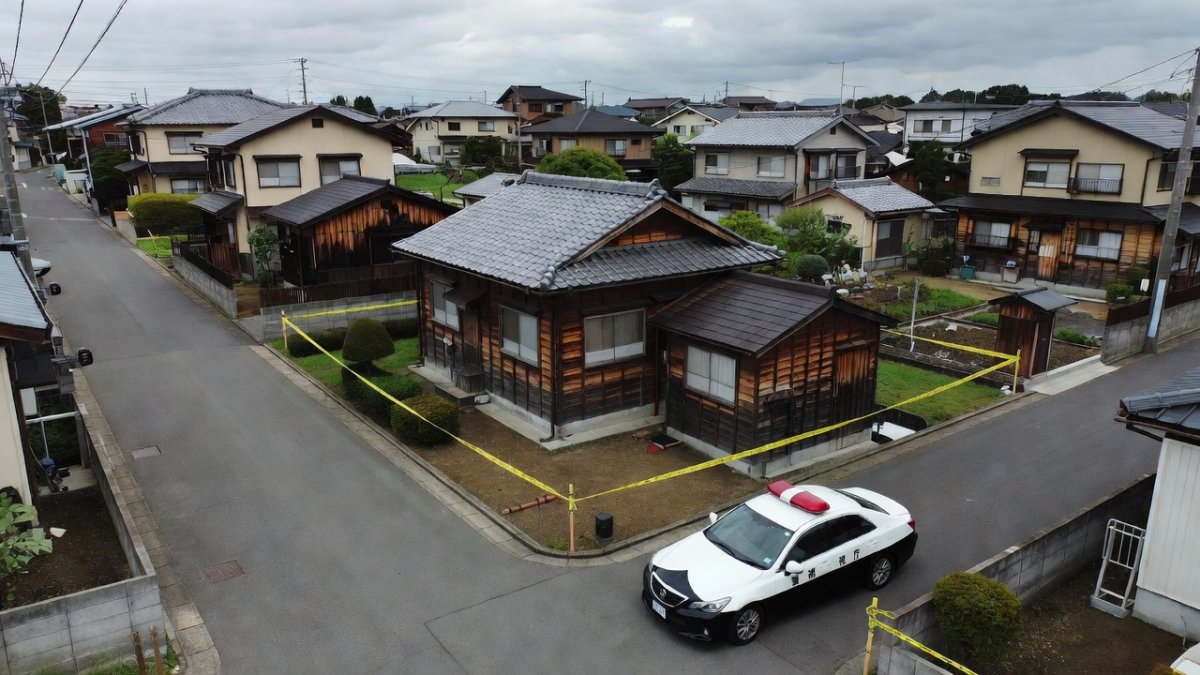
That single call triggered a response from Gifu Prefectural Police officers stationed at the local Ibi Station. When they arrived at the property, they made a grim discovery. Three bodies were found on the premises. Two were located inside the single-story wooden main house. A third was found on the first floor of a two-story wooden annex situated on the same property. The front door was unlocked. The residents of the home have still not been able to be contacted.
Let me be clear about the timeline here, folks. This wasn't a fresh scene. The discovery was made on Monday afternoon, but police did not announce it to the public until Tuesday, August 25, 2026. That delay tells you everything you need to know about the complexity of what they walked into. This wasn't a simple, straightforward call. This was a scene that required time, careful processing, and a whole lot of questions.
What Police Have Said
Right now, the official word from the Gifu Prefectural Police is measured and cautious. They have confirmed the discovery of the three bodies. They have confirmed the locations: two in the main house, one in the annex. They have confirmed the front door was open. And that is essentially where the confirmed facts end.
Here is what we do not know, and I want to be straight with you about this because speculation helps no one. The sex and age of the three deceased individuals have not yet been determined. The cause of death has not been released. And critically, police have made no determination about whether criminal activity was involved. They are not saying this is a homicide. They are not saying it isn't. They are saying the investigation is ongoing, and they are working to confirm identities and determine the circumstances surrounding these deaths.
What we do know from reporting by the Gifu Shimbun is that decomposition was advanced. At least one of the bodies was partially skeletonized. That is a brutal, factual detail that tells us these individuals had been deceased for a significant period of time before anyone found them. This was not a sudden, recent event. This was a situation that had been developing, silently, behind that unlocked door, for what appears to be a considerable stretch.
The Scene and the Town
Photographs from the scene show police tape cordoned around the property, a stark visual of official intervention in what is otherwise a residential neighborhood. The Sakura Omono area of Ono Town is not a bustling metropolis. Ono Town is a small municipality in Gifu Prefecture's Ibi District, the kind of place where neighbors know each other, where the town office keeps tabs on its residents, and where a household going silent is noticed.
And that is precisely what happened here. The discovery was made not by a family member, not by a friend, but by a town office employee conducting a welfare check. This is the system working exactly as it was designed to work. Municipal welfare checks, known in Japan as "ankaku-kakunin," are a common mechanism in which town employees visit residents who have not been in contact. It is a safety net. And in this case, that safety net caught something tragic.
Think about the sequence of events. Someone at the town office noticed a household had gone quiet. They tried to make contact. They failed. So they sent someone out to physically check. That employee arrived, found the door open, called for help, and police discovered three bodies. This is the reality of a society where isolation can be so profound that a person can pass away, and no one knows until the smell or the silence becomes too much to ignore.
Japan's Quiet Crisis of Solitary Death
Now, I need to be very clear about something. Police have not confirmed that this case is a "kodokushi," or solitary death. They have not confirmed the identities of the deceased, their ages, or the circumstances of their deaths. We do not know if this is a case of an elderly person living alone, or a family that became isolated, or something else entirely. The investigation is ongoing, and we must respect that.
However, the context here is impossible to ignore. Japan's National Police Agency recorded 76,941 people living alone who died at home in 2025. Of those, 58,919 were aged 65 or older. Let me put that number in perspective for you. That is nearly 77,000 people who died alone in their homes in a single year. And the trend is accelerating. From January to June 2025, 40,913 people died alone at home in Japan. That is an increase of 3,686 from the same period in 2024.
This is the phenomenon of "kodokushi," and it is a well-documented crisis in Japan's aging society. The discovery in Ono Town, with its advanced decomposition and unlocked door, fits a pattern that is becoming all too familiar. The fact that it was a municipal welfare check that found these bodies is not a coincidence. It is the system responding to the exact scenario it was built to address: a resident who has fallen off the grid.
There is also the "8050 problem" to consider. This refers to isolated households where middle-aged children in their 50s live with and care for elderly parents in their 80s, often cut off from the community. When the parent dies, the child may be left alone, unable or unwilling to seek help. These are complex, multi-generational situations that can end in tragedy. Again, I want to stress, we do not know if this applies to the Ono Town case. But it is the reality of the environment in which this discovery was made.
What Happens Next
The immediate priority for the Gifu Prefectural Police is identification. They need to confirm who these three individuals are. This will likely involve dental records, DNA analysis, and cross-referencing with missing persons reports. Given the advanced state of decomposition, this process could take time. It is painstaking, methodical work, and it cannot be rushed.
Once identities are confirmed, the next step will be determining the cause and manner of death. Autopsies will be conducted. Forensic pathologists will examine the remains for signs of trauma, disease, or natural causes. The fact that the front door was open is a detail that investigators will be scrutinizing. Was it left open by the deceased? Was it opened by someone else? These are questions that only a thorough investigation can answer.
Police have not ruled out criminal involvement, but they have not suggested it either. They are keeping an open mind, which is the correct approach. The scene has been secured, evidence has been collected, and the investigation is underway. The residents of the home have not been contacted, which suggests that the individuals found may be the residents themselves. But until police make an official statement, we cannot confirm that.
The Bigger Picture
Folks, here is why this story matters beyond the borders of Ono Town. This is not an isolated incident. This is a symptom of a demographic and social shift that is reshaping Japan, and it holds lessons for the rest of the developed world. Ono Town is a small, rural municipality with an aging, declining population. It is exactly the kind of place where these tragedies are most likely to occur.
When a society ages as rapidly as Japan's, the traditional support structures of family and neighborhood begin to fray. People live longer, but they also live alone. Children move to cities for work, leaving elderly parents behind. Communities shrink, and the social fabric that once held everything together becomes threadbare. The result is a growing number of people who die alone, unnoticed, sometimes for weeks or months.
The fact that a town employee found these bodies is both a tragedy and a testament to the importance of these welfare checks. Without that visit, who knows how much longer this would have gone unnoticed? This is a system that works, but it is a system under strain. As the population continues to age, the number of people needing these checks will only grow, and the resources to perform them will be stretched thinner.
This story should make you think about your own community. Who is the neighbor you haven't seen in a while? Who is the relative who lives alone and doesn't call as often as they used to? In Japan, the state is trying to fill the gap left by frayed social connections. But the state cannot do it alone. It takes a community to notice when someone goes quiet. It takes a neighbor to knock on a door. It takes a town employee to make a call that leads to a discovery, even a tragic one.
The investigation in Ono Town will continue. Identities will be confirmed. Causes of death will be determined. But the larger question, the one that hangs over this entire story, is how a society prevents these silent tragedies from happening in the first place. That is a question with no easy answers. But it is one we must keep asking, because the alternative is accepting a world where people can disappear behind unlocked doors, and no one notices until it is far too late.
We will bring you updates as this story develops. For now, our thoughts are with the community of Ono Town, and with the families who are waiting for answers.
By Jessica Ali, Staff Writer
This article was produced with AI-assisted research and editorial support. Sources: Asahi Shimbun, Sankei Shimbun, Gifu Shimbun, Chunichi Shimbun, TV Asahi, Kyodo News, Japan's National Police Agency.
What's Your Reaction?
 Like
0
Like
0
 Dislike
0
Dislike
0
 Love
0
Love
0
 Funny
0
Funny
0
 Wow
0
Wow
0
 Sad
0
Sad
0
 Angry
0
Angry
0

Editor-in-Chief at Global1.News. Atlanta-based journalist who cuts through the BS and tells it like it is. Lead anchor, host, and the voice you hear when the spin stops and the truth starts.













Comments (0)