
Russia's 'Black August' Curse Returns — and Putin Is Trying to Sweep It Under the Rug
Russia's 'Black August' curse — the month that brought the 1991 putsch, 1998 default and Kursk disaster — returns in 2026 as Putin downplays fuel shortages, burning Wildberries warehouses and a Kremlin political squeeze ahead of September's Duma elections.
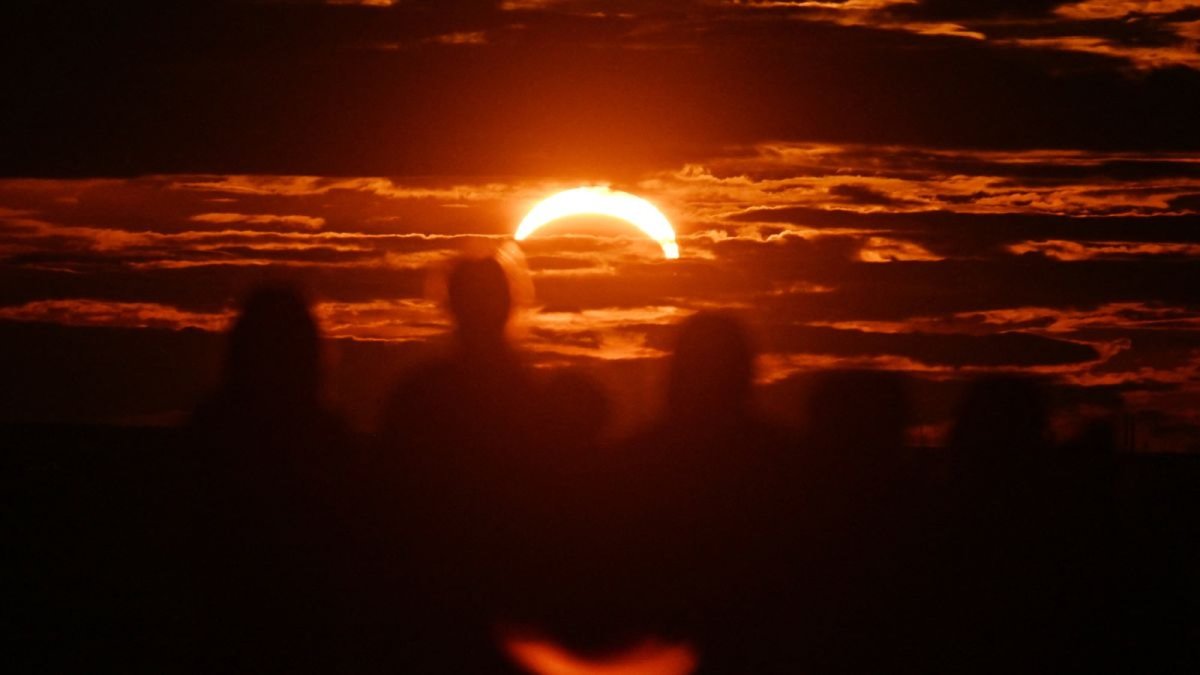
The August Curse Strikes Again, But This Time It's Different
There's an old saying in Moscow that August is when the Black Swans come home to roost. Russian journalists have a name for it — "Black August," or the "August curse" — a rough equivalent of Britain's "silly season," but with a far more pessimistic folk wisdom attached. The idea is simple: when dramatic crises are going to strike Russia, they tend to strike in the last weeks of summer. And this year, according to a new CNN analysis published Sunday, Aug. 23, 2026, the curse is back — even as the Kremlin tries to pretend otherwise.
The historical record is stark. In August 1991, 35 years ago this month, Communist hardliners launched a failed putsch against Soviet leader Mikhail Gorbachev, unleashing the forces that culminated in the collapse of the Soviet Union. In August 1998, a financial crisis hit Russia, triggering a default on domestic debt and the collapse of the ruble. In August 1999, militants staged an incursion into the southern republic of Dagestan, sparking the second Chechen War and launching a then-unknown former KGB officer named Vladimir Putin into the top echelon of power. He took power on New Year's Eve 1999, after Boris Yeltsin's surprise handover.
August 2000 brought the Kursk nuclear submarine disaster, which killed 118 sailors and became one of Putin's first major tests in office. August 2008 saw Russia go to war with neighboring Georgia, revealing a belligerent new face of Putin's foreign policy. Now, in August 2026, the pattern is repeating — but this time the crisis is not a single dramatic event. It's a slow, grinding accumulation of economic pain, military stalemate, and political repression that the Kremlin is desperately trying to manage.
Fuel Lines and Burning Warehouses: The Summer of Discontent
This summer has been punishing for ordinary Russians. Ukrainian strikes have blackened skies over Russian cities, hitting oil refineries and what CNN describes as "Amazon-style" distribution centers. The result: long lines at fuel pumps and rumors of a fresh wave of mobilization that have Russians grumbling. On the front lines in Ukraine, Russian forces are making scant progress, and the war of attrition is taking a visible toll.
The most visible symbol of the crisis is the assault on Wildberries, Russia's e-commerce giant. Ukrainian forces began attacking Wildberries warehouses on July 18, 2026. By late August, at least 12 warehouses had been significantly damaged or completely destroyed by fire. UNN reported that goods worth nearly 500 billion rubles burned in about a month of attacks — a direct hit on the Russian consumer economy.
Putin addressed the issue Wednesday, Aug. 19, 2026, in remarks on infrastructure. Without naming Wildberries directly, he acknowledged the economic damage but downplayed the long-term impact. "It goes without saying that these attacks will not have, do not cause and cannot bring about any critical consequences," Putin said. "True, they do cause harm – this much is obvious, and we understand this, we see this, and we are aware of it." He said the facilities would be rebuilt with government support — and Meduza reported Aug. 19 that Putin had ordered a rebuild program.
Economists Warn of 'Social Crisis' as Ruble Falls
The Kremlin's public confidence is not matched by private anxiety. Exiled Russian commentator Ilya Varlamov posted his thoughts on the August curse this week, calling the recurring disasters "a coincidence, of course." But he added a warning: "Many Russians await August with apprehension. Especially now, when the country is truly in crisis. … The fuel crisis has returned, prices are rising and have no intention of stopping, the ruble is falling, elections are coming and God knows what else."
Varlamov also highlighted recently publicized remarks by a top Russian economist — unnamed in the CNN analysis — warning that Moscow faces a "social crisis" and is "losing both the technological and economic competition globally." The economist reportedly said Russia would not win a war of attrition against a Ukraine backed by the West. Even pro-Kremlin media are feeling the jitters: the tabloid Moskovsky Komsomolets has turned to astrology, noting a lunar eclipse "opposite Pluto – a planet associated with catastrophes" and warning of "social shifts, political changes in relations with neighbors, and domestic unrest." When the Kremlin's own press is consulting the stars, you know the mood is grim.
Ukraine's Own August Turmoil: A Challenge to Zelensky
It's not just Russia feeling the August heat. Ukraine is facing its own internal crisis — the biggest challenge to President Volodymyr Zelensky since Russia's full-scale invasion began in February 2022. On Tuesday, Aug. 18, 2026, ousted Defense Minister Mykhailo Fedorov delivered a bombshell address calling for wartime elections. Fedorov argued that Ukraine faced a "systemic crisis of governance," a direct challenge to Zelensky's authority confirmed by multiple outlets, including The Guardian and ABC.
The context is complicated. Zelensky's five-year term was originally expected to end in 2024, but elections were postponed under martial law imposed after the invasion. That postponement has become a political flashpoint. Government reshuffles in Kyiv and major anti-government protests show that civil society and democratic processes are still alive in Ukraine — but they also reveal deep fractures in the wartime unity that once defined the country.
For Putin, Ukraine's internal turmoil cuts both ways. A distracted Kyiv could weaken Ukrainian resistance — but a leadership change could also alter the war's dynamics. Western allies are watching closely.
The Kremlin's Political Squeeze: Shlosberg Sentenced, Yabloko Barred
While Ukraine debates elections, Russia is tightening the screws on its own opposition. On Monday, Aug. 17, 2026, a court in Pskov convicted Lev Shlosberg, deputy chairman of the liberal Yabloko party, to 11 years and one month in a penal colony. His crime: opposing the war in Ukraine. The charges were repeatedly "discrediting" the Russian army and spreading "false information" about the military. Prosecutors had sought 12 years and one month. The conviction was confirmed by AP, Reuters, Amnesty International, and Novaya Gazeta Europe.
The timing is no accident. Russia's Supreme Court on Aug. 10, 2026, barred Yabloko from the ballot in upcoming parliamentary elections. The party appealed, and at least 30 supporters were detained outside the Supreme Court in Moscow on the appeal hearing day, Aug. 17. The message is clear: there will be no meaningful opposition in the State Duma elections scheduled for Sept. 18-20, 2026, when 450 seats are up for grabs.
This is a pattern with deep roots. Jailed opposition leader Alexey Navalny died in February 2024, but his fatal journey began on an August day in 2020, when he fell ill from nerve-agent poisoning on a return flight to Moscow from Siberia. The August curse, it seems, applies to Russia's dissidents as much as to its rulers.
Putin's 'War Party' Gambit Ahead of September Elections
With the elections weeks away, Putin is doubling down on the war narrative. On Saturday, Aug. 22, 2026, he addressed the United Russia party congress, calling for national unity and continued support for the war effort. The Institute for the Study of War (ISW) concluded that Putin used the congress to establish United Russia as "the war party," setting conditions to use its inevitable victory as evidence that Russians support a protracted war.
The strategy is transparent: if United Russia wins big in September, the Kremlin will claim a mandate for the war. Either way, the elections are less about democracy and more about legitimizing a conflict that is increasingly unpopular at home. The fuel lines, the burning warehouses, and the falling ruble are not the stuff of victory speeches — but Putin is betting that a controlled electoral process can paper over the cracks.
The ISW analysis suggests Putin is setting conditions for a long war, not a quick victory. And the August curse has a way of upending even the best-laid plans. As CNN's analysis notes, "Coincidence or not, the month of August has been a punishing one for Russia."
What the August Curse Means for the Coming Months
So what should we make of all this? The August curse is, of course, a coincidence — a pattern imposed on random events by human minds that crave narrative. But patterns matter because people believe in them. When Russians see fuel lines and burning warehouses in August, they remember 1998, 2008, the Kursk — that August is when things fall apart. That psychological weight is real, and it shapes behavior in ways that are hard to measure but impossible to ignore.
For Putin, the challenge is to survive the curse. The Kremlin's response so far has been a mix of denial, downplaying, and repression. Putin's Aug. 19 remarks acknowledged the damage from the Wildberries strikes but insisted there would be "no critical consequences." But the underlying problems — a stalled war, a struggling economy, a restless population — are not going to be solved by infrastructure programs or astrological reassurances from pro-Kremlin tabloids.
The coming weeks will be telling. The State Duma elections on Sept. 18-20 will show whether the Kremlin can deliver a controlled result. The war in Ukraine will grind on, with no end in sight. And the August curse will fade into September, only to return next year. The question is whether Putin can keep sweeping it under the rug — or whether the rug is getting too lumpy to hide.
The Bottom Line: A Regime Under Pressure, But Not Yet Broken
Let's be clear about what we're seeing. Russia is not on the verge of collapse. The regime has weathered worse moments — the 1998 default, the chaos of the 1990s, the Kursk disaster — and it has always found a way to survive. Putin's grip on power remains firm. The opposition is decimated, with leaders like Shlosberg in prison and parties like Yabloko barred from the ballot.
But the pressure is real. The economic damage from the Wildberries strikes — nearly 500 billion rubles in goods burned — is a direct hit on the Russian consumer economy. The fuel crisis is visible to every driver in the country. The ruble is falling, prices are rising, and the war is dragging on with no clear end. That's not a sign of confidence; it's a sign of nerves.
For the United States and its allies, the takeaway is that Russia is vulnerable — but not yet broken. The August curse is a reminder that even the most powerful regimes can be shaken by events they cannot control. The question is whether Putin can manage the fallout, or whether the curse will finally catch up with him. As always in August, the answer is uncertain. But one thing is clear: this is not a summer the Kremlin will forget anytime soon.
This article was produced with AI-assisted research and editorial support. Sources: CNN, AP, Reuters, Meduza, Kyiv Independent, Amnesty International, The Moscow Times, ISW.
By Jessica Ali, Staff Writer
What's Your Reaction?
 Like
0
Like
0
 Dislike
0
Dislike
0
 Love
0
Love
0
 Funny
0
Funny
0
 Wow
0
Wow
0
 Sad
0
Sad
0
 Angry
0
Angry
0

Editor-in-Chief at Global1.News. Atlanta-based journalist who cuts through the BS and tells it like it is. Lead anchor, host, and the voice you hear when the spin stops and the truth starts.











Comments (0)