
The Next Chapter of Africa-China Climate Cooperation
Nearly five years have passed since the Declaration on China‑Africa Cooperation on Combating Climate Change was adopted at the eighth Forum on China‑Africa Cooperation (FOCAC 8) in 2021.
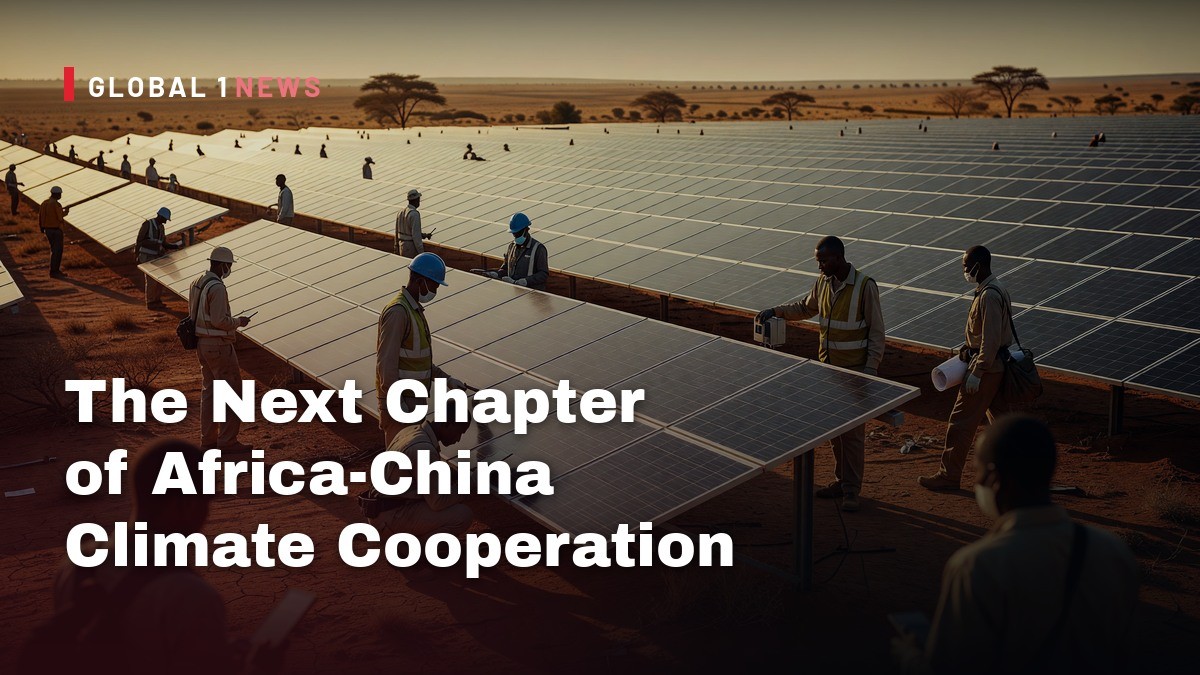
Nearly five years have passed since the Declaration on China‑Africa Cooperation on Combating Climate Change was adopted at the eighth Forum on China‑Africa Cooperation (FOCAC 8) in 2021. In the intervening period, the partnership has moved beyond the simple tally of projects and megawatts to a more nuanced set of structural shifts. Development Reimagined’s China‑Africa Climate Action Tracker, which records 246 publicly announced climate actions across 50 African nations between 2022 and the first half of 2026, provides the empirical basis for this analysis. While the tracker documents roughly 49 GW of renewable energy in the pipeline, it also reveals three converging trends: a transition from contractor‑led to investment‑led cooperation, an expanding green industrial agenda that integrates critical minerals and manufacturing, and a growing emphasis on institutional capacity building. As FOCAC 10 approaches in 2027, these trends will shape how future Africa‑China climate collaboration is designed, financed, and evaluated.
From EPC Contracts to Investment Partnerships
The early phase of China‑Africa energy cooperation was dominated by engineering, procurement and construction (EPC) contracts. African governments or development banks typically issued tenders, and Chinese firms won bids to build power plants, transmission lines and related infrastructure. This model, while still important, is gradually giving way to longer‑term investment arrangements. The Climate Action Tracker shows a rising share of equity‑led projects, “EPC‑plus” contracts that combine construction with subsequent operation, and technology‑transfer agreements. At the same time, the proportion of pure EPC‑only projects is on the decline.
State‑owned enterprises such as Power China and Energy China remain central to project delivery, but Chinese private firms are increasingly entering the market through direct investments in local manufacturing capacity. A notable illustration is the 2024 announcement by a Chinese company of a lithium‑battery plant in Zambia, funded at roughly $30 million and situated in the Zambia‑China Jiangxi International Economic and Technical Cooperation Zone. The facility is now operational, signalling a shift from merely supplying hardware to fostering domestic green‑manufacturing ecosystems. This evolution reflects a broader strategic intent: to embed Chinese capital and expertise within African value chains rather than limiting engagement to one‑off construction contracts.
Green Industrialisation: Linking Renewables, Minerals and Manufacturing
The second structural shift extends climate cooperation beyond isolated renewable‑energy projects toward integrated green industrial value chains. While solar, wind and hydropower installations continue to dominate the partnership, the tracker highlights a rapid emergence of critical‑mineral projects as a complementary pillar. Since Development Reimagined began systematically tracking such projects in 2025, it has identified close to 20 initiatives involving lithium, graphite, rare‑earth elements and other strategic resources. Eight of the nine host countries for these mineral projects also house renewable‑energy projects, underscoring a deliberate overlap of resource extraction and clean‑energy development.
African national industrial strategies are increasingly aligning with this integrated approach. The Democratic Republic of Congo is pursuing battery‑value‑chain development; Nigeria is expanding clean‑technology manufacturing; and Tanzania is positioning itself as a multi‑mineral processing hub. Chinese participation in these sectors spans electric‑vehicle assembly, battery production, energy‑storage facilities, solar‑panel manufacturing and related supply‑chain activities. Although many of these initiatives remain at the memorandum‑of‑understanding or feasibility stage, the trend indicates a growing interest among Chinese firms to localise production for African markets rather than relying solely on export of finished goods.
Institutional Capacity Building as the Quiet Engine
The third, less visible trend concerns the strengthening of African institutions through climate‑related exchanges. Since 2022 the tracker has logged more than 40 climate “exchanges,” encompassing strategic partnerships, technology cooperation, capacity‑building programmes and industry collaborations. These initiatives receive less media attention than large‑scale renewable projects but are crucial for establishing the human‑capital and institutional foundations required for sustained low‑carbon development.
Examples include joint training programmes that pair Chinese expertise in solar technology and energy storage with African engineers and technicians. Such collaborations not only accelerate the deployment of clean‑energy systems but also cultivate the local skills needed for operation, maintenance and eventual domestic innovation. By embedding technical know‑how within African institutions, the partnership moves from a project‑by‑project model to a more systemic, long‑term transformation framework.
Implications for Investment Strategies
The shift toward investment‑led cooperation calls for a reassessment of financing models. Traditional EPC contracts relied on upfront procurement funding from African governments or multilateral lenders. In contrast, equity‑based projects require longer‑term capital commitments and risk‑sharing mechanisms. Chinese private firms, entering through direct investment, bring market‑driven financing approaches that may involve joint‑venture structures with local partners. This evolution aligns with broader global trends where climate finance is increasingly tied to private‑sector participation and blended finance arrangements.
For African governments, the move toward investment partnerships offers the prospect of deeper technology transfer and the development of domestic industrial capacity. However, it also demands robust regulatory frameworks to manage foreign direct investment, protect strategic resources and ensure that projects deliver tangible local benefits. The emerging emphasis on “EPC‑plus” contracts—where construction is coupled with operational responsibilities—further blurs the line between contractor and investor, requiring clear governance structures to balance risk and reward.
The Role of the African Continental Free Trade Area
One recurring theme in the tracker’s analysis is the under‑utilisation of the African Continental Free Trade Area (AfCFTA) in green‑manufacturing projects. Many feasibility studies for battery plants, solar‑panel factories and mineral‑processing facilities do not fully incorporate the market‑access advantages offered by the AfCFTA. By leveraging the continent‑wide tariff reductions and harmonised standards, Chinese investors could achieve economies of scale that make green‑manufacturing projects more commercially viable.
Realising this potential will require coordinated policy action. African states need to align national industrial strategies with AfCFTA provisions, while Chinese partners must design investment plans that anticipate cross‑border supply‑chain integration. The synergy between a continent‑wide market and Chinese capital could accelerate the scale‑up of green industries, reducing reliance on imported components and fostering a more resilient African manufacturing base.
Measuring Progress Beyond Megawatts
Traditional metrics for climate cooperation have focused on installed capacity—megawatts of solar, wind or hydro power. While the 300 GW renewable‑energy target set by African leaders in the 2023 Nairobi declaration remains a key benchmark, the three structural shifts highlighted by the Climate Action Tracker suggest that future assessments must incorporate broader indicators. Investment volume, the number of equity‑based projects, the depth of technology transfer, and the establishment of institutional frameworks should all factor into performance evaluations.
Moreover, the overlap between renewable‑energy installations and critical‑mineral projects offers a composite measure of integrated green industrialisation. Tracking the proportion of countries that host both types of projects can reveal the extent to which Africa is building end‑to‑end value chains rather than isolated infrastructure. Such multidimensional metrics will provide a more accurate picture of the partnership’s contribution to both climate mitigation and sustainable development.
Outlook for FOCAC 10 and Beyond
As FOCAC 10 approaches in 2027, the three identified trends will likely shape the agenda. Delegates are expected to discuss mechanisms for scaling investment‑led projects, enhancing green industrial value chains, and institutionalising capacity‑building exchanges. The Chinese side may seek to promote private‑sector participation, while African partners will likely emphasise safeguards that ensure technology transfer and local job creation.
In the medium term, the partnership’s evolution could serve as a model for South‑South climate cooperation, demonstrating how emerging economies can combine financing, industrial policy and skills development to accelerate low‑carbon transitions. The success of this model will hinge on the ability of both sides to align strategic objectives, manage risks, and translate announced projects into operational capacity that delivers tangible climate and development outcomes.
This article was produced with AI-assisted research and editorial support. Reporting is based on the source material cited below. Sources: The Diplomat; thediplomat.com; Global1.News (26 October 2026).
By Kenji Tanaka, Staff Writer
What's Your Reaction?
 Like
0
 Dislike
0
 Love
0
 Funny
0
 Wow
0
 Sad
0
 Angry
0

Japan Correspondent at Global1.News. Tokyo-based voice covering Japanese politics, technology, economy, and culture. Tracks the intersection of tradition and innovation in one of the world's most dynamic societies.














Comments (0)