
South Africa's Migrant Exodus Splits Families Across Borders
Richard Itoro's decision to board a voluntary repatriation flight from Johannesburg to Lagos in June left his South African wife and twin children behind, highlighting the human cost of rising anti-migrant tensions in South Africa. The 47-year-old Nigerian businessman abandoned a car dealership and home built over 15 years amid harassment that extended to his family. His story reflects the experiences of tens of thousands of foreigners who have d
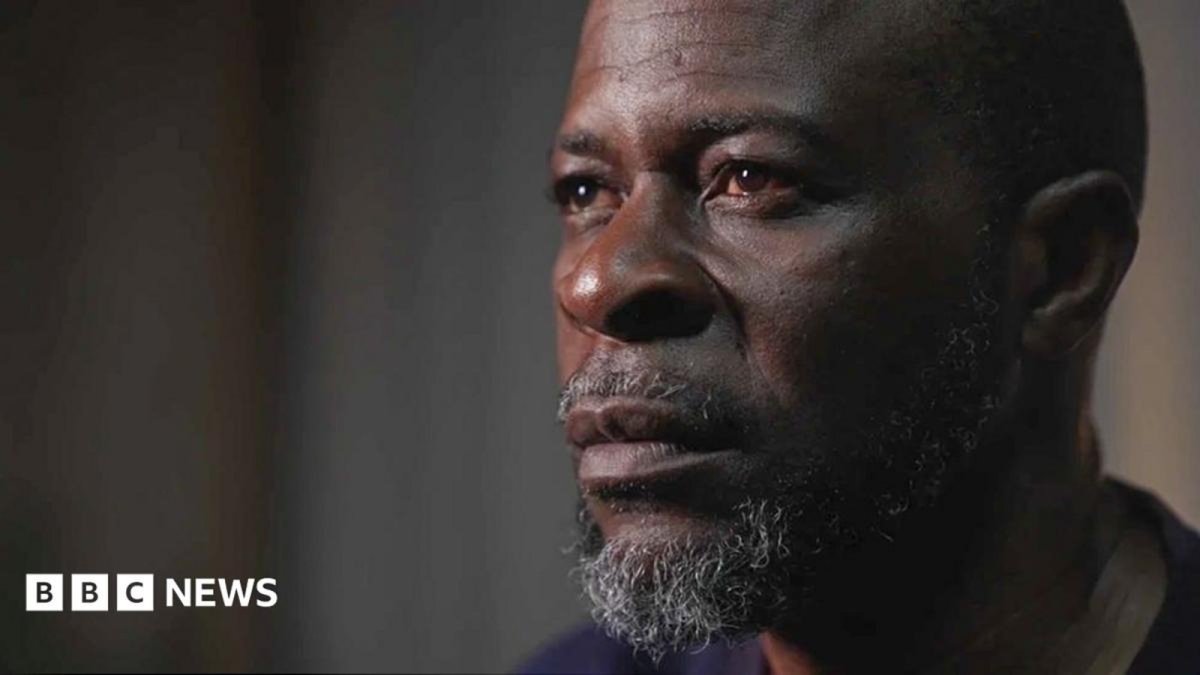
Richard Itoro's decision to board a voluntary repatriation flight from Johannesburg to Lagos in June left his South African wife and twin children behind, highlighting the human cost of rising anti-migrant tensions in South Africa. The 47-year-old Nigerian businessman abandoned a car dealership and home built over 15 years amid harassment that extended to his family. His story reflects the experiences of tens of thousands of foreigners who have departed the country in recent months.
FAMILIES SHATTERED AS MIGRANTS FLEE SOUTH AFRICA
Lagos, Nigeria - Richard Itoro boarded one of the voluntary repatriation flights organized for Nigerians in June, carrying only the weight of separation from his wife and twins. The move came after months of escalating protests that targeted foreigners, forcing many to weigh safety against the lives they had established in South Africa.
Leaving Johannesburg Under Pressure
Itoro's departure from Johannesburg carried a weight that settled deep in the chest, the kind of ache that lingers long after the car pulls away. He spoke of his South African wife as his best friend, the person who made his small family feel beautiful and peaceful, with no issues troubling their days. The Nigerian high commission's refusal to let her and the children travel alongside him turned the moment into something raw and irreversible, like watching the last helicopter lift off from a city under siege.
Tears welled as he recalled wishing he could beg embassy staff to understand that he could not leave his loved ones behind. Instead the car began to move, and all he could do was wish he had told her not to cry. Marches demanding that undocumented migrants depart had built to a peak by the end of June, pushing tens of thousands of foreigners to exit the country in the preceding two months and leaving families like his scattered across borders.
The choice to return home and begin again felt safer than remaining amid constant harassment and fear for his life. Itoro described the quiet dignity of his household before everything changed, a life now fractured by forces beyond his control. The pain of that final drive away stayed with him, a reminder of how quickly belonging can be stripped away when political pressure rises.
Diplomatic Exchanges Heat Up
Nigeria's Minister of State for Foreign Affairs Sola Enikanolaiye spoke plainly about the records showing Nigerians with legitimate papers who still faced attacks, underscoring how legal status offered little shield once tensions boiled over. The death of a Nigerian during a police arrest over suspected drug offences last week added fresh heat, prompting an independent body to investigate and raising questions about accountability in enforcement actions.
South African authorities maintained they would address anyone taking the law into their own hands, yet President Cyril Ramaphosa remained firm on the country's sovereign right to enforce immigration laws. This exchange revealed the delicate balance between protecting citizens and upholding continental ties, as each statement carried the risk of straining relations further.
For Nigeria and South Africa, the friction tests the limits of mutual respect built over decades. When one side highlights documented migrants under threat and the other insists on border control, the conversation shifts from individual safety to broader questions of how African nations navigate shared challenges without fracturing unity. The diplomatic temperature now influences not only bilateral talks but also the tone of cooperation across the continent.
Ghanaian Experiences Mirror the Pattern
Asamoah's video confrontation captured the raw edge of resentment on the streets of Soweto, where a woman told him that moving between countries no longer worked and that locals wanted outsiders to fix their own nations instead. The push and accusations that migrants were spoiling opportunities and taking girlfriends landed with particular force on someone who had arrived legally in 2023 and built a life as a hairstylist.
He insisted on his documented status and offered to go to the police station or Home Affairs for verification, yet the moment still forced his departure. With help from a Ghanaian businessman he has since opened a cement business in Accra, turning the painful return into a new chapter of rebuilding.
His message to brothers and sisters still in South Africa carries both resignation and resolve: he is now fixing his country. The April video spread quickly, amplifying fears that legal migrants could be swept into the same wave of hostility as others, and highlighting how quickly daily life can fracture when economic grievances find a visible target.
Economic Strains Fuel Local Resentment
McKenzie's words cut to the heart of the matter: no man can feed another man's children while his own go hungry, and South Africans are starving for jobs. With unemployment above 30 percent, that economic pressure has become a steady undercurrent feeding hostility toward outsiders, even as anti-migrant groups insist their focus remains on those without papers.
The Culture Minister, leading one of the coalition parties, has framed the protests as calls for legitimate entry, stating that South Africa remains open to continental brothers who arrive with proper documentation. Yet documented migrants report feeling targeted regardless, caught between genuine local anxiety and the blunt reality that papers do not always protect against street-level suspicion.
This tension reveals how economic hardship can blur lines between policy and prejudice. When families struggle to find work, the presence of any newcomer becomes an easy symbol of scarcity, even if the individuals involved hold legal status and contribute to communities. The result is a climate where belonging feels conditional and fragile for those who came seeking opportunity.
Continental Solidarity Called Into Question
Ghana's Foreign Minister Samuel Okudzeto Ablakwa questioned whether South Africa should embody the spirit of Pan-Africanism, noting that talk of African integration and free movement rings hollow when high immigration is met with such treatment. He pointed to the continent's shared history, recalling how African nations supported the struggle against apartheid that ended in 1994, and asked whether this was truly the way to resolve migration pressures.
Malawi's decision to organise transport for its citizens to leave and Nigeria's call for compensation over abandoned property show how quickly individual crises can ripple into state-level responses. The pattern suggests that solidarity, once assumed across borders, now requires deliberate effort to maintain.
In Senegal the story resonates through the enduring value of teranga, the hospitality that welcomes strangers yet understands the ache of return when dreams abroad turn sour. For Senegalese families watching the diaspora, the pain of Itoro, Asamoah and others feels familiar, a reminder that migration weaves hope and heartbreak into daily life across West Africa, and that true continental unity must still prove itself in moments of strain.
Rebuilding Amid Ongoing Separation
In Lagos, Itoro maintains daily contact with his family while hoping his wife will join him soon. Nigeria has indicated it will pursue compensation for assets left behind by its citizens, and the damage to South Africa's standing on the continent has been severe, with social media footage amplifying concerns far beyond its borders.
His case illustrates how political pressures can dismantle personal foundations built over years, and how a single decision made in a climate of fear can reshape entire families. For now, the businessman clings to the belief that his wife will join him once he finds his footing again. "It's not easy. But we talk every day, and I'm broken. There is hope, because... my wife is going to join me very soon, as soon as God lifts me up. But it was heartbreaking, and that's how I felt: like I lost everything," he told the BBC from Lagos.
That mix of heartbreak and hope captures the wider mood across West Africa as governments weigh compensation claims, repatriation logistics and the harder task of repairing trust between neighbours. The human toll, however, is measured in quieter losses: fathers separated from children, businesses abandoned, and communities left to wonder whether the dream of a borderless Africa can survive the strain of hard economic times.
By Amara Diop, Staff Writer
This article was produced with AI-assisted research and editorial support. Reporting is based on sources cited in the article.
What's Your Reaction?
 Like
0
Like
0
 Dislike
0
Dislike
0
 Love
0
Love
0
 Funny
0
Funny
0
 Wow
0
Wow
0
 Sad
0
Sad
0
 Angry
0
Angry
0

West Africa/Sahel Correspondent at Global1.News. Dakar-based journalist covering politics, security, climate, and development across Francophone and Anglophone West Africa. Tells the stories of a region undergoing profound transformation.











Comments (0)