
Sheffi Paz, Who Made South Tel Aviv's Migrant Fight Her Life, Dies at 74
Sheffi Paz, the activist who spent more than a decade leading the campaign against African migrants and asylum seekers in south Tel Aviv, died on Monday at 74 after a fourth cancer diagnosis. Her death came one day before Israelis vote for the 26th Knesset, with polls showing neither bloc near a majority.
Sheffi Paz spent more than a decade turning the migrant presence in south Tel Aviv into a national cause, and on Monday the cause lost its most recognizable face. The activist died at 74, one day before Israelis vote, in a campaign where the questions she pushed sit close to the surface: who belongs, and who gets to stay.
Sheffi Paz, Who Made South Tel Aviv's Migrant Fight Her Life, Dies at 74
Tel Aviv, Israel — Sheffi Paz, the Israeli activist who led the campaign against African migrants and asylum seekers in south Tel Aviv, died Monday at the age of 74. The death was announced by Otef Tachana Merkazit, the civil-society group that says it fights illegal immigration and crime around the city's central bus station. The Jerusalem Post reported that she died after a battle with cancer: a fourth diagnosis, received in the past month, after three earlier bouts with the disease.
The Announcement From the Bus Station Group
The organization, also rendered as Save Tel Aviv, framed the death as a loss to a movement rather than a single family. It said Paz dedicated her life to the residents of south Tel Aviv and called her a voice for what it described as silenced, forgotten people. In its statement, the group said she proved time after time that even a single person, armed with a truth and self-belief, is capable of shaking an entire country. It said she sought justice for neighborhood residents and would not stay silent in the face of what it called injustice, standing tall, in its words, even when she was persecuted, arrested and sent to jail. The group also named the people now carrying the work, including deputy director-general Amalia Ozer and spokesperson Yaakov Sela, who called her a courageous leader and a dear friend.
A Left-Wing Life Before the Turn
Paz was born on 18 June 1952 in Lodz, Poland, to parents who were Holocaust survivors, and the family immigrated to Israel when she was a child. She grew up in Holon, joined the Hashomer Hatzair youth movement and served her mandatory service in the IDF Technology and Maintenance Corps. She came out as gay at 22, the Times of Israel reported. For decades she was a left-wing activist and a Meretz party member, marched with Peace Now, took part in the 2011 social justice protests and campaigned for lesbian and LGBT rights. She protested outside then-president Ezer Weizman's house over homophobic remarks. In 1996 she and her partner moved to the Shapira neighborhood of south Tel Aviv, and she said she was friendly with immigrant neighbors, including two Nigerian families in her building. In 2002, during a wave of deportations ordered by Ariel Sharon, she hid a Nigerian migrant in her house while immigration police worked the area.
The Years the Neighbourhood Became a Cause
She traced her own turn to the years she spent watching her street change. The Times of Israel reported that she said she had been a left-wing activist until living in south Tel Aviv changed her views, and from 2013 she led the local battle against the migrant presence there. She ran a branch of the organization that called itself the South Tel Aviv Liberation Front. The Times of Israel reported that she argued the migrants were a source of violent crime, including rape, and that the situation was tolerated only because south Tel Aviv is a socio-economically disadvantaged area. Those were her arguments, made in her own name, and she repeated them for years to any camera that arrived. The campaign gave the neighborhood's grievances a recognizable face, and it gave the country a shorthand for a fight it had mostly avoided.
What She Said, and What Her Neighbours Said Back
Her standing was never settled inside the neighborhood she claimed to speak for. The Times of Israel reported that other south Tel Aviv residents challenged her approach, arguing that the area's problems came from longstanding neglect and from the central bus station, not from the asylum seekers alone. The same outlet reported that her activism drew sharp criticism from some residents and strong support from right-wing politicians. The dispute was public and it followed her into courtrooms and onto the pavement. She raised a son, Yotam, with her longtime partner Tali Rachlin-Paz. In a 2025 interview with Arutz 7 she said the work took a toll on her family, and that her son wanted them to move away from south Tel Aviv but she could not imagine leaving. She said he knows she would die, or really wither away, if she left, and called it a very strong sense of mission.
The Graffiti, the Preschool and the Knesset Ban
The legal record runs alongside the campaign. The Times of Israel reported that over the years she orchestrated protests that included vandalism and trespassing, and that the offences she was later sentenced for included vandalism in red paint at the entrance of the European Union's diplomatic mission in Tel Aviv. In 2020 she broke into a preschool for the children of asylum seekers during the school day. She later told Channel 12: "In hindsight, perhaps we shouldn't have gone in. We didn't raise a hand, we didn't hurt the children, we didn't touch them." That year she was also detained on suspicion of spray-painting slogans outside the home of then-Supreme Court president Esther Hayut, including "Esther Hayut, you buried Zionism" and "The High Court destroyed south Tel Aviv". In 2021 she was barred from the Knesset after calling for the execution of a lawmaker who had backed asylum for Afghan refugees.
Forty-Five Days in Neve Tirtza
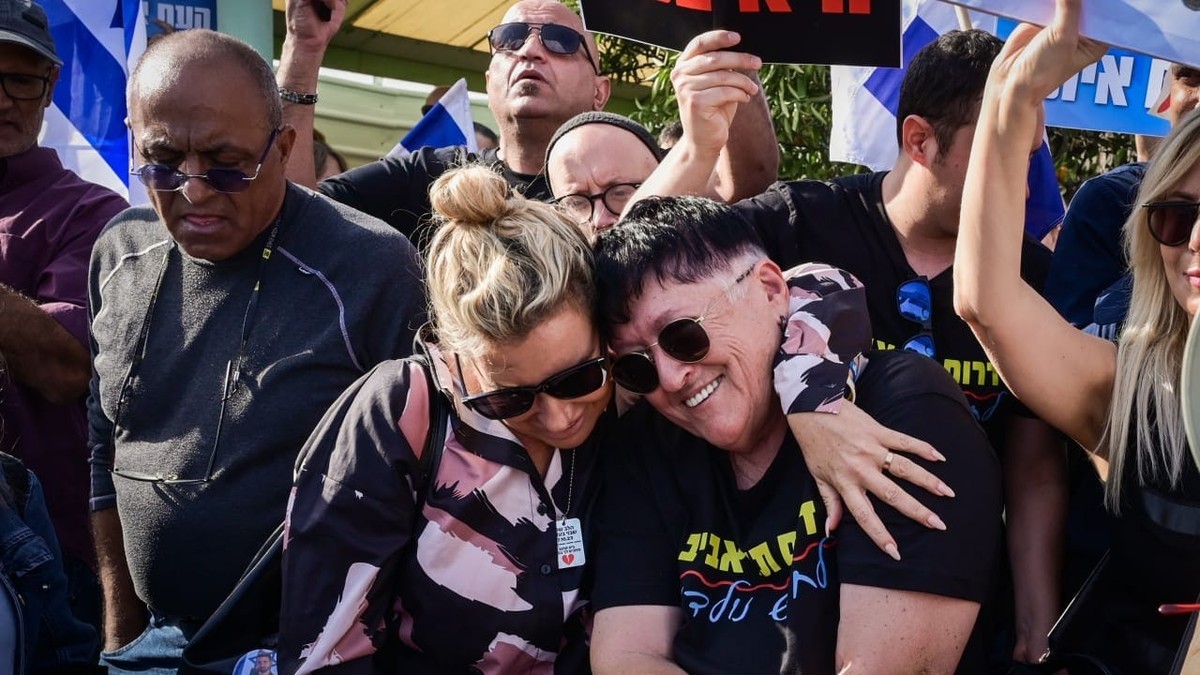
In November 2024 she began serving a 45-day sentence at the Neve Tirtza women's prison in Ramle, having been sentenced that September. What the sentence was for is described differently by two outlets. The Times of Israel reported that it covered offences committed in 2020, including the vandalism at the European Union mission and the preschool trespass. Israel National News described it as a sentence for spray-painting graffiti near judges' homes and near schools, preschools and clinics where the children of foreign workers live, and reported a fine of 2,000 shekels. She refused to convert the term to community service and said she was the victim of selective enforcement. Before going in she told Channel 12: "I've been arrested enough times in my life. Handcuffs don't scare me, and that's the price I'm willing to pay." She served half of it and was released because of prison overcrowding. National Security Minister Itamar Ben Gvir said on 14 November 2024 that her imprisonment was "a mark of shame on the forehead of the State Prosecutor's Office, on the forehead of the court, and a red warning light for the state of Israel's democracy."
The 2018 Deal She Campaigned Against
In 2018 she was among the activists who campaigned against an agreement between Netanyahu's government and the UN refugee agency that would have given thousands of African migrants temporary status in Israel. Netanyahu walked the agreement back shortly after reaching it, following right-wing backlash, a sequence reported by the Times of Israel, The Guardian and PBS. The reversal was the campaign's most visible result at national level, and it fixed her place in the wider immigration debate. The population at the center of that fight had arrived over more than a decade. The Times of Israel reported that the migrants, mainly from Sudan and Eritrea, began crossing the country's porous border with Egypt in 2005 after Egyptian forces violently quashed a refugee demonstration in Cairo, and that the influx stopped when Israel completed a barrier in 2012.
Who the Asylum Seekers Actually Are
The Association for Civil Rights in Israel, citing Population and Immigration Authority data, says 28,000 asylum seekers from Eritrea and Sudan live in Israel, including roughly 21,000 Eritreans and 6,100 Sudanese, and that about 10,000 of the adults live in south Tel Aviv. The group says about 7,000 children of asylum seekers are in the country, most born here, and that Israel acknowledges their lives would be in danger if they were returned to Eritrea or Sudan, which is why it has not deported them. They hold renewable permits rather than refugee status. HIAS puts the asylum approval rate in Israel at less than 1 percent, against a recognition rate above 70 percent for Eritreans and Sudanese in the European Union. The Times of Israel reported that while many of the migrants say they fled conflict or persecution, Israel views them as job-seekers who threaten the Jewish character of the state.
A Day Before the Vote
The death came one day before Israel's election for the 26th Knesset, set for Tuesday 27 October. Al Jazeera reported that the last polls published before a blackout on new surveys took effect on Friday showed neither bloc close to the 61 seats needed for a majority. A survey by public broadcaster KAN projected the opposition alliance at 52 seats against 50 for Netanyahu's bloc, with the rest going to unaffiliated parties including Ra'am and the Joint List. The threshold is 3.25 percent and about 7.3 million citizens are eligible to vote. Both blocs have ruled out governing with the Arab-led parties for now, leaving open lengthy coalition talks, a minority government leaning on outside support, or another election. The pro-Netanyahu side includes Likud, United Torah Judaism, Shas, Otzma Yehudit and Religious Zionism-Zehut.
Who Inherits the Struggle
The question of who carries the campaign was being asked before her death. Amalia Ozer told Walla on Monday: "It was a very rapid and unexpected downward spiral." She said: "The State of Israel has lost a precious asset, someone who cared for the invisible people. I'm not sure she can be replaced." Ozer, who said she spent nights at Paz's bedside over the past month, added: "We always talked about who would inherit the struggle. I'm the one who does all the parliamentary work, but I'm not her. Sheffi is the recognizable face of our movement." Knesset Speaker Amir Ohana, a Likud member, said: "You fought like a lioness for the residents and drew many admirers to your side, and naturally, many fierce enemies as well." The organization said her struggle is not over and pledged to keep fighting for south Tel Aviv and against illegal immigration.
By Jessica Ali, Staff Writer
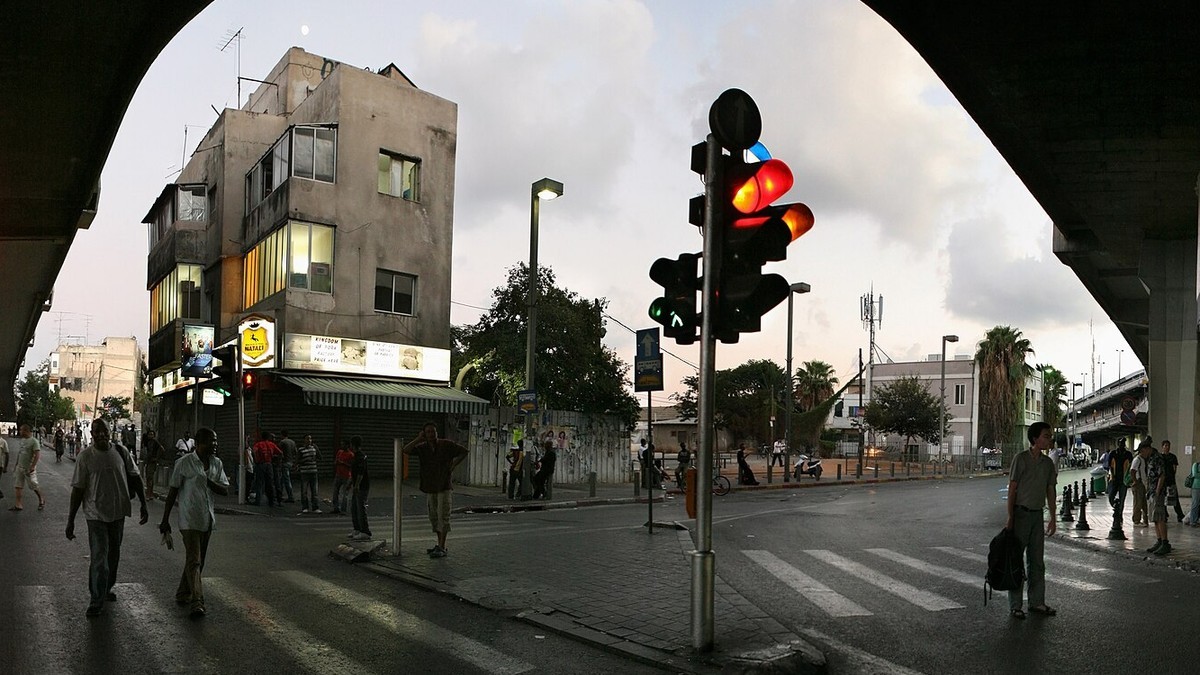
This article was produced with AI-assisted research and editorial support. Sources: The Times of Israel, The Jerusalem Post, Israel National News, the Association for Civil Rights in Israel, HIAS, Al Jazeera, The Guardian and PBS. Photographs: Sheffi Paz at a Knesset committee meeting on 26 January 2026 and arriving at the Neve Tirtza women's prison on 14 November 2024, both via The Jerusalem Post; Levinsky Street at the Tel Aviv Central Bus Station by Roi Boshi, CC BY-SA 3.0, via Wikimedia Commons.
What's Your Reaction?
 Like
0
 Dislike
0
 Love
0
 Funny
0
 Wow
0
 Sad
0
 Angry
0

Editor-in-Chief at Global1.News. Atlanta-based journalist who cuts through the BS and tells it like it is. Lead anchor, host, and the voice you hear when the spin stops and the truth starts.















Comments (0)