
An East Asia Summit Dialogue on Nuclear Non-Proliferation: Addressing Indo-Pacific Strategic Anxieties
The Indo-Pacific confronts the gravest risk of nuclear proliferation since the negotiation of the Nuclear Non-Proliferation Treaty. An essay published through the Asian Peace Programme at the National University of Singapore contends that the East Asia Summit offers the most viable multilateral venue for a structured government-level dialogue on the underlying drivers of this risk. Such an initiative would examine strategic anxieties without requiring immediate commitments, thereby reinforcing t
The NPT Compact and Its Historical Foundations
In 1963, U.S. President John F. Kennedy warned that the world might soon contain as many as twenty-five nuclear weapon states. His argument helped galvanize support for the NPT, which became the cornerstone of global non-proliferation efforts. The treaty succeeded by offering three core incentives: access to peaceful nuclear energy, an international safeguards regime under the IAEA to prevent diversion of materials, and a commitment by the five recognized nuclear weapon states to pursue eventual disarmament. Although not every element of this bargain was fully realized, the combination proved sufficient to dissuade most states from acquiring nuclear weapons. The compact rested on the shared recognition that unchecked proliferation would destabilize the international system.
The NPT emerged from a period of acute superpower confrontation in which both Washington and Moscow recognized that unchecked diffusion of nuclear technology would erode their own strategic primacy. Early negotiations reflected a shared interest in preserving the post-1945 hierarchy of nuclear possession while offering non-nuclear states limited technological benefits. This bargain proved durable because it aligned with the security calculations of most signatories, who viewed the costs of independent programs as outweighing any marginal gains in autonomy. Over subsequent decades the treaty’s safeguards system evolved through successive IAEA protocols, gradually embedding verification practices into national regulatory frameworks across Asia and beyond.
South Korea’s own trajectory illustrates the compact’s early effectiveness. After exploring sensitive fuel-cycle options in the 1970s, Seoul accepted strengthened safeguards under sustained U.S. pressure, thereby anchoring its security to alliance guarantees rather than indigenous capabilities. That choice shaped a generation of defense planning premised on extended deterrence. Contemporary policy debates must therefore weigh whether renewed interest in nuclear options would simply revisit earlier calculations or whether altered threat perceptions now render those earlier restraints obsolete. Any EAS discussion would need to revisit these historical trade-offs without assuming that past compliance guarantees future restraint.
Revisiting Non-Proliferation Assumptions in the Indo-Pacific
Contemporary developments have prompted several states to reconsider these assumptions. South Korea and Poland have discussed nuclear acquisition in unusually direct terms. In Australia, a traditional champion of non-proliferation, a Lowy Institute poll found that 39 percent of respondents now support acquiring nuclear weapons. The essay describes the situation as one in which the dominoes remain upright for the present, yet the fall of any single state could trigger rapid follow-on decisions. These shifts reflect deeper doubts about whether the original NPT incentives continue to address current security concerns.
The erosion of the original NPT incentives has unfolded gradually as regional powers observe widening gaps between treaty promises and contemporary security realities. States that once accepted the regime’s logic now confront simultaneous pressures from a rising China and fluctuating U.S. commitments, prompting reconsideration of long-standing non-nuclear postures. This reassessment occurs against a backdrop of technological diffusion that lowers barriers to weaponization for countries possessing advanced civilian nuclear sectors. The resulting strategic environment rewards hedging behaviors that stop short of overt breakout yet keep options open for rapid reversal.
For South Korea the implications are particularly acute given its advanced reactor fleet and historical sensitivity to North Korean advances. Policymakers must assess whether incremental capability development could be contained within alliance structures or whether it would accelerate regional arms racing. An EAS dialogue could usefully examine how reassurance measures short of nuclear acquisition might restore confidence in the original compact. Such examination would require participants to distinguish between declaratory interest in nuclear options and actual program initiation, thereby clarifying the threshold at which proliferation dynamics become self-reinforcing.
The Double Hedging Strategy and Extended Deterrence Challenges
Regional states are pursuing a double hedging approach. They seek to counterbalance China’s growing influence while simultaneously preparing for possible U.S. unreliability. This dual posture directly undermines the credibility of extended nuclear deterrence. The essay poses the pointed question of whether the United States would sacrifice San Francisco to defend Sydney. As states invest in greater strategic autonomy, nuclear weapons appear to some as the ultimate guarantee of both deterrence and independence. These perceptions erode the psychological foundation of the non-proliferation regime even before any formal withdrawal occurs.
Extended deterrence has always rested on a delicate balance between declaratory commitments and perceived willingness to incur costs on behalf of allies. In the Indo-Pacific this balance faces simultaneous strain from China’s conventional and nuclear modernization and from episodic U.S. domestic skepticism toward alliance obligations. Regional capitals therefore pursue parallel tracks: deepening security cooperation with Washington while developing independent capabilities that could function if that cooperation falters. The resulting posture dilutes the psychological credibility of nuclear guarantees without formally repudiating them.
South Korea’s position within this dynamic is distinctive because of its proximity to North Korea and its reliance on U.S. nuclear assets stationed or deployed regionally. Any perceived weakening of extended deterrence prompts domestic constituencies to advocate compensatory measures, including latent nuclear options. An EAS process could explore whether collective reassurance mechanisms, such as enhanced consultation protocols or shared early-warning arrangements, might substitute for unilateral nuclear hedging. Such measures would need to address both the Chinese challenge and the reliability concerns that have accumulated over successive U.S. administrations.
Arguments Fueling Proliferation Interest
Several simplified narratives have gained traction. Observers note that North Korea, having withdrawn from the NPT, has avoided direct attack, whereas Iran, still an NPT party, has faced sustained pressure. Similarly, some argue that Ukraine would have been more secure had it retained Soviet-era nuclear weapons. Although these claims overlook important contextual differences, they resonate in an environment of strategic uncertainty. The essay emphasizes that such arguments cannot be dismissed; they must be addressed through open examination of their strategic premises and practical limitations.
Simplified historical analogies gain influence when decision-makers confront environments of high uncertainty and compressed decision timelines. References to North Korea’s survival or Ukraine’s post-Soviet choices resonate because they appear to demonstrate that nuclear possession confers unambiguous security advantages. These narratives overlook the specific diplomatic and military contexts that shaped each case, yet they circulate widely in policy circles seeking quick solutions to complex deterrence problems. Their appeal lies in reducing multifaceted strategic dilemmas to binary possession-or-vulnerability choices.
In the Korean context such arguments intersect with long-standing debates over whether nuclear latency could serve as leverage in negotiations with Pyongyang. Policymakers must therefore distinguish between rhetorical utility and operational reality, recognizing that any move toward weaponization would trigger immediate alliance and sanctions consequences. An EAS dialogue could subject these analogies to structured scrutiny, examining the technical thresholds, alliance frictions, and escalation pathways that simplified narratives typically omit. This examination would help clarify whether the perceived benefits of proliferation survive detailed strategic analysis.
South Korea’s Nuclear Debate in Context
South Korea’s public discussion of nuclear options carries particular weight because of its position on the Korean Peninsula. Seoul continues to rely on U.S. extended deterrence commitments under the alliance framework, yet domestic voices increasingly question whether those commitments remain credible amid shifting U.S. domestic politics. The debate intersects with inter-Korean dynamics, where any move toward indigenous nuclear capabilities would likely intensify Pyongyang’s own programs and complicate prospects for denuclearization talks. At the same time, crossing the nuclear threshold would strain the U.S.-ROK alliance and risk international sanctions. An EAS dialogue could provide Seoul with a multilateral channel to articulate these security anxieties, explore alternative reassurance measures, and test the assumptions behind nuclear acquisition without immediately abandoning the non-proliferation norm.
Structuring a Dialogue Through the East Asia Summit
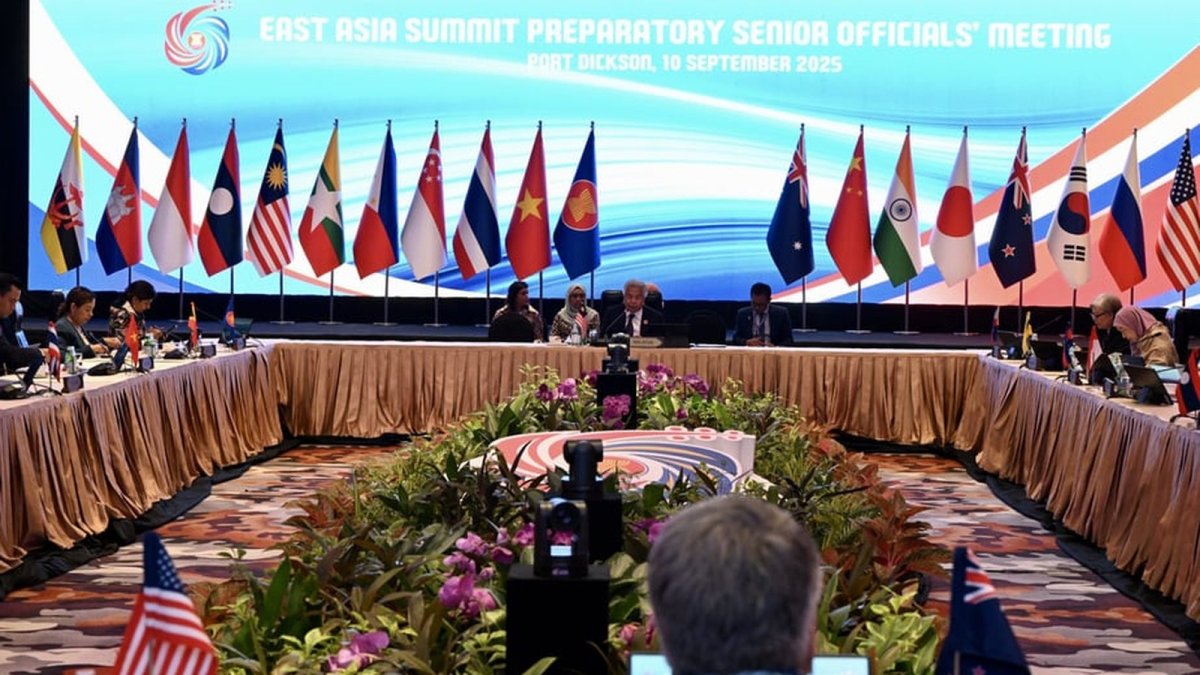
Track II processes have value but cannot substitute for government-level engagement. The East Asia Summit, despite recent strains from U.S.-China tensions, remains the only Indo-Pacific body that includes all major stakeholders. Non-proliferation is an issue on which the United States, China, and Russia share a basic interest in preventing further spread, much as Washington and Moscow cooperated during the Cold War. Australia’s established record—strengthening IAEA safeguards, supporting the Comprehensive Test Ban Treaty, and negotiating the South Pacific Nuclear Free Zone Treaty—positions it to help initiate such a dialogue, ideally in partnership with ASEAN. The resulting process could examine the technical complexity and financial costs of nuclear programs, thereby clarifying that simple deterrence arguments overlook substantial practical obstacles.
The East Asia Summit’s inclusive membership provides a rare venue in which nuclear-weapon and non-nuclear states can address proliferation drivers without the procedural rigidities that have characterized NPT review cycles. Australia’s historical role in multilateral arms-control initiatives supplies diplomatic capital that could help initiate discussions focused on strategic anxieties rather than immediate disarmament obligations. ASEAN partnership would further legitimize the process by embedding it within regional ownership rather than great-power sponsorship.
For South Korea participation would allow articulation of extended-deterrence concerns alongside other regional actors facing similar dilemmas. The dialogue could usefully explore verification standards, cost assessments, and escalation risks associated with new nuclear programs, thereby clarifying practical obstacles that abstract deterrence arguments often minimize. Policy implications include the possibility of generating shared understandings that slow proliferation momentum without requiring formal treaty commitments. Success would depend on maintaining focus on underlying drivers rather than declaratory positions.
Implications for Regional Institutions and Northeast Asian Security
A structured EAS dialogue would not resolve every proliferation driver, yet it could demonstrate that multilateral cooperation remains essential for addressing borderless threats. For Northeast Asia, the initiative would offer South Korea and other states a forum to voice extended-deterrence concerns collectively rather than through unilateral nuclear hedging. While the high point of post-Cold War multilateralism has passed, the essay concludes that problems without borders do not vanish when institutions weaken; they simply require different forms of cooperation. An EAS non-proliferation dialogue represents one such adaptation, preserving space for strategic autonomy while reinforcing the collective interest in preventing a cascade of new nuclear weapon states.
Regional institutions have struggled to adapt to an era in which sovereignty assertions and great-power competition overshadow cooperative mechanisms. An EAS non-proliferation dialogue would test whether limited functional cooperation remains feasible even when broader multilateralism has weakened. For Northeast Asia the initiative could provide a channel through which South Korea and other states voice deterrence concerns collectively, reducing incentives for unilateral nuclear hedging that might otherwise accelerate regional instability.
The broader policy implication is that problems of strategic reassurance cannot be resolved through national measures alone. While the high point of post-Cold War institutional optimism has passed, selective multilateral engagement on proliferation risks offers a pragmatic adaptation that preserves space for autonomy while reinforcing collective interests. Success would not eliminate underlying anxieties but could demonstrate that structured dialogue remains a viable instrument for managing them before they translate into irreversible capability decisions.
By Prof. David Park, Staff WriterThis article was produced with AI-assisted research and editorial support. Reporting is based on sources cited in the article.
What's Your Reaction?
 Like
0
Like
0
 Dislike
0
Dislike
0
 Love
0
Love
0
 Funny
0
Funny
0
 Wow
0
Wow
0
 Sad
0
Sad
0
 Angry
0
Angry
0

East Asia/Technology Correspondent at Global1.News. Seoul-based voice covering Korean politics, technology, business, and culture. Analyzes how technology and geopolitics intersect across East Asia.















Comments (0)