
Russia's New Move in the Kuril Dispute
The Sakhalin branch of the Russian Geographical Society announced on July 28, 2026, plans to install a commemorative plaque for Soviet intelligence officer Richard Sorge on an uninhabited island in the Lesser Kurils. Moscow intends to rename the feature after Sorge in the coming months as part of its ongoing effort to solidify administrative control through symbolic acts. This development occurs against the backdrop of an unresolved territorial dispute that has persisted since Soviet forces occu
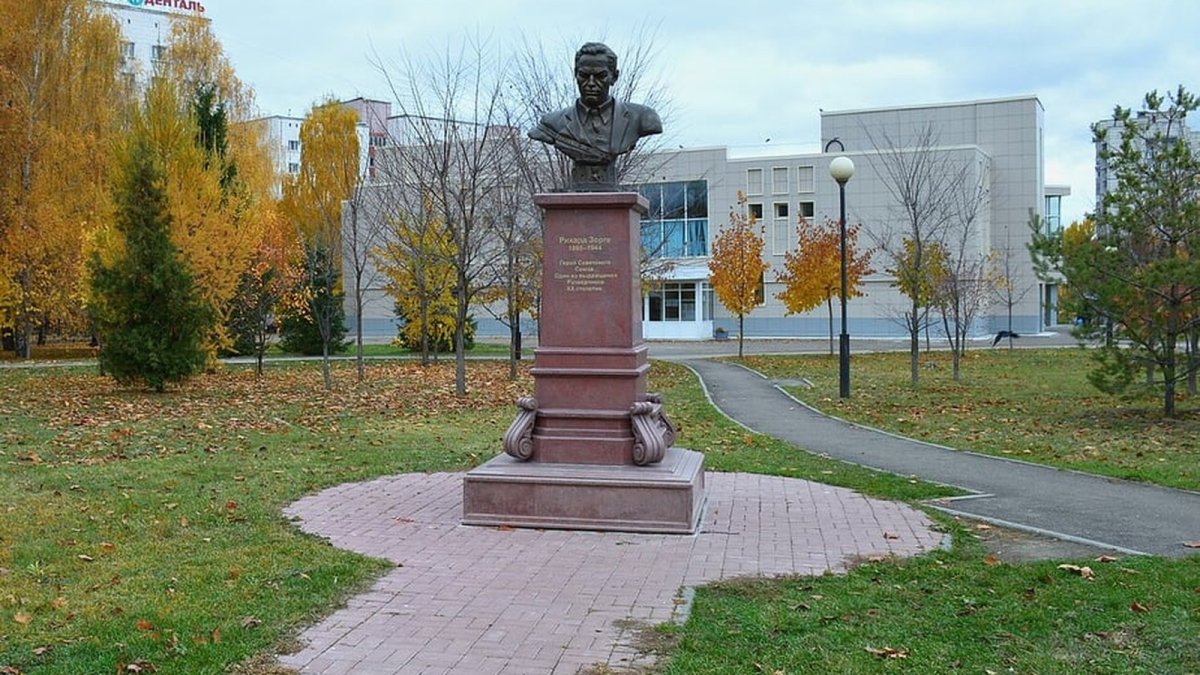
The Sakhalin branch of the Russian Geographical Society announced on July 28, 2026, plans to install a commemorative plaque for Soviet intelligence officer Richard Sorge on an uninhabited island in the Lesser Kurils. Moscow intends to rename the feature after Sorge in the coming months as part of its ongoing effort to solidify administrative control through symbolic acts. This development occurs against the backdrop of an unresolved territorial dispute that has persisted since Soviet forces occupied the islands in 1945.
Russia Names Disputed Kuril Island After Soviet Spy Richard Sorge
Tokyo — The Russian Geographical Society's July 28 announcement marks the latest instance of Moscow employing historical commemoration to reinforce sovereignty claims over the Southern Kurils, which Japan designates as the Northern Territories. The island in question forms part of the disputed southern group that includes Etorofu, Kunashiri, Shikotan, and the Habomai Islands. Russian authorities expect the renaming to proceed shortly, following precedents established in 2012 and 2017 when features received names honoring Soviet figures involved in the 1945 seizure.
A New Name for a Disputed Island
The planned plaque and subsequent renaming target an uninhabited island within the Lesser Kurils chain. This location lies among the southernmost features still claimed by Japan despite Soviet occupation at the close of World War II. The choice of Richard Sorge, whose espionage activities supplied Moscow with critical intelligence on Japanese strategic intentions in 1941, underscores the deliberate linkage between wartime history and contemporary territorial administration.
The Sakhalin branch of the Russian Geographical Society functions as an institutional intermediary between scholarly commemoration and state administrative practice in the Russian Federation. Its July 28 announcement signals an initial procedural step that typically precedes formal governmental endorsement, whereby the society identifies geographic features for official designation and prepares supporting documentation. In the Lesser Kurils, an archipelago of small, largely uninhabited islands extending southward from the main Kuril chain toward Hokkaido, such naming integrates isolated landforms into a unified administrative narrative. This process draws on established Soviet-era precedents of geographic inscription, transforming remote terrain into sites of national memory without requiring large-scale settlement or infrastructure.
Commemorative naming in this context serves as a low-cost yet durable mechanism of territorial administration. By attaching historical figures to specific islands, Russian authorities embed claims within everyday cartographic and educational references, reinforcing administrative control over features that lack permanent populations. The practice aligns with broader Northeast Asian patterns where states use symbolic acts to consolidate presence in contested maritime spaces, particularly where physical development remains constrained by climate and isolation. Over time, these designations accumulate into a layered record that subsequent governments can invoke in diplomatic exchanges.
Sorge's Legacy in Tokyo and Moscow
Richard Sorge operated in Japan from 1933 until his arrest in October 1941 under the cover of a German journalist. His network, which included Japanese journalist Ozaki Hotsumi, provided reports confirming that Tokyo would pursue southward expansion into Southeast Asia rather than attack the Soviet Union. This intelligence contributed to the Soviet decision to redeploy Siberian divisions westward during the defense of Moscow. Sorge received posthumous recognition as a Hero of the Soviet Union in 1964 under Nikita Khrushchev, and President Vladimir Putin has cited him as a personal influence on his KGB career.
Sorge’s network operated within the constrained environment of wartime Tokyo, where his standing as a German journalist and his personal connections to Ambassador Eugen Ott and journalist Ozaki Hotsumi provided access to policy deliberations at the highest levels of the Japanese government. Postwar Soviet authorities initially suppressed recognition of his contributions, reflecting the regime’s suspicion of independent intelligence operations, until de-Stalinization and renewed mass-cultural interest prompted the 1964 Hero of the Soviet Union designation that reframed him as a symbol of loyalty and foresight.
In contemporary Russia, Sorge’s biography has been selectively integrated into narratives of state security service continuity. Vladimir Putin’s repeated references to the agent underscore a personal identification with intelligence tradecraft that prioritizes long-term strategic advantage over immediate political expediency. Japanese historical memory, by contrast, situates Sorge within accounts of wartime espionage and betrayal, emphasizing the domestic consequences of his activities rather than their geopolitical utility. This divergence illustrates how the same historical actor can anchor competing national interpretations of wartime agency and postwar legitimacy.
Commemoration as Territorial Claim
Russia has applied this naming strategy consistently over the past decade to features across the Kuril chain. Earlier examples include islands or landmarks honoring Pavel Fitin, head of Soviet foreign intelligence from 1939 to 1946; General Kuzma Derevyanko, who signed the Japanese Instrument of Surrender aboard the USS Missouri; and General Alexei Gnechko, who commanded the 1945 Kuril operation. Each act serves to embed Russian administrative presence through official geographic designations that Tokyo has protested as illegitimate.
Over the preceding decade, successive naming initiatives have embedded Soviet-era military and intelligence figures within the Kuril archipelago’s geographic nomenclature. The 2012 and 2017 designations established a pattern of linking territorial features to individuals directly associated with the 1945 occupation and the formal acceptance of Japan’s surrender. These acts function as incremental administrative assertions that accumulate without necessitating new physical infrastructure or large-scale demographic change.
Commemorative strategies of this kind operate within a broader Russian approach that treats geographic designation as an instrument of sovereignty maintenance, particularly in regions where bilateral negotiations remain stalled. The consistency across multiple administrations indicates a deliberate policy of symbolic layering rather than episodic gestures.
From 2022 Proposal to 2026 Naming
In January 2022 Moscow first floated the idea of reburying Sorge's remains from Tokyo on one of the disputed islands. The current proposal substitutes a direct naming of the island itself, creating a permanent geographic marker without requiring physical relocation. The Sakhalin branch announcement on July 28, 2026, advances this approach and aligns with the decade-long pattern of using Soviet-era intelligence and military figures to assert enduring control.
The progression from the 2022 exhumation proposal to the 2026 island-naming decision reflects an adaptive calibration of symbolic measures in response to evolving bilateral and domestic conditions. Where reburial would have required coordination with Japanese authorities and risked direct confrontation over remains, attaching Sorge’s name directly to an island achieves comparable commemorative impact through unilateral administrative action. This shift suggests Moscow has prioritized measures that reinforce territorial claims while minimizing external dependencies.
Under current circumstances, the naming approach allows Russian officials to sustain pressure on the unresolved dispute without introducing new variables that could complicate relations with third parties. It also aligns with established practices of geographic memorialization that can be implemented through domestic institutions alone. Analysts may interpret this evolution as evidence of a preference for durable, low-visibility assertions that accumulate over time rather than high-profile initiatives subject to immediate international scrutiny.
The Unresolved 80-Year Dispute
Japan maintains that the Soviet seizure violated the 1941 Soviet-Japanese Neutrality Pact and that the four southern islands lie outside the Kuril group renounced under the 1951 San Francisco Peace Treaty. Russia rejects this distinction and treats the entire chain as sovereign territory acquired through wartime victory. No bilateral agreement has resolved the status of the Southern Kurils despite multiple rounds of negotiations since the 1950s.
The legal ambiguity rooted in the 1945 seizure has never been tested to resolution, in part because successive Japanese governments have tied any settlement to the broader normalization of relations with Moscow. Negotiations since the 1950s have periodically revived proposals for a two-island formula or joint economic activity, but each round has foundered on the same interpretive gap: Tokyo treats the four islands as distinct from the Kuril group, while Moscow regards the question as closed. The absence of a peace treaty between the two states remains one of the enduring structural consequences of this division.
This interpretive divergence has prevented conclusion of a postwar peace treaty and has shaped decades of diplomatic exchanges. Japanese governments have consistently protested Russian administrative actions as perpetuating an illegal occupation, while Russian positions emphasize the finality of 1945 outcomes. The resulting stalemate illustrates how differing readings of mid-twentieth-century agreements continue to constrain contemporary bilateral relations in Northeast Asia.
Northeast Asia's Territorial Memory Politics
Similar patterns of historical commemoration appear in other Northeast Asian territorial disputes, including those involving Korea's claims over Dokdo and Japan's positions regarding the Senkaku Islands. Seoul has observed Russia's alignment with Pyongyang, which includes expanded military and economic cooperation since 2022, as a factor complicating trilateral security coordination among Japan, South Korea, and the United States. Russian actions in the Kurils reinforce a broader posture that prioritizes historical narratives over diplomatic compromise, affecting Seoul's room for independent engagement with Moscow on energy and regional stability issues.
Commemoration practices in Northeast Asia frequently serve as instruments for reinforcing territorial positions amid unresolved postwar claims. Japan has employed similar strategies in its administration of disputed features, embedding historical narratives within public education and official mapping. These parallel approaches highlight a regional pattern in which states link memory of wartime events to contemporary sovereignty assertions, thereby sustaining domestic support for long-standing positions.
The Kuril case shares structural similarities with the Dokdo/Takeshima dispute between South Korea and Japan, where commemorative acts and administrative designations function to consolidate control and shape historical consciousness. In both instances, memory politics intertwine with strategic considerations because unresolved territorial questions affect maritime boundaries, resource access, and alliance dynamics. Such practices demonstrate how historical interpretation remains an active component of regional diplomacy rather than a settled background condition.
Implications for Regional Security Dynamics
The naming decision arrives at a moment when North Korea's deepening ties with Russia have drawn renewed attention to the Sea of Japan and the Sea of Okhotsk. South Korean policymakers must weigh how symbolic Russian assertions in the Kurils influence Japanese threat perceptions and, by extension, the pace of bilateral defense cooperation between Seoul and Tokyo. Historical memory politics remain central to public discourse in both Korea and Japan, where wartime legacies continue to shape responses to contemporary territorial claims.
The naming underscores Moscow’s willingness to maintain pressure on territorial questions even as its strategic alignment with Pyongyang introduces new variables into Northeast Asian security calculations. Japanese planners must therefore account for potential Russian actions that could complicate responses to regional contingencies, adding a further layer of uncertainty to an already crowded threat environment.
For South Korea, the development prompts careful assessment of how Moscow’s moves intersect with trilateral security arrangements. Seoul’s diplomatic calculus involves balancing condemnation of territorial revisionism with the need to preserve channels for engagement on peninsula-related issues. The episode illustrates how symbolic actions in one dispute can ripple across alliance structures and influence calculations regarding extended deterrence and maritime domain awareness.
What This Means for the Region
Russia's continued use of geographic naming to consolidate control over the Kurils signals that the dispute will remain frozen absent major shifts in great-power relations. For Northeast Asia, the episode illustrates how intelligence history and wartime commemoration serve as instruments of statecraft rather than neutral historical recognition. Korean observers note parallels with their own experience of unresolved historical grievances, underscoring the enduring linkage between territorial integrity and national narrative across the region.
Japanese responses are likely to include formal diplomatic protests and continued emphasis on the legal distinction between the disputed islands and the broader Kuril chain. Analysts will interpret the naming as confirmation that Moscow intends to treat the territorial question as settled through administrative faits accomplis rather than through negotiated settlement. This approach aligns with patterns observed in other unresolved disputes where states consolidate control through incremental symbolic and administrative measures.
In 2026, the persistence of such disputes underscores their enduring strategic significance for maritime access, resource claims, and alliance cohesion across Northeast Asia. The Sorge naming demonstrates how historical memory continues to serve as a vehicle for contemporary territorial reinforcement, suggesting that similar commemorative initiatives may recur as states seek to anchor sovereignty claims within established geographic and narrative frameworks.
By Prof. David Park, Staff WriterThis article was produced with AI-assisted research and editorial support. Reporting is based on sources cited in the article.
What's Your Reaction?
 Like
0
Like
0
 Dislike
0
Dislike
0
 Love
0
Love
0
 Funny
0
Funny
0
 Wow
0
Wow
0
 Sad
0
Sad
0
 Angry
0
Angry
0

East Asia/Technology Correspondent at Global1.News. Seoul-based voice covering Korean politics, technology, business, and culture. Analyzes how technology and geopolitics intersect across East Asia.













Comments (0)