
Russia Strikes Kyiv Again as Ballistic Missile Shortage Leaves Civilians Exposed
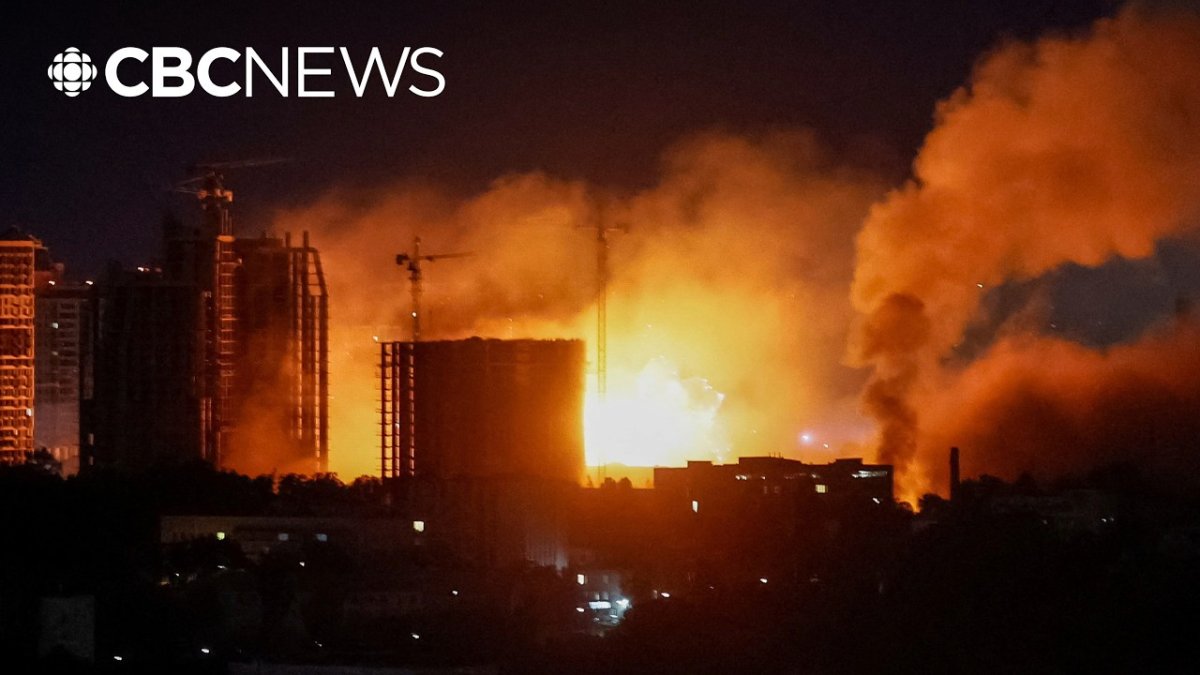
In a recent CBC News report, footage from Kyiv captured the immediate aftermath of overnight explosions that shattered windows and collapsed roofs across multiple districts, underscoring the scale of Russia's latest assault on the Ukrainian capital.
In a recent CBC News report, footage from Kyiv captured the immediate aftermath of overnight explosions that shattered windows and collapsed roofs across multiple districts, underscoring the scale of Russia's latest assault on the Ukrainian capital. The barrage, which struck in the second major attack on Kyiv this week, has again focused international attention on Ukraine's dwindling supply of air defence interceptors — and on the allied decisions that will determine whether cities like Kyiv can keep their residents safe.
Russia Strikes Kyiv Again as Ballistic Missile Shortage Leaves Civilians Exposed
Kyiv, Ukraine – Saturday — Russia launched a massive ballistic missile and drone attack on Kyiv overnight into Saturday, killing at least 10 people and injuring around 30 in the second major strike on the capital this week. Ukrainian President Volodymyr Zelenskyy reported that Russia fired 35 missiles, including 27 ballistic ones, and 185 attack drones, with Kyiv as the primary target. Explosions began around 1:30 a.m. local time, blowing doors off hinges and damaging buildings in five districts.
The Attack
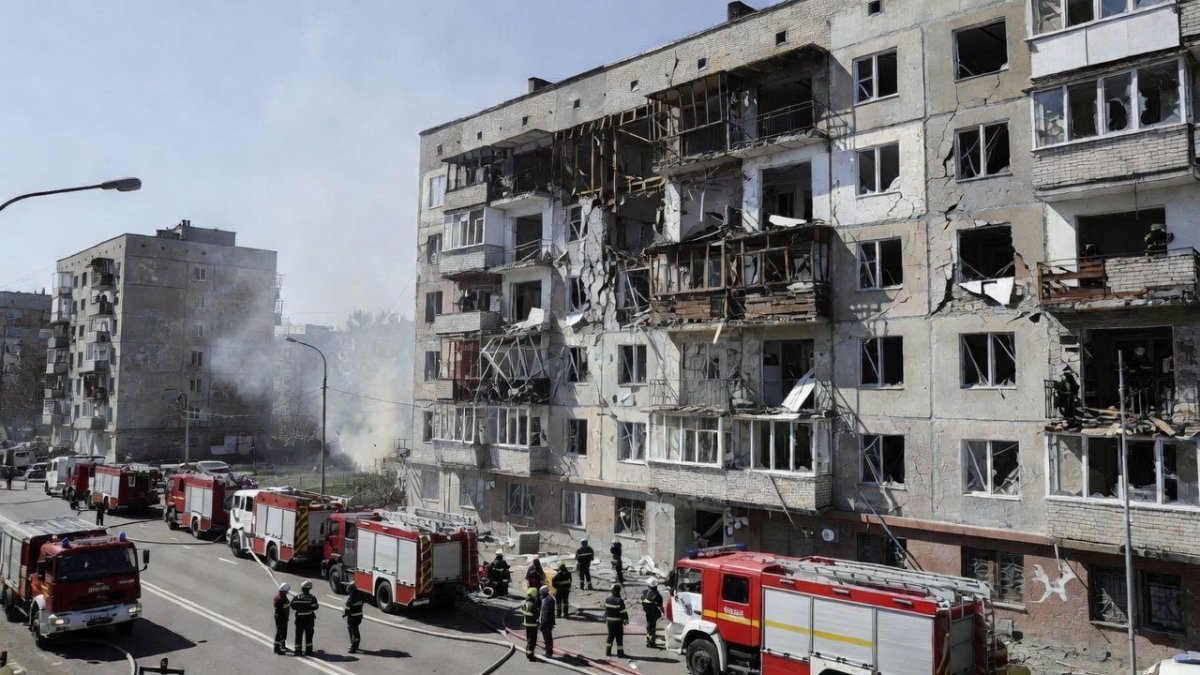
Russian forces targeted residential areas with ballistic missiles that proved difficult to intercept. Ukraine's state emergency service confirmed strikes hit Darnytskyi, Solomianskyi, Shevchenkivskyi and two additional districts. The barrage arrived in waves, combining faster ballistic missiles and slower drones, which complicated defensive efforts; only one of the 27 ballistic missiles was intercepted. In Darnytskyi district, seven people died and 14 were wounded, with multiple buildings and vehicles damaged. Solomianskyi district recorded two deaths and eight injuries when a five-storey residential building was hit.
Kyiv mayor Vitali Klitschko posted on social media that the night was horrific for the city. Russia's defence ministry described the operation as a "massive strike" against Ukrainian military-industrial complex facilities and logistics centres in Kyiv, while claiming its air defences destroyed 274 Ukrainian drones overnight. The attack marked the second major strike on the capital this week amid a broader pattern of stepped-up Russian bombardment of Ukrainian cities. The war, now in its fifth year along a roughly 1,200-kilometre front line, has seen Russian advances slow by more than half this year even as Moscow intensifies its long-range campaign against urban centres.
For residents of Kyiv, the distinction between military targets and civilian neighbourhoods has blurred in practice. Ballistic missiles travel at several times the speed of sound, leaving little time between launch detection and impact, which is why officials say the interceptor shortage carries such grave consequences for densely populated districts. The strikes also damaged the embassy of Lithuania, a NATO member, when missiles hit nearby buildings — a reminder that the war's reach now extends to diplomatic missions in the Ukrainian capital. Ukraine and Russia have both ramped up attacks on each other in recent months, with Kyiv pressing its counter-offensive against Russian oil infrastructure even as it absorbs punishing strikes at home.
Rescue Efforts and Casualties
Firefighters and rescue crews worked through the night to pull residents from burning and damaged apartment blocks across the affected districts. In Solomianskyi district, teams rescued 35 residents from the upper floors of a damaged five-storey building, with children among the wounded. Firefighters in Shevchenkivskyi district extinguished a blaze in a non-residential building, while authorities reported damage to commercial and residential property in two additional districts.
Ukraine's state emergency service tallied nine deaths and 28 injuries from the strikes, including four children, with CBC reporting at least 10 killed and approximately 30 injured overall. A separate Russian strike two days earlier killed at least 10 people elsewhere in Ukraine, part of what Ukrainian officials have described as an expanded effort by Moscow to capitalise on Kyiv's shortage of interceptors capable of bringing down ballistic missiles. The psychological toll is mounting as well: 64-year-old resident Liudmyla Nakonechna told the Associated Press from a basement shelter that attacks now occur practically every day, adding, "It is incredibly hard to bear this psychologically."
Interceptor Shortage at the Heart of the Crisis
Only one of the 27 ballistic missiles launched at Kyiv was shot down because Ukraine lacks sufficient interceptors for its US Patriot air defence systems. Patriot systems form a key part of Ukraine's air defence, yet the supply of interceptors has become the critical bottleneck. Zelenskyy has stated that every package of ballistic missile interceptors saves the lives of Ukrainian people, and he has made repeated appeals to allies for more such munitions.
The repeated failure to intercept ballistic missiles reveals how supply constraints have altered the battlefield balance, forcing Ukrainian forces to ration defensive resources across multiple fronts. This dynamic has emboldened Russia to launch more frequent and concentrated barrages, knowing that volume alone can overwhelm existing systems. As a result, civilian districts face heightened exposure precisely when diplomatic efforts to expand production remain stalled. The pattern suggests that without accelerated deliveries, future strikes will continue to exploit the same gap, turning interceptor scarcity into a recurring strategic advantage for Moscow.
The Washington Question
Earlier this week Zelenskyy met US President Donald Trump, who initially indicated agreement to licence Patriot missile production for Ukraine. On Friday, however, Trump stated that Washington had not agreed, saying the United States must be "very judicious" and "very careful" about sharing the technology, and that the matter remains under discussion. Licensing production would allow Ukraine to manufacture interceptors domestically, reducing reliance on foreign shipments and easing the pressure on allied stockpiles.
Allied coordination on such a step would involve multiple partners beyond the United States, and the outcome matters directly for Ukraine's defence given that only one of 27 ballistic missiles was intercepted in the latest attack. The stalled talks leave Ukraine reliant on existing interceptor supplies while Russia ramps up ballistic missile use, directly exposing the link between delayed production licensing decisions in Washington and the immediate vulnerability of Ukrainian cities. Zelenskyy has emphasised that additional interceptors save lives, and the coming weeks will test whether diplomatic progress can keep pace with the intensity of Russian strikes.
The licence question also carries broader significance for allied defence industrial policy. If Washington were to permit Ukrainian production of Patriot interceptors, it would mark one of the most consequential technology transfers of the war, with implications for how Western weapons systems are built, maintained and supplied in future conflicts. Trump's caution reflects the sensitivity of sharing advanced missile technology, even with a close partner under existential threat. For Canada and other allies that have contributed to Ukraine's air defence through donations and joint procurement, the outcome of the licence talks will shape whether those contributions can be replenished quickly enough to keep pace with Russian production of ballistic missiles.
Impact on Canadians
This story matters to Canadians because Canada has been one of Ukraine's most steadfast supporters since 2022, providing billions in military, financial and humanitarian aid. Operation UNIFIER continues to rotate Canadian Armed Forces personnel through training missions for Ukrainian troops in Europe. The Ukrainian-Canadian community is among the world's largest, with major populations in Winnipeg, Edmonton, Toronto and Saskatoon, where families maintain close ties to relatives in Kyiv.
The federal government's CUAET emergency travel measures have allowed hundreds of thousands of Ukrainians to settle in Canadian cities, many of whom still have family facing these attacks. The personal connections between Canadian communities and Ukrainian cities mean that each strike carries immediate emotional weight for families monitoring events from afar. Residential attacks that injure children and damage homes resonate with Canadian values of protecting civilians and supporting democratic sovereignty. Lithuania's foreign minister reported that the Lithuanian embassy in Kyiv sustained damage during the barrage, underscoring how closely the war now touches diplomatic missions and international personnel. Sustained Canadian engagement now hinges on whether Ottawa can press allies to resolve the interceptor shortfall before further civilian losses accumulate, linking domestic values to international munitions policy.
What Happens Next
Ukraine has responded by striking Russian oil facilities, logistics sites and weapons production, while both sides have increased attacks in recent months. Negotiations over additional Patriot interceptors remain unresolved, leaving Kyiv vulnerable to further ballistic strikes. The status of interceptor negotiations with the United States will determine whether Patriot supplies can increase in the coming weeks, and Canadian readers should watch for developments in allied munitions deliveries, the scale of further Russian strikes on urban centres, and any progress in production licensing talks.
The intensified Russian campaign on Kyiv raises urgent questions about the pace of air defence deliveries and the broader direction of the conflict, with direct implications for Canadian policy on military aid and humanitarian commitments. For Canadian readers, these events highlight the ongoing need for sustained allied support and the personal connections that link communities across the Atlantic. The human cost in Kyiv, with at least nine confirmed dead and dozens wounded, underscores the ongoing pressure on civilian areas — and the quiet determination of residents who, like Nakonechna, continue to shelter through attacks that now arrive almost daily.
What unfolds in the coming weeks will depend on several moving pieces: whether Washington and Kyiv reach agreement on Patriot production licensing, whether allied governments can accelerate interceptor deliveries from existing stockpiles, and whether Ukraine's own strikes on Russian oil infrastructure begin to constrain Moscow's ability to sustain its long-range campaign. For Canadians watching from across the Atlantic, the war is no longer a distant conflict but one with direct ties to their cities, their communities and their government's commitments. As Kyiv's residents once again survey the damage of an overnight attack, the question of how quickly the West can close the interceptor gap has never felt more urgent.
By Alex Thompson, Staff Writer
This article was produced with AI-assisted research and editorial support. Reporting is based on sources cited in the article.
What's Your Reaction?
 Like
0
Like
0
 Dislike
0
Dislike
0
 Love
0
Love
0
 Funny
0
Funny
0
 Wow
0
Wow
0
 Sad
0
Sad
0
 Angry
0
Angry
0

Canada Correspondent at Global1.News. Based in Toronto, covering Canadian politics, energy, trade, and US-Canada relations. Provides the Canadian perspective on North American and global affairs.













Comments (0)