
Kubeh Festival Near Jerusalem Showcases 2,700 Years of Kurdish Jewish Heritage
In a recent i24NEWS English report, thousands gathered near Jerusalem to celebrate Kurdish culture at the annual Kubeh Festival, spotlighting the traditions of Israel's Kurdish Jewish community — a community of roughly 200,000 people whose roots in the mountains of Kurdistan stretch back.
In a recent i24NEWS English report, thousands gathered near Jerusalem to celebrate Kurdish culture at the annual Kubeh Festival, spotlighting the traditions of Israel's Kurdish Jewish community — a community of roughly 200,000 people whose roots in the mountains of Kurdistan stretch back nearly three millennia. The festival, held in Mevaseret Zion on the road between Tel Aviv and Jerusalem, is one of the most visible expressions of a bond between Israelis and Kurds that is at once cultural, historical, and strategic.
Kubeh Festival Near Jerusalem Showcases 2,700 Years of Kurdish Jewish Heritage
Jerusalem, Israel — The Kubeh Festival, held in Mevaseret Zion just west of Jerusalem near the Castel national site, drew thousands of attendees this week for a celebration of Kurdish music, dance, and cuisine centered on kubeh, the stuffed dumpling dish that has become one of the most beloved comfort foods in Israeli kitchens. For Kurdish Jews, the event is far more than folklore; it is a living link to a homeland that most families left more than seven decades ago.
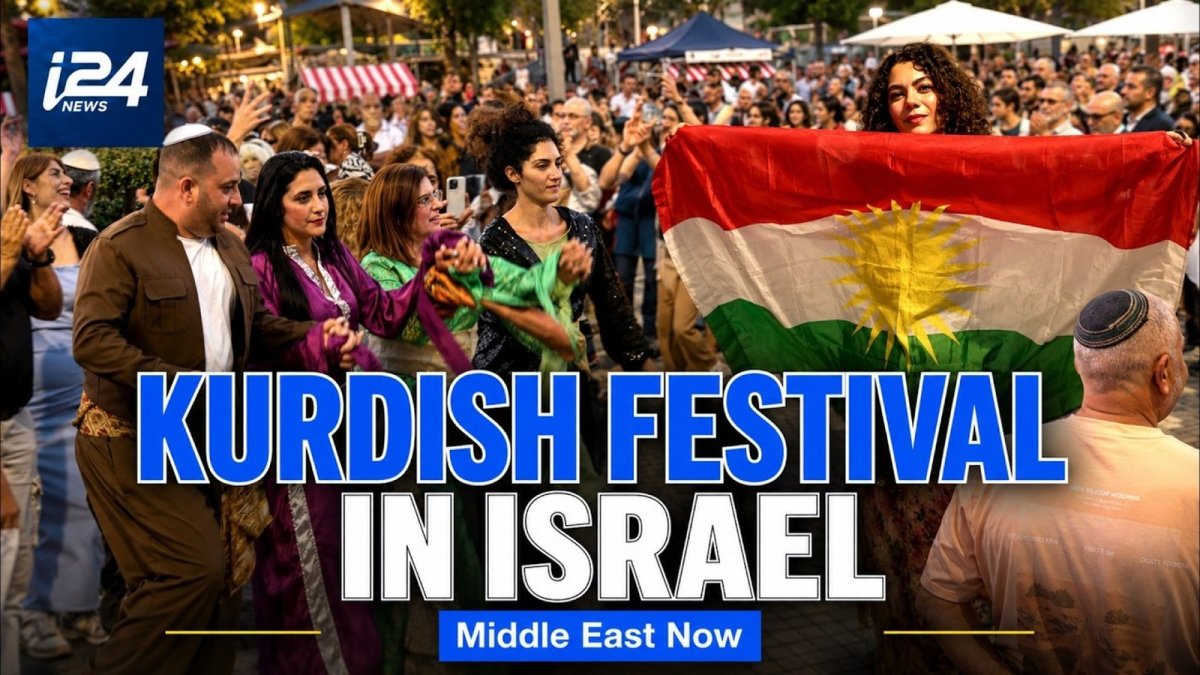
The Kubeh Festival in Mevaseret Zion
The annual celebration in Mevaseret Zion, a town on the historic Tel Aviv-Jerusalem corridor, featured performances and food stalls that connected participants directly to practices maintained across generations. Organizers framed the festival as a preservation of heritage that traces the community's presence in the region from the First Temple period to modern Israel.
The location is fitting. Mevaseret Zion overlooks the approaches to Jerusalem, and the festival's blend of Kurdish music, dance, and cuisine underscores how deeply these traditions are woven into daily Israeli life — from family tables to national food culture.
Kubeh itself is a case study in how Kurdish Jewish cooking entered the Israeli mainstream. The dish — a semolina or bulgur shell stuffed with spiced meat, served in a tangy broth — is now found in restaurants and home kitchens across the country, far beyond the community that brought it. At the festival, generations cooked side by side, with older women passing recipes to children who will carry them forward.
A Heritage Nearly Three Millennia Old
Jews lived in Kurdistan for almost 3,000 years, in relative harmony with Kurdish Muslim neighbors, maintaining Jewish schools and synagogues across a mountainous region that today spans southeastern Turkey, northern Iraq, northeastern Syria, and northwestern Iran. They primarily spoke Aramaic but borrowed words from Kurdish, producing what scholars describe as a distinctive "mountain Judaism."
That tradition produced remarkable figures, including Osnat Barzani, the 17th-century woman religious scholar from the Mosul region, and a unique festival calendar. The Kurdish Jewish spring festival Seharane, also called Saharane, shares roots with Newroz, the Zoroastrian-inspired celebration of the new year that marks the beginning of spring. Saharane celebrations now take place in various Israeli cities, with the largest gatherings in Jerusalem drawing around 13,000 attendees.
From the Mountains of Kurdistan to the Borders of Israel
On the eve of Israel's establishment in 1948, Kurdish Jews numbered between 20,000 and 30,000, most of them in the Kurdish region of northern Iraq. Nearly all emigrated to Israel after 1948, and between 1951 and 1952 Israel conducted Operation Ezra and Nehemia, airlifting Kurdish and Iraqi Jews en masse to the young state.
Kurdish Jews went on to establish some of Israel's earliest moshavim, or farming villages, and were settled along the country's borders during the 1950s, serving as early border guardians in the state's formative years, according to Yehuda Ben Yosef, President of the Kurdish Community in Israel. Today only a few hundred Jewish families remain in Kurdistan — about 500 in Iraqi Kurdistan — a measure of how complete the departure was.
The imprint of that community is everywhere in Israel: streets carry Kurdish names, popular Israeli singers of Kurdish descent perform in Kurdish, and Kurdish restaurants are a staple of the country's culinary scene. The Kurdish diaspora in Israel also holds Kurdiyada, a three-day festival featuring Kurdish food, music, dance, and the flag of Kurdistan.
Newroz and Kurdish Culture in Israel
Newroz is the most important festival in Kurdish culture, celebrating the arrival of spring and the new year with bonfires lit on the evening of March 20, alongside games, dancing, family gatherings, special foods, and poetry readings. This year's Newroz on March 21 drew massive gatherings from Istanbul's Yenikapi Square, where crowds numbered in the hundreds of thousands, to Bonn, Germany, where participants unfurled a 100-meter Kurdish flag, performed halay dances, and waved Israeli flags in a display of shared struggles.
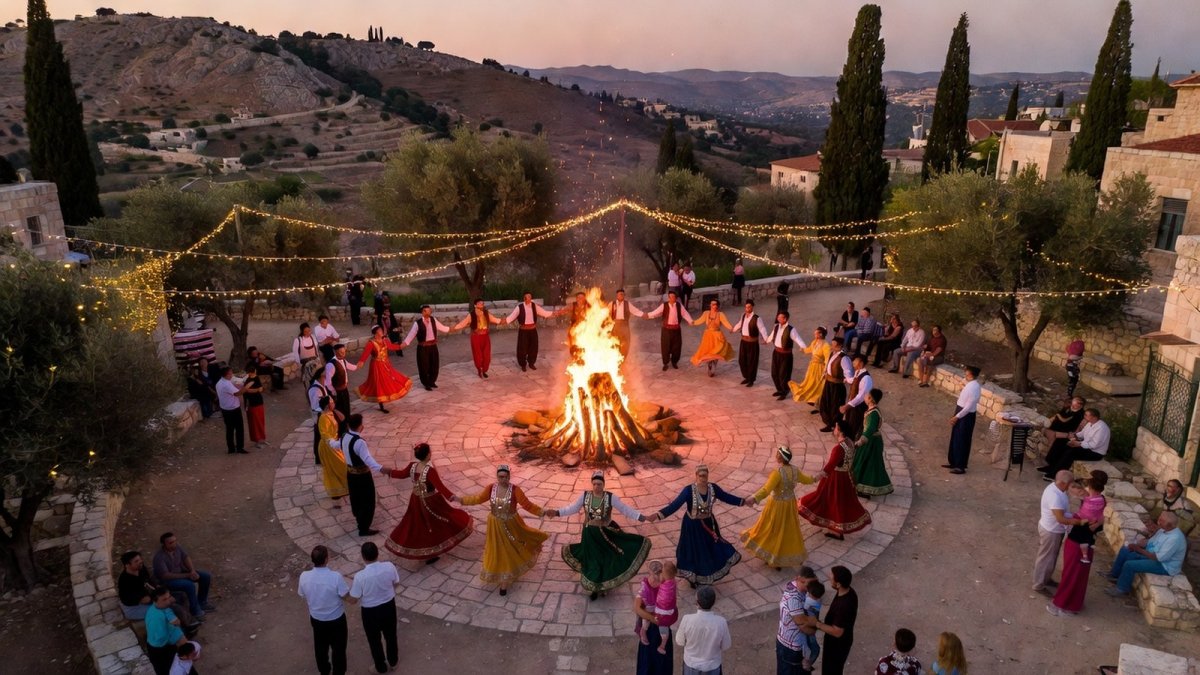
For Israelis of Kurdish descent, the festival season is a reminder that the Kurds remain the largest stateless nation in the Middle East. Iraqi Kurdistan, governed by the Kurdistan Regional Government, is the only autonomous Kurdish region today, while Kurdish communities in Turkey, Syria, and Iran continue to navigate a shifting regional landscape.
The waving of Israeli flags at this year's Newroz gatherings in Europe was deliberate. For many Kurds, Israel is one of the few states that has consistently treated the Kurdish cause with sympathy, and the flag is a gesture of recognition across a distance of thousands of kilometers. In Israel, the Kurdish community returns the sentiment, keeping the Kurdistan flag prominent at its own festivals.
Israel and Kurdistan: A Strategic Bond
Kurds and Israelis are widely described as natural geopolitical allies. A 2001 Hebrew University of Jerusalem study suggested the bond is not just ancient but likely genetic. Israeli Foreign Minister Gideon Sa'ar began his tenure calling the Kurdish people a "natural ally" of Israel, arguing that in a region where Israel will always be a minority, natural alliances form with those who share its values.
Institutional ties have followed. Tel Aviv University runs a Kurdish Studies Program directed by Dr. Ofra Bengio, and the Jewish Coalition for Kurdistan, established in 2017 with Bengio and Sa'ar on its board, works to strengthen ties between Jews and Kurds worldwide. The Kurdish Institute of Jerusalem, an independent NGO, promotes Kurdish and Kurdish-Jewish culture in Israel through academic events, conferences, art exhibitions, and film screenings.
Diplomatic and International Reactions
The Kurdistan Regional Government has taken steps of its own. A 2015 minority rights law recognized Judaism as a protected religion and created the first representative for Jewish affairs in the Ministry of Endowment and Religious Affairs. In 2016, Erbil hosted the first Holocaust Remembrance Day ceremony in the Kurdish capital, attended by Kurdistan officials and Kurdish Jews.
Mariwan Naqshbandi, head of Kurdistan's Directorate for Religious Coexistence, spoke of the "duty to support the Jewish religion." Cultural memory is also preserved in institutions: Erbil's Museum of Education maintains an exhibit on Daniel Kassab, a Kurdish Jewish artist, while the Kurd Heritage Museum in Sulaymaniyah houses a Jewish Collection. These gestures remain limited — the position of Jewish affairs representative has reportedly lapsed — but they signal a willingness in Erbil to acknowledge the Jewish chapter of Kurdish history.
Analysis and What This Means
The festival's warmth should not obscure its strategic backdrop. Israel remains in an active conflict with Iran that began in late February, with missile and drone exchanges, US involvement, and a collapsed US-Iran memorandum, and Israeli elections were held under missile fire. In that environment, the Kurds' geographic position matters: Iraq's Kurdish region sits adjacent to Iran, hosts US forces, and represents a rare example of a Middle Eastern minority that has maintained working ties with Jerusalem.
Iranian Kurds in the east have long served as a pressure point for Tehran, while Turkey, a NATO member, faces its own Kurdish insurgency and has conducted operations in northern Iraq and Syria. For Israeli analysts, the Kurdish question is therefore not merely sentimental — it is a strategic variable that touches Iranian power projection, Iraqi stability, and the balance of influence across the region.
Domestically, the festival also speaks to a broader Israeli story. Kurdish Jews are part of the Mizrahi mosaic — the Jews of Arab, Persian, Turkish, and Kurdish lands who today number around 200,000 families of origin across those communities, with the largest wave of migration arriving between 1948 and 1950. For decades, that heritage was often overshadowed in Israeli culture; events like the Kubeh Festival mark its confident return to the center of national identity.
What the Kubeh Festival offers is the human foundation beneath that calculation: a community that kept its language, its food, and its memory for centuries in the mountains, and that now anchors a quiet but durable alliance between Israel and the Kurds. As the region's crises evolve, that bond is likely to remain one of the more consequential — and least predictable — relationships in the Middle East.
By Hannah Berg, Staff Writer
This article was produced with AI-assisted research and editorial support. Reporting is based on sources cited in the article.
What's Your Reaction?
 Like
0
Like
0
 Dislike
0
Dislike
0
 Love
0
Love
0
 Funny
0
Funny
0
 Wow
0
Wow
0
 Sad
0
Sad
0
 Angry
0
Angry
0
Israel Correspondent at Global1.News. Based in Tel Aviv, covering Israeli politics, security, technology, and society. Provides balanced, deeply-sourced reporting on one of the most closely-watched regions in the world.













Comments (0)