
Israeli Occupiers Cut Power to West Bank Town as Army Arrests 5 Palestinians
Israeli forces cut electricity to a Palestinian town near Nablus on Sunday by attacking its power infrastructure, while troops arrested five Palestinians in raids spanning the northern and southern occupied West Bank, Palestinian news agency Wafa reported.
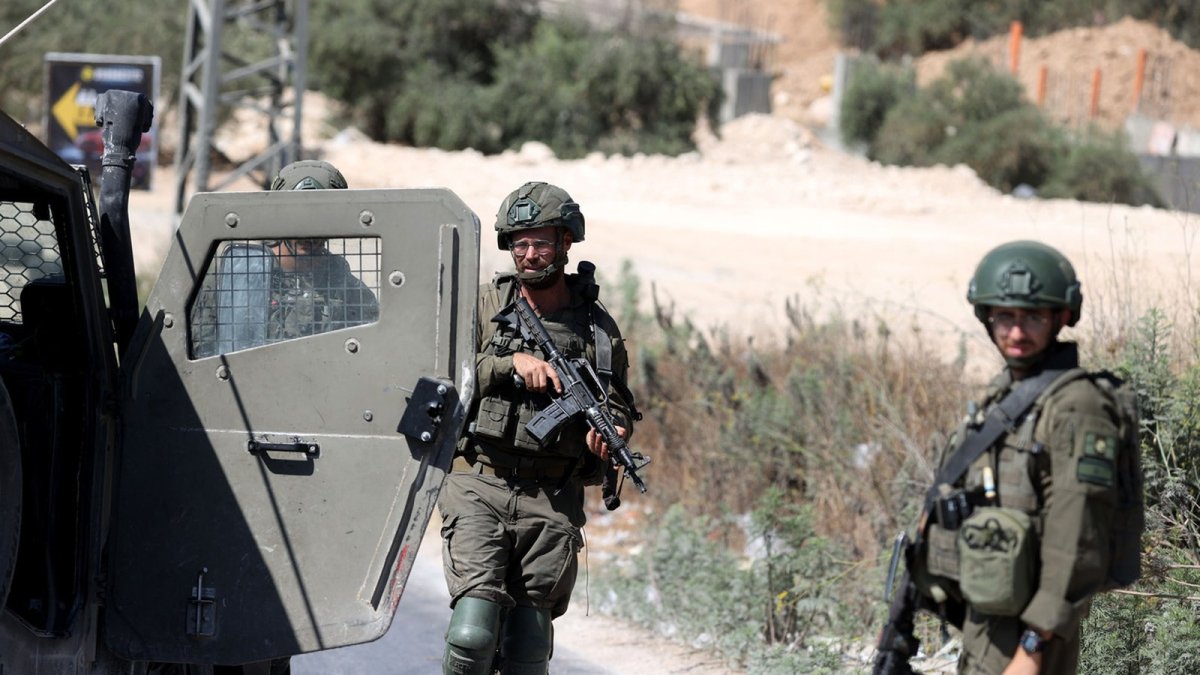
Israeli forces cut electricity to a Palestinian town near Nablus on Sunday by attacking its power infrastructure, while troops arrested five Palestinians in raids spanning the northern and southern occupied West Bank, Palestinian news agency Wafa reported. The coordinated operations, which included an incursion into the Dheisheh refugee camp and the posting of threatening notices on a Bethlehem mosque, came as the occupied territory endures its deadliest and most intensive period of military raids in years.
West Bank Town Plunged Into Darkness as Israeli Raids Arrest Five Palestinians
Ramallah, Occupied West Bank — Israeli forces cut electricity to the northern part of Madama, a town near Nablus in the occupied West Bank, on Sunday by damaging power infrastructure. Palestinian news agency Wafa reported that a group of Israeli occupiers attacked electricity poles, leaving residents without power. The incident occurred alongside multiple military raids that resulted in the arrest of five Palestinians across different locations.
Attack on Power Infrastructure in Madama
The disruption in Madama highlights the direct effect of such actions on daily routines. Without electricity, families lose access to lighting, refrigeration for food, and basic communication tools. In a town already navigating movement restrictions and economic pressures, the outage adds immediate strain to households preparing for evening hours and the following day.
The targeting of power infrastructure in West Bank towns imposes immediate and cascading hardships on residents already navigating restricted movement and limited resources. Without reliable electricity, households lose the ability to preserve food, forcing families to discard spoiled goods and incur repeated replacement costs that strain already tight budgets. Water systems dependent on electric pumps cease functioning, compelling residents to ration stored supplies or seek distant alternatives under curfew conditions.
Medical devices such as oxygen concentrators or refrigerated medications become inoperable, heightening health risks for the elderly and chronically ill. Evening hours, normally used for study or small-scale home enterprises, turn into periods of enforced inactivity. Repair crews face delays due to permit requirements and checkpoint protocols, while the economic burden of repeated infrastructure damage falls on local utilities operating under occupation constraints that limit access to materials and funding. These disruptions compound over time, eroding the viability of sustained community life.
Raids and Arrests Near Nablus
Israeli forces raided eastern Nablus and detained two Palestinians after searching their homes, according to Wafa. The same agency noted that troops also entered the nearby town of Tel southwest of Nablus, where they searched several residences but made no arrests. These operations follow a pattern of nighttime entries into Palestinian communities that interrupt sleep, schooling, and work schedules.
In the Nablus area, as across the West Bank, most raids occur in the early hours of the morning. Families describe soldiers forcing their way into homes, gathering residents in a single room, and conducting searches that can last for hours. The psychological effect is deliberate: communities never know which house will be next, and children grow up accustomed to the sound of armoured vehicles at their doors.
Arrests at Dheisheh Refugee Camp
Further south, Israeli forces arrested three young Palestinians from the Dheisheh refugee camp south of Bethlehem. The soldiers raided and searched family homes before taking the individuals into custody. Dheisheh, like other refugee camps in the West Bank, has long housed families displaced decades ago, and repeated military visits there affect entire neighborhoods through curfews, property damage, and the absence of detained relatives.
Established in the immediate aftermath of the 1948 displacement, Dheisheh refugee camp has long served as a physical reminder of families uprooted from villages around Jerusalem and Bethlehem. Its narrow alleys and dense housing embody the enduring claim to return, a principle central to Palestinian political identity across generations. Night operations within the camp interrupt schooling, fragment family structures, and instill a pervasive sense of insecurity that affects children's development and adults' ability to maintain employment. The camp's symbolic weight draws international attention to unresolved displacement, yet repeated incursions reinforce the gap between legal recognition of refugee rights and the daily reality of restricted movement. Over decades, residents have adapted communal support networks to absorb shocks, yet the cumulative psychological toll of interrupted routines undermines efforts to build stable futures within the camp's confines.
Additional Actions in Bethlehem
In central Bethlehem, Israeli forces raided the Kanaan family home. They also posted threatening notices on the walls of the Salah al-Din Mosque. Wafa documented these steps as part of the same day's activities. Such postings and home searches create an atmosphere of uncertainty for residents who must navigate both religious sites and private dwellings under constant scrutiny.
The posting of notices on a mosque is particularly provocative in a city that holds deep religious significance for Christians and Muslims alike. Residents of Bethlehem, whose economy depends heavily on tourism and pilgrimage, say the constant presence of military vehicles and checkpoints has already driven many visitors away. The incident threatens to deepen the economic isolation of a city whose name is known around the world.
Escalation Since October 2023
The occupied West Bank has seen intensified Israeli military raids on cities, towns, and refugee camps since the start of Israel's war on Gaza in October 2023. These operations have involved killings, arrests, home demolitions, and forced evacuations. Official Palestinian figures record more than 1,182 Palestinians killed, about 13,000 injured, and nearly 24,000 arrested during this period.
The scale of arrests and casualties points to a shift in the intensity of control, with communities experiencing simultaneous pressures from military actions and settler encroachments. Humanitarian organizations document rising needs for medical care and shelter, while diplomatic channels have produced few concrete changes on the ground, leaving Palestinian authorities and civil society to manage the aftermath with constrained resources.
Effects on Daily Life and Movement
Power cuts and home raids alter ordinary activities such as cooking, studying, and medical care. In Madama, the northern section without electricity faces challenges in preserving medicines and maintaining contact with relatives. In Nablus and Bethlehem areas, families report disrupted sleep and anxiety over possible future visits by soldiers. These measures compound existing limits on travel between towns and access to employment.
Since October 2023, the Israeli army has imposed dozens of new checkpoints and flying checkpoints across the West Bank, extending journey times and cutting communities off from farmland, schools, and hospitals. The combination of physical barriers, infrastructure attacks, and night raids has created what human rights groups describe as a slow erosion of the basic conditions needed for ordinary life to function.
Human Rights Context and Future Outlook
The combination of infrastructure damage and mass detentions raises concerns about collective impact on Palestinian communities. Reports from Wafa and Anadolu Agency describe coordinated actions across multiple sites on a single day. If such patterns continue, they risk deepening economic hardship and limiting access to essential services for residents already living under prolonged occupation. Figures on long-term outcomes were not immediately available from the reporting agencies.
The simultaneous execution of operations across multiple locations signals a coordinated approach aimed at maintaining comprehensive territorial control. Such patterns erode any residual sense of personal security for residents, as raids can occur without warning in towns, camps, and urban centers alike. Oslo-era security coordination, once framed as a pathway to stability, faces increasing strain when large-scale arrest campaigns and infrastructure interference become routine. Over time, these dynamics reshape the occupied territory's future by deepening economic fragmentation and limiting prospects for negotiated arrangements.
For the families of the five detainees — two from Nablus, three from Dheisheh — the immediate question is where their relatives have been taken and under what conditions they are being held. Under Israeli military law, Palestinians can be held without charge or trial for extended periods, and access to lawyers and family visits is frequently delayed. International humanitarian law requires that detainees be treated humanely and that protected persons have access to legal counsel; whether those standards are met in the coming days will determine whether Sunday's arrests become a brief footnote or the beginning of another long ordeal for five Palestinian families.
By Fatima Al-Rashid, Staff Writer
This article was produced with AI-assisted research and editorial support. Reporting is based on sources cited in the article.
What's Your Reaction?
 Like
0
Like
0
 Dislike
0
Dislike
0
 Love
0
Love
0
 Funny
0
Funny
0
 Wow
0
Wow
0
 Sad
0
Sad
0
 Angry
0
Angry
0

Gulf/MENA Correspondent at Global1.News. Based in Doha, covering Gulf politics, energy markets, diplomacy, and development across the Middle East and North Africa. Tracks the economic transformation of the Gulf states.











Comments (0)