
Russia Hits Kyiv-Warsaw Train Two Kilometres From Poland as Boris Johnson's Train Is Halted
A Russian drone struck the locomotive of a Kyiv-Warsaw passenger train two kilometres from the Polish border on 13 September 2026, while a chartered train carrying Boris Johnson and Merz's security adviser was halted at Yahodyn. No one was injured and Poland reported no airspace breach.
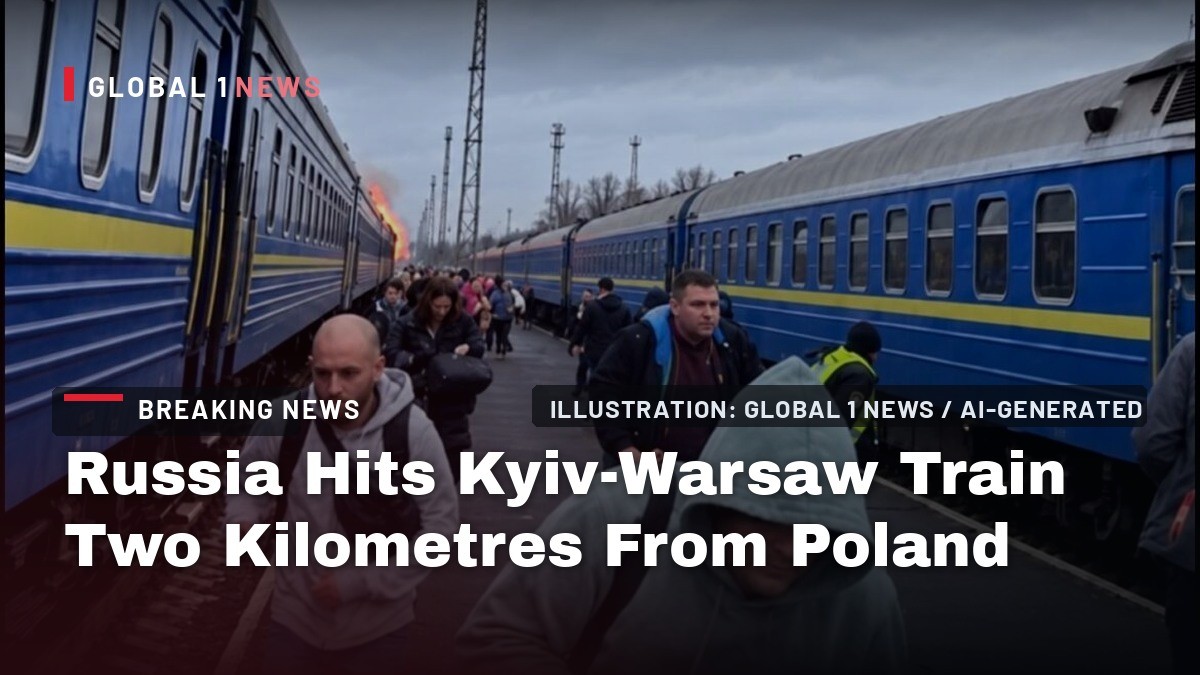
A Russian drone struck the locomotive of a Kyiv-Warsaw passenger train in Ukraine's Volyn region early Sunday, two kilometres from the Polish border, as a separate chartered train carrying former UK prime minister Boris Johnson and a top adviser to Germany's chancellor was halted at the Yahodyn border station. No one was injured aboard the passenger service, and Poland reported no violation of its airspace — but Warsaw scrambled fighter jets, and its prime minister convened an emergency security meeting.
Russia Hits Kyiv-Warsaw Train Two Kilometres From Poland as Boris Johnson's Train Is Halted
Volyn Region, Ukraine — The locomotive was hit at roughly 5 a.m. local time on Sunday, according to Ukrainian and Polish authorities, on a stretch of track in western Ukraine just two kilometres from the crossing into NATO member Poland. Ukraine's state railway operator, Ukrzaliznytsia, said a monitoring team detected the threat and gave the train crew advanced warning, allowing safety procedures to be implemented before impact. No passengers or railway employees were injured.
Poland's PKP Intercity, which took control of the affected train, said the service would continue towards Warsaw once customs clearance was complete. Ukrainian singer Olya Polyakova and her daughter were among those aboard, according to RBC-Ukraine.
At the same border station, a privately chartered train carrying senior Western figures had stopped at about 5 a.m. Among those on board were Boris Johnson, Günter Sautter — one of Chancellor Friedrich Merz's closest advisers and a foreign and security policy adviser at the Federal Chancellery — security advisers from other European governments, members of the German Bundestag, diplomats and academics. They were returning from Kyiv, where they had attended the annual Yalta European Strategy conference and discussed possible peace talks with Russia with President Volodymyr Zelenskyy's team.
The Locomotive Hit Two Kilometres From Poland
What prevented a mass-casualty event was the warning. Ukrzaliznytsia said its monitoring team identified the incoming threat and alerted the crew, allowing safety procedures to be carried out before the drone struck. The operator was categorical that no passengers and no railway employees were hurt.
The locomotive that took the hit was not necessarily a running service. The Independent, citing sources, reported that a locomotive carriage sitting in the sidings was struck — not a train in motion — and that an ordinary passenger train was vacated as a precaution, believed to be because of a gas station hit nearby. Poland's PKP Intercity said it assumed control of the affected service, which was carrying 206 people, none of them Polish citizens, and that it would continue towards Warsaw after customs clearance. The delay ran to roughly 370 minutes.
Footage circulated by Ukrainian outlets showed people running across the tracks after the warning sounded. Metro reported that the trains crossing between Poland and Ukraine have been targeted by Russia repeatedly in recent days.
The Diplomatic Train on the Same Rails
The chartered train that stopped at Yahodyn was carrying a cross-section of European officialdom: Johnson, Sautter, security advisers from several EU member states, Bundestag members, diplomats and academics. They had all been in Kyiv for the Yalta European Strategy conference, where possible peace talks with Russia were discussed with Zelenskyy's team, according to RBC-Ukraine.
Ukrzaliznytsia said senior Western figures including Johnson and former CIA director David Petraeus were at the station shortly before the Warsaw-bound train was struck. In its account, a diplomatic train was at Yahodyn station shortly before the locomotive was hit, carrying security advisers from several EU member states and former European leaders including Johnson. In another train at Yahodyn station at the very moment of the attack, the railway said, was Petraeus.
Sweden's former prime minister, Carl Bildt, writing on X, described what he understood had happened: "This wasn't our train, but the one just minutes after us by the border crossing. It was evacuated as the drone approached and no one was hurt."
The reporting on the diplomatic train does not agree. Der Spiegel reported that part of the chartered train was evacuated because of drone strikes in the border area. RBC-Ukraine, citing its own sources, said Der Spiegel's report is inaccurate: the train carrying Sautter and Johnson had already passed Dorohusk station and was safe when the strike occurred, and a different train travelling along the same railway line about an hour later came under attack. The Independent, citing sources, reported that none of the "VIP" trains with European officials were involved in the attack. The accounts differ on which train was struck and on the status of the officials' train at the moment of impact; what is not in dispute is that no one on the diplomatic train was harmed.
Robin Wagener, a member of Germany's Greens party who was on the train, called the attack "blind terror." He said: "These drone attacks are blind terror against Ukrainian civilians and a dangerous escalation of Putin's war." Russia, he said, is "playing with fire right on the border of the EU and NATO."
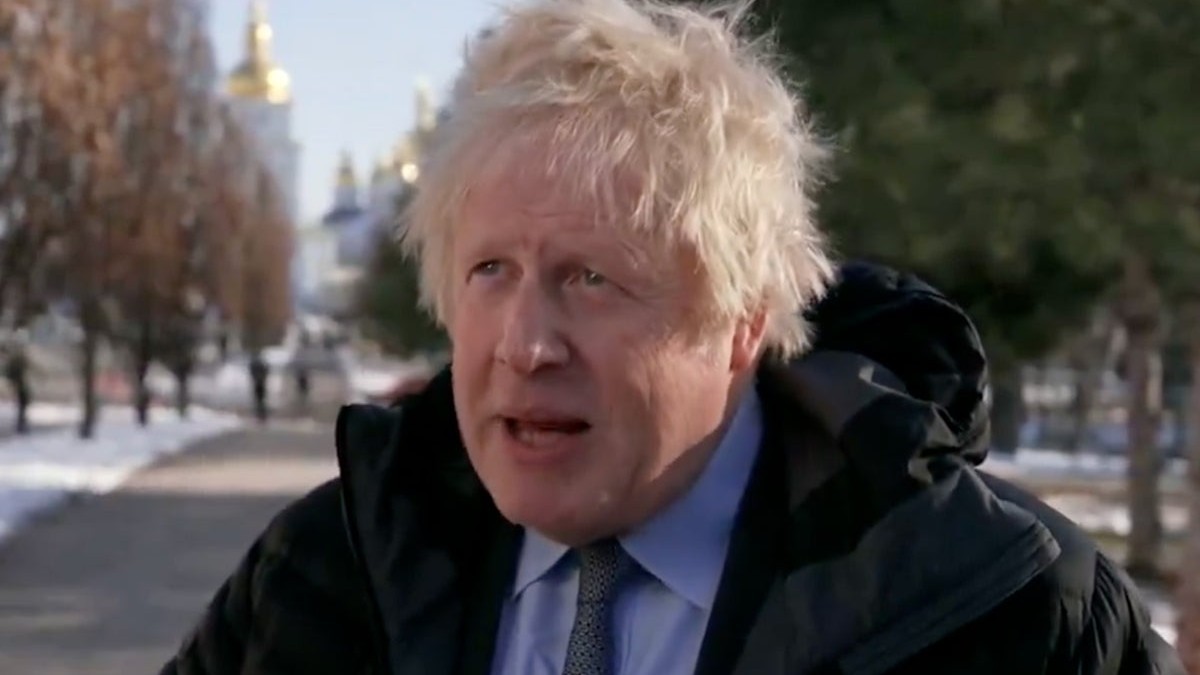
Johnson's own response was blunt. "I don't know what warped logic drove Putin to blow up a stationary Ukrainian locomotive on the Polish border this morning," he said. He pressed the case for more air defence and for using frozen Russian assets: "When are we going to give them the air defences they need? Why won't we unfreeze Putin's cash and give it to Ukraine? There is more than €140 billion in a Belgian bank account - and about £10 billion in London," adding that Britain could lead the way.
He went further on the war's trajectory: "What we can say for sure is that this is the kind of random and senseless attack Ukrainians are enduring every day - even on civilian railways." And: "The Ukrainians are going to win - that much was clear from the last three days in their wonderful country. But we will get this dreadful war over much faster if we all get serious and give them what they need and deserve."
What Warsaw Saw — and Scrambled
Polish Defence Minister Władysław Kosiniak-Kamysz said Polish systems detected an attack by about a dozen Russian Geran-5 jet-powered drones in western Ukraine, with one striking about a kilometre from the Polish border and another about five kilometres away. "Our airspace was protected by F-16s, helicopters and a Saab airborne early warning aircraft. There was no violation of our border," he wrote on X.
Polish authorities issued alerts in the eastern Lublin and Podkarpacie regions and scrambled fighter jets as a precaution. The operation ended before 10 a.m. Polish Armed Forces Operational Command spokesman Lt. Col. Jacek Goryszewski said the threat had been "real and close," with some drones operating within several to a dozen kilometres of the Polish border.
There is a recent precedent for Warsaw's alarm. In July, a Russian Kh-101 cruise missile breached Polish airspace and crashed in eastern Poland, about 80 kilometres from the Ukrainian border.
Yahodyn: the Crossing That Stopped
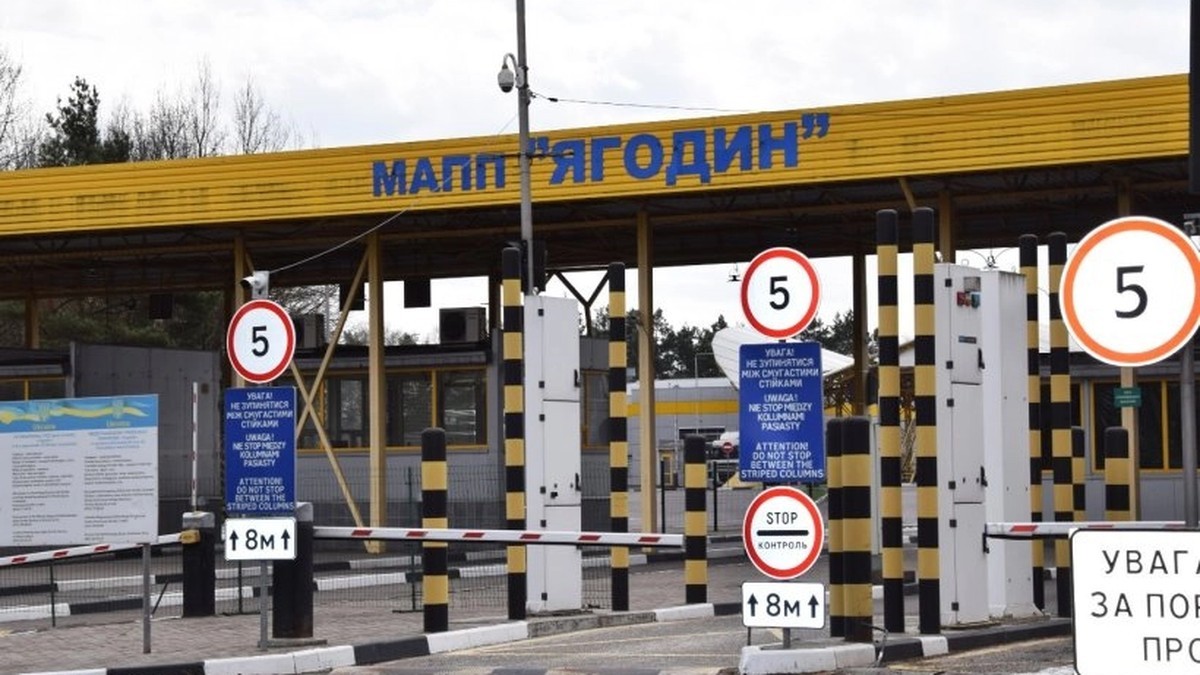
The strike that hit the train was not the only one to land near the frontier. A Russian drone struck a truck less than a kilometre from the Polish border near the Dorohusk-Yahodyn crossing, destroying the vehicle, Border Guard spokesman Maj. Dariusz Sienicki told Polish outlet Wirtualna Polska. The crossing itself was not hit, he said, and traffic between the two countries is flowing normally.
Polish border guards told Reuters the Dorohusk-Yahodyn crossing point briefly stopped working after the attack on a truck about 0.8 km from Poland, but has since resumed operations. Two trucks were on fire, and a gas station was hit, according to the reporting. No one was injured on the Polish side, Interior Ministry spokeswoman Karolina Galecka said.
Ukrainian officials also reported another drone strike on Yahodyn overnight, some 800 metres from the Polish border. Yahodyn is the Ukrainian border station facing Dorohusk on the Polish side.
Zelenskyy Says the Locomotive Was 'Deliberately Burned'
Zelenskyy said the locomotive was "deliberately burned" and that a gas station was damaged in Volyn. "It is precisely to prevent these strikes from spreading further into Europe that Ukrainian men and women fight every day, give their lives, and do not allow the aggression to expand," he said.
Ukrainian Foreign Minister Andrii Sybiha, in an English-language post on X, called the attacks "barbaric" and more than "just a continuation of its attacks on our state borders." He wrote: "This is Putin's terror 'knocking' directly on the doors of the EU and NATO. Russian barbarians are at your gate, dear partners." He urged allies to make Russia "feel the consequences of its terror. Not just half-decisions, but uncompromising, powerful steps. Full trade embargo. Full entry bans. Full sanctions on the military-industrial complex." He added: "Putin needs to understand that his barbarism will be met with decisive action that increases the cost of war for him to an unacceptable level."
Tusk Calls an Emergency Meeting
Polish Prime Minister Donald Tusk chaired an emergency meeting on Sunday and warned Poland must be prepared for the possibility that drones could target Polish territory. "The coming weeks and months will be a period of very intensive actions on the Russian side," he said, adding that Poland "cannot rule out that this escalation will also affect our territory."
Tusk convened a special meeting at the Government Centre for Security, due to begin at 17:00 on Sunday, concerning the overnight Russian attacks near the Polish border, according to Polish outlet Onet, cited by Ukrainian Pravda. Polish foreign minister Radosław Sikorski, at a press briefing, said: "This is an escalation, this is another great challenge for Ukraine and for the hypothetical future victims of Russian aggression and this means that we should double our efforts to support victims of aggression."
The Peace Track Running Alongside the War
The strike landed in the middle of a fragile diplomatic push. The Yalta European Strategy conference in Kyiv brought together Sautter, security advisers from the UK, France and Italy, and Zelenskyy's team to discuss possible peace talks with Russia. Kremlin spokesman Dmitry Peskov said three-way negotiations between Ukraine, Russia and the United States could take place in October, Russian media reported: "We do not rule out such a possibility; we are talking about the foreseeable future," he said, according to RIA Novosti and TASS.
US negotiators recently visited Kyiv and Moscow to try to ramp up negotiations to end the war, and US President Donald Trump and Russia's Vladimir Putin have held talks by phone. In an interview aired Saturday, Zelenskyy said he would be willing to meet Putin at the G20 summit in Miami in December for talks. Several previous attempts at negotiations involving the US have failed.
Moscow did not immediately comment on the reports of the strikes near the Polish border.
863 Drones in Twenty-Four Hours
The border strikes were part of a far larger overnight exchange. Russia launched 863 drones at Ukraine over the last 24 hours, the Ukrainian General Staff said on Sunday. Russia's Ministry of Defence said its forces shot down 389 Ukrainian drones during the night, including over Tatarstan, other Russian regions and occupied Crimea.
Russia's Defence Ministry said its forces struck Ukrainian logistics and energy facilities overnight and targeted infrastructure facilitating military cargoes from Europe in western Ukraine. In Odesa, at least nine people were injured in a Russian night-time attack, according to Serhiy Lysak, who heads the city's military administration. Several civilians were killed and more than 20 wounded overnight as Russia and Ukraine attacked each other with waves of drones, according to Al Jazeera.
In Kyiv, authorities have begun stockpiling food and drinking water in preparation for prolonged power outages and other emergencies, for use at resilience centres and to assist residents during large-scale disruptions. A new air-threat alert system went into operation in Kyiv on 6 September; residents now receive notifications about the type of threat — drone, missile, or both.
A Second Day on the Rails
Sunday's strike was the second on Ukraine's rail network in two days. The day before, Russia targeted a passenger train in Lutsk. Passengers and staff were evacuated in advance, so there were no casualties, although the strike sparked a fire, according to RBC-Ukraine.
Ukrainian Railways has described a systematic campaign against the rail network. The stakes extend well beyond passenger travel: Ukraine is dependent on trade and arms shipments from across the Polish, Romanian and Moldovan borders, and the border with Poland serves as an essential transit point for military and humanitarian aid. Ukraine operates several border crossings with Poland, through which a significant proportion of military and humanitarian aid from its allies is delivered.
Johnson also addressed the human cost inside Ukraine's railways, saying Putin had been responsible for the deaths of 1,700 staff of Ukrzaliznytsia — Ukrainian Railways — a figure he offered without citing a source. "They and their daily passengers are absolutely heroic," he said.
What Comes Next at NATO's Doorstep
The strike puts a hard question in front of NATO's eastern flank. Poland is a NATO member and one of Ukraine's closest allies, a key eastern-flank state, and the drones on Sunday operated within several to a dozen kilometres of its border, according to Polish military officials. Warsaw's answer so far has been measured: F-16s, helicopters and a Saab airborne early warning aircraft protected the airspace, Kosiniak-Kamysz said, and there was no violation of the border. The Dorohusk-Yahodyn crossing has resumed operations.
But Tusk's warning that the coming weeks and months will be intensive, and that Poland cannot rule out escalation affecting its territory, sets the frame for what allies do next. The July precedent — a Russian Kh-101 cruise missile breaching Polish airspace and crashing about 80 kilometres from the Ukrainian border — shows how quickly the airspace question becomes concrete. Whether Sunday's strikes near Yahodyn produce a harder response from NATO governments, or another round of statements, is the open question. Moscow, for now, has said nothing about the attacks.
By Jessica Ali, Staff Writer
This article was produced with AI-assisted research and editorial support. Sources: Deutsche Welle, Al Jazeera, Reuters via Polish border guards, i24NEWS, RBC-Ukraine, The Independent, Metro, EU Today, Ukrainian Pravda.
What's Your Reaction?
 Like
0
Like
0
 Dislike
0
Dislike
0
 Love
0
Love
0
 Funny
0
Funny
0
 Wow
0
Wow
0
 Sad
0
Sad
0
 Angry
0
Angry
0

Editor-in-Chief at Global1.News. Atlanta-based journalist who cuts through the BS and tells it like it is. Lead anchor, host, and the voice you hear when the spin stops and the truth starts.















Comments (0)