
Pochettino Signs New US Soccer Deal Through 2030 World Cup
Mauricio Pochettino signed a new four-year contract with US Soccer on Monday, August 3 2026, locking him in as head coach through the 2030 FIFA World Cup. The Argentine, 54, who previously managed Tottenham Hotspur, Paris Saint-Germain and Chelsea, extends his role after the USMNT's Round of 16 exit at the 2026 tournament co-hosted by the United States, Canada and Mexico.
Mauricio Pochettino signed a new four-year contract with US Soccer on Monday, August 3 2026, locking him in as head coach through the 2030 FIFA World Cup. The Argentine, 54, who previously managed Tottenham Hotspur, Paris Saint-Germain and Chelsea, extends his role after the USMNT's Round of 16 exit at the 2026 tournament co-hosted by the United States, Canada and Mexico. This commitment arrives as South African football eyes its own long-term rebuild under SAFA ahead of 2030 qualifying.
Pochettino Locks In Until 2030 as USMNT Eyes Next Cycle
Johannesburg, South Africa — Mauricio Pochettino's new deal keeps him at the helm of the United States men's national team through the 2030 World Cup, shifting focus from the 2026 home tournament to a full qualification campaign and broader federation development.
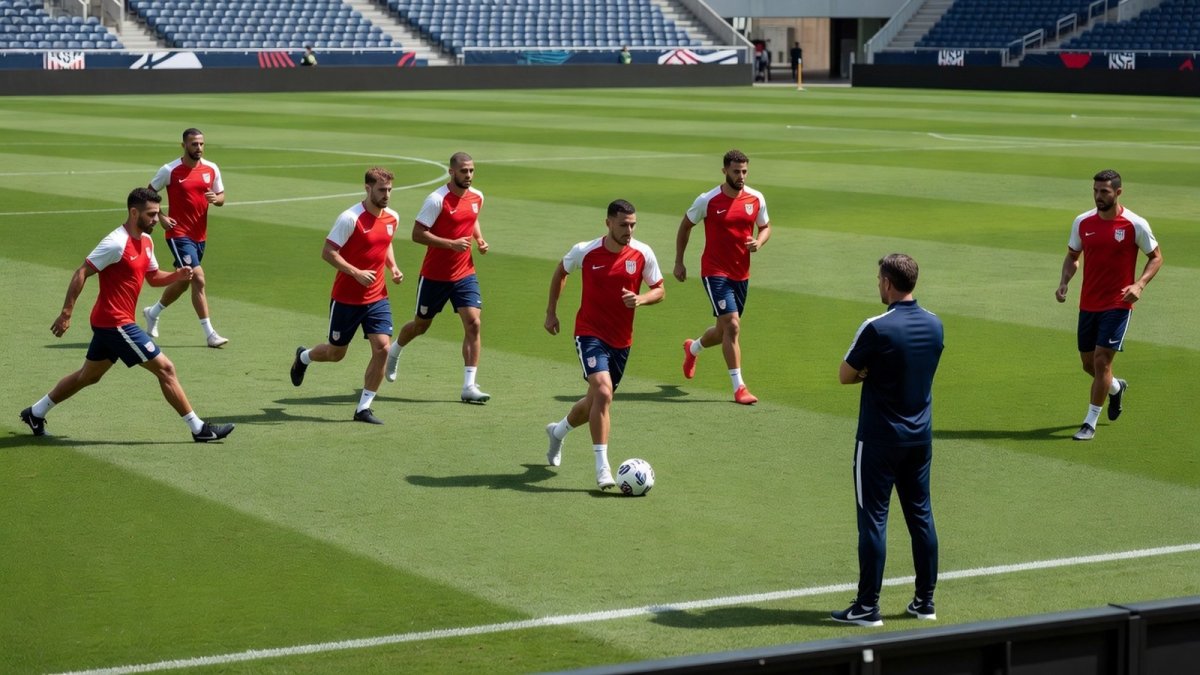
Pochettino Commits to the Long Game
Pochettino's first contract, signed in September or October 2024, ran only through the 2026 World Cup hosted by the United States, Canada and Mexico. The new four-year extension, announced Monday, August 3 2026, guarantees his presence until the 2030 tournament in Spain, Portugal and Morocco. At 54, the former Tottenham Hotspur, Paris Saint-Germain and Chelsea manager now oversees a program that posted an 18-12-1 record under his watch.
He stated in the US Soccer announcement that the passion from fans during the 2026 World Cup strengthened belief in what is possible. Pochettino added in a pre-announcement roundtable that the gap with the best teams is not so big and that talent and organization make closing it achievable. His comments stressed starting from zero with the next World Cup as the clear goal.
The coach noted after the Belgium loss that the journey included good and not-so-good moments, closing the chapter on player assessment after less than two years in charge. He emphasized that a process requires a four-year cycle and that decisions for the future now rest on a complete picture of the squad. This timeline aligns directly with South African football's need for sustained planning under SAFA rather than short-term fixes.
Players credited Pochettino with overhauling the group's mentality and raising standards, despite early struggles that included fourth place in the 2025 Nations League and a Gold Cup final loss to Mexico. The 5-1 friendly thrashing of Uruguay stood as one of the program's most surprising results. These outcomes show the value of committing to a coach across multiple cycles, a lesson Bafana Bafana supporters have voiced repeatedly since their 2002 World Cup appearance.
A Home World Cup of Highs and Heartbreak
The United States won its 2026 World Cup group for the first time since 2010, opening with a 4-1 dismantling of Paraguay that many called the program's best-ever World Cup performance. Strong showings against Australia and Bosnia and Herzegovina followed, including a knockout-stage win over Bosnia and Herzegovina that marked only the second such victory in USMNT World Cup history. The team scored 10 goals overall, the most ever by the United States at a World Cup.
That progress ended abruptly with a 4-1 Round of 16 loss to Belgium, the worst World Cup defeat for the USMNT in 20 years. Spain ultimately won the tournament by beating Argentina in the final. Pochettino described the entire experience as amazing, highlighting the magic connection with fans and the organization as a key factor in his decision to stay.
Bafana Bafana also reached the 2026 World Cup, their first appearance since 2002, though they exited in the group stage. South Africa's 2010 hosting remains the benchmark for African World Cup infrastructure, and the USMNT's mixed results at home offer a direct parallel for how hosting can accelerate development when paired with long-term coaching stability.
The contrast between the 4-1 Paraguay win and the Belgium collapse illustrates the fine margins at this level. Pochettino's post-tournament comments stressed that the team now possesses a clearer idea of its strengths and weaknesses after the full cycle. This assessment phase mirrors the honest review SAFA must conduct following Bafana Bafana's group-stage exit.
The 'Expanded Role' — Building Beyond the Senior Team
Pochettino's new contract includes an expanded role that keeps primary focus on the senior US team while adding advisory and support duties across the federation. Responsibilities now cover the national team pathway, youth soccer, coaching education and professional league collaboration. One stated priority is bringing younger players into the pool, including more MLS-based talent.
This structure echoes South Africa's transformation agenda, where SAFA and the sports ministry push for greater development of black coaches and grassroots structures. The DStv Diski Challenge and MultiChoice-backed academies already aim to strengthen pathways from youth to senior level, much like the US model Pochettino will now influence.
Pochettino's quote highlighted tremendous potential to make the men's national team program even stronger by applying experience across more areas of U.S. Soccer. He stressed strengthening pathways for players, coaches and teams across the federation. Such federation-wide involvement represents a shift from purely senior-team focus.
Early clashes with figures such as Christian Pulisic and occasional media tensions showed the pressure of the role, yet the overall record and player feedback indicate raised standards. Extending this approach to youth and coaching education could accelerate progress toward 2030 qualification, a challenge the United States faces without automatic hosting rights.
For South Africa, the model offers a practical blueprint: a federation that ties senior-team results to its youth conveyor belt and coaching pipeline. Collaboration between the professional league and the national setup is a debate South African stakeholders have long circled through SAFA funding and SuperSport revenue discussions. Pochettino's mandate makes that link explicit at the top of US Soccer, and the lesson for SAFA is that pathway-building cannot wait until after a tournament ends.
The Money Behind the Man
The previous contract paid Pochettino $6 million per year, already the largest outlay for any US head coach. Financial details of the extension remain undisclosed, though a raise is expected. Billionaire hedge fund manager Ken Griffin bankrolled the initial deal and will serve as primary funder again.
A source described the return as an expanded role, confirming the broader scope beyond match days. This private-funding model stands in contrast to South Africa's mix of SAFA resources, state support and SuperSport broadcasting revenue. The scale of Griffin's commitment underscores how external capital can accelerate program growth when aligned with federation goals.
Pochettino's willingness to accept the extended mandate reflects both the results achieved and the resources available. South African football governance debates often center on sustainable funding for grassroots and professional pathways, making the US example a relevant reference point for SAFA's planning ahead of 2030.

Morocco 2030: Africa's Second World Cup and What It Means for SA
The 2030 World Cup will be hosted by Spain, Portugal and Morocco, marking only the second time an African nation has hosted the tournament after South Africa in 2010. Morocco's role carries continental significance, building on the infrastructure and visibility gained from the 2010 event in Johannesburg, Cape Town and Durban.
Bafana Bafana must now navigate CAF World Cup qualifying and the 2027 and 2029 Gold Cups while preparing for AFCON cycles. The USMNT, by contrast, will face a full qualification process for 2030 after automatic entry in 2026. This shared requirement for qualification creates direct parallels between the two programs.
South Africa's 2010 legacy includes upgraded stadiums and transport links that still serve domestic leagues and national teams. Morocco 2030 is expected to deliver similar long-term benefits across the continent, reinforcing the value of hosting as a catalyst for sustained investment in African football. For South African observers, watching how Morocco prepares its stadiums, transport and football pathways offers a measure of how far the continent has come since 2010 — and how much further it can go.
Pochettino's insistence on thinking from day one about World Cup games provides a mindset shift that aligns with the rebuild facing SAFA ahead of AFCON and CAF qualifying. The United States must qualify for 2030 without an automatic berth, and the coach has already framed the campaign as starting now, not on the eve of the tournament.
What Bafana Bafana and SAFA Can Learn
Pochettino's four-year-cycle philosophy directly mirrors the long-term project thinking SAFA requires for Bafana Bafana. His emphasis on starting from day one with the next World Cup in mind offers a template for coaches and administrators facing similar qualification demands.
The expanded role model, linking senior-team performance to youth pathways and coaching education, aligns with South Africa's transformation priorities. Developing more black coaches and strengthening grassroots academies remain central to SAFA's agenda, much as the US federation now seeks to integrate MLS talent more effectively. The US coach's advisory work on coaching education is a reminder that transformation is not only about who plays — it is about who coaches, who administers and who develops the next generation.
Private funding through figures such as Ken Griffin highlights one route to resourcing ambitious programs. South African stakeholders continue to debate the balance between state support, SAFA budgets and broadcasting deals, making the US approach a useful case study for future planning.
Pochettino's view that the gap to the top teams is narrowing supplies encouragement for a federation balancing state support, broadcasting revenue and long-term planning. His 5-1 friendly win over Uruguay and emphasis on younger players highlight the value of structured youth development — the same goal the DStv Diski Challenge and MultiChoice academies pursue on South African soil.
What to Watch For
The United States is scheduled to host the 2028 Copa America and the Gold Cup in 2027 and 2029, providing additional high-level matches before 2030 qualifying begins. These tournaments will test how Pochettino integrates younger players and refines tactics after the 2026 assessment.
For South African fans, the key question remains how SAFA translates lessons from both the USMNT cycle and Morocco's hosting into concrete progress for Bafana Bafana. Sustained coaching stability, clearer youth-to-senior pathways and targeted investment will determine whether the 2030 cycle delivers measurable gains.
Pochettino's commitment through 2030 sets a clear benchmark. The coming months will reveal whether the expanded role produces tangible improvements in player development and whether similar long-term thinking takes root within South African football governance.
By Dante Williams, Staff Writer
This article was produced with AI-assisted research and editorial support. Reporting is based on sources cited in the article.
What's Your Reaction?
 Like
0
Like
0
 Dislike
0
Dislike
0
 Love
0
Love
0
 Funny
0
Funny
0
 Wow
0
Wow
0
 Sad
0
Sad
0
 Angry
0
Angry
0

Breaking News and Investigations Correspondent at Global1.News. Based in London, covering global breaking news, security, and investigative stories. Known for digging deeper and connecting the dots across continents.










Comments (0)