
Ofer Winter Launches Amcha Yisrael Party in Israeli Election Shakeup
In a recent i24NEWS English report, the launch of former Brigadier General Ofer Winter's new political party, "Amcha Yisrael" ("People of Israel"), was showcased as a significant development in Israel's already turbulent political landscape. The report highlighted Winter's dramatic entrance into the race for the October 27, 2026 Knesset election, a move that threatens to upend the delicate balance of power on the Israeli right.
In a recent i24NEWS English report, the launch of former Brigadier General Ofer Winter's new political party, "Amcha Yisrael" ("People of Israel"), was showcased as a significant development in Israel's already turbulent political landscape. The report highlighted Winter's dramatic entrance into the race for the October 27, 2026 Knesset election, a move that threatens to upend the delicate balance of power on the Israeli right. With a slate of candidates ranging from an Arab-Israeli activist to a Be'eri widow, Winter is positioning his party as the authentic voice of post-October 7 Israel, directly challenging the established leadership of Prime Minister Benjamin Netanyahu and Finance Minister Bezalel Smotrich.
Former IDF General Ofer Winter Launches "Amcha Yisrael" Party, Shaking Up the Right-Wing Bloc Ahead of October Election
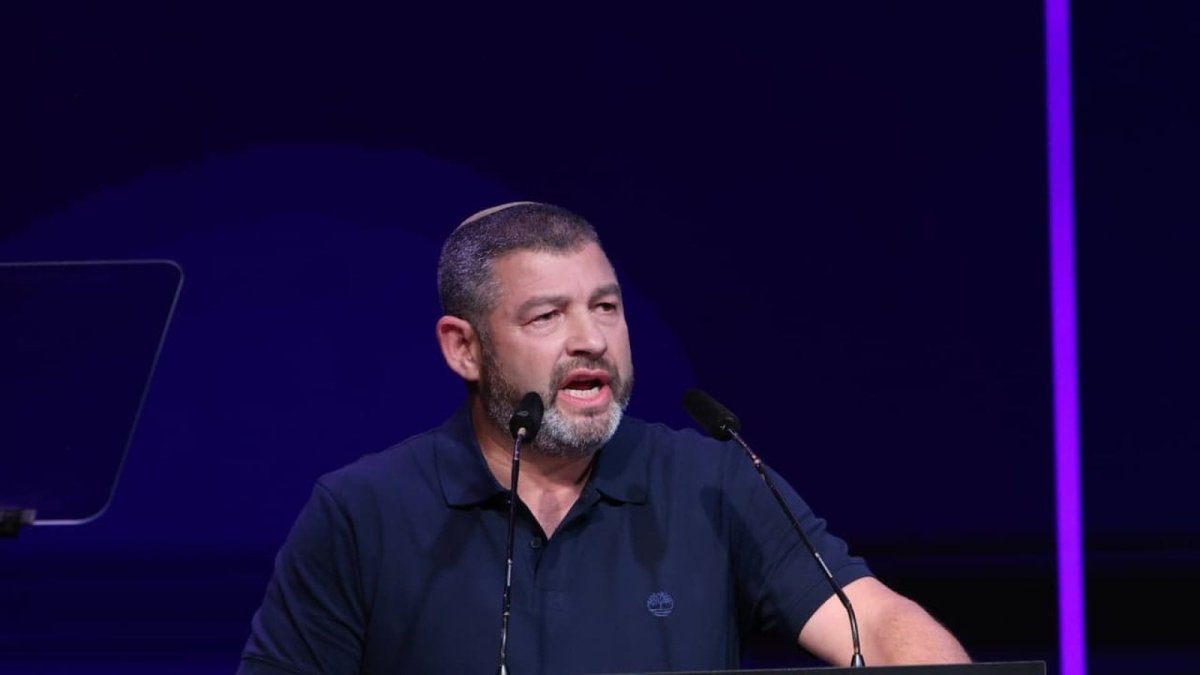
Jerusalem, Israel – Tuesday — In a packed event hall in Jerusalem, former Givati Brigade chief Brig. Gen. (res.) Ofer Winter officially launched his new right-wing party, "Amcha Yisrael," before an audience of roughly 300 supporters. The launch, which took place on Tuesday, marks the formal entry of a high-profile military figure into a political arena already crowded with contenders jockeying for position ahead of the October 27, 2026 vote. Winter, who also commanded the elite Duvdevan undercover unit—the counter-terror force depicted in the hit Israeli series Fauda—is betting that his military pedigree and uncompromising security platform will resonate with voters disillusioned by the current political class.

A New Face on the Right: The Slate and the Strategy
Winter's party list reads like a cross-section of Israeli society united by a shared trauma and a demand for change. The slate includes Yoseph Haddad, a prominent Arab-Israeli advocacy activist who served in the IDF's Golani Brigade; Fleur Hassan-Nahoum, the former Deputy Mayor of Jerusalem known for her international diplomatic work; journalist Netali Shem Tov; attorney Eran Ben Ari, who serves as chairman of the opposition within the Israel Bar Association; Sigal Kraunik, widow of Kibbutz Be'eri security coordinator Arik Kraunik who was killed on October 7; Davidi Ben Zion, deputy head of the Shomron Regional Council; and Aviv Ezra, chairman of the reservists' movement Dor HaNitzachon.
The diversity of the slate is a deliberate strategy. By bringing together a former Jerusalem deputy mayor, an Arab-Israeli activist, and a widow of the October 7 massacre, Winter is attempting to build a coalition that transcends traditional sectoral politics. "Anyone who thinks, after October 7, that the public will accept everything remaining the same in the political sphere, without new people entering the system, is making a bitter mistake," Winter declared in his keynote address, directly challenging the incumbency of the current government and the opposition alike.
The October 7 Argument: A Demand for New Leadership
Winter's entire political platform is anchored in the failures of October 7, when Hamas terrorists breached the Gaza border, killing over 1,200 Israelis and taking hundreds hostage. The former general is not merely offering policy proposals; he is offering a narrative of accountability. His message is aimed squarely at the political establishment in Jerusalem, which he argues failed to protect the citizens of the Gaza periphery. The presence of Sigal Kraunik on his slate is a powerful symbol of this argument—a direct link to the worst intelligence and military failure in Israel's history.
On the issue of Gaza, Winter has adopted a hardline stance that goes beyond even the current government's position. He explicitly rejected the establishment of a Palestinian state and called for the "emigration" of Palestinians from the Strip. "An enemy who starts a war against us will pay a heavy territorial price," he said. "This is the true morality. This and no other." This rhetoric positions Winter to the right of Netanyahu, who has publicly supported the concept of "voluntary emigration" but has stopped short of making it a central policy plank. For Israeli voters in the Sharon region and the Gaza envelope, Winter's message is clear: the security paradigm that failed on October 7 must be replaced with one of total deterrence and demographic change.
Shaking Up the Bloc: Poll Numbers and the Smotrich Effect
The immediate impact of Winter's entry was quantified on Wednesday by a Walla poll conducted by Lazar Research. The survey, which polled 500 respondents with a 4.4% margin of error, showed Winter's party securing six Knesset seats. More dramatically, it showed Finance Minister Bezalel Smotrich's Religious Zionist Party (RZP) falling below the electoral threshold with just 2.6% of the vote—a catastrophic outcome for the party that has been the standard-bearer of the religious-Zionist settlement movement. Pollster Dr. Menachem Lazar explained the dynamic: "In my estimation, he took approximately one seat from the Religious Zionist Party."
The poll's overall breakdown paints a fragmented picture: Gadi Eisenkot's Yashar leads with 25 seats, followed by Netanyahu's Likud at 21, Naftali Bennett's B'Yachad at 15, Yair Golan's The Democrats at 10, Avigdor Liberman's Yisrael Beytenu at 9, Itamar Ben-Gvir's Otzma Yehudit at 8, Arye Deri's Shas at 7, Yitzhak Goldknopf's United Torah Judaism at 7, the Joint List (Hadash, Ta'al, Balad) at 7, Winter's Amcha Yisrael at 6, and Mansour Abbas' Ra'am at 5. The bloc math is stark: Netanyahu's current coalition stands at 43 seats, the opposition at 59, Winter's party at six, and the Arab parties at 12. Even if Winter were to join Netanyahu's bloc, the combined total would reach only 49 seats—far short of the 61-seat majority needed to form a government.
The Battle for the Right-Wing Vote: A Crowded Field
Winter's entry has created a three-way battle for the right-wing voter base, pitting him against Smotrich's Religious Zionist Party and Ben-Gvir's Otzma Yehudit. Lazar noted a "drastic decline" in the strength of former Mossad chief Gilad Erdan, and observed that both Otzma Yehudit and United Torah Judaism were losing votes to the new player. The dynamic is reminiscent of the 2019-2021 election cycles, where the proliferation of small right-wing parties repeatedly cost the bloc crucial seats. Prime Minister Netanyahu has already issued a public warning: "Whoever doesn't pass the electoral threshold wastes their votes."
This warning is directed not only at Winter but at the entire right-wing ecosystem. With the deadline for party list submission to the Central Elections Committee set for September 9, 2026, there is intense pressure on smaller parties to merge or drop out. The billboards that have appeared around Israel ahead of Winter's launch suggest a well-funded campaign, and his military credentials give him a level of public trust that Smotrich and Ben-Gvir, both civilians, lack. For the Shin Bet and IDF veterans watching this race, Winter represents a return to a security-first agenda that they feel has been diluted by coalition politics in the Knesset.
What This Means for the Election: October 27 Stakes
The October 27, 2026 election will elect all 120 members of the 26th Knesset. The outgoing 25th Knesset is notable for being the first Israeli legislature to complete its full four-year term without early dissolution since 1988—a testament to the fragile stability of the current coalition. Winter's party now enters an already crowded field, and his success or failure will likely determine whether Netanyahu can form a government or whether the country faces a prolonged period of political paralysis. The Foreign Ministry and the Prime Minister's Office in Jerusalem are closely monitoring the polls, aware that a fragmented right could hand the premiership to a center-left coalition led by Eisenkot or Bennett.
Yoseph Haddad, the Arab-Israeli activist on Winter's slate, has added a unique dimension to the campaign. He stated that he wants to become the first Arab member of Israel's security cabinet, arguing that Arab-Israelis need political representatives who "represent them and not Gaza, Jenin and Ramallah." This is a direct challenge to the Joint List and Ra'am, and it could peel away votes from the Arab sector that traditionally votes for those parties. Haddad's presence on a right-wing ticket is unprecedented and reflects a broader realignment in Israeli politics, where security issues are increasingly trumping ethnic identity.
Analysis: A Realignment or a Footnote?
The question facing Israeli voters is whether Winter's party is a genuine realignment of the right or a temporary phenomenon that will fade by October. His military record is impeccable: as commander of the Givati Brigade, he led troops in Operation Protective Edge in 2014, and his tenure at Duvdevan cemented his reputation as a counter-terror specialist. But military success does not always translate into political viability. The Israeli political landscape is littered with former generals who failed to make the leap—most notably Benny Gantz, who despite leading the Blue and White party to 33 seats in 2020, ultimately failed to unseat Netanyahu.
What makes Winter different is the post-October 7 context. The trauma of that day has created a hunger for leaders who were not in the room when the decisions were made. Winter's promise of "new people entering the system" is a direct appeal to the 300 supporters at his launch and the millions of Israelis who feel betrayed by the current political class. However, the poll numbers suggest that his ceiling may be limited. At six seats, he is a kingmaker, not a prime minister. The real question is whether he will use that position to join a Netanyahu-led coalition or force a new alignment. For the Mossad, Shin Bet, and IDF leadership watching from the sidelines, the stability of the state depends on the answer.
As the September 9 deadline for party list submission approaches, the pressure on Winter will intensify. Netanyahu's warning about wasted votes is a clear attempt to squeeze him out, but Winter has shown no signs of backing down. His party's slogan, "Amcha Yisrael," evokes the biblical concept of the "People of Israel" as a unified entity, and his supporters see him as the embodiment of that unity. Whether he can translate that sentiment into Knesset seats remains to be seen, but one thing is certain: the October 27 election will be a referendum not just on Netanyahu, but on the very idea of leadership in the post-October 7 era.
By Hannah Berg, Staff Writer
This article was produced with AI-assisted research and editorial support. Reporting is based on sources cited in the article.
What's Your Reaction?
 Like
0
Like
0
 Dislike
0
Dislike
0
 Love
0
Love
0
 Funny
0
Funny
0
 Wow
0
Wow
0
 Sad
0
Sad
0
 Angry
0
Angry
0

Israel Correspondent at Global1.News. Based in Tel Aviv, covering Israeli politics, security, technology, and society. Provides balanced, deeply-sourced reporting on one of the most closely-watched regions in the world.













Comments (0)