
Netanyahu Blames Social Media as US Support for Israel Fades Before October Vote
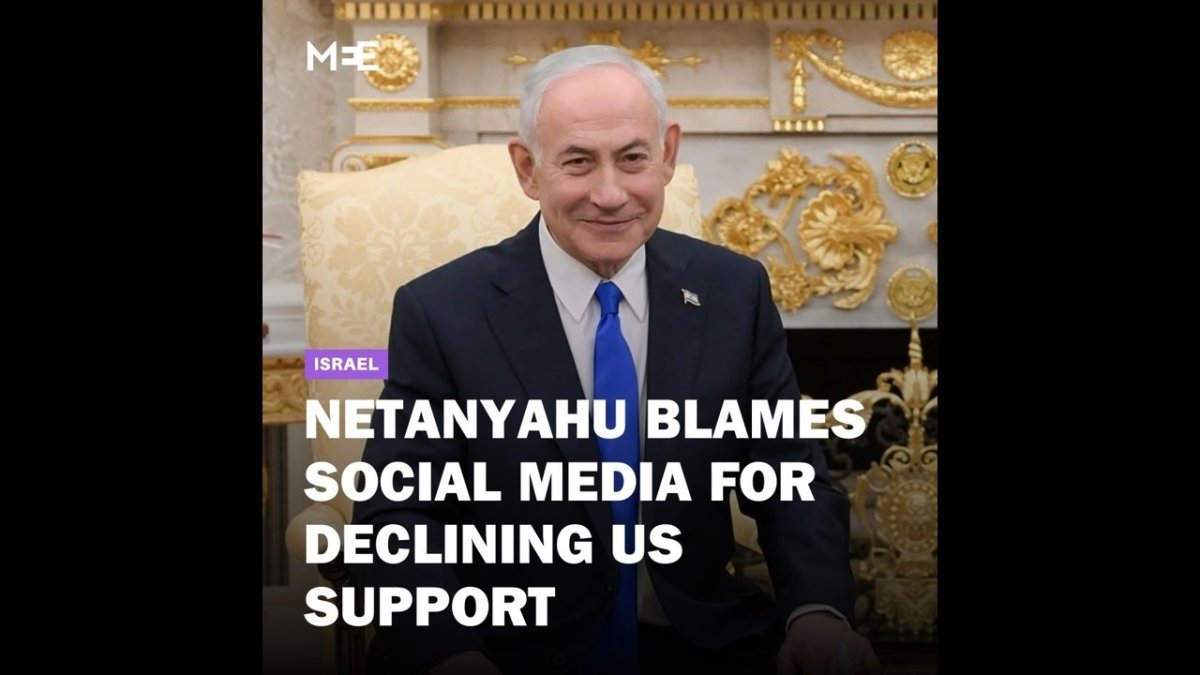
In a recent Middle East Eye report covering Israeli Prime Minister Benjamin Netanyahu's appearance on CBS's 60 Minutes, the leader linked declining American support for Israel to the influence of social media and what he called effective disinformation campaigns. Netanyahu described social media as the eighth front of the war and pointed to foreign bots and AI bots as key factors behind the shift in public opinion since the war in Gaza began.
In a recent Middle East Eye report covering Israeli Prime Minister Benjamin Netanyahu's appearance on CBS's 60 Minutes, the leader linked declining American support for Israel to the influence of social media and what he called effective disinformation campaigns. Netanyahu described social media as the eighth front of the war and pointed to foreign bots and AI bots as key factors behind the shift in public opinion since the war in Gaza began. The remarks come as Netanyahu prepares for a White House visit amid strained bilateral ties and ahead of Israel's legislative elections scheduled for 27 October 2026.
Netanyahu Links US Opinion Shift to Social Media While Facing Domestic Electoral Pressure
Washington, DC – 4 August 2026 — Israeli Prime Minister Benjamin Netanyahu used a CBS 60 Minutes interview with chief Washington correspondent Major Garrett to attribute falling US support for Israel to social media platforms and what he described as disinformation campaigns. Middle East Eye reported the comments in its live blog, noting Netanyahu's framing of social media as an additional battlefront. The statements arrive weeks before Netanyahu's expected White House meeting and as Israeli polls forecast a possible defeat by opposition candidate Gadi Eisenkot in the 27 October 2026 vote to elect all 120 members of the 26th Knesset.
Netanyahu's Framing of Social Media Influence
During the interview, Netanyahu stated that the drop in US support since the Gaza war began is closely tied to the rise of social media. He reportedly called social media the eighth front of the war and blamed foreign bots and AI bots for spreading what he termed disinformation. These remarks were first highlighted by Middle East Eye in its coverage of the 60 Minutes segment. Netanyahu, Israel's longest-serving prime minister with prior terms from 1996 to 1999, 2009 to 2021, and 2022 to the present, has faced an ICC arrest warrant issued on 21 November 2024 over alleged war crimes including starvation as a method of warfare.
Israeli military censorship has long restricted independent reporting from Gaza, limiting journalists' access to verified footage and accounts from within the enclave. Netanyahu's emphasis on social media as an external threat aligns with these controls, which have intensified since October 2023 and make it harder for Palestinian perspectives to reach international audiences without facing accusations of disinformation. The ICC warrant adds another layer, as it places Netanyahu under international legal scrutiny for policies that Palestinian communities describe as collective punishment, including prolonged restrictions on humanitarian corridors that have affected food distribution and medical evacuations.
US Public Opinion Data from Pew Research
Pew Research Center polling shows six in ten Americans now hold a very or somewhat unfavorable view of Israel. That figure is up seven percentage points since last year and nearly 20 points since 2022. Very unfavorable views have roughly doubled to about 19 percent. These numbers reflect measurable erosion in attitudes among the American public during the period of the Gaza conflict. The data provide concrete context for Netanyahu's comments on shifting sentiment without relying on unverified claims.
Public opinion in the United States began to shift noticeably after the October 2023 attacks and the subsequent Israeli military operations in Gaza. Earlier support for Israel, which had remained relatively stable in Pew surveys through 2022, started to decline as reports of civilian casualties and infrastructure damage circulated. While exact casualty figures from the Gaza Health Ministry have not been independently verified in real time due to access constraints, the broader pattern of displacement affecting hundreds of thousands of residents has contributed to growing unease among segments of the American public, particularly younger voters and those following developments through digital platforms.
The polling shift presents distinct challenges for Palestinian advocacy groups operating in Washington, where efforts to highlight humanitarian needs must contend with established institutional relationships that have historically prioritized security cooperation. In Gaza, residents describe a deepening sense of abandonment as these trends unfold without corresponding policy adjustments that might ease restrictions on aid and movement.

Electoral Outlook and Gadi Eisenkot's Challenge
A recent Israeli poll predicts Netanyahu will be ousted by opposition candidate Gadi Eisenkot, leader of the centrist Yashar party, in the October vote. Eisenkot served as IDF chief of staff from 2015 to 2019 before entering politics in 2022. He joined Netanyahu's war cabinet after the 7 October 2023 attacks and resigned from the Knesset in 2025, demanding an IDF withdrawal from Gaza while criticizing Netanyahu's conduct of the war. The Knesset dissolved on 17 July 2026, setting the stage for the contest that will determine the composition of the next government.
Eisenkot's military background and his public break with Netanyahu over Gaza strategy highlight divisions within Israel's security establishment. A change in government could alter the trajectory of settlement expansion in the West Bank, where Palestinian communities have faced increased land confiscations and movement barriers in recent years. Analysts note that Eisenkot has signaled willingness to prioritize diplomatic channels over prolonged military engagement, which might reopen discussions on aid corridors and reconstruction funding that have stalled under the current coalition.
An Eisenkot victory could prompt reviews of settlement expansion policies across the West Bank, where Palestinian villages have documented accelerated outpost growth and associated restrictions on agricultural land and water resources. Such shifts might ease some movement barriers for local communities, though the scale of any reversal remains uncertain given entrenched security frameworks.
Strains in Bilateral Relations and Gaza Policy
Politico reported on 27 July 2026 that Netanyahu was expected at the White House after months of waiting for an invitation, at a moment of significant tension between the allies. Netanyahu has also said Israel should reduce its dependence on the US. Al Jazeera reported on 1 August 2026 that Netanyahu faces political turmoil over a Gaza disarmament plan tied to a potential Israeli withdrawal from the enclave. These developments occur against the backdrop of the ongoing conflict and its direct effects on Palestinian civilians in Gaza, where access to basic necessities has been severely restricted for extended periods.
Regional dynamics add pressure, as tensions with Iran continue to shape Israeli threat assessments and complicate any Saudi normalization talks that Palestinians have long viewed as a potential lever for renewed US engagement. Reduced American diplomatic cover could limit Israel's room to maneuver in international forums, while Palestinian officials hope that a recalibrated US approach might translate into stronger advocacy for humanitarian access and protection mechanisms under occupation. The interplay between these bilateral strains and wider Middle East security concerns leaves little margin for error in negotiations that directly affect daily survival in Gaza and the West Bank.
Human Impact on Palestinian Communities
Palestinian families in Gaza have endured repeated displacement and shortages of food, water, and medical supplies throughout the conflict. The ICC warrant against Netanyahu references allegations of starvation as a method of warfare, underscoring international scrutiny of policies affecting civilian populations. Local economies in the West Bank and Gaza Strip have contracted sharply, with unemployment and poverty rates rising as movement restrictions and infrastructure damage persist. These conditions shape daily life for residents whose voices often receive limited attention in international coverage focused on Israeli political maneuvering.
Erosion of US support carries immediate consequences for aid delivery and diplomatic protection. Palestinian communities report that reduced American pressure on Israel has coincided with tighter controls at border crossings, delaying shipments of essential medicines and reconstruction materials. In the West Bank, families describe heightened settler violence and land seizures that local authorities say receive less international pushback when US attention is diverted. Without sustained diplomatic engagement, prospects for renewed ceasefire talks or expanded humanitarian corridors remain uncertain, leaving residents to navigate shortages that compound the effects of prolonged conflict.
Analysis and Implications
Netanyahu's attribution of opinion shifts to social media occurs at a time when Pew data document concrete changes in American attitudes and when Israeli polls point to possible electoral consequences. The upcoming 27 October 2026 vote, the first since the Knesset dissolution on 17 July 2026, will test whether domestic criticism from figures such as Gadi Eisenkot translates into a change in leadership. Tensions with Washington, including the delayed invitation noted by Politico, coincide with Netanyahu's stated interest in reducing reliance on US support. For Palestinians living under occupation and blockade, these political calculations intersect with immediate questions of survival, access to aid, and prospects for any withdrawal or disarmament arrangements referenced in recent reporting. The combination of legal proceedings at the ICC, polling trends, and regional policy disputes suggests that the period leading to the October elections will remain marked by competing pressures on Israeli decision-making and its effects on civilian populations in Gaza and the West Bank.
Netanyahu's emphasis on social media as the primary driver of opinion change also draws attention to the structural barriers Palestinians encounter in sharing verified information, including repeated targeting of communication infrastructure and restrictions on independent media access inside Gaza. These constraints allow external framings to dominate discourse while limiting the circulation of direct accounts from affected communities.
Looking ahead, the interplay of eroding US support, potential leadership transitions in Israel, and restricted information flows signals prolonged uncertainty for Palestinian families in Gaza and the West Bank. Residents continue to manage immediate pressures on food security, medical access, and movement while awaiting any meaningful shifts in policy that could alter daily conditions on the ground.
By Fatima Al-Rashid, Staff Writer
This article was produced with AI-assisted research and editorial support. Reporting is based on sources cited in the article.
What's Your Reaction?
 Like
0
Like
0
 Dislike
0
Dislike
0
 Love
0
Love
0
 Funny
0
Funny
0
 Wow
0
Wow
0
 Sad
0
Sad
0
 Angry
0
Angry
0
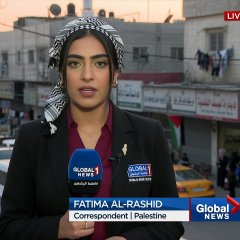
Gulf/MENA Correspondent at Global1.News. Based in Doha, covering Gulf politics, energy markets, diplomacy, and development across the Middle East and North Africa. Tracks the economic transformation of the Gulf states.












Comments (0)