
Mossad Chief Meets Syrian FM in Jordan After Airbase Strike
In a recent i24NEWS English report, the extraordinary backchannel between Israel and Syria's new leadership came into focus: Mossad Director Roman Gofman met Syrian Foreign Minister Asaad al-Shaibani in Jordan on Sunday in a secret bid to defuse tensions following an Israeli strike on the Abu al-Duhur airbase in northwestern Syria.
In a recent i24NEWS English report, the extraordinary backchannel between Israel and Syria's new leadership came into focus: Mossad Director Roman Gofman met Syrian Foreign Minister Asaad al-Shaibani in Jordan on Sunday in a secret bid to defuse tensions following an Israeli strike on the Abu al-Duhur airbase in northwestern Syria. The meeting, confirmed by three sources familiar with the matter and first reported by Axios, marks the highest-level direct contact between the two countries since the fall of Bashar Assad in December 2024 — and it came just days after Israel bombed a runway that Damascus insists was being rehabilitated for civilian use.
The encounter underscores a fragile and paradoxical reality: Israel and Syria's new Islamist-led government are simultaneously negotiating a security framework under US mediation while Israel continues to strike Syrian territory with impunity. For Israeli readers, the question is no longer whether Jerusalem talks to Damascus — it is what those talks can possibly yield when the IDF is bombing Syrian bases and occupying buffer zones in the Golan.
Mossad Chief Meets Syrian FM in Jordan as Israel and Damascus Walk a Diplomatic Tightrope
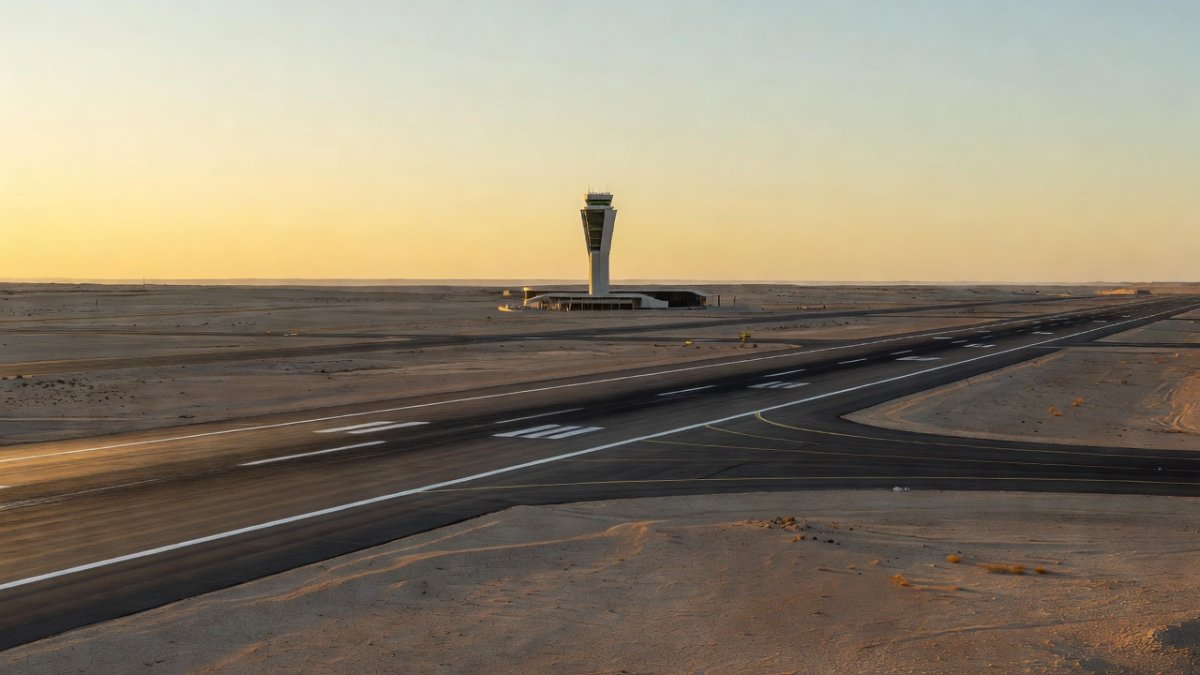
Jerusalem, Israel – this week — The secret meeting between Mossad Director Roman Gofman and Syrian Foreign Minister Asaad al-Shaibani in Amman was convened to ease tensions after Israel's overnight strike on Monday-Tuesday this week against the Abu al-Duhur airbase in Idlib countryside near Aleppo, approximately 70 kilometers from the Turkish border. Eight Israeli airstrikes hit the runway and storage facilities, according to Syrian state media, which reported no casualties. The US envoy to Syria, Tom Barrack, called the strike an "unnecessary escalation" — a rare public rebuke of Israeli military action by Washington's point man on the file.

The Strike That Nearly Broke the Channel
The Abu al-Duhur airbase has been a flashpoint since the Assad regime's collapse. Turkey, now the primary patron of President Ahmed al-Sharaa's government, has been training and advising Syrian forces, and Ankara's defense minister confirmed last year that Turkey maintains more than 20,000 troops in Syria with no immediate withdrawal plans. Israeli intelligence assessed that the base's runway rehabilitation could facilitate a Turkish military deployment — a red line for Prime Minister Benjamin Netanyahu, who said this week: "We will not tolerate a Turkish military entrenchment in Syria that threatens Israel. We made the message very clear: Don't. Apparently they did not hear it clearly enough, so we made sure they understood it better."
Both Syria and Turkey denied any planned Turkish deployment at the base, and Damascus insisted the runway was being repaired for domestic civilian and military use. But the Israeli strike, which came without prior warning to the Syrian side, threatened to collapse the nascent communication channel that had been painstakingly built over months of US-mediated talks.
From Phone Calls to Face-to-Face in Amman
Before the strike, Gofman and al-Shaibani had held a phone call on August 14 regarding Turkey's military presence in Syria. According to Al Majalla, there were several calls, not just one, in which Damascus explained that the Abu al-Duhur runway was being rehabilitated and had no hostile intentions toward Israel. The Syrian foreign minister reportedly sought to reassure the Mossad chief that the base's reconstruction was not a precursor to Turkish entrenchment — a message that evidently did not land in Jerusalem.
The Sunday meeting in Jordan was therefore a damage-control exercise. Gofman and al-Shaibani met face-to-face, with Jordanian mediation, to walk back from the brink. The meeting followed a series of US-mediated Israeli-Syrian negotiating sessions under Special Envoy Tom Barrack, including in London and Paris. In those sessions, former Mossad chief David Barnea and National Security Council head Gil Reich sat across from al-Shaibani and former Syrian intelligence chief Hussein al-Salama. In Paris in January, Washington announced a "joint integration mechanism" — a permanent communication cell designed to prevent misunderstandings from spiraling into conflict.
Damascus Pushes for a Coordination Centre; Israel Hesitates
One of the key sticking points in the negotiations has been the establishment of a joint coordination centre in Jordan. Damascus has pushed for such a mechanism, which would institutionalize communication and provide a channel for de-escalation in real time. Israel, however, has refused to activate it — a decision that critics say contributed to the Abu al-Duhur misunderstanding. The Israeli position reflects a broader reluctance to legitimize the new Syrian government or to create structures that could be seen as formal diplomatic recognition. Yet the refusal to institutionalize communication carries its own risks, as this week's strike demonstrated.
Al-Shaibani, for his part, said Syria remains ready for negotiations to de-escalate and reach a new security agreement, but warned that "de-escalation cannot be the responsibility of one side alone." He said Syria expects security talks with Israel to resume soon and wants an end to Israeli military actions and the withdrawal of Israeli forces from Syrian territory as confidence-building steps. Those demands are unlikely to be met — Israel has occupied the buffer zone in the Golan since Assad's fall, established forward positions, and carried out hundreds of strikes across Syria, destroying strategic assets from air defenses to missile production facilities.
Domestic Israeli Criticism Mounts
The strike on Abu al-Duhur has not gone unchallenged inside Israel. Opposition Democrats chairman Yair Golan called it "a provocative and dangerous move that brings us closer to a confrontation with Turkey." Golan's criticism reflects a growing concern among security analysts that Israel's aggressive posture in Syria risks dragging the country into a direct military confrontation with Ankara — a NATO member with a formidable army and drone fleet. Tom Barrack has warned that a military mistake between Israel and Türkiye could spark a wider war, a scenario that would dwarf the current low-intensity conflict in Syria.
The Israeli security establishment is divided. Some officials argue that the strikes are necessary to prevent Turkey from establishing a permanent military presence near Israel's northern border, particularly at bases like Abu al-Duhur that could host Turkish aircraft within striking distance of Israeli territory. Others contend that the strikes are counterproductive, pushing Damascus closer to Ankara and undermining the very negotiations that could produce a stable security arrangement. The Gofman-al-Shaibani meeting suggests that the Mossad, at least, believes dialogue is the better path — even as the IDF continues to bomb Syrian infrastructure.
What the Meeting Means for Israel's Northern Front
The Amman meeting is significant not because it resolved the underlying tensions — it did not — but because it kept the channel open. For Israel, the ability to communicate directly with Damascus, even through a Mossad director rather than a diplomat, provides a critical safety valve. The alternative — relying on intermediaries like Jordan or the United States — has proven slow and unreliable, as the Abu al-Duhur strike demonstrated. For Syria, the meeting offered a measure of legitimacy and a chance to explain its intentions without the threat of immediate military retaliation.
The broader context is sobering. Since Assad's fall, Israel has destroyed much of Syria's military infrastructure, occupied the Golan buffer zone, and supported the Druze community in Sweida, which has declared autonomy from Damascus. The new Syrian government, led by the former al-Qaeda affiliate Hayat Tahrir al-Sham, has sought to project moderation and pragmatism, but its ties to Turkey and its Islamist roots make it a deeply uncomfortable partner for Jerusalem. The negotiations under Barrack's auspices have produced a communication mechanism but little else — no security agreement, no withdrawal schedule, no formal recognition.
The coming weeks will test whether the Gofman-al-Shaibani meeting can translate into concrete de-escalation. Syria wants Israeli forces out of its territory and an end to airstrikes; Israel wants guarantees that Syria will not become a Turkish forward base or a platform for Iranian or Hezbollah resurgence. Those positions are not irreconcilable, but they require a level of trust that neither side has yet demonstrated. The Abu al-Duhur strike was a reminder of how quickly that trust can evaporate — and the Amman meeting was a reminder that both sides, for now, prefer talking to fighting. Whether that preference survives the next Israeli airstrike is an open question that will define the northern front for months to come.
By Hannah Berg, Staff Writer
This article was produced with AI-assisted research and editorial support. Reporting is based on sources cited in the article.
What's Your Reaction?
 Like
0
Like
0
 Dislike
0
Dislike
0
 Love
0
Love
0
 Funny
0
Funny
0
 Wow
0
Wow
0
 Sad
0
Sad
0
 Angry
0
Angry
0

Israel Correspondent at Global1.News. Based in Tel Aviv, covering Israeli politics, security, technology, and society. Provides balanced, deeply-sourced reporting on one of the most closely-watched regions in the world.














Comments (0)