
Israeli army arrests 13 Palestinians as occupiers escalate attacks in West Bank
In a single day of operations across the occupied West Bank, the Israeli army arrested 13 Palestinians, including a child, while separate attacks by Israeli settlers resulted in the burning of a residential room, the destruction of agricultural land, and the uprooting of olive and grape trees,.
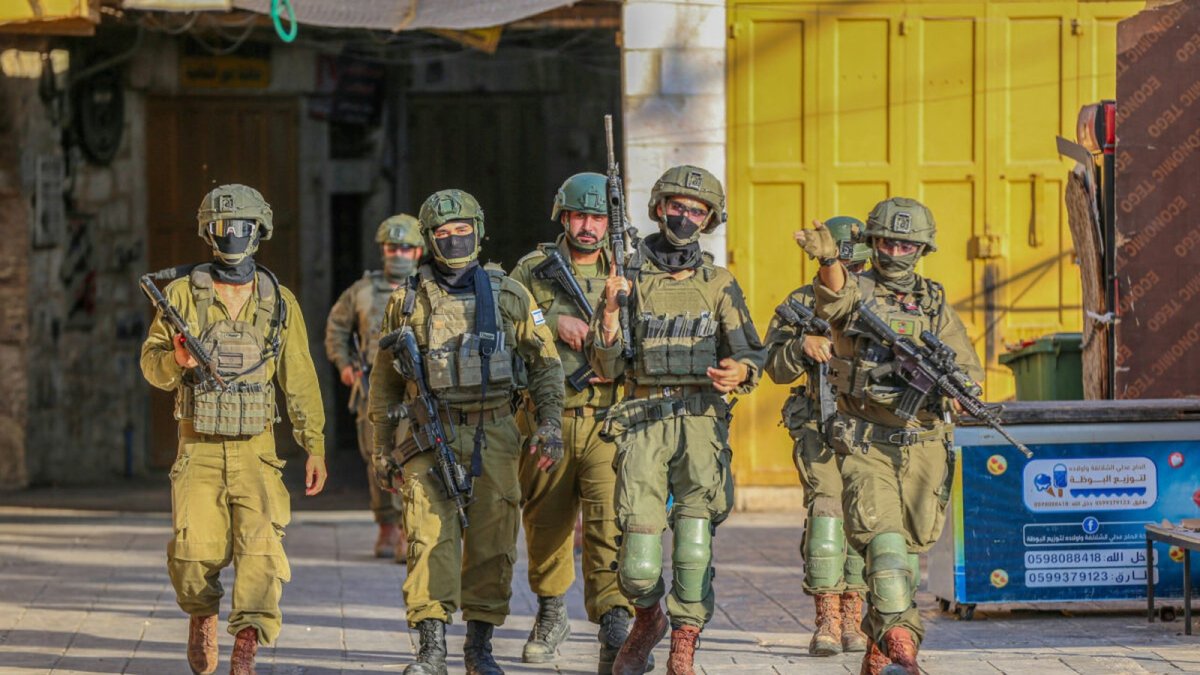
In a single day of operations across the occupied West Bank, the Israeli army arrested 13 Palestinians, including a child, while separate attacks by Israeli settlers resulted in the burning of a residential room, the destruction of agricultural land, and the uprooting of olive and grape trees, according to reports from Anadolu and the official Palestinian news agency Wafa. The incidents, which unfolded Sunday across at least five governorates, underscore the intensifying pressure on Palestinian communities as military raids and settler violence continue to reshape daily life in the territory.
Raids and Arrests From Nablus to Tulkarem
The arrests were spread across several cities, reflecting what Palestinian officials describe as a coordinated campaign of nightly incursions. In Qalqilya, the army detained six Palestinians after raiding the city and searching homes in the Kafr Saba and al-Naqqar neighborhoods, according to Wafa. In a separate incursion, five Palestinians were rounded up from the city of Tulkarem. The army also detained two Palestinians, including a child, from the village of al-Rashaydeh in the Bethlehem governorate.
Local sources told Anadolu that the detainees were taken to undisclosed locations, a common practice in recent months that has made it difficult for families to track their loved ones. The Palestinian Prisoners Club, a watchdog group, has documented a sharp rise in administrative detention and pre-trial imprisonment since October 2023, though figures for Sunday's arrests were not immediately available.
The raids are part of a broader pattern. Since the outbreak of Israel's war on the Gaza Strip in October 2023, the Israeli military has conducted near-daily operations in West Bank cities, towns, and refugee camps. The Israeli military says its operations are aimed at dismantling militant networks and preventing attacks, and it has repeatedly said it investigates reports of settler violence. According to the United Nations Office for the Coordination of Humanitarian Affairs, hundreds of Palestinians have been killed in the West Bank, including East Jerusalem, since that date, though these figures could not be independently verified for this report.
Settler Attacks in Osarin: Fire and Racist Graffiti
In the northern West Bank, the town of Osarin, south of Nablus, was the scene of a particularly brazen settler attack. Local sources told Anadolu that Israeli occupiers burned a residential room belonging to a Palestinian in the northern part of the town. They also set fire to a vehicle, partially burning it, and spray-painted racist slogans at the site.
The attack forced the family to flee their home as flames consumed the room, which had been used for sleeping and storage. No injuries were reported, but the psychological toll was evident. Local sources described the family as deeply shaken, and residents told Anadolu that such attacks, carried out with apparent impunity, have become a recurring feature of life in towns bordering settlement outposts.
Settler violence in Osarin is not new, but the frequency and intensity have escalated. The town sits near several illegal settlement outposts, and Palestinian residents have long complained of harassment, land confiscation, and physical attacks. The Israeli military, which is supposed to protect all civilians under international law, has been accused of failing to intervene or, in some cases, of accompanying settlers during such operations.
Bethlehem's Agricultural Heartland Under Assault
In the Bethlehem governorate, the attacks targeted the very livelihood of farming communities. Israeli occupiers attacked the Khala'il al-Louz area east of the city, damaging irrigation pipes used for crops, cutting down trees, and damaging Palestinian property and agricultural land, according to local sources. The area is known for its fruit orchards and vegetable plots, which provide income for dozens of families.
In the nearby village of al-Minya, east of Bethlehem, occupiers uprooted olive and grape trees from Palestinian-owned land, according to Wafa. Olive trees are particularly symbolic in Palestinian society, often passed down through generations and representing a deep connection to the land. The destruction of mature trees, which take decades to grow, is a devastating blow to families who rely on them for both subsistence and income.
Agricultural experts say the timing of these attacks is especially harmful. With the harvest season approaching, the loss of trees and irrigation infrastructure means that families will not only lose this year's crop but will face years of recovery. The damage to irrigation pipes in Khala'il al-Louz could take months to repair, and the cost is beyond the means of many small farmers.
Ramallah Villages Isolated and Under Siege
In the Ramallah governorate, Israeli forces closed the western entrance to al-Mughayyir village, northeast of the city, preventing Palestinians from entering or leaving. Local sources told Anadolu that the western entrance is currently the village's only access point after the Israeli army closed its eastern entrance on Oct. 7, 2023. The closure effectively traps residents, cutting them off from hospitals, schools, and markets.
During the operation, soldiers subjected some Palestinians to field interrogations and fired tear gas toward vehicles, according to local sources. The use of tear gas in confined spaces, particularly near homes and schools, has raised concerns about respiratory illnesses and the safety of children and the elderly.
In a separate incident on the outskirts of Burqa village, east of Ramallah, Israeli occupiers burned a tent, equipment, and animal feed belonging to a Palestinian farmer. The farmer, who was not identified by name, lost not only his shelter but also the means to care for his livestock. The attack appears to be part of a pattern of targeting shepherds and farmers in areas near settlements, where land disputes are common.
The Wider Context: A Surge Since October 2023
The West Bank has witnessed a surge in occupier attacks and Israeli military raids since the outbreak of Israel's war on the Gaza Strip in October 2023, amid Palestinian and international warnings over the consequences of the continued escalation. The United Nations and human rights organizations have repeatedly called for an end to settler violence and for Israel to fulfill its obligations as an occupying power under the Fourth Geneva Convention.
According to the Palestinian body that monitors settlements, illegal Israeli settlements and outposts in the West Bank have reached 592, a figure that reflects the steady expansion of the settler population. These settlements are considered illegal under international law, though Israel disputes this. The presence of settlements, and the military infrastructure that protects them, fragments the West Bank into isolated enclaves, making the prospect of a viable Palestinian state increasingly remote.
The raids and settler attacks are not isolated incidents but part of a coordinated strategy, according to analysts. By targeting agricultural land, closing roads, and arresting activists and ordinary residents, the Israeli military and settlers are systematically undermining the Palestinian presence in areas designated for future statehood. The result is a slow-motion displacement, driven not by a single dramatic event but by the cumulative effect of daily harassment and destruction.
Human Cost and the Two-State Reality
The human cost of these operations extends beyond the immediate victims. The child detained in al-Rashaydeh, whose name has not been released, is one of hundreds of minors held in Israeli military custody each year. According to Defense for Children International-Palestine, children are often subjected to night raids, interrogations without a parent present, and prolonged detention. The psychological impact on these children, and on their communities, is profound.
For families in Osarin, Khala'il al-Louz, and al-Mughayyir, the message is clear: their presence is not welcome. The destruction of homes, trees, and infrastructure is designed to make life so difficult that they will leave voluntarily. This is a strategy that has been documented by human rights groups for decades, and it continues unabated.
The two-state solution, long the cornerstone of international diplomacy, appears increasingly unattainable. With settlements expanding, roads closed, and villages isolated, the territorial contiguity required for a viable Palestinian state is being eroded. The international community's response, limited to statements of concern and occasional resolutions, has done little to change the reality on the ground.
As the sun set on Sunday, the people of Osarin were left to survey the charred remains of a room that was once a home. In al-Minya, farmers counted the stumps of trees that had taken decades to grow. In al-Mughayyir, residents waited for the army to open the road so they could reach a hospital. These are the daily realities of occupation, and they show no signs of abating.
By Fatima Al-Rashid, Staff Writer
This article was produced with AI-assisted research and editorial support. Reporting is based on sources cited in the article.
What's Your Reaction?
 Like
0
Like
0
 Dislike
0
Dislike
0
 Love
0
Love
0
 Funny
0
Funny
0
 Wow
0
Wow
0
 Sad
0
Sad
0
 Angry
0
Angry
0

Gulf/MENA Correspondent at Global1.News. Based in Doha, covering Gulf politics, energy markets, diplomacy, and development across the Middle East and North Africa. Tracks the economic transformation of the Gulf states.















Comments (0)