
Mladenov Warns Gaza Ceasefire at 'Point of No Return'
The fragile Gaza ceasefire, brokered after months of devastating conflict, is teetering on the edge of collapse, with the UN's top envoy for the enclave warning that a return to fighting would constitute a "point of no return" for the entire region.
The fragile Gaza ceasefire, brokered after months of devastating conflict, is teetering on the edge of collapse, with the UN's top envoy for the enclave warning that a return to fighting would constitute a "point of no return" for the entire region. The warning comes as the intricate web of commitments-from Hamas weapons handovers to Israeli political recalcitrance-threatens to unravel, carrying profound implications for Middle East stability, Gulf normalization efforts, and the broader great-power competition shaping the region.
Gaza's Fragile Truce at "Point of No Return": Disarmament Stalls, Politics Threaten to Unravel US-Backed Plan
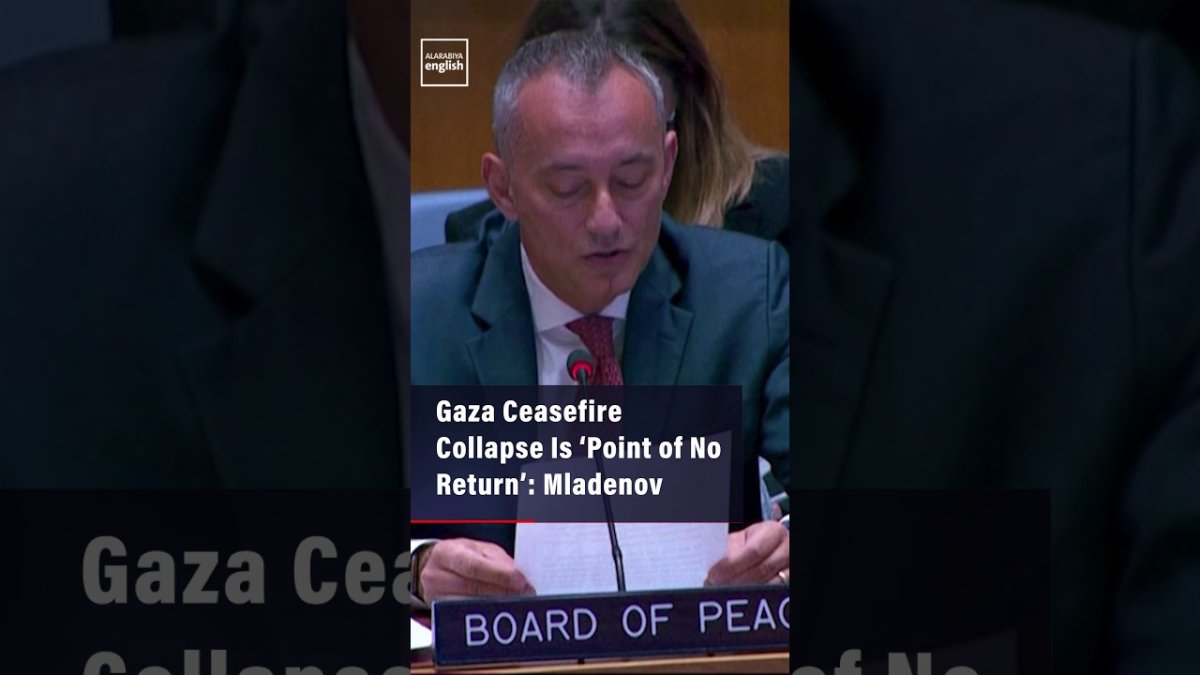
United Nations, New York - August 26, 2026 - Nickolay Mladenov, the high representative for Gaza in US President Donald Trump's Board of Peace, delivered a stark ultimatum to the UN Security Council on Wednesday, warning that the tenuous ceasefire in the Gaza Strip could reach a catastrophic "point of no return" if hostilities resume. The Bulgarian diplomat and former UN Special Coordinator for the Middle East Peace Process framed the current moment not merely as a diplomatic setback but as an existential crossroads for the enclave and the wider regional order.
A Ceasefire That Holds but Does Not Heal
Mladenov's address painted a picture of a truce that has dramatically reduced casualties but has yet to deliver the tangible relief that Gaza's two million residents desperately need. "The ceasefire holds and casualties have fallen sharply but they have not stopped," he told the council. "A ceasefire under which civilians are still buried is not yet one the people of Gaza can feel." His words underscored the grim reality that while the large-scale bombardment has ceased, the daily dangers and humanitarian catastrophes persist, eroding public confidence in the peace process.
The high representative's warning was unequivocal: "Gaza does not have another catastrophe left in it. If this ceasefire collapses ... that would not be a setback. It would be a point of no return for everyone." He elaborated that in such a scenario, there would be "no roadmap to return to, there will be no administration to deploy, and there will be nothing left on the ground to rebuild." This stark assessment signals that the current framework, however imperfect, represents the last viable structure for preventing a total societal and physical collapse of the Gaza Strip.
The Disarmament Dilemma: Hamas's Pledge and Israel's Skepticism
At the heart of the current crisis lies the contentious issue of disarmament. Mladenov confirmed that Hamas and other Palestinian factions agreed on July 30, 2026, to hand over their weapons and transfer full governing authority to a transitional administration recognised by the UN. This landmark commitment, brokered under the auspices of the US-led Board of Peace, was hailed by President Trump as a breakthrough. However, the implementation has been fraught with delays and mutual recriminations, threatening to derail the entire process.
The road map agreed upon involves the decommissioning of weapons under international supervision, with the International Stabilisation Force (ISF) supporting verification. The ISF, led by US Major General Jasper Jeffers, is preparing for deployment, but its role remains contingent on the cooperation of all parties. Mladenov highlighted the second major risk to the ceasefire, noting that "Hamas has committed to cease all military activities. That commitment is still to be met in full. Every weapon carried, every tunnel still worked on, and every convoy still obstructed sets the process back and hands an argument to those who want to resume war."
Netanyahu's Political Calculus and the US-Israel Dynamic
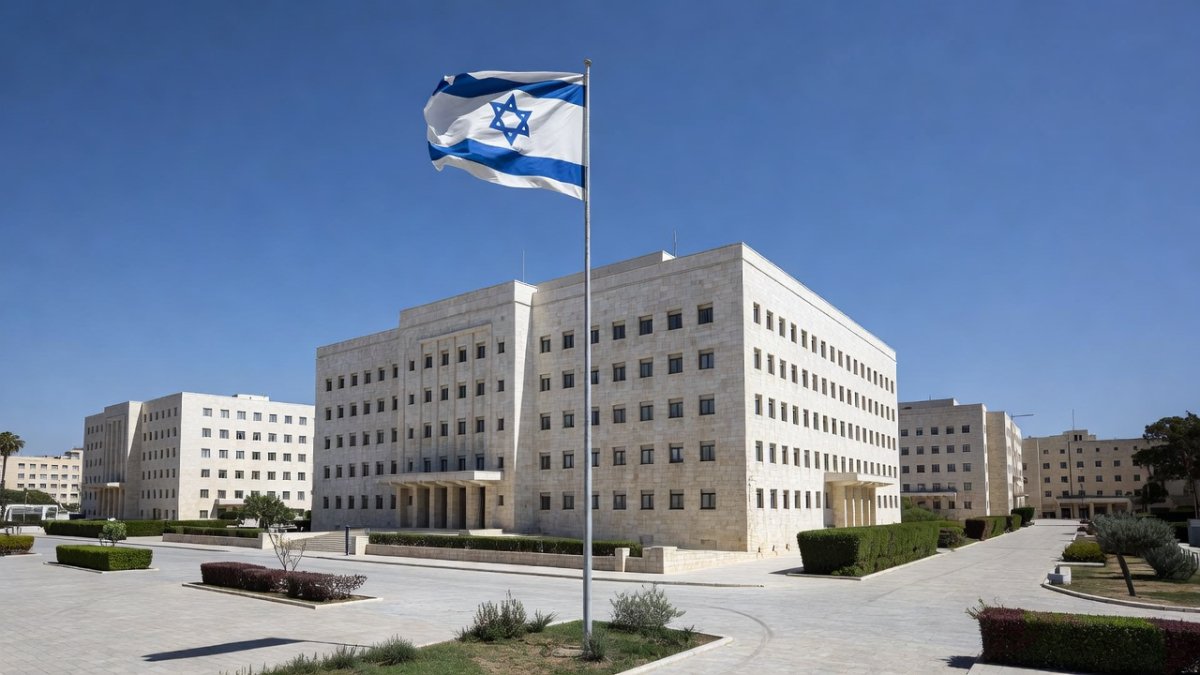
The political landscape in Israel adds another layer of volatility to the situation. Prime Minister Benjamin Netanyahu, facing a tough re-election fight, earlier this month publicly rejected the latest part of the US plan. His public dismissal of the arrangement, despite his government's stated commitment to Trump's broader peace vision, reflects the intense domestic political pressures he faces. The Israeli deputy envoy to the UN, Jonathan Miller, reiterated Israel's position, stating, "Israel is committed to Trump's peace plan but the plan cannot succeed while Hamas remains armed. Disarmament must come first."
This stance creates a classic security dilemma: Israel demands disarmament before any further concessions, while Hamas and other factions view the continued Israeli military presence and blockade as a justification for retaining their weapons. The US, caught between its key ally and its self-proclaimed diplomatic victory, must navigate this impasse. Trump's initial enthusiasm for the breakthrough now faces the harsh reality of implementation, where the political survival of Netanyahu and the security guarantees demanded by Israel clash with the on-the-ground realities in Gaza.
Human Rights vs. Security: A Clash at the Security Council
The Security Council session also exposed the deep ideological chasm regarding the Gaza framework. Athena Rayburn, executive director of the Association of International Development Agencies (AIDA), delivered a scathing critique of the US-backed plan, arguing that "the rights of Palestinians in Gaza have been made subordinate to the far-reaching, capricious and arbitrary requirements of its occupier. This is untenable." Her remarks reflect widespread concern among humanitarian organizations that the security-first approach undermines fundamental Palestinian rights and self-determination.
US Ambassador to the UN Mike Waltz countered forcefully, citing UN commission of inquiry reports that detailed torture by Hamas, the use of hospitals as human shields, and the construction of tunnels and command centres under schools. In a pointed rebuke, Waltz accused Hamas leaders of hypocrisy, stating, "Hamas fighters aren't starving ... their wives, who are carrying Birkin bags on camera, they're not starving." This exchange highlights the fundamental incompatibility between the humanitarian perspective, which prioritizes Palestinian rights and needs, and the security perspective, which focuses on the threat posed by Hamas's continued military capabilities.
Regional Repercussions: The Gulf, Normalization, and the Abraham Accords
The Gaza crisis is inextricably linked to the broader regional dynamics of the Middle East. For Gulf states, particularly those that signed the Abraham Accords with Israel, the conflict presents a significant dilemma. The normalization agreements were predicated on a vision of economic integration and security cooperation, but the repeated cycles of violence in Gaza-2008-09, 2014, 2021, and the devastating 2023-25 war-expose the fragility of this vision. The UAE and Bahrain, in particular, face domestic criticism for maintaining ties with Israel while Palestinian civilians suffer, complicating their strategic calculus.
Moreover, the conflict provides leverage for Iran and its proxies, who use the Palestinian cause to rally regional support and undermine US-backed normalization efforts. The Sunni-Shia competition, while not the primary driver of the Gaza conflict, is a persistent undercurrent. Iran's support for Hamas and Islamic Jihad, despite their Sunni affiliation, is a strategic tool to counter Israeli and US influence. The failure of the current ceasefire could hand Tehran a propaganda victory and destabilize the region further, potentially impacting energy markets and the security of Gulf shipping lanes.
The Role of Mediators: Egypt, Qatar, and the Stakes for Regional Stability
Egypt and Qatar have historically played crucial mediating roles in Gaza, and their involvement remains vital to the current process. Egypt, which shares a border with Gaza and has a peace treaty with Israel, views the enclave's stability as a direct national security interest. Cairo has consistently worked to broker ceasefires and facilitate reconstruction, wary of the Muslim Brotherhood's historical ties to Hamas. Qatar, meanwhile, has provided significant financial support to Gaza, using its wealth and political connections to maintain a channel of communication with Hamas that Israel and the US cannot directly access.
The current crisis tests the limits of these mediators' influence. If the US-backed plan collapses, Egypt and Qatar would be forced to scramble for a new framework, likely with diminished leverage. The failure would also embolden hardliners on all sides, making a return to the status quo of blockade and sporadic violence more likely. For the broader region, a collapse would signal that the great powers-the US, Russia, and China-are unable or unwilling to enforce a durable peace, potentially leading to a power vacuum filled by non-state actors and regional proxies.
Second-Order Effects: UNRWA, Reconstruction, and the Two-State Question
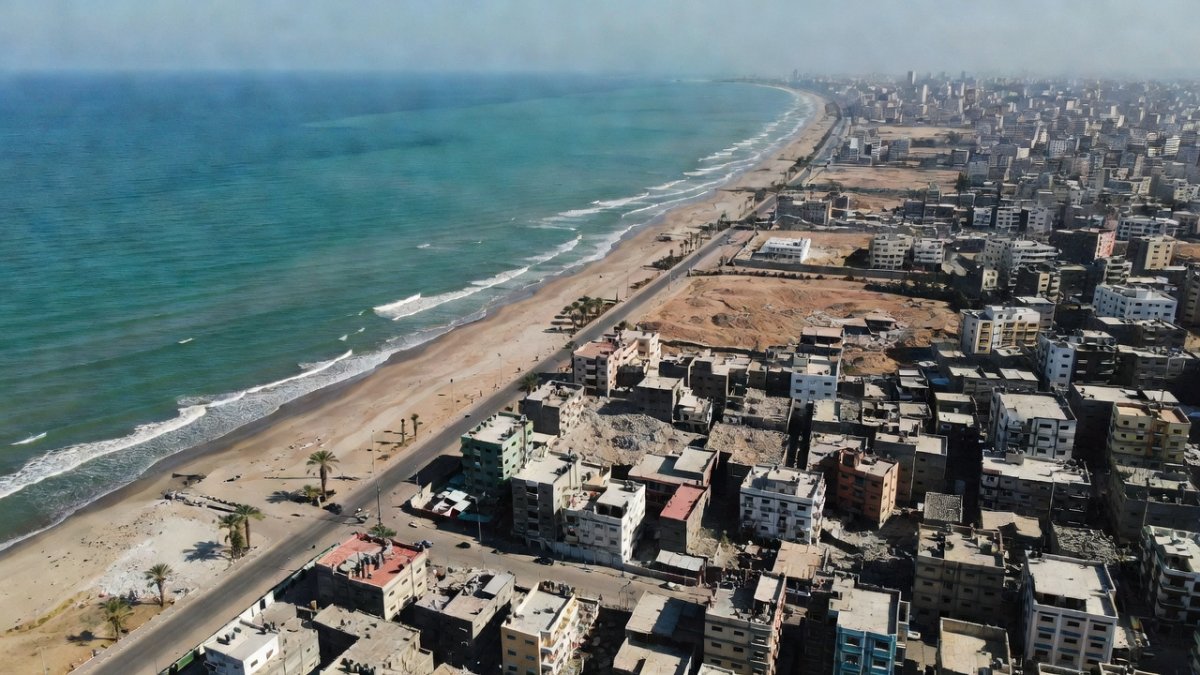
The long-term viability of the ceasefire is also tied to the fate of UNRWA, the UN agency for Palestinian refugees. The agency, which provides essential services to millions of Palestinians, has faced funding crises and political attacks from Israel and the US. Mladenov's warning that there will be "nothing left on the ground to rebuild" underscores the immense reconstruction challenge. The 2023-25 war caused unprecedented destruction to Gaza's infrastructure, and without a functioning administration and a secure environment, reconstruction efforts will be impossible.
Furthermore, the current crisis has profound implications for the two-state solution. The US plan, which involves a transitional administration and eventual disarmament, is seen by some as a step toward a Palestinian state, while others view it as a mechanism to perpetuate Israeli control. The Palestinian Authority, which is not directly involved in the Gaza administration, watches these developments with a mix of hope and suspicion. If the plan succeeds, it could revitalize the two-state paradigm; if it fails, it may entrench the one-state reality of occupation and conflict, further radicalizing the population and undermining moderate voices.
Strategic Calculus: What Each Side Wants and the Path Forward
Understanding the strategic calculus of each actor is essential to predicting the next phase. Hamas, weakened but not defeated, seeks to survive as a political entity and secure an end to the blockade. Its agreement to disarm is a significant concession, likely made in exchange for guarantees of reconstruction and a political role. However, its continued military activities, as noted by Mladenov, suggest internal divisions or a hedging strategy. Israel, under Netanyahu, seeks to maintain security and political advantage, with disarmament as a non-negotiable precondition. The US, with an eye on its legacy and regional influence, needs a success story in the Middle East, particularly as it competes with China and Russia for influence.
The path forward requires a delicate balancing act. The ISF deployment, led by Major General Jeffers, is a critical test. If the force can be deployed and effectively verify disarmament, it could provide the security guarantees Israel demands and the legitimacy Hamas needs to surrender its weapons. However, this requires a level of trust and cooperation that has been conspicuously absent. Mladenov's warning serves as a final call to action: the window for a peaceful resolution is closing, and the consequences of failure are too catastrophic to contemplate. The international community, and the regional powers, must now decide whether they are willing to invest the political capital and resources necessary to prevent the point of no return.
By Malik Hassan, Staff Writer
This article was produced with AI-assisted research and editorial support. Sources: Al Arabiya English, The National (Adla Massoud, United Nations), Arab News/AFP.
What's Your Reaction?
 Like
0
Like
0
 Dislike
0
Dislike
0
 Love
0
Love
0
 Funny
0
Funny
0
 Wow
0
Wow
0
 Sad
0
Sad
0
 Angry
0
Angry
0
Middle East Correspondent at Global1.News. Based in Beirut, covering politics, conflict, energy, and society across the Middle East. Brings context and depth to a region often reduced to headlines.













Comments (0)