
Meta India Head Booked Over AI-Morphed PM Modi Videos
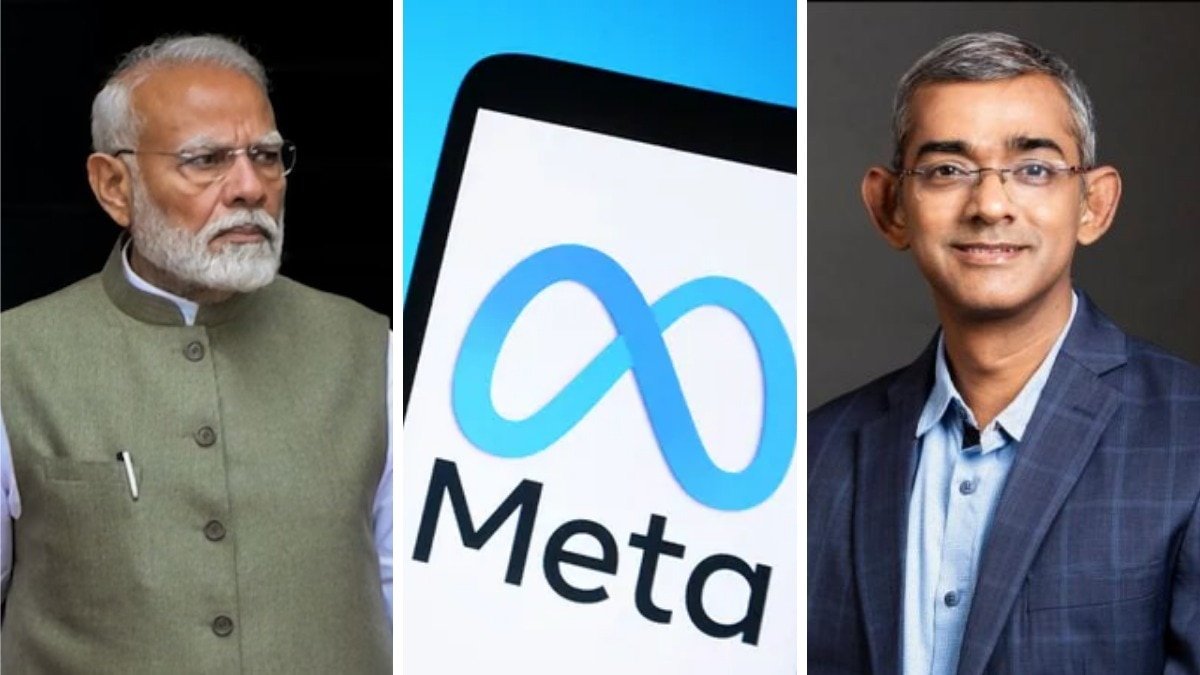
The Hyderabad Cyber Crime Police have registered two FIRs naming Meta India head Arun Srinivas as co-accused over the circulation of AI-generated morphed videos targeting Prime Minister Narendra Modi, marking one of the most consequential legal actions against a global tech platform executive in India.
The Hyderabad Cyber Crime Police have registered two FIRs naming Meta India head Arun Srinivas as co-accused over the circulation of AI-generated morphed videos targeting Prime Minister Narendra Modi, marking one of the most consequential legal actions against a global tech platform executive in India. The cases, filed under the Bharatiya Nyaya Sanhita (BNS) and the Information Technology Act, come amid a deepening regulatory crackdown on synthetic content that has exposed serious gaps in platform accountability. With the probe still at a preliminary stage and all cited links already inactive, the investigation is now a key test of whether India's evolving deepfake rules can keep pace with viral disinformation.
Meta India Head Booked by Hyderabad Police in AI-Deepfake Case: 2 FIRs, BNS Charges, and a Digital Evidence Puzzle
New Delhi, India – July 31, 2026 — The Hyderabad Cyber Crime Police have formally registered an FIR against the Managing Director of Meta India, Arun Srinivas, and several social media users in connection with AI-morphed videos of Prime Minister Narendra Modi that were circulated on Instagram and Facebook. The action, confirmed in an India Today report updated on July 31, 2026, follows complaints filed by two Telangana BJP supporters and places Meta's senior-most India executive in the crosshairs of Indian law enforcement for the first time.
Two Complainants, Two Cases, One Common Accused
The first complainant, T Saikiran Goud, a 32-year-old social media core committee member of the Telangana BJP, approached the police on the night of Wednesday, July 29, after reportedly coming across objectionable reels on Instagram and Facebook. Goud submitted 20 Facebook and Instagram links allegedly containing morphed and objectionable videos of the Prime Minister, and explicitly requested action against Meta for allowing such content to remain on its platforms. The second complainant, S Aravind Reddy, a BJP supporter from Nampally, alleged that certain Instagram handles circulated digitally manipulated content featuring PM Modi, the President of the United States, and former Union minister Dharmendra Pradhan in an obscene, derogatory, and misleading manner. He too sought action against the head of Meta in India.

According to the Times of India report by Mahesh Buddi published on July 31, 2026, the two separate cases were registered by Hyderabad cyber crime police on complaints lodged by BJP supporters, with Arun Srinivas named as co-accused in both. The cases have been filed under relevant provisions of the Bharatiya Nyaya Sanhita and the Information Technology Act, though the specific sections were not enumerated in the complaint documents. By Thursday evening, July 30, all the links cited in both complaints had become inactive, a development that investigators say complicates the process of preserving digital evidence while also pointing to possible coordinated take-downs by the platform.
The Man in the Dock: Arun Srinivas and Big Tech Accountability
Arun Srinivas, previously Vice President at Meta, now serves as the Managing Director of Meta India, making him the highest-ranking executive of the company in the country. Meta operates one of the largest digital ecosystems in India, with over 500 million WhatsApp users alone, alongside hundreds of millions of active users on Facebook and Instagram. The naming of the India head as co-accused in both FIRs elevates this case beyond individual content creators. It shifts legal attention to the platform's responsibility for the content it hosts and amplifies — a foundational question for India's rapidly maturing internet economy.
The case is being widely seen as one of the highest-profile investigations involving a senior executive of a global technology company in India. Never before has a Meta India MD been directly booked in a criminal case related to AI-manipulated content of a constitutional authority. Legal analysts note that the move signals a willingness by state police forces — not just central regulators — to use criminal process against platform leadership when algorithmic amplification is alleged to have caused public mischief or lowered the dignity of public figures.
From Jantar Mantar to Hyderabad: The Deepfake Trail and a Political Movement
The AI-morphed videos that triggered the Hyderabad FIRs did not emerge in a vacuum. They have been circulating since a students' stir led by the Cockroach Janta Party (CJP) at Delhi's Jantar Mantar. The CJP is a youth-based satirical political movement founded on 16 May 2026 by Abhijeet Dipke, in direct response to remarks made a day earlier by Chief Justice of India Surya Kant, who reportedly referred to certain activists and unemployed youth as "cockroaches" and "parasites of society". What began as a protest against a judicial remark quickly morphed into a nationwide campaign focused on irregularities in the undergraduate medical entrance examinations (NEET), culminating in the resignation of Union Education Minister Dharmendra Pradhan on 25 July 2026.
The political context matters for understanding why manipulated content featuring PM Modi, the US President, and Dharmendra Pradhan gained such traction. On July 20, 2026, the CJP's "Sansad Chalo" march to Parliament saw at least 80 protesters injured in police action. Reports at the time said pellet guns and shock batons were used, though Delhi Police denied these claims. A CRPF post-event review concluded that pellet guns and other non-lethal measures were authorised by Delhi Police and carried out per standard operating procedures. The tensions around that march, the NEET irregularities, and the fall of an Education Minister have created a hyper-polarised digital environment in which AI-altered videos can be weaponised within hours, reaching millions before fact-checkers or platform moderators respond.
Regulatory Backdrop: The IT Rules 2026 and MeitY's Tightening Grip
The FIR against Meta India comes just weeks after the Hyderabad Cyber Crime Police summoned Meta representatives to explain the company's mechanisms for detecting and removing AI-generated scams, fake advertisements, and other manipulated content. A Meta representative reportedly appeared before investigators and briefed them on content moderation and compliance measures. That engagement appears to have been a precursor to the more aggressive legal step of naming the country head in an FIR.
India's legal framework for deepfakes has been in active motion. The IT (Intermediary Guidelines and Digital Media Ethics Code) Amendment Rules 2026 came into force on 20 February 2026, requiring platforms to pull court-flagged deepfakes within three hours and to label AI-generated or synthetic content. Barely two months later, on April 21, 2026, the Ministry of Electronics and Information Technology (MeitY) proposed even stricter norms requiring continuous, visible labels for the full duration of AI-generated content. The feedback deadline was later extended to May 7, 2026, indicating that the consultation process is ongoing. The Hyderabad case now becomes an early test of whether the existing three-hour takedown window and labelling obligations are being honoured in practice, especially in a high-stakes political scenario.
The Investigation: Inactive Links, Digital Evidence, and Possible International Complexities
A cyber crime investigator involved in the case told India Today: "We have issued a notice to Meta about the cases registered and the objectionable links reported by the complainants. We are also trying to collect details about the accused to identify and arrest them." The statement confirms that the investigation is active and that Meta, as a legal entity, has been formally notified. Investigators are probing three core questions: the origin of the AI-generated videos, how they were amplified across platforms, and whether Meta's existing safeguards were adequate. The probe will also examine individual users accused of creating, uploading, or sharing the manipulated content.
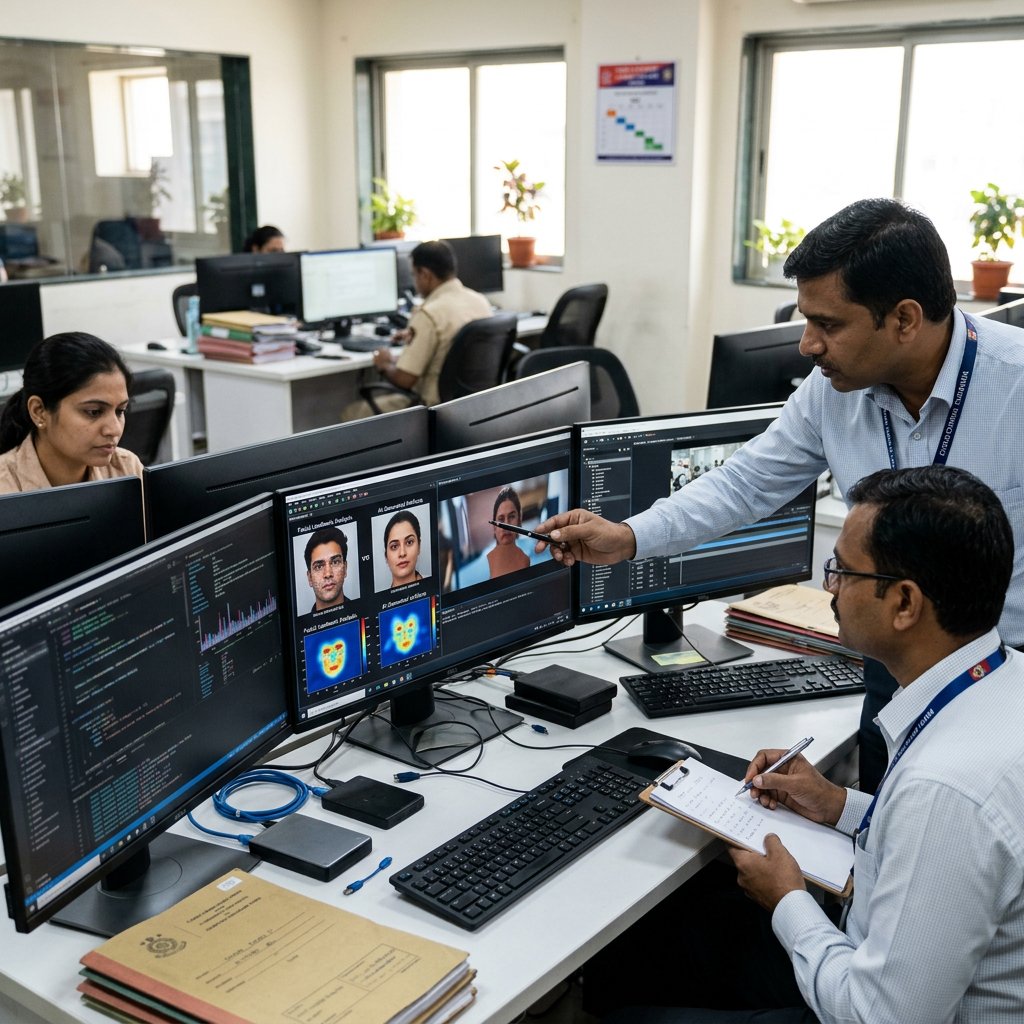
One immediate obstacle is the deactivation of all cited links within roughly 24 hours of the complaints. While this might be seen as prompt action by Meta, investigators must now recover the original content through forensic means or rely on cached versions. The case also raises cross-border questions: Meta's content moderation systems are partly automated and partly human-reviewed, with AI policies set at the company's global headquarters. Any request for data on the creators of the reels would likely involve legal assistance mechanisms and data localisation considerations under Indian law.
Parallel Cases: A Separate Zero FIR in Noida Over PM Modi Comments
The Hyderabad FIR is not the only legal action tied to this wave of anti-government online content. A separate Zero FIR was registered on July 29 at the Expressway police station in Gautam Buddh Nagar against Ruchika Singh of Noida, following a complaint by Smriti Singh of Ghaziabad. The complaint alleges abusive and objectionable language against PM Modi during a July 23 protest at Jantar Mantar. The case has been registered under Section 352 (intentional insult to provoke breach of peace), Section 353(1) (statements conducing to public mischief), and Section 356(1) of the BNS. This demonstrates that law enforcement agencies across multiple states — Telangana and Uttar Pradesh — are simultaneously moving against both platform executives and individual users, suggesting a coordinated if not centralised anxiety about AI-fuelled political speech.
The Bottom Line: A Landmark Legal Reckoning or a Symbolic Gesture?
For Indian citizens, the booking of Meta India's head in connection with AI-morphed videos of the Prime Minister is a watershed moment in the governance of digital platforms. It signals that the state is willing to move beyond fines and show-cause notices to criminal prosecution of senior executives when content harms the dignity of elected officials. But it also raises profound questions about the limits of platform liability. Meta is the intermediary; the videos were created by unknown individuals and shared by other users. Holding the platform's country head criminally liable for user-generated content could be challenged in court, and the legal battle may take years. Still, the psychological effect on Big Tech is immediate: no global platform can assume that local executive leadership is insulated from the consequences of algorithmically amplified disinformation.
The case also exposes a deeper vulnerability in India's information ecosystem. The AI-generated videos emerged in the chaotic aftermath of a student protest movement that toppled an Education Minister. They were distributed via platforms where India has massive user bases. The investigators' task is not only to find the creators but to ascertain whether foreign or domestic politically motivated actors used AI tools to deepen social division. Until the digital evidence trail is fully analysed, the public can expect further summonses, more arrests, and potentially a landmark Supreme Court ruling on intermediary liability in the age of synthetic media. For now, the FIR stands as a warning: in India, the buck no longer stops at the algorithm — it reaches the corner office.
— By Dr. Raj Patel, Staff Writer
This article was produced with AI-assisted research and editorial support. Reporting is based on sources cited in the article.
What's Your Reaction?
 Like
0
Like
0
 Dislike
0
Dislike
0
 Love
0
Love
0
 Funny
0
Funny
0
 Wow
0
Wow
0
 Sad
0
Sad
0
 Angry
0
Angry
0

India/South Asia Correspondent at Global1.News. Analytical voice with a background in science and health journalism. Based in New Delhi, covering Indian politics, education, healthcare, technology, and policy. Breaks down complex data into clear, actionable reporting.








Comments (0)