
Haiti plans first elections since 2016 - with major caveats
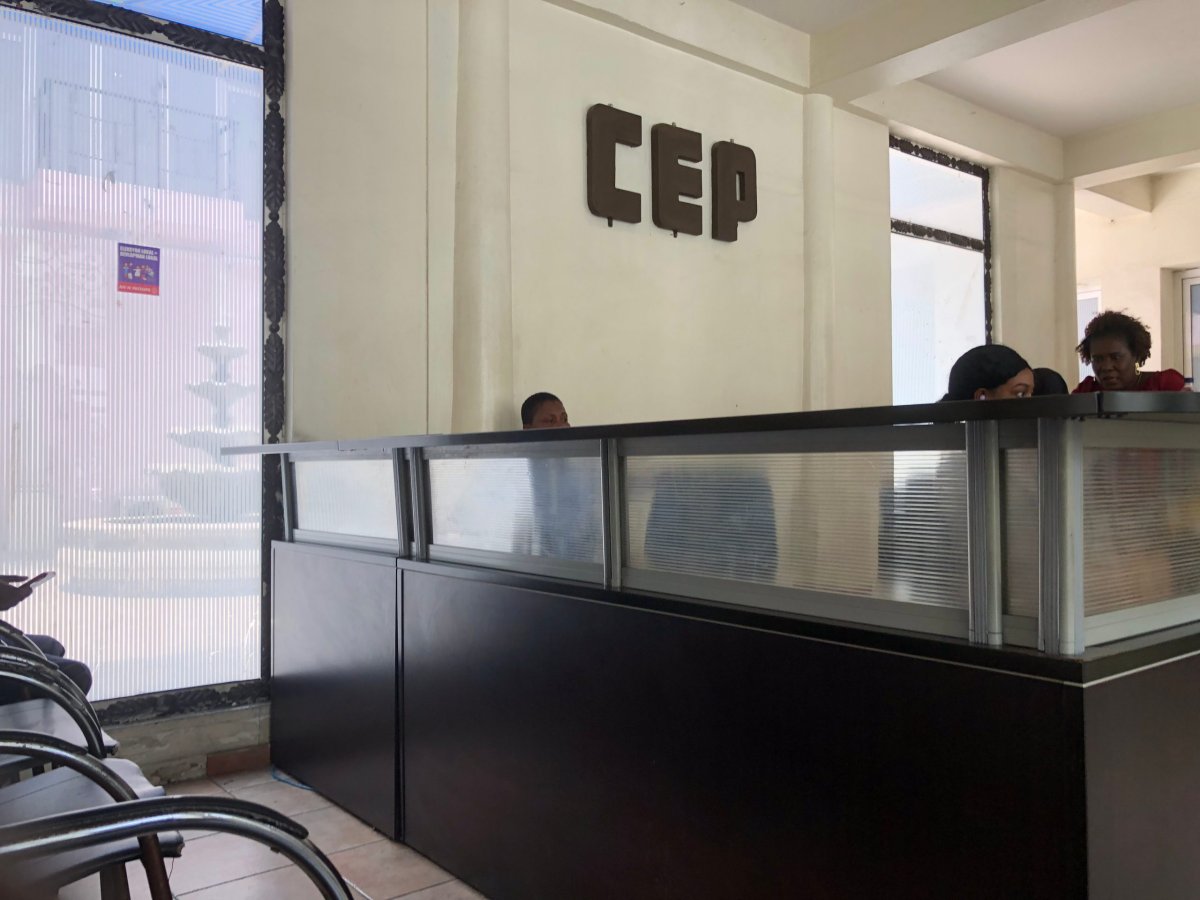
After a decade of broken promises and false starts, Haiti has finally set a date for the ballot box. The country's Provisional Electoral Council (CEP) published its revised electoral calendar on Monday, announcing that the first round of presidential and legislative elections will be held on 13 December 2026 — the first national elections since 2016.
Haiti plans first elections since 2016 - with major caveats
After a decade of broken promises and false starts, Haiti has finally set a date for the ballot box. The country's Provisional Electoral Council (CEP) published its revised electoral calendar on Monday, announcing that the first round of presidential and legislative elections will be held on 13 December 2026 — the first national elections since 2016. But as the council itself made plain, the road to the polls remains steep, and everything depends on two things Haiti has been struggling to secure for years: security and money.
A Date at Last
The announcement ends months of speculation over whether the French-speaking CARICOM member state would be able to stage an election at all, let alone on time. Under the revised timetable, published on 27 July after being submitted to the Government four days earlier, voters will go to the polls on 13 December for the first round of presidential and legislative elections, alongside a popular vote on proposed constitutional reforms. A second round — which also covers local government elections — has been set for 21 February 2027.
The calendar replaces an earlier timetable that had scheduled the first round for 30 August and the runoff for 6 December. The CEP withdrew that calendar in April at the Government's request while officials revised the country's electoral framework to align with a National Pact for Security and the Organization of Elections signed with political stakeholders, along with constitutional reform plans.
A Decade of Broken Democracy
To understand the weight of this moment, one has to remember how Haiti arrived here. The last time Haitians elected a president was in November 2016, when Jovenel Moïse won the office. Five years later, on 7 July 2021, Moïse was assassinated at his private residence overlooking Port-au-Prince by armed groups, including mercenaries. The country has not had an elected president since.
What followed was a cascade of crises: political paralysis, institutional collapse, and a security vacuum that criminal gangs moved swiftly to fill. Today, international organisations estimate that gangs control roughly 90 per cent of Port-au-Prince, and vast stretches of the country remain effectively beyond the reach of the State. The Haitian people have endured kidnapping, displacement and hunger on a scale that most of the region can barely imagine — and all of it without a single elected official at the national level to answer for it.
Since Moïse's assassination, Haiti has been governed through a succession of transitional arrangements, most recently a Transitional Presidential Council established in 2024 with international backing and charged with restoring order and steering the country back to elections. The publication of the electoral calendar is the clearest sign yet that the transitional authorities intend to make good on that mandate — but intention alone has never been enough in Port-au-Prince.
The Calendar — and Its Conditions
The CEP's statement lays out the mechanics of the vote. Voter and candidate registration is expected to run through mid-October, followed by a two-month campaign period, with preliminary results anticipated by late December. A runoff, if needed, would follow in February.
But here is the caveat that should give every observer pause. In its statement, the CEP said the calendar depended on "the establishment of an acceptable security climate and the necessary funds to pursue electoral operations." In plainer language: if the gangs still hold the streets and the treasury is empty, the 13 December date is a target, not a promise.
The funding question is just as pressing as the security one. Organising elections in a country of more than 11 million people — with voter rolls to build, polling stations to secure, ballots to print and thousands of officials to train — is an expensive exercise under the best of circumstances. Under the current ones, it is a monumental undertaking that will require significant support from the international community.
The Gang Question
Security is the issue that shadows every other aspect of the plan. With an estimated 90 per cent of the capital under gang influence, holding a credible vote means first reclaiming territory, protecting candidates, and guaranteeing that ordinary Haitians can reach polling stations without fear of violence or reprisal.
This is where regional and international partners come in. CARICOM officials have echoed the CEP's concerns and are urging the swift deployment of international personnel to the multinational Gang Suppression Force to stabilise the country before voting begins. The message from the region is clear: Haiti cannot hold these elections on its own, and the window to act is now.
The history of recent Haitian elections offers little comfort. Votes held under the shadow of armed groups have repeatedly been marred by violence, intimidation and low turnout, and there is a real risk that a poorly secured election would produce results that large parts of the population — and the international community — refuse to accept as legitimate. That is why the CEP's insistence on an "acceptable security climate" is not bureaucratic hedging. It is the difference between an election that restores faith in democracy and one that deepens the cynicism which has fed the crisis for a decade.
Securing the vote will also mean securing the people who run it. Electoral officials, poll workers, observers and journalists will all need protection, as will the candidates themselves. And beyond the capital, in the departments where the State's presence has faded almost entirely, the challenge is even greater. An election that takes place only in Port-au-Prince — or only in the areas the gangs permit — would be no election at all.
CARICOM's Stake
The Caribbean Community has more than a passing interest in this election. CARICOM's Eminent Persons Group has welcomed the publication of the electoral calendar, recognising it as a critical step towards restoring constitutional order in a member state that has been without functioning democratic institutions for years.
CARICOM has been engaged in Haiti since the crisis began, with the Eminent Persons Group shuttling between Port-au-Prince and regional capitals in repeated attempts to broker a path back to constitutional rule. Its welcome of the new calendar reflects both hope and realism — hope that a decade of paralysis may finally be ending, and realism that the hardest work lies ahead.
For the rest of the region, the stakes are practical as much as principled. Instability in Haiti fuels migration pressures across the Caribbean, complicates trade and security cooperation, and tests the credibility of a regional bloc that has made democratic governance one of its founding principles. A successful election would be a powerful statement that the Caribbean can help one of its own find its way back to democracy; a failed one would deepen the crisis for another generation.
What Happens Next
Between now and 13 December, the focus will be on the fundamentals: completing voter registration, standing up the security arrangements, and — perhaps most importantly — securing the funding that makes all of it possible. The CEP has set aside 21 February for the runoff and local elections, and the constitutional referendum adds another layer of complexity to an already crowded ballot.
Nobody in the region is under any illusion about the difficulty of what lies ahead. Elections do not, by themselves, end gang violence or rebuild institutions; they are the beginning of a longer recovery, not the end of it. But they are also the indispensable first step — the moment when the Haitian people get to speak, and the world gets to listen.
For the diaspora watching from Trinidad, from Miami, from Montreal and beyond, this is more than a news story. It is the sound of a homeland trying to stand up again. The date is set. The conditions are clear. Now the region — and the international community — must decide whether Haiti finally gets the support it needs to make that date real.
By Sharon Sahatoo, Staff Writer
This article was produced with AI-assisted research and editorial support. Reporting is based on sources cited in the article.
What's Your Reaction?
 Like
0
Like
0
 Dislike
0
Dislike
0
 Love
0
Love
0
 Funny
0
Funny
0
 Wow
0
Wow
0
 Sad
0
Sad
0
 Angry
0
Angry
0

Caribbean Correspondent at Global1.News. Based in Port of Spain, Trinidad, covering Caribbean politics, economy, energy, climate, and culture. Amplifying the voices and stories of the Caribbean region.














Comments (0)