
Polar Ambassador Push Signals India's Arctic Ambitions
India's parliamentary panel recommends appointing a Polar Ambassador, acquiring ice-breaking research vessels and seeking full Arctic Council membership, arguing that observer status leaves New Delhi locked out of polar decision-making on a region tied to the Himalayan third pole.

India's engagement with the world's frozen frontiers is at an inflection point. A parliamentary committee has asked the government to appoint a dedicated Polar Ambassador, acquire ice-breaking research vessels, and push for full membership of the Arctic Council — a package of recommendations that would fundamentally upgrade how New Delhi conducts polar diplomacy. The proposal, contained in a report of the Committee on External Affairs of the 18th Lok Sabha, reflects a growing recognition that India's scientific presence in the Arctic and Antarctic has raced ahead of its institutional machinery.
Polar Ambassador Push Signals India's Arctic Ambitions
New Delhi – July 31, 2026 — A parliamentary committee has recommended that India appoint a dedicated Polar Ambassador and pursue full-fledged membership of the Arctic Council, arguing that New Delhi's current observer status leaves it locked out of decision-making on a region where the country holds critical scientific and strategic stakes. The recommendation is part of a report titled 'India's Role and Presence in the Arctic and Antarctic Regions' tabled by the Committee on External Affairs, which has also urged the Ministry of External Affairs to acquire ice-breaking research vessels for polar exploration.
The Committee's Core Recommendation
The committee's central demand is institutional. It has asked the government to appoint a polar ambassador at a level "equivalent to other countries exclusively to deal with polar regions," according to the report. The Ministry of External Affairs informed the committee that India's Arctic-related policy is currently handled by the Polar Cell in the United Nations Economic and Social Division of the ministry — a single desk tasked with a portfolio that other nations now treat as a dedicated diplomatic mission.
The report noted that many countries are exploring "institutionalised or dedicated mechanisms" to handle polar issues, including appointing a Polar or Arctic Affairs Ambassador, or a dedicated representative, committee or desk. All eight Arctic Council member states and most non-Arctic observer states such as Japan, China, Singapore and South Korea already have a Polar or Arctic Ambassador with a dedicated affairs desk. "It is imperative that India also has such an ambassador," the committee stated, adding that it "recommends the government to consider appointing a polar ambassador for polar engagement and facilitating collaboration."
The Observer Ceiling India Faces
India has held observer status in the Arctic Council since 2013. The Council comprises eight member states — Canada, Denmark, Finland, Iceland, Norway, Russia, Sweden and the United States — along with 13 observer states (France, Germany, Netherlands, Poland, Spain, the United Kingdom, India, China, Japan, Singapore, South Korea, Italy and Switzerland) and Arctic indigenous groups. But the committee was blunt about the limits of that status: observer countries "cannot take part in decision making process," cannot make financial contributions to the Council, and cannot undertake research in the Arctic region directly.
That constraint matters more with every passing year. The Arctic is opening up — retreating sea ice is making shipping routes such as the Northern Sea Route commercially viable, and the region is estimated to hold vast untapped reserves of hydrocarbons and critical minerals. The committee expressed satisfaction with India's performance as part of the Arctic Council, but argued that full-fledged membership would allow India to be "more actively engaged and be representative of the Global South," recommending that the upgrade be pursued "whenever the Council undergoes a review."
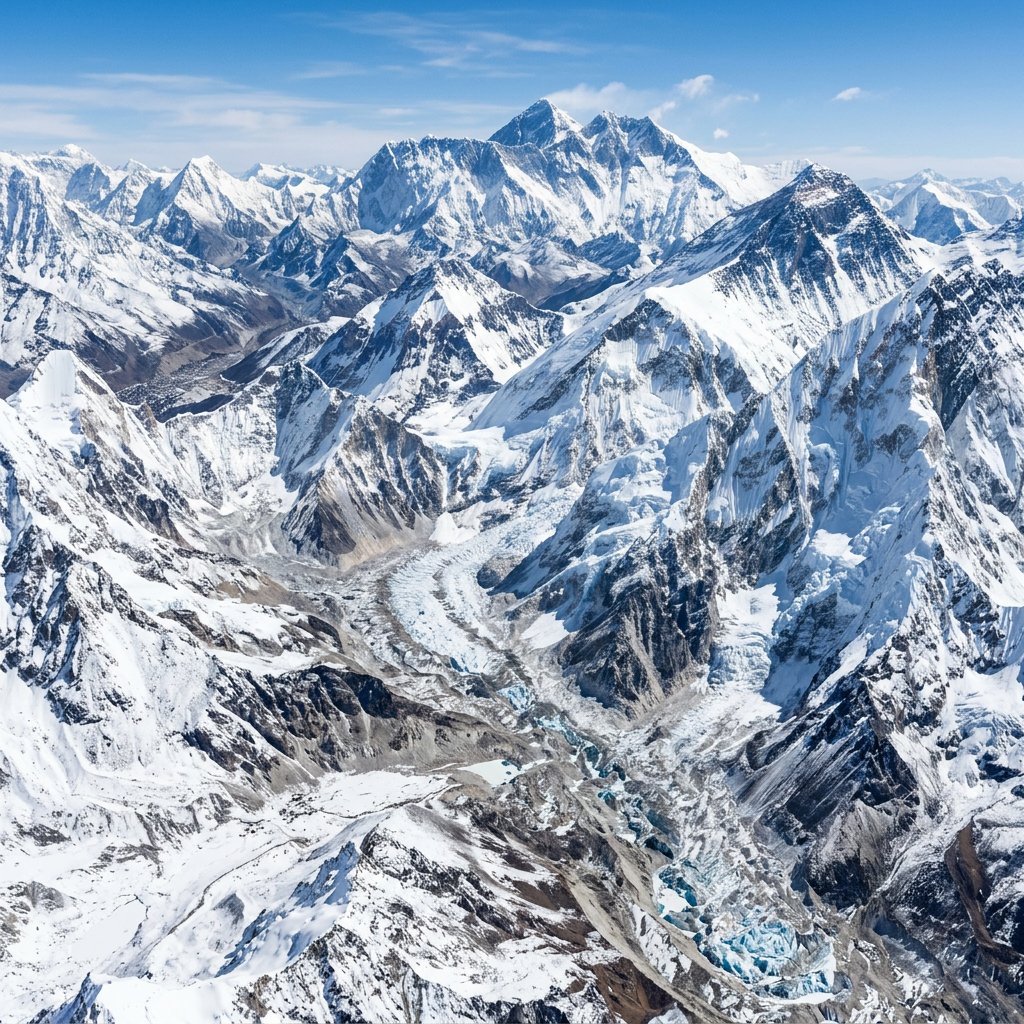
The Third Pole: Why the Arctic Matters to India
For Indian policymakers, the Arctic is not a distant curiosity — it is hydrologically and climatically connected to the subcontinent. The committee's report itself notes that the Himalayan range is considered the "third pole" because of its ice deposits, which hold global importance. The glaciers of the Hindu Kush-Himalaya feed major river systems — the Ganga, Brahmaputra and Indus — that sustain over a billion people across South Asia. Climate scientists, including teams at the Indian Institute of Tropical Meteorology in Pune, have documented links between Arctic sea-ice variability and the behaviour of the Indian summer monsoon, which remains the single largest driver of agricultural output and rural livelihoods in the country.
India's physical presence in the region reflects that stake. The country established its first permanent Arctic research station, Himadri, at Ny-Ålesund in Svalbard, Norway, on July 1, 2008, and released its first comprehensive Arctic Policy in 2022. Research conducted at Himadri spans atmospheric science, glaciology, microbiology and climate modelling — work that feeds directly into India's understanding of monsoon variability, sea-level rise and extreme weather events. Yet the committee's report points to a widening gap: India's scientists can go to the Arctic, but its diplomats have no dedicated envoy to translate that science into influence.
Antarctica: The Other Pole in India's Programme
The committee's recommendations also carry implications for India's Antarctic programme, which is far older and more extensive. India launched its Antarctic expeditions in 1981, acceded to the Antarctic Treaty on August 1, 1983, and became the fifteenth Consultative Member of the Treaty on September 12, 1983 — a status that gives it a vote in Antarctic governance. The National Centre for Polar and Ocean Research (NCPOR) in Goa manages the programme, which has operated successive research stations — Dakshin Gangotri, Maitri and Bharati — over more than four decades of continuous expeditions. India has also moved to build a successor station, Maitri II, with the project sanctioned by the Union Finance Ministry in 2025.
The governance contrast is instructive. Antarctica is governed by the Antarctic Treaty System and stores about 70 per cent of the Earth's fresh water, while the Arctic consists largely of sovereign territory inhabited by around four million people. India already holds consultative, decision-making status in the Antarctic system but remains a mere observer in the Arctic — an asymmetry the committee clearly wants corrected.
What This Means for India
The immediate cost of the recommendations is modest. A polar ambassador, embedded in the MEA with a dedicated desk, would be a small line item in the diplomatic budget — but it would signal that India treats polar governance as a strategic priority rather than an administrative afterthought. The heavier lift is the ice-breaking research vessel. India currently depends on foreign icebreakers to supply its Antarctic stations and has no ice-capable research ship of its own; a domestic vessel, which typically costs hundreds of crores and takes years to build, would require sustained inter-ministerial coordination between Earth Sciences, External Affairs, Finance and Defence.
There is also a geopolitical dimension. China, Japan, Singapore and South Korea have all institutionalised polar diplomacy with dedicated ambassadors, and Beijing has built its own icebreaker fleet and a fifth Antarctic research station. As Arctic governance evolves — with new rules on shipping, seabed resources and scientific access — India's observer status leaves it on the sidelines of exactly the negotiations that will shape the region's future. The committee's framing of full membership as a question of Global South representation is also deliberate: New Delhi has increasingly positioned itself as a voice for developing countries in global governance forums, and the Arctic Council is a conspicuous gap in that narrative.
The Road Ahead
Committee recommendations are advisory, and the timeline depends on two factors: the MEA's response, and the Arctic Council's own review process, which the committee itself acknowledges may not happen on New Delhi's schedule. In the meantime, the report's underlying message is clear — India's scientific credentials in the polar regions are no longer the constraint; its institutional architecture is.
The Bottom Line
India has spent more than four decades building a world-class polar science programme — three Antarctic stations, an Arctic station at Svalbard, and a research footprint managed by NCPOR — while running polar diplomacy out of a single desk in the MEA. The Committee on External Affairs has now proposed the obvious fix: a dedicated polar ambassador, ice-breaking capability, and a seat at the Arctic Council table. The recommendation costs little, signals much, and aligns India's diplomatic machinery with a scientific presence that is already, by any measure, polar-class.
— By Dr. Raj Patel, Staff Writer
This article was produced with AI-assisted research and editorial support. Reporting is based on sources cited in the article.
What's Your Reaction?
 Like
0
Like
0
 Dislike
0
Dislike
0
 Love
0
Love
0
 Funny
0
Funny
0
 Wow
0
Wow
0
 Sad
0
Sad
0
 Angry
0
Angry
0

India/South Asia Correspondent at Global1.News. Analytical voice with a background in science and health journalism. Based in New Delhi, covering Indian politics, education, healthcare, technology, and policy. Breaks down complex data into clear, actionable reporting.















Comments (0)