
Marcos grants absolute pardon to Mary Jane Veloso
President Ferdinand Marcos Jr. signed an executive clemency for Mary Jane Veloso on September 25, 2026, granting her an absolute pardon and a clean slate after more than a year of detention without formal charges.
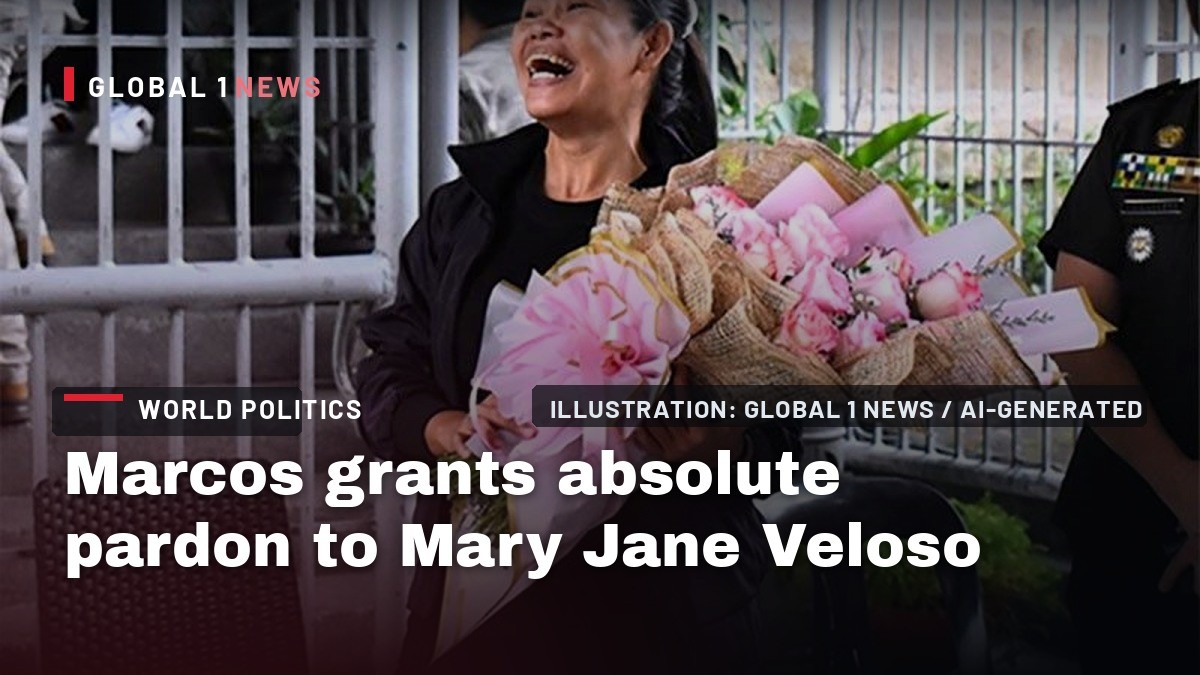
President Ferdinand Marcos Jr. signed an executive clemency for Mary Jane Veloso on September 25, 2026, granting her an absolute pardon and a clean slate after more than a year of detention without formal charges. The decision, announced in an impromptu interview with reporters, marks the latest chapter in a saga that began with Veloso’s 2010 arrest on drug‑trafficking accusations in Indonesia and a dramatic reprieve from execution in 2015. As Filipinos across barangays and cities watch the development, many wonder what this clemency means for the ordinary families who have followed her case for over a decade.
From death row to a Philippine prison
Mary Jane Veloso’s journey back to the Philippines began when she returned on December 18, 2024, after spending years in Indonesia’s correctional system. Upon arrival, she was transferred to the Correctional Institute for Women in Mandaluyong City, where she has remained under custody for more than a year. The source material notes that she has been detained “without charges,” a status that raises concerns about due process and the lingering shadow of a case that once threatened her life.
For many Filipinos, the image of a fellow countrywoman confined behind bars without formal accusations evokes the familiar plight of OFWs and overseas Filipinos who often navigate foreign legal systems with limited support. Community leaders in nearby barangays have expressed a mixture of relief that Veloso is finally home and frustration over the prolonged uncertainty that has kept her family in a state of limbo for years.
The 2015 reprieve that sparked hope
Veloso’s story first entered the national consciousness in 2015, when then‑President Benigno Aquino III intervened on her behalf. After her illegal recruiter surrendered to Philippine authorities, Aquino made a “last‑minute plea” to Indonesian officials, seeking to spare Veloso from a scheduled firing‑squad execution on April 29, 2015. The appeal succeeded just hours before the execution could proceed, granting her a reprieve that was widely reported as a narrow escape from death.
That moment of reprieve left an indelible mark on the public imagination. Newspapers ran headlines celebrating the mercy shown, while social media lit up with messages of solidarity. The episode highlighted the role of the Philippine presidency in diplomatic advocacy for Filipinos abroad, reinforcing a sense of national pride and the belief that the government would stand up for its citizens, even in distant courts.
Marcos Jr.’s clemency: a political and humanitarian gesture
When President Marcos Jr. signed the absolute pardon on September 25, 2026, he did so in an “ambush interview,” indicating a desire to convey the decision directly to the public without the fanfare of a formal ceremony. By granting a “clean slate,” the executive clemency removes any remaining legal cloud over Veloso’s case, effectively restoring her civil rights and allowing her to move forward without the stigma of a criminal record.
From a humanitarian perspective, the pardon underscores the government’s willingness to rectify prolonged detentions that lack clear legal basis. For families of other Filipinos who face similar predicaments—whether in the Philippines or abroad—the decision may be seen as a precedent for compassionate relief when judicial processes stall.
Impact on Veloso’s family and community
Veloso’s relatives, who have endured years of uncertainty, now face the challenge of reintegrating her into everyday life. The emotional toll of watching a loved one languish in a foreign prison, then a domestic facility without charges, cannot be overstated. Community members in her hometown have begun organizing a modest welcome, preparing simple meals and offering moral support, echoing the Filipino spirit of bayanihan.
Local sari‑sari stores have stocked modest celebratory items, and neighbors have expressed hope that Veloso’s experience will translate into advocacy for others caught in similar legal limbo. The collective response reflects how Filipinos often rally around a shared narrative of resilience, turning personal hardship into a communal call for justice.
Legal implications of an absolute pardon
An “absolute pardon” carries the weight of erasing any lingering legal consequences. In the Philippine legal framework, such a clemency is an exercise of the president’s constitutional power to grant mercy, distinct from a commutation that merely reduces a sentence. By signing the pardon, Marcos Jr. effectively nullifies any pending administrative or criminal actions related to Veloso’s case.
Legal scholars note that while the pardon does not retroactively alter the fact that Veloso was detained without charges, it does signal a governmental acknowledgment that the detention was untenable. This may influence future considerations by the Department of Justice and the Office of the Ombudsman when reviewing cases of prolonged pre‑trial detention.
Broader diplomatic context
Veloso’s ordeal began in Indonesia, a neighboring country with which the Philippines maintains a complex diplomatic relationship. The 2015 intervention by then‑President Aquino highlighted the delicate balance of respecting another nation’s sovereignty while advocating for Filipino citizens abroad. The 2026 pardon, though a domestic act, reverberates in the broader context of Philippines‑Indonesia ties, reminding both governments of the human dimension behind diplomatic negotiations.
Observers suggest that the clemency may serve as a quiet diplomatic signal, reinforcing the Philippines’ commitment to protect its overseas workers and migrants. It also underscores the importance of bilateral mechanisms for consular assistance, a topic regularly discussed within the Department of Foreign Affairs and among NGOs that assist OFWs.
Looking ahead: lessons for justice and human rights
The Veloso case, now concluding with a presidential pardon, offers several takeaways for the nation’s pursuit of justice and human rights. First, it underscores the need for transparent legal processes, especially when citizens face foreign jurisdictions. Second, it highlights the role of executive clemency as a tool for correcting systemic oversights, albeit one that should be exercised judiciously.
For ordinary Filipinos, the story reinforces a familiar narrative: that the state can be both a protector and a source of frustration. As the country continues to grapple with issues of drug enforcement, prison overcrowding, and the rights of detainees, Veloso’s experience may inspire renewed advocacy for legal reforms. Community groups, barangay officials, and human‑rights organizations are likely to cite her case when calling for stronger safeguards against indefinite detention without charge.
In the end, Mary Jane Veloso’s return to freedom is more than a personal relief; it is a reminder that the pursuit of justice is an ongoing journey, one that requires vigilance, compassion, and the collective will of a nation that values every Filipino’s right to a fair and humane legal process.
This article was produced with AI-assisted research and editorial support. Reporting is based on the source material cited below. Sources: Philstar.com; Global1.News (25 September 2026).
By Bella Reyes, Staff Writer
What's Your Reaction?
 Like
0
Like
0
 Dislike
0
Dislike
0
 Love
0
Love
0
 Funny
0
Funny
0
 Wow
0
Wow
0
 Sad
0
Sad
0
 Angry
0
Angry
0

Philippines/Southeast Asia Correspondent at Global1.News. Manila-based journalist covering Philippine politics, environment, maritime security, and social issues. Passionate about marine conservation and the communities protecting the Philippines' natural heritage.















Comments (0)