
Lebanese President Says Israeli Blasts at Beaufort Castle Threaten Framework Agreement
Lebanese President Joseph Aoun condemned Israeli explosions using 700 tons of explosives at Beaufort Castle on July 31, 2026, which caused 3.8-magnitude seismic waves and threatened the June 26 US-mediated framework agreement ahead of Rome talks. The blasts damaged UNESCO sites and civilian homes amid 4,333 deaths since March 2.
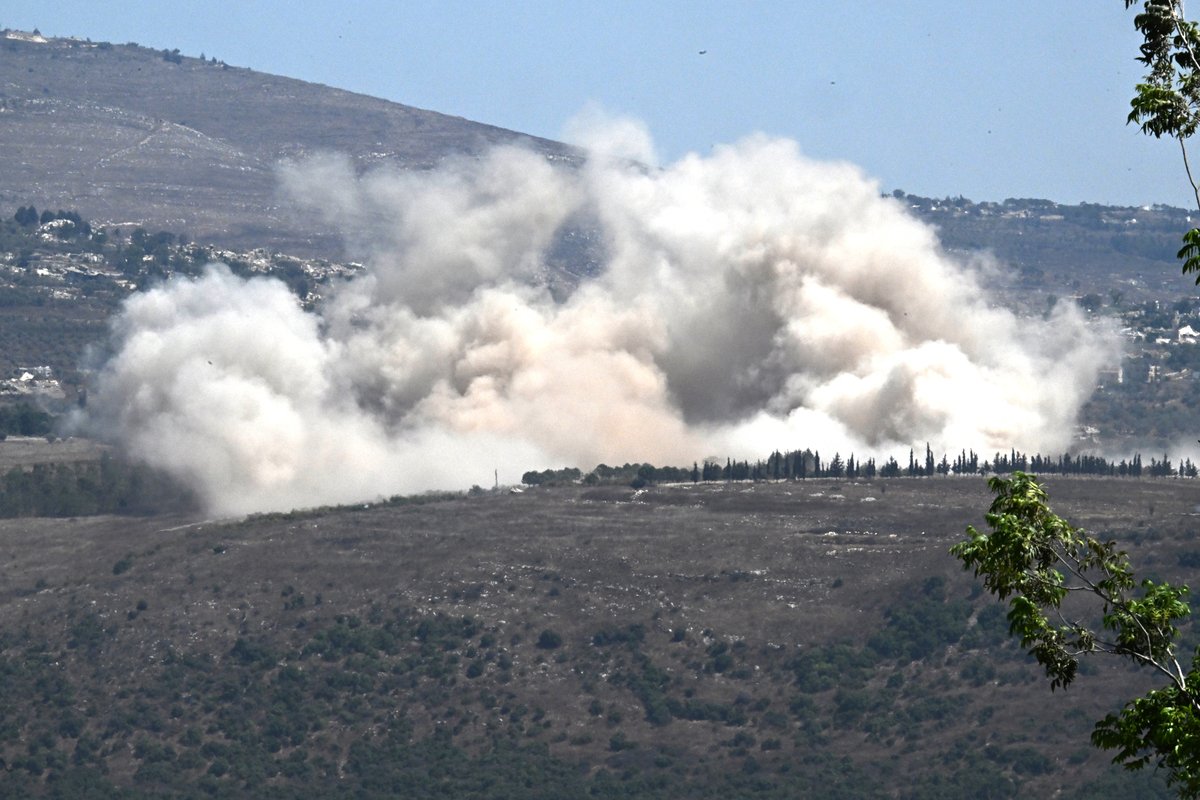
Lebanese President Joseph Aoun on Friday condemned Israeli military explosions at the historic Beaufort Castle in southern Lebanon, warning that the blasts — which used 700 tons of explosives and registered seismic waves equivalent to a 3.8-magnitude earthquake — constitute a dangerous escalation that directly threatens the US-mediated framework agreement between Lebanon and Israel.
Lebanese President Condemns Blasts at Beaufort Castle
Lebanese President Joseph Aoun issued a strong condemnation on Friday of Israeli military explosions at the historic Beaufort Castle in southern Lebanon. He described the blasts as a dangerous escalation that directly threatens the US-mediated framework agreement between Lebanon and Israel. The attacks involved powerful detonations that sent heavy smoke billowing across the Shaqif region and generated seismic activity felt in nearby areas.
Scale of the Explosions and Seismic Impact
Israeli forces used 700 tons of explosives in the operation on July 31, 2026. Lebanon's National Center for Geophysics recorded seismic waves equivalent to a 3.8-magnitude earthquake from the blasts. The explosions targeted caves and tunnels beneath the UNESCO-listed Beaufort Castle, causing extensive damage to the surrounding landscape and infrastructure in southern Lebanese villages.
Threat to the US-Mediated Framework Agreement
President Aoun warned that the timing of the attacks, just before a scheduled meeting in Rome to advance the trilateral framework, sends negative messages and undermines international diplomatic efforts. The June 26 framework agreement calls for gradual Israeli withdrawal from occupied Lebanese territory in exchange for Lebanese army deployment and disarmament of armed groups. Aoun stated that the blasts represent a blatant violation of existing commitments and a direct threat to the implementation process.
The June 26 framework agreement outlined a phased Israeli withdrawal from southern Lebanon, paired with the deployment of Lebanese army units to border areas and the gradual disarmament of armed groups. This structure was designed to create verifiable steps that would reduce immediate hostilities while allowing Lebanese state institutions to reassert control. The Rome meeting that preceded the accord brought together key international actors to endorse these sequenced measures, lending diplomatic weight to what had previously been bilateral understandings. Yet the agreement’s fragility stems from its reliance on simultaneous compliance by multiple parties operating under domestic political pressures that often conflict with the timeline.
United States mediation formed the trilateral backbone of the process, bridging Israeli security requirements with Lebanese governmental commitments and international monitoring expectations. American diplomats facilitated the technical details of withdrawal phases and the sequencing of Lebanese army movements, while also pressing for mechanisms to address violations. Repeated breaches of the ceasefire terms, however, erode the credibility of these arrangements by demonstrating that military actions can proceed without immediate diplomatic consequence. Each incident forces the Lebanese government to defend a deal whose core provisions appear increasingly unenforceable on the ground.
Lebanese officials have publicly reaffirmed their commitment to the framework, emphasizing the army’s readiness to deploy and the state’s intention to extend its authority southward. In practice, however, the presence of non-state armed groups and the slow pace of disarmament reveal a persistent gap between declared policy and operational reality. This disconnect risks turning the agreement into a diplomatic shell that satisfies external sponsors but fails to alter conditions along the border, thereby inviting further violations that could unravel the entire process.
Israeli Military's Stated Objectives
Israeli Prime Minister Benjamin Netanyahu and Defense Minister Israel Katz said the operation targeted Hezbollah tunnels beneath the UNESCO World Heritage site. They claimed these tunnels formed part of a plan to attack settlements in the Galilee. Lebanese authorities confirmed damage to homes in nearby villages and noted that the blasts triggered seismic tremors across the region.
Damage to Historical and Civilian Sites
The explosions caused extensive destruction across southern Lebanese villages and endangered civilians living near the targeted areas. Beaufort Castle, a UNESCO World Heritage site, suffered significant impact from the detonations. President Aoun highlighted the targeting of infrastructure and archaeological sites, noting that such actions compound the harm to Lebanon's cultural heritage and local communities already strained by ongoing conflict.
Beaufort Castle, known locally as Shaqif Arnun, stands as a Crusader-era fortress whose layered history reflects successive occupations and conflicts stretching back centuries. Its elevated position has made it a recurring strategic point, yet its cultural value lies in the architectural remnants that document medieval military engineering and regional power shifts. International law, including the Hague Convention and UNESCO protections, requires parties to safeguard cultural heritage during hostilities, recognizing that destruction of such sites inflicts lasting harm beyond immediate military objectives. The castle’s status underscores the tension between tactical considerations and the obligation to preserve shared historical patrimony.
Strikes near Beaufort Castle have also affected adjacent villages, damaging homes, infrastructure, and agricultural land that sustain local communities. Residents in these areas face compounded losses when heritage structures and civilian property are impacted in the same operations. The debate over tunnels beneath historic sites raises questions about proportionality: while military infrastructure may exist, the destruction of above-ground cultural assets carries consequences that extend to national identity and future tourism potential. International observers have noted that such damage complicates post-conflict reconstruction by removing physical anchors of collective memory.
Loss of cultural landmarks affects Lebanese national identity by severing tangible links to a multi-layered past that transcends current political divisions. Reconstruction efforts already strained by economic constraints become more complex when heritage sites require specialized restoration rather than standard rebuilding. Communities near the border must weigh the immediate need for security against the long-term erosion of historical continuity, a calculation that influences both local resilience and broader prospects for national recovery.
Human Cost in Southern Lebanon
According to Lebanon's Health Ministry, Israeli attacks since March 2 have killed 4,333 people and injured 12,236 others. The latest blasts added to the pattern of destruction affecting civilian homes and daily life in southern Lebanon. Residents face continued displacement risks and loss of property as military operations persist despite the framework agreement's provisions for stability.
The reported toll of 4,333 killed and 12,236 injured since March 2 represents a severe demographic shock for Lebanon’s small population, concentrated heavily in the south where villages have absorbed repeated strikes. These figures encompass both combatants and civilians, yet the civilian share underscores how densely populated border areas have become theaters of sustained operations. Displacement has followed predictable patterns, with families moving northward to relatives or temporary shelters, emptying communities that traditionally rely on cross-border trade and agriculture for livelihoods.
Lebanon’s health system, already weakened by prolonged economic crisis and shortages of medicine and personnel, faces acute strain from the influx of casualties. Hospitals in southern governorates operate under reduced capacity while attempting to maintain routine care, creating backlogs that will persist long after active fighting subsides. The experience of villages closest to the border illustrates daily realities of interrupted schooling, restricted movement, and dependence on external aid, conditions that compound physical injuries with economic hardship.
Constant explosions have produced widespread psychological effects, including anxiety disorders and trauma among children and adults who have endured months of uncertainty. Recovery will require not only physical rebuilding but sustained mental health support and economic programs capable of restoring livelihoods. For a country navigating simultaneous financial collapse and political paralysis, the human cost of the current conflict extends the timeline for stabilization well beyond any immediate ceasefire.
Ongoing Violations Despite Diplomatic Efforts
Israel has continued military operations in Lebanon even after the signing of the US-mediated framework agreement. President Aoun called on the agreement's sponsors and the international community to assume their responsibilities and halt violations that threaten progress toward security and stability. The attacks on July 31 underscore the fragility of the diplomatic process and the human rights implications for civilians caught in the crossfire.
Israeli military operations have continued in southern Lebanon after the June 26 framework agreement, following a pattern that tests the accord’s operational credibility. Each new strike or incursion challenges the assumption that diplomatic commitments would produce measurable restraint on the ground. International sponsors, including the United States and European participants in the Rome process, have issued statements urging de-escalation, yet enforcement mechanisms remain limited to diplomatic channels rather than binding verification regimes.
From an Israeli strategic perspective, continued operations reflect calculations that immediate security threats outweigh the risks of diplomatic friction. These actions, however, place the Lebanese government in a difficult position: presenting the framework as a tangible achievement becomes harder when visible violations persist. Domestic critics can portray the deal as ineffective, weakening the political capital needed to advance army deployment and disarmament steps.
The human rights implications of operations in civilian areas add another layer of scrutiny, as reports document damage to homes and infrastructure alongside military targets. Renewed escalation remains a constant risk if violations accumulate without corrective measures. For the framework to retain relevance, sponsors must translate rhetorical support into practical pressure that aligns actions with the sequenced commitments originally negotiated.
Regional Context and Stability Concerns
The events at Beaufort Castle reflect broader challenges in the Middle East where occupation, displacement, and conflict continue to shape daily realities for communities in Lebanon and neighboring areas. President Aoun urged compliance with the framework to consolidate stability, emphasizing that repeated violations erode trust and prolong suffering for local populations seeking normalcy after years of tension.
By Fatima Al-Rashid, Staff WriterThis article was produced with AI-assisted research and editorial support. Reporting is based on sources cited in the article.
What's Your Reaction?
 Like
0
Like
0
 Dislike
0
Dislike
0
 Love
0
Love
0
 Funny
0
Funny
0
 Wow
0
Wow
0
 Sad
0
Sad
0
 Angry
0
Angry
0
Gulf/MENA Correspondent at Global1.News. Based in Doha, covering Gulf politics, energy markets, diplomacy, and development across the Middle East and North Africa. Tracks the economic transformation of the Gulf states.










Comments (0)