
Iran's Missile and Drone Stocks Under Pressure After Five Months of US-Israeli Strikes
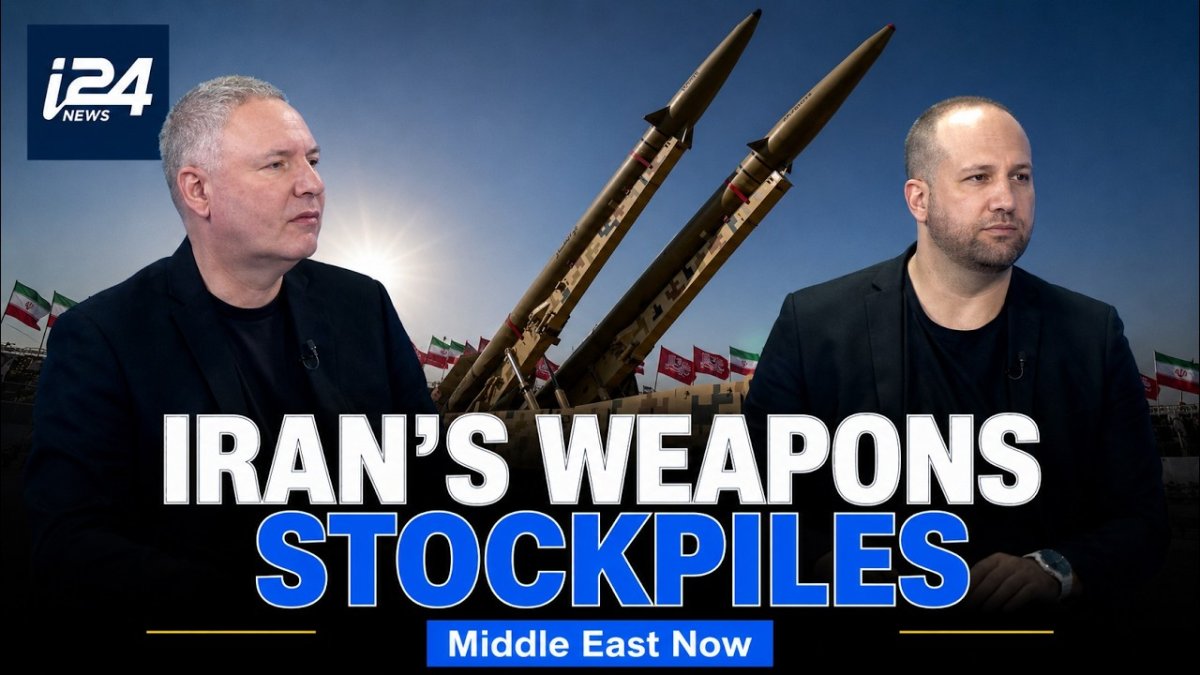
In a recent i24NEWS report titled "How much firepower does Iran have left?", analysts examine Iran's remaining ballistic missile and drone stocks after five months of direct exchanges with the United States and Israel. The conflict, which began on February 28, 2026, with US-Israeli airstrikes that killed Supreme Leader Ali Khamenei, has tested Tehran's ability to sustain long-range strikes while Israel coordinates closely with Washington. Renewed attacks this week on...
In a recent i24NEWS report titled "How much firepower does Iran have left?", analysts examine Iran's remaining ballistic missile and drone stocks after five months of direct exchanges with the United States and Israel. The conflict, which began on February 28, 2026, with US-Israeli airstrikes that killed Supreme Leader Ali Khamenei, has tested Tehran's ability to sustain long-range strikes while Israel coordinates closely with Washington. Renewed attacks this week on Jordanian bases and Saudi facilities underscore the stakes for Israeli cities and regional shipping lanes.
Iran's Missile and Drone Stocks Under Pressure After Five Months of US-Israeli Strikes
[Jerusalem, Israel] — The i24NEWS report highlights how Iran has fired more than 500 ballistic missiles and over 2,000 drones since the war opened on February 28, 2026. US Central Command data shows launch rates fell 90 percent for missiles and 86 percent for drones by mid-March, though analysts attribute the drop partly to inventory management rather than total depletion. Israeli Prime Minister Benjamin Netanyahu's recent White House visit coincided with these renewed US-Iran exchanges, reflecting tight coordination between the IDF and US Central Command.
Origins of the 2026 Iran War and Initial Strikes
The war erupted on February 28, 2026, when US-Israeli airstrikes targeted Iranian officials including Supreme Leader Ali Khamenei during stalled nuclear talks. An interim agreement collapsed in recent weeks after renewed fighting in the Strait of Hormuz. On July 7, US President Donald Trump declared the truce over, triggering escalated exchanges that now involve multiple fronts from Jordan to the Red Sea.
Iran's Pre-War Ballistic Missile and Drone Arsenal
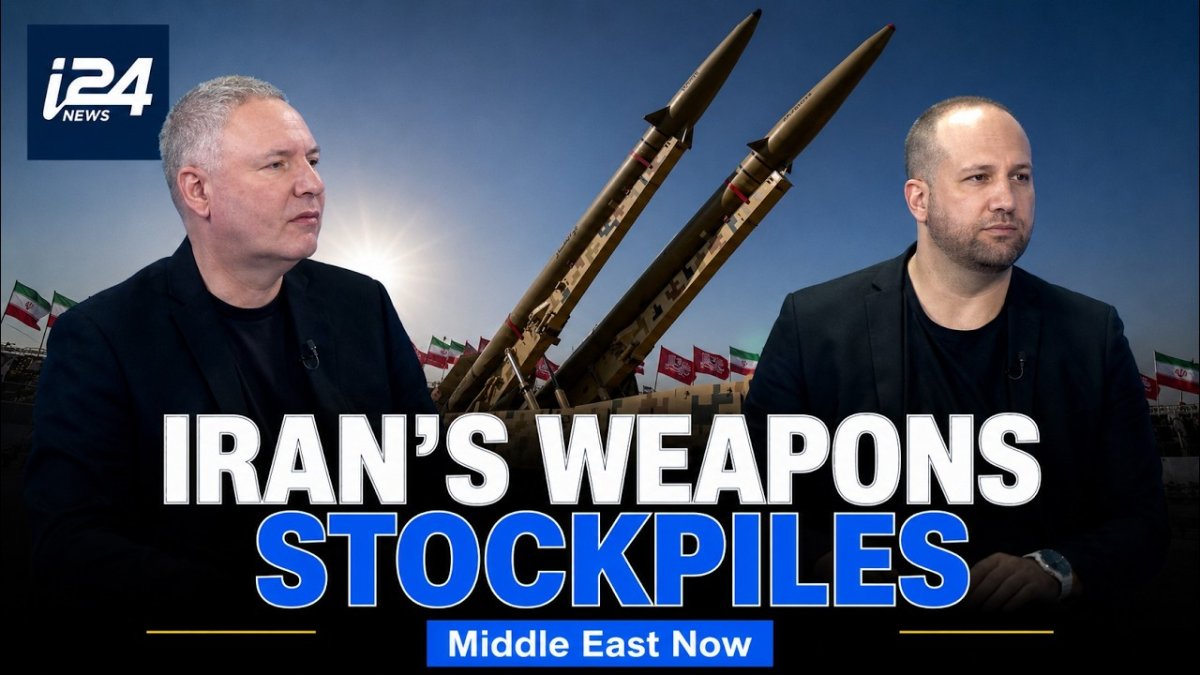
US intelligence assessed Iran held the Middle East's largest ballistic missile stockpile before the war, with estimates ranging from 2,500 to more than 3,000 missiles. The arsenal includes short-range and medium-range ballistic missiles capable of reaching the entire Middle East, parts of southeastern Europe, Southeast Asia, and northeast Africa. On March 20, 2026, Iran launched two ballistic missiles at the joint US-UK base on Diego Garcia, 4,000 km away, demonstrating extended range. Iran maintains at least five underground missile cities in Kermanshah, Semnan, and Gulf provinces, where it has fired missiles from concealed tunnels since demonstrating the capability in 2020. Shahed-series one-way attack drones, costing $20,000 to $50,000 each, are produced in dispersed facilities that resist air neutralization.
Documented Depletion of Iranian Launchers and Rates
A senior Israeli military official cited by the Institute for the Study of War reported that Israel has disabled up to 290 of Iran's estimated 410 to 440 ballistic missile launchers. CENTCOM recorded more than 500 ballistic missiles and 2,000 drones fired since February 28, 2026. Top US commander General Dan Caine confirmed an 86 percent decline in ballistic missile strikes from the first day of fighting. Defense analysts note that Iran's underground facilities and low-cost drone production allow potential regeneration of the threat despite these losses.
Renewed Exchanges in Late July 2026
On Wednesday, the IRGC fired multiple ballistic missiles at US installations in Jordan, including Muwaffaq Salti Air Base and Tower 22, where about 4,000 US soldiers are stationed. The US confirmed interception of the surprise attack. The same day, US and Saudi forces struck Iran-backed groups in seven Iraqi provinces, killing at least 20 Popular Mobilisation Forces fighters and wounding 32. Iranian advisers were also killed in Markazi province. On Thursday, the US conducted its first strikes in more than five days, hitting dozens of IRGC command centers and missile facilities in a two-hour operation after Trump vowed to hit Iran "very hard." Iranian state media reported three injuries on Qeshm island and three IRGC deaths in Zanjan province. Jordan faced incoming missiles for a second day, while a drone attack struck a building in Kuwait, killing one person. A separate drone strike ignited fires on two natural gas vessels at Egypt's Damietta port, the first attack on Egyptian territory since the war began.
Impact on Israel's Multi-Layer Defenses and Home Front
For Israel, Iran's remaining firepower poses an existential test to the IDF's multi-layer air defense system. An April 5 Iranian ballistic missile struck a seven-story residential building in Haifa, collapsing it. Israeli officials state that sustained strikes have degraded Iran's launcher capacity, yet underground missile cities and cheap drone output mean the threat persists. The US has depleted roughly two-thirds of its pre-war Patriot interceptor inventory, prompting a new $58.6 billion Lockheed Martin contract through 2032. Netanyahu's presence at the White House during this week's flare-ups highlights Jerusalem's direct role in shaping US responses.
The April 5 strike on the residential building in Haifa served as a stark reminder of the stakes for Israeli cities and the constant pressure on the home front, even as the IDF intercepts the overwhelming majority of launches.
Israeli defense planners face sustained demands on interceptor stocks as underground facilities continue to enable sporadic launches that test response times across multiple layers of protection.
The record contract awarded to Lockheed Martin reflects the urgent need to replenish Patriot inventories depleted during the conflict, ensuring the multi-layer system can maintain coverage for population centers under ongoing threat.
Regional Economic Fallout and Mediation Efforts
Brent crude rose 7.3 percent to over $88 a barrel amid the renewed hostilities. Saudi Arabia announced a military coalition with over a dozen nations including Egypt and Turkey to protect shipping after Red Sea attacks. Iraqi Prime Minister Ali al-Zaidi convened an emergency Ministerial Council meeting. Pakistan's foreign ministry spokesperson Tahir Andrabi stated mediators are doing their utmost to return parties to talks. RUSI fellow Burcu Ozcelik noted that Iran's Jordan strikes reflect Tehran's belief in proactive deterrence, especially as US interceptor stocks run low. Analysts described the multi-front flare-ups as pushing the region into uncharted territory.
What the Numbers Really Mean
The reported loss of up to 290 launchers out of an estimated 410 to 440 represents a severe operational setback for the IRGC, yet the existence of five known underground missile cities in Kermanshah, Semnan and Gulf provinces provides Tehran with concealed storage and potential regeneration capacity. These facilities, demonstrated in 2020 when Iran fired a ballistic missile from underground, combine storage depots, concealed launch systems and transport tunnels that complicate Israeli targeting. Meanwhile, the Shahed-series drones, produced at $20,000 to $50,000 per unit in dispersed, simple facilities, offer a cost-asymmetric edge that is extremely difficult to neutralize from the air. Israeli security officials assess that while launch rates have dropped sharply, the combination of underground infrastructure and rapid drone manufacturing could allow Iran to sustain sporadic pressure even after heavy attrition.
Analysts note that the underground missile cities allow Iran to protect assets from initial strikes and potentially reposition launchers through hidden tunnels, preserving some capacity for follow-on attacks despite the high number of disabled systems.
The low production cost and dispersed manufacturing of Shahed drones further complicate efforts to achieve lasting degradation, as simple facilities can resume output more quickly than hardened sites can be rebuilt.
Israeli assessments therefore focus on the interplay between remaining launchers and these regeneration factors when projecting how long Iran can maintain pressure on multiple fronts.
Diplomacy vs. Deterrence
Mediators continue to insist that talks remain active despite the latest exchanges. Pakistan's foreign ministry spokesperson Tahir Andrabi emphasized that all parties are doing their utmost to bring participants back to the negotiating table. At the same time, RUSI senior research fellow Burcu Ozcelik observed that Iran's strikes on Jordan last night show Tehran still believes deterrence is achieved through proactive military action. Reports that US interceptor stockpiles have been running low may also have shaped calculations in the IRGC. More broadly, there is a strong sense within the Iranian leadership that it is engaged in an existential struggle and that putting pressure on the Trump administration remains an important objective. Israeli officials, coordinating from the Prime Minister's Office and the Foreign Ministry, continue to weigh whether additional strikes on underground sites in Kermanshah and Semnan will force a durable pause or merely accelerate the next cycle of retaliation.
Mediators insisted talks were continuing, with Pakistan's foreign ministry spokesperson Tahir Andrabi stating they were doing their utmost to bring all parties back to the negotiating table amid the latest exchanges.
A durable ceasefire would require sustained coordination between mediators and the parties to address both immediate de-escalation and longer-term constraints on launcher regeneration and interceptor resupply.
The Strait of Hormuz and the Global Economy
Brent crude's 7.3 percent jump to more than $88 a barrel illustrates how quickly renewed hostilities can ripple through energy markets. Saudi Arabia's decision to form a military coalition with over a dozen countries, including Egypt and Turkey, to protect shipping lanes reflects growing concern over Red Sea and Gulf vulnerabilities. The first attack on Egyptian territory since the war began, when a drone ignited fires on two natural gas vessels at Damietta port, further underscores the expanding geographic scope. Iraqi Prime Minister Ali al-Zaidi's emergency convening of the Ministerial Council for National Security after 20 Popular Mobilisation Forces fighters were killed across seven provinces highlights the domestic pressures on Baghdad. For Israel, these economic and maritime dimensions add another layer of strategic calculation as the IDF monitors both Iranian launcher regeneration and the broader regional stability that affects energy flows through the Strait of Hormuz.
The coming weeks will determine whether Iran's remaining launchers and drone production can sustain pressure on Israel and US forces or whether sustained IDF and CENTCOM strikes force Tehran into a durable ceasefire. Israeli security officials continue to monitor underground facilities in Kermanshah and Semnan while coordinating interceptor resupply with Washington.
By Hannah Berg, Staff Writer
This article was produced with AI-assisted research and editorial support. Reporting is based on sources cited in the article.
What's Your Reaction?
 Like
0
Like
0
 Dislike
0
Dislike
0
 Love
0
Love
0
 Funny
0
Funny
0
 Wow
0
Wow
0
 Sad
0
Sad
0
 Angry
0
Angry
0

Israel Correspondent at Global1.News. Based in Tel Aviv, covering Israeli politics, security, technology, and society. Provides balanced, deeply-sourced reporting on one of the most closely-watched regions in the world.













Comments (0)