
Kyiv Missile Attack Exposes Patriot Interceptor Shortage as UK Backs Ukraine
The latest Russian ballistic missile and drone barrage on Kyiv has laid bare the lethal consequences of depleted Western air defence stocks, with direct implications for Britain's own security commitments and household energy costs. At least nine people died and more than thirty were wounded in the 1 August 2026 assault, including four children hit by shrapnel.
The latest Russian ballistic missile and drone barrage on Kyiv has laid bare the lethal consequences of depleted Western air defence stocks, with direct implications for Britain's own security commitments and household energy costs. At least nine people died and more than thirty were wounded in the 1 August 2026 assault, including four children hit by shrapnel. The United Kingdom, a leading supplier of long-range weapons and training to Ukraine since February 2022, now confronts fresh questions about interceptor production and NATO's collective shield.
Kyiv Attack Reveals Critical Gaps in Ukraine's Air Shield as UK Weighs Defence Commitments
London, UK – 2 August 2026 — Russia launched 35 missiles, including 27 ballistic missiles, and 185 drones at Ukraine overnight into Saturday 1 August. Ukrainian forces intercepted only one ballistic missile. President Volodymyr Zelensky stated the shortfall occurred "simply because there are no interceptors for the Patriot system."
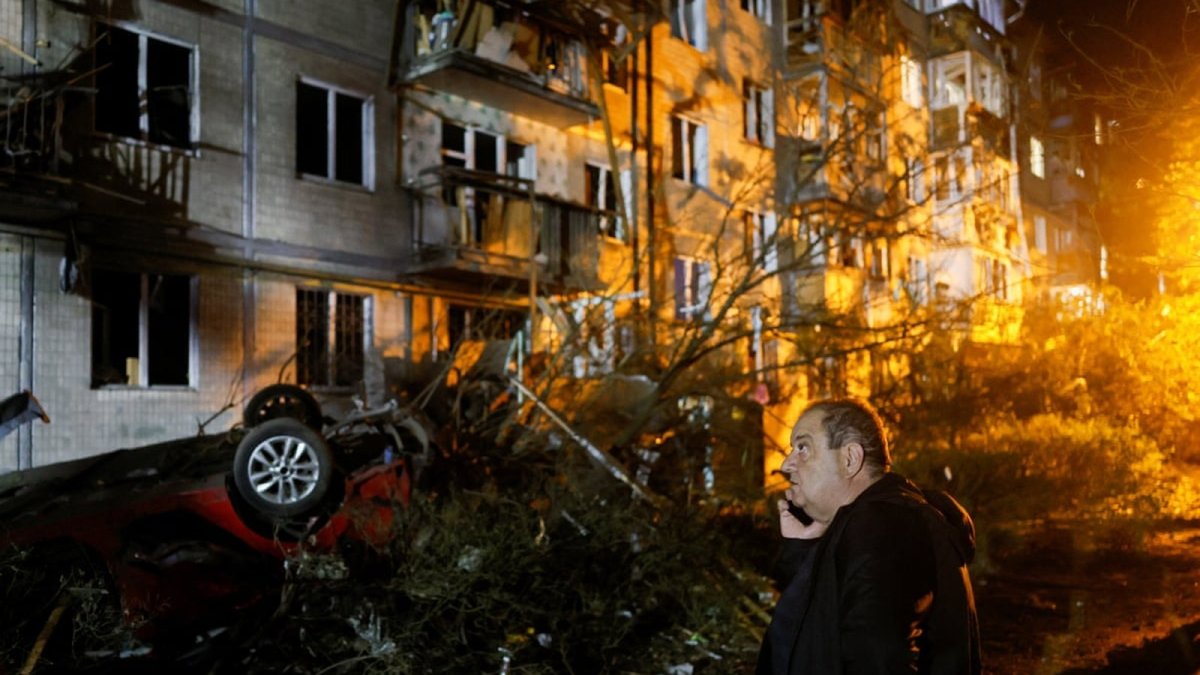
The Scale of the Overnight Assault
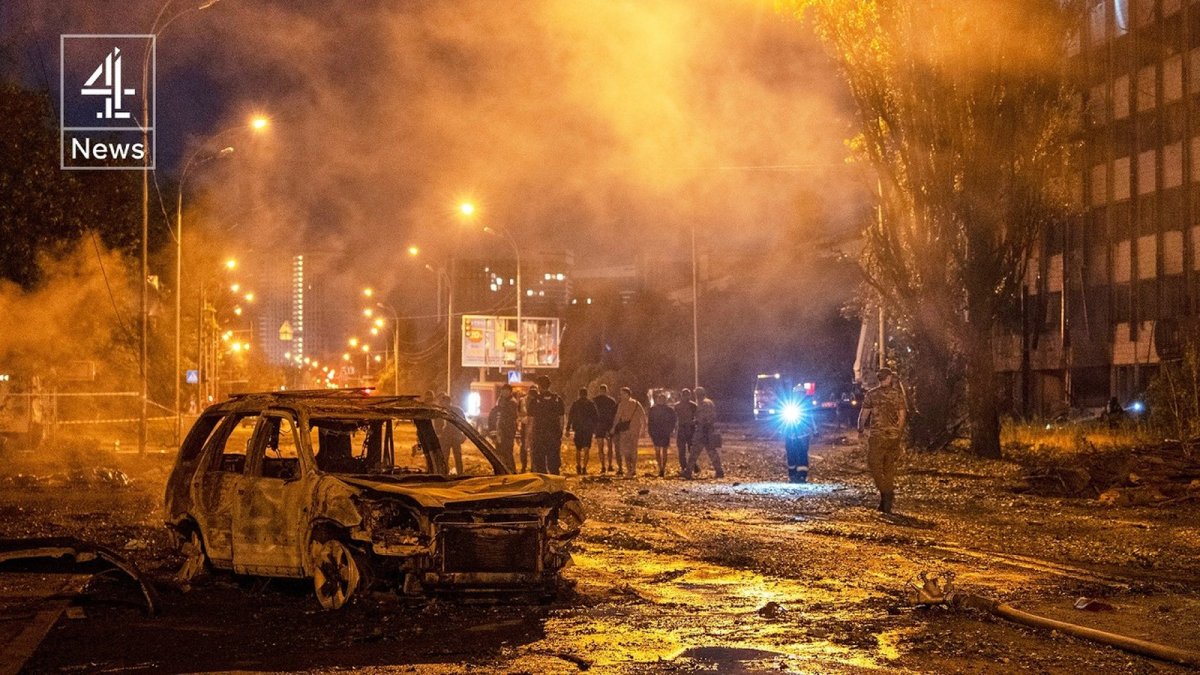
More than a dozen explosions shook the capital in successive waves. Damage occurred across seven districts of the city of three million residents. Fires erupted and power supplies failed in several areas. The State Emergency Service rescued 105 people from impacted buildings. This marked the second major strike on Kyiv within a week. The speed of the ballistic missiles left residents minimal time to reach shelters, as noted in Channel 4 News reporting on the attacks.
Voices from the Rubble: Eyewitness Accounts
Nadiia Komarova, 68, a concierge in Kyiv, described the sudden onset: "I looked at my phone, it was 1:30 (22:30 GMT) and sirens [blared], I was lying dressed in my bed, I got up immediately. And at once explosions started — boom, boom." Her ceiling began to crumble and a window was smashed. Kateryna Kravchenko, 75, recounted the aftermath: "Everything was smashed, the windows, everything. I can barely stand. I don't know how I'm going to get through all this." Four children suffered shrapnel injuries and lacerations in the strikes.
Zelensky's Direct Appeal on Interceptors
President Zelensky posted on X and Telegram that "every package of ballistic missile interceptors saves the lives of our people. And every night without them results in more casualties." He linked the shortage explicitly to the diversion of US-made Patriot missiles to the Gulf following the Iran conflict. Ukraine continues to rely on these systems for high-altitude defence. Foreign Minister Andrii Sybiha stated: "It is the battle for the skies that will define the trajectory of this war. The stronger the air shield over Ukraine, the closer peace becomes."
The Iran war has seen supplies of interceptor missiles previously earmarked for Ukraine diverted to the US military and US allies in the Gulf, leaving Ukrainian batteries without sufficient stocks for sustained operations. This diversion carries clear strategic weight: Patriot systems remain the only reliable counter to Russian ballistic missiles, and their absence forces Ukrainian crews to conserve rounds or accept higher losses. Donald Trump retreated further from a promise to let Ukraine manufacture its own Patriot air defence interceptors, closing one potential route to greater self-sufficiency. Zelensky urged Trump to help Ukraine gain permission from Elon Musk to use Starlink for guiding strikes inside Russia; Trump did not commit. The episode underscores Ukraine's continued dependence on Western technology platforms and the political leverage that accompanies them. For NATO allies the shortfall is more than a supply-chain issue; it tests whether collective defence commitments can be honoured when resources are stretched across multiple theatres.
Destruction in Darnytskyi and Solomyanskyi Districts
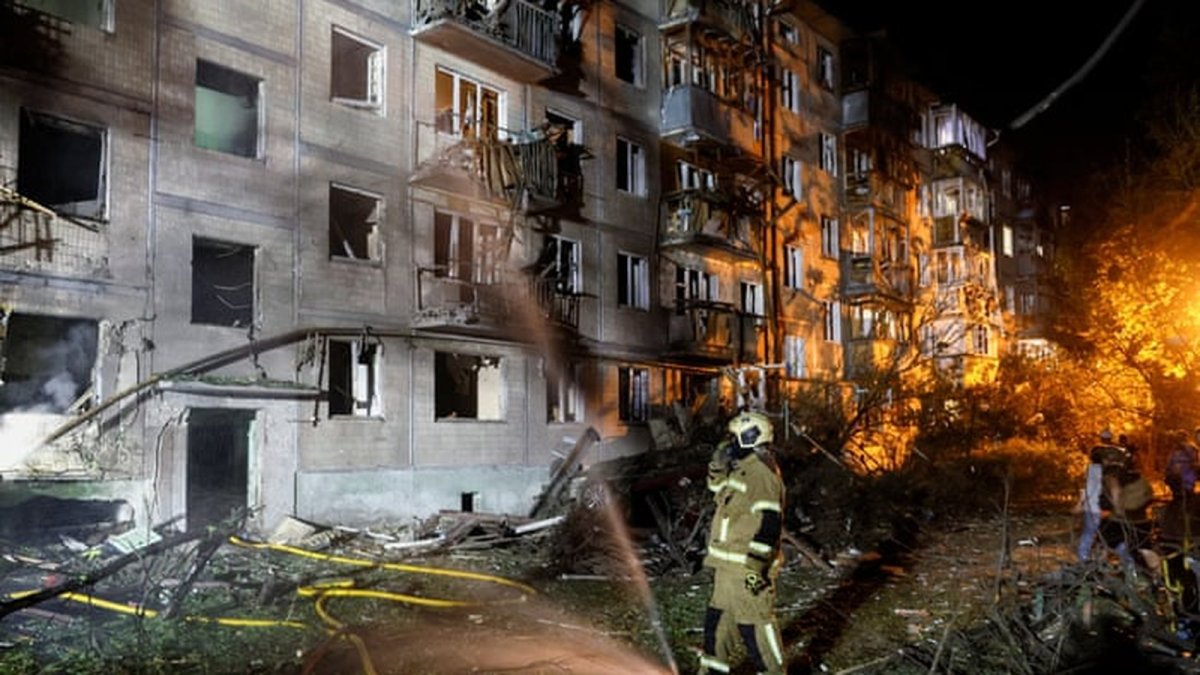
In Darnytskyi district on the left bank of the Dnipro, seven people were killed and fourteen injured. Fires damaged homes, vehicles and an administrative building. In Solomyanskyi district on the right bank, falling debris struck a five-storey residential building, starting a fire. Thirty-five residents were evacuated from upper floors; two died and eight were injured, including two children. One further fatality occurred in the wider Kyiv region after warehouses were hit. Mayor Vitali Klitschko said a residential building in Shevchenkivskyi district was partially destroyed, trapping people inside. Kyiv is working to build and prepare more shelters as attacks intensify.
Diplomatic Incidents and Cross-Border Fallout
The Lithuanian embassy in Kyiv was damaged — windows broke, solar collectors damaged, yard scattered with debris. Lithuania's foreign ministry confirmed no injuries from the missiles. Thursday's earlier strike killed nine people, including six members of one family near Kryvyi Rih, and a suspected Russian cruise missile landed in Poland; Poland protested to the Russian ambassador.
A Week of Escalation: From Kryvyi Rih to Warsaw
Thursday's strike near Kryvyi Rih killed nine people, among them six members of a single family, highlighting the indiscriminate reach of Russian ballistic and cruise missiles. The same day a suspected Russian cruise missile crossed into Polish airspace and landed on Polish territory. Warsaw lodged a formal protest with the Russian ambassador, an action that immediately drew attention to NATO's Article 5 obligations and the vulnerability of the eastern flank. These incidents occurred against the backdrop of intensified Russian strikes on Ukrainian cities, demonstrating how the conflict continues to generate spillover risks for alliance members. The Polish protest and the family deaths near Kryvyi Rih together illustrate the narrowing margin between Ukrainian air defence shortfalls and direct consequences for NATO territory.
UK Defence Policy and NATO Production Pressures
The Ministry of Defence and Foreign, Commonwealth & Development Office have tracked these strikes closely. Successive UK governments have supplied air defence support and long-range weapons since the full-scale invasion began in February 2022. The current shortage of Patriot interceptors has intensified debates in London and other NATO capitals about scaling up European production capacity. Officials warn that diverting missiles to the Middle East leaves Ukrainian skies exposed and weakens the broader European security architecture. Donald Trump retreated further from a promise to let Ukraine manufacture its own Patriot air defence interceptors. Zelensky urged Trump to help Ukraine gain permission from Elon Musk to use Starlink for guiding strikes inside Russia; Trump did not commit.
Defence manufacturing constituencies across the UK stand to gain from any sustained increase in orders, yet the gap between allied promises and actual interceptor production rates remains wide. Whitehall sources and independent think tanks argue that European production lines must be expanded rapidly if NATO is to meet both Ukrainian requirements and its own stockpiling targets. The debate in Westminster over raising defence spending has sharpened precisely because current output cannot keep pace with battlefield consumption. Without accelerated European manufacturing, the alliance risks repeated cycles of shortage that leave frontline states exposed.
Energy Security and British Household Bills
Repeated Russian attacks on Ukrainian infrastructure continue to affect European energy markets. Westminster remains sensitive to any upward pressure on wholesale gas prices that feeds through to British household bills. The Foreign Office has emphasised that sustained Ukrainian resistance protects wider continental energy stability, a live political issue for UK consumers still recovering from previous price shocks.
The link between Ukrainian infrastructure strikes and European wholesale gas markets is direct: damage to generation and transmission capacity reduces Ukraine's ability to export electricity and increases reliance on imported fuels at peak times. This dynamic feeds into the energy price cap debates in London, where even modest rises in wholesale costs translate into higher bills for households. The effect is felt differently across the UK. In the north of England, manufacturing and heavy industry remain sensitive to energy volatility. Scotland's energy transition faces competing pressures as North Sea output and renewables targets must accommodate short-term security needs. Wales and Northern Ireland, with their distinct grid arrangements and higher reliance on imported gas, experience the price transmission more acutely. The war therefore continues to shape domestic energy policy across all four nations.
Ukrainian Strikes and Russian Territorial Gains
Ukraine struck infrastructure at three oil refineries in Russia's Bashkortostan region, roughly 1,600 km from the border, and sank the sanctioned Russian container ship Yanina in the Black Sea. Zelensky described the targets as facilities that sustain the Russian war effort. Meanwhile Russia captured two further villages: Olgivka in northern Kharkiv region and Lyubytske in southeastern Zaporizhia. The frontline now stretches approximately 1,200 km. The war is now in its fifth year.
Ukraine's long-range strikes deep into Russia, including the refineries in Bashkortostan some 1,600 km from the border, demonstrate an expanding reach that targets the economic base of the Russian military campaign. The sinking of the sanctioned container ship Yanina further disrupts Moscow's logistics in the Black Sea. Yet these operations occur alongside Russia's slow territorial gains along the 1,200 km frontline. Russian advances have slowed by more than half this year, according to Reuters reporting, indicating that incremental battlefield progress comes at high cost and limited strategic return in the fifth year of the war.
What This Means for the UK
Westminster debate on defence spending has sharpened, with the Ministry of Defence's support for Ukraine under renewed scrutiny alongside questions of NATO production capacity and the future of European security architecture. Defence jobs in shipbuilding and arms production constituencies stand to benefit from sustained orders, yet households across England, Scotland, Wales and Northern Ireland face continued energy price pressure. The moral and strategic debate in Britain over continued support intersects with regional perspectives on how defence budgets are allocated amid competing domestic priorities.
British readers should understand the direct line between Kyiv's air defence and UK security: every shortfall in interceptors increases the risk that Russian forces achieve breakthroughs that would demand greater NATO involvement later. The moral argument for continued support rests on the protection of civilian life and the prevention of wider escalation. Voters should watch for concrete steps on European interceptor production, any movement on Starlink permissions, and the trajectory of wholesale gas prices in the coming weeks, as these will reveal whether allied commitments are matching the scale of the challenge.
The Bottom Line — What Comes Next
The speed of the ballistic missiles left residents minimal time to reach shelters. Kyiv continues to expand its network of protective facilities. For the United Kingdom, the immediate question is whether NATO allies can accelerate interceptor production before further civilian casualties mount. The Ministry of Defence's ongoing support for Ukraine remains central to that calculation, with direct consequences for both battlefield outcomes and domestic energy security.
By Erica Thornton, Staff Writer
This article was produced with AI-assisted research and editorial support. Reporting is based on sources cited in the article.
What's Your Reaction?
 Like
0
Like
0
 Dislike
0
Dislike
0
 Love
0
Love
0
 Funny
0
Funny
0
 Wow
0
Wow
0
 Sad
0
Sad
0
 Angry
0
Angry
0

US Politics and Policy Correspondent at Global1.News. Based in Washington DC, covering American politics, policy, elections, and the courts. Knows how the system works and tells you what it actually means.














Comments (0)