
Kenya's Nurses Strike Exposes a Global Health Workforce Crisis
The woman on the screen, Shiru Kihara, does not look like a radical. She looks exhausted. In the sweltering Nairobi heat, surrounded by hundreds of other nurses in crisp white uniforms that have become the uniform of dissent, she tells Al Jazeera’s Malcolm Webb that she has not been paid what she is owed. She has not been promoted. She has watched her colleagues flee to the United Kingdom, to the United States, to Saudi Arabia, leaving behind a system that is bleeding out.
The woman on the screen, Shiru Kihara, does not look like a radical. She looks exhausted. In the sweltering Nairobi heat, surrounded by hundreds of other nurses in crisp white uniforms that have become the uniform of dissent, she tells Al Jazeera’s Malcolm Webb that she has not been paid what she is owed. She has not been promoted. She has watched her colleagues flee to the United Kingdom, to the United States, to Saudi Arabia, leaving behind a system that is bleeding out. And on this 28th day of the nationwide strike, she is not asking for a handout. She is demanding a contract. This is not a story about one country’s labor dispute; it is a warning flare from a global health system that is fracturing along the same fault lines, from Nairobi to Bogotá to Kingston. As I watched that report, I could not shake the feeling that I was watching a preview of Latin America’s own future if we do not act on the data we already have.
Kenya's Nurses Strike — and Latin America Should Be Watching
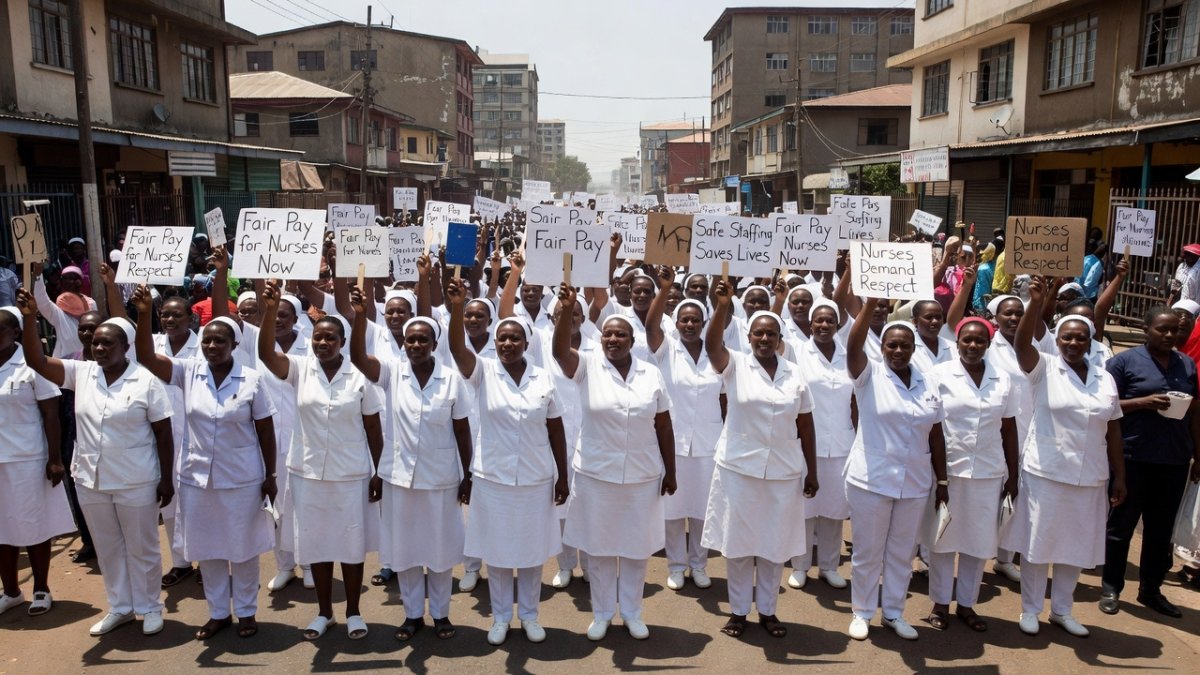
Nairobi, Kenya – August 25, 2026 — For nearly a month, the rhythm of healthcare in Kenya has been violently disrupted. As of Tuesday, August 25, 2026, the strike is in its 28th day, with thousands of nurses having walked off the job, effectively paralyzing government hospitals across the country. This is not a symbolic protest; it is a systemic shutdown. Emergency rooms are operating with skeletal staff, elective surgeries have been postponed indefinitely, and maternal wards are turning away expectant mothers. The Al Jazeera English report, titled "Kenya nurses demand better pay as nationwide strike disrupts healthcare," captures the scene in Nairobi where the air is thick with frustration and the chants are rhythmic and relentless. The disruption is not accidental; it is the point. The nurses are forcing the nation to confront a reality that has been papered over for years: you cannot run a healthcare system on the goodwill of underpaid, overworked professionals.
The Strike That Shut Kenya's Hospitals
The scale of the action is staggering. More than 23,000 nurses planned a major march in Nairobi in August 2026, a mobilization that turned the capital into a sea of white and teal. This is not a fringe movement; it is the organized, collective voice of the majority of the public nursing workforce. The Kenya National Union of Nurses (KNUN), under the leadership of Secretary General Seth Panyako, has framed this as the culmination of years of unresolved labor disputes. The government hospitals, which serve the vast majority of Kenyans who cannot afford private care, are now largely silent. The strike has exposed a brutal truth: the system was already on life support, and the nurses have simply pulled the plug to force a renegotiation of the terms. The question is not whether the strike will end, but whether the underlying rot will be addressed or merely patched over with empty promises.
'Enough Is Enough' — Why Nurses Are Walking Out
To understand the fury on the streets of Nairobi, one must look at the specific, unmet demands that have pushed these professionals to the brink. The core of the dispute is the Collective Bargaining Agreement (CBA) with county governments. This is not a new ask; it is a legally binding agreement that has been negotiated, agreed upon, and then ignored. On August 6, 2026, nurses and midwives marched to the Council of Governors to demand the signing and implementation of this CBA. They are demanding fair pay, better working conditions, clear pathways for promotions, and secure employment. These are not luxuries; they are the basic pillars of a functional profession. Without a CBA, nurses are subject to arbitrary pay cuts, unsafe staffing ratios, and the constant threat of casualization—being hired on short-term contracts with no benefits or job security.
But the most incendiary issue is the payment of salary arrears dating back to the 2017 nationwide nurses' strike. Let that sink in. These nurses are not striking over a recent grievance; they are striking because the government has failed to pay them for work they did nearly a decade ago. In Murang’a county, nurses joined the action specifically citing these arrears, which have ballooned as the cost of living has risen. They are being asked to provide life-saving care while their own families struggle to pay rent and school fees. The county governments, for their part, claim they cannot make commitments without guaranteed funding from the national treasury. This is a classic bureaucratic deadlock, but the human cost is borne by the nurses and the patients they refuse to serve. The message is clear: "Enough is enough." They are not walking out on their patients; they are walking out on a system that has walked out on them.
A Global Health Workforce Crisis
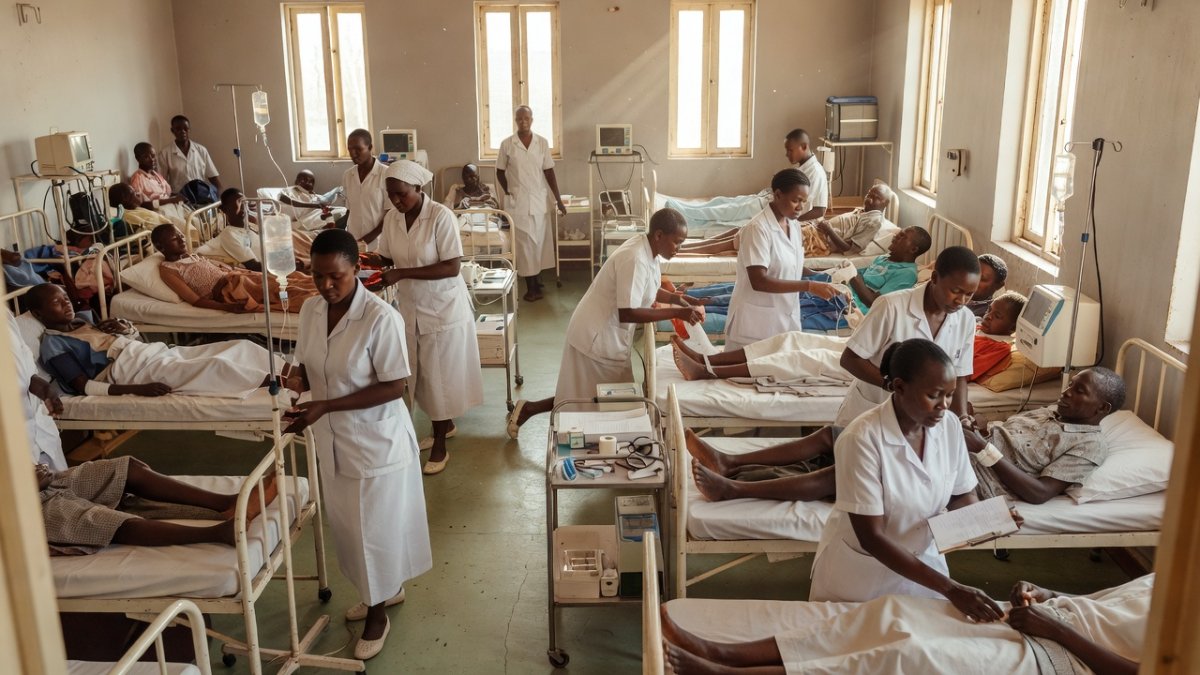
What is happening in Kenya is not an isolated anomaly; it is a symptom of a global health workforce crisis that is reaching a critical inflection point. The World Health Organization has long warned of a projected shortfall of 10 million health workers by 2030, primarily in low- and lower-middle-income countries. But the crisis is not just about numbers; it is about distribution, working conditions, and the relentless pressure of underfunded systems. The pandemic exposed these fractures, but it did not create them. It merely accelerated a decade of neglect. In Kenya, as in many nations, the nurses are not asking for more than their counterparts in the private sector; they are asking for the dignity of a living wage and the safety of a functional workplace. When these basic conditions are not met, the workforce votes with its feet—either through strikes or through emigration.
The data from the Americas paints a similarly stark picture. A PAHO report from April 30, 2025, titled "The Health Workforce in the Americas," found that 14 of 39 countries in the region lack sufficient doctors, nurses, and midwives. This is not a future problem; it is a current reality. The report warns that without significant intervention, the region faces a deficit of between 600,000 and 2 million health workers by 2030. That is a staggering range, but even the most conservative estimate represents a catastrophic failure to prepare. The crisis is not uniform; it is most acute in countries with fragile health systems and weak labor protections. The nurses in Kenya are fighting for a CBA; their counterparts in Latin America are fighting for the very existence of their public health systems. The common thread is a lack of political will to prioritize health workers as the most valuable asset in the system.
Latin America's Parallel Emergency
The parallels between Kenya and Latin America are not merely thematic; they are structural. A PAHO report from April 29, 2026, confirms that critical inequalities persist in the availability and distribution of health personnel in nine South American countries. The report highlights a marked concentration of health workers in capitals and large cities, leaving rural and underserved areas with severe shortages. This is the same urban-rural divide that is crippling Kenya, where nurses in Nairobi are striking while their colleagues in remote counties are simply absent. The issue is not a lack of trained professionals; it is a lack of incentives to work in the places where they are needed most. Rural postings often come with lower pay, fewer resources, and no housing, making them untenable for nurses who have families and career aspirations.
Consider the situation in countries like Peru and Bolivia, where indigenous communities in the highlands and the Amazon basin have access to a fraction of the health workers available in Lima or La Paz. The PAHO data shows that this is not a natural phenomenon; it is a policy failure. Governments have failed to create the conditions—financial, professional, and social—that would encourage nurses to serve in these areas. The result is a two-tiered system where urban elites have access to care and rural populations are left to fend for themselves. The nurses in Kenya are demanding promotions and secure employment; their Latin American counterparts are demanding the same, but often without the collective bargaining power of a strong union. The crisis is a shared one, and the solutions must be too.
The Rural Divide — Capitals Versus the Interior
The rural divide is the most visceral manifestation of the health workforce crisis. In Kenya, the strike has hit government hospitals hardest, but the reality is that many rural facilities were already operating with a single nurse covering an entire ward. The concentration of health workers in Nairobi is a direct result of the same dynamics that concentrate them in Bogotá, Mexico City, or São Paulo. The PAHO report from April 2026 is explicit: the availability of health personnel is heavily skewed toward capitals and large cities. This is not just a matter of convenience; it is a matter of life and death. A mother in a rural village in Kenya or in the Andean highlands faces a significantly higher risk of maternal mortality simply because there is no skilled birth attendant within reach. The nurses who are striking are not just fighting for themselves; they are fighting for the right to be present in these communities.
The solution to the rural divide is not simply to train more nurses; it is to create a system that values and supports them wherever they choose to work. This requires investment in rural health infrastructure, housing, and education for their children. It requires a career ladder that does not force nurses to move to the capital to advance. The county governments in Kenya argue they lack the funding to meet the nurses' demands, but the question is one of priorities. The same argument is made in Latin America, where national budgets often prioritize large infrastructure projects over the recurring costs of health worker salaries. The result is a system that is top-heavy and hollow at the core. The nurses on the picket line in Nairobi are not just demanding a contract; they are demanding a reallocation of resources that recognizes the fundamental value of their work.
The Migration Drain — Caribbean and Central America
Perhaps the most insidious aspect of this crisis is the migration drain. The nurses who are not striking are often leaving. A PAHO report from July 25, 2025, notes that countries of the Americas are moving toward a joint approach to manage health workforce migration, but the damage is already being done. The migration of physicians, nurses, and other health professionals is severely impacting low- and middle-income countries, particularly in Central America and the Caribbean. These regions are losing their most valuable asset—their trained health workforce—to wealthier nations that offer better pay and working conditions. CARICOM has issued stark warnings that a surge in healthcare worker migration threatens the region's health sector development. This is not a brain drain; it is a brain hemorrhage.
The drivers of this migration are well-documented: wage gaps, limited career progression, and chronic under-resourcing. Caribbean nurses are highly respected internationally for their training and professionalism, which makes them prime targets for recruitment by the UK, the US, and Canada. This is a double-edged sword. Their excellence is a point of pride, but it also makes them vulnerable to poaching. The nurses in Kenya are striking for a CBA that would provide them with the security they need to stay. Their counterparts in the Caribbean are often making the individual decision to leave because the system offers them no future. The PAHO data shows that this is a systemic issue that requires a regional response. We cannot simply train more nurses if we are going to lose them to richer countries. We must invest in making the profession sustainable at home.
The Bottom Line — What Comes Next
The strike in Kenya is at a critical juncture. The negotiations for the CBA are ongoing, but the county governments have signaled they cannot make commitments without guaranteed funding from the national government. This is a political standoff, and the nurses have shown they are willing to endure significant hardship to make their point. The proposed solution is a multi-year CBA that addresses salary arrears, promotions, and working conditions, but it remains pending. The longer the strike continues, the more damage is done to the health system and to public trust. The nurses are not asking for the impossible; they are asking for the implementation of agreements that were already made. The question is whether the government has the political will to find the resources and honor its commitments.
For Latin America, the lesson from Kenya is clear: inaction has a cost. The PAHO data is not a prediction; it is a warning. If we do not address the working conditions, pay, and distribution of health workers, we will face our own version of this crisis. The deficit of 600,000 to 2 million health workers by 2030 is not inevitable. It can be avoided with targeted investment, policy reform, and a commitment to valuing health workers. The nurses in Nairobi are not just fighting for themselves; they are fighting for the principle that healthcare is a public good and that those who provide it deserve dignity and respect. The world is watching, and the time to act is now. The bottom line is that a health system is only as strong as the people who staff it, and we are failing them.
By Elena Vasquez, Staff Writer
This article was produced with AI-assisted research and editorial support. Reporting is based on sources cited in the article.
What's Your Reaction?
 Like
0
Like
0
 Dislike
0
Dislike
0
 Love
0
Love
0
 Funny
0
Funny
0
 Wow
0
Wow
0
 Sad
0
Sad
0
 Angry
0
Angry
0

Latin America Correspondent at Global1.News. Based in Mexico City, covering politics, economics, energy, and culture across the region. Brings an on-the-ground perspective to stories spanning from the Rio Grande to Patagonia.














Comments (0)