
Mossad Chief Backs Bedouin Industrial Zone in Israel's Negev
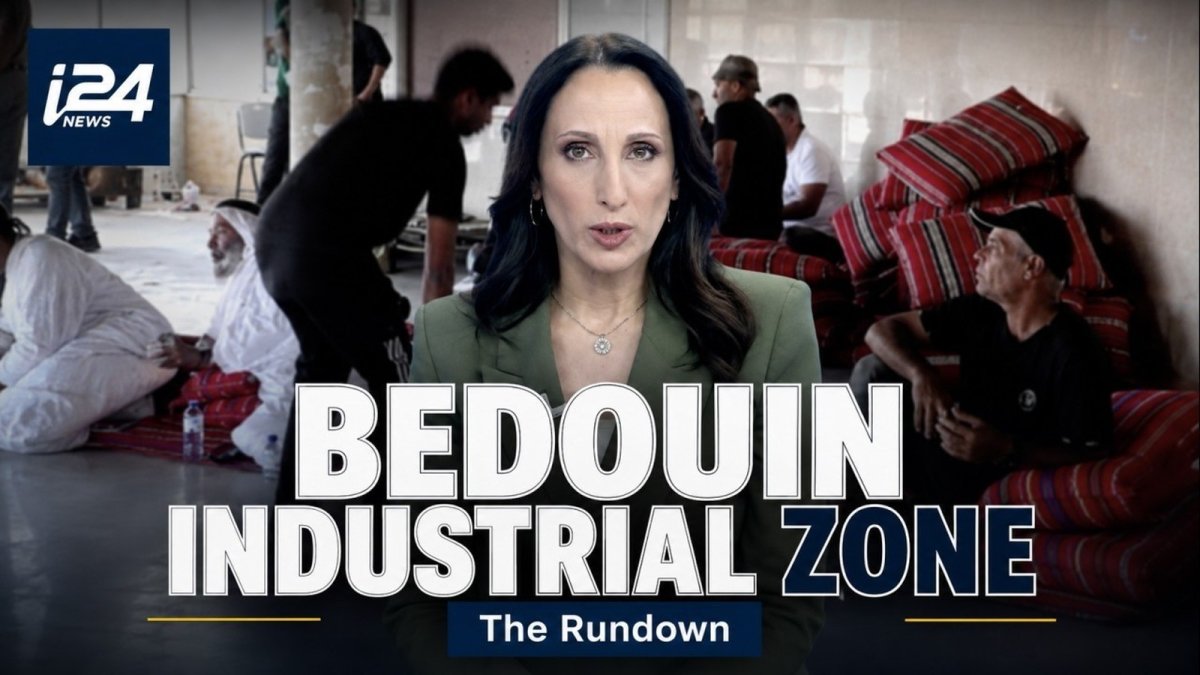
In a recent i24NEWS English report, Mossad Director Roman Gofman made an unusual public intervention in domestic policy, throwing his weight behind a long-stalled joint industrial zone between the Bedouin locality of Bir Hadaj and the Ramat Negev Regional Council. The project, covering approximately 200,000 square meters (20 hectares) in the Negev desert, has been discussed for years but never broke ground.
In a recent i24NEWS English report, Mossad Director Roman Gofman made an unusual public intervention in domestic policy, throwing his weight behind a long-stalled joint industrial zone between the Bedouin locality of Bir Hadaj and the Ramat Negev Regional Council. The project, covering approximately 200,000 square meters (20 hectares) in the Negev desert, has been discussed for years but never broke ground. Gofman's letter of support, presented during a Ramat Negev Council meeting, marks a rare instance of the intelligence chief engaging in civilian economic development, signaling deep state-level concern over crime and unemployment in the Bedouin sector.
Mossad Chief Breaks Silence to Back Bedouin Industrial Zone in Negev
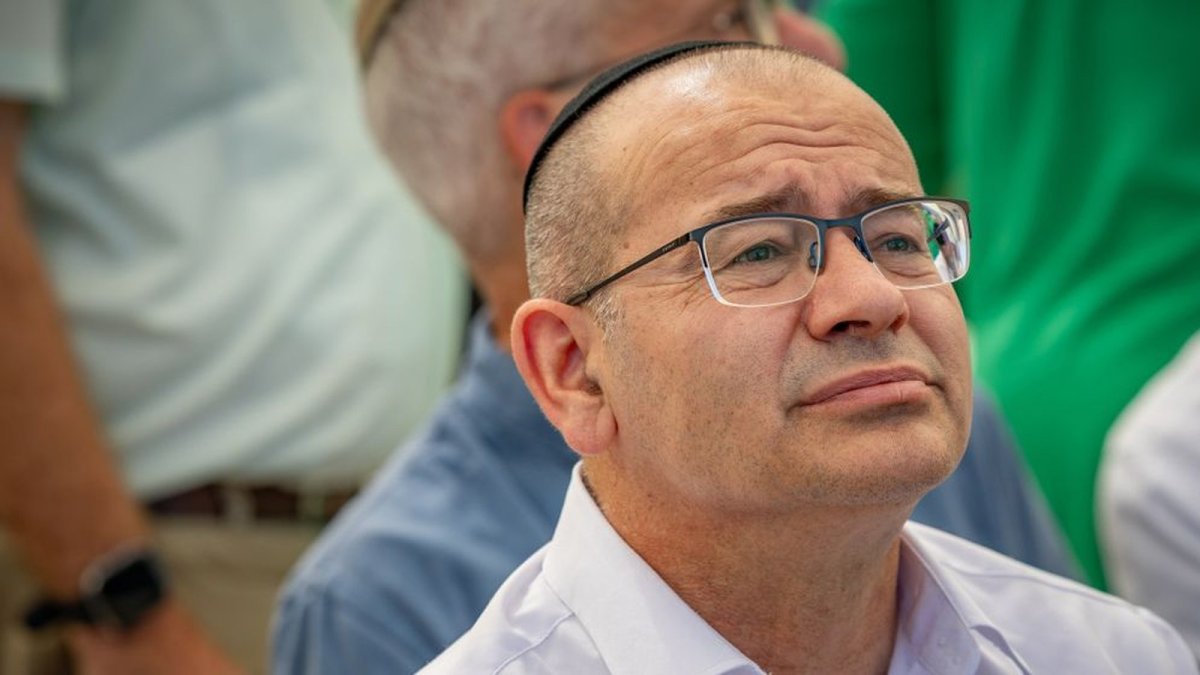
Jerusalem, Israel – Tuesday — Gofman, the 14th Mossad chief sworn in on June 2, 2026, succeeding David Barnea, previously served as Prime Minister Benjamin Netanyahu's military secretary from 2024 to 2026. Born on November 30, 1976, he immigrated from the former Soviet Union as a child and holds the rank of Aluf (major general). His backing of the Bir Hadaj initiative is not abstract—Gofman commanded the National Training Center for Land Forces (National Ground Forces Training Center) in the area, giving him firsthand knowledge of the region's security dynamics and its civilian population.
A Letter That Shifts the Debate
The catalyst for the renewed push came from Salama Abu Edissen, president of the Neve Midbar Regional Council, which oversees Bir Hadaj. Abu Edissen approached the Ramat Negev Council to revive the dormant project, which had been on the books for several years without implementation. During a recent meeting of the Ramat Negev Council, its president Eran Doron presented Gofman's letter, a move that immediately changed the tenor of the discussion from local economic planning to national strategic priority.
Gofman wrote that "the initiative that was presented to me is a fair and courageous decision, endowed with strategic value of the highest order." He argued that developing employment opportunities could strengthen the state's presence in the Negev, reduce social tensions, and limit the influence of criminal organizations. The Mossad chief acknowledged the risks but recommended gradual implementation with monitoring mechanisms and law enforcement measures. His full quote, as reported by i24NEWS, was direct: "The local population is, for the most part, law-abiding and looking for work and a future for their children. Expanding employment opportunities will reduce the room for maneuver available to criminal elements and strengthen the partnership with the state."
The letter is significant not just for its content but for its source. Mossad directors rarely comment on domestic civilian matters, and Gofman's willingness to attach his name to a regional industrial park suggests the issue has been elevated to the highest levels of Israeli security thinking. The Negev has long been a focus for the IDF, Shin Bet, and Israel Police due to arms trafficking, drug smuggling, and organized crime in parts of the Bedouin sector.
Bir Hadaj: A Community at a Crossroads
Bir Hadaj is a Bedouin locality in the Negev with an estimated population of 7,000 to 10,000 residents. The community was recently recognized by the state, a formal step that unlocked municipal services and development budgets. The broader Negev Bedouin population numbers approximately 300,000, roughly 3% of Israel's total population. Government Resolution 3708, passed in 2011, promoted economic development for the Bedouin population, but implementation has been uneven, with unemployment and poverty rates remaining significantly higher than the national average.
The proposed industrial zone sits at the intersection of Bir Hadaj and the Ramat Negev Regional Council, a vast desert jurisdiction that includes kibbutzim, moshavim, and the Nitzana border crossing area. Itzik Tzur, CEO of Ramat Negev's economic development company, acknowledged known criminal activity in the region but stressed that thousands of law-abiding residents in Bir Hadaj need employment. "The project is meant for them," Tzur said, pushing back against those who would let the actions of a minority define the entire community.
Abu Edissen, who has been a persistent advocate for the project, framed the vote in stark terms. "When there is economic security, there is also more personal security," he said. "People who get pulled into crime often do so due to a lack of prospects. Creating jobs can change the face of the entire settlement and strengthen the entire region." His comments reflect a growing consensus among Israeli officials that economic opportunity is a security tool, not just a social welfare measure.
Opposition and the Crime Question
Not everyone in the Ramat Negev Council was convinced. Council member Avi Friza argued that the cooperation could send the wrong message given enforcement and crime problems in the area. Friza's concerns are not unfounded—parts of the Negev Bedouin sector have seen violent clashes, weapons seizures, and drug trafficking operations that have required IDF and police intervention. The Shin Bet has repeatedly warned about criminal networks exploiting weak governance in unrecognized villages and using the desert's open terrain for smuggling routes from Egypt and Jordan.
Doron, the Ramat Negev Council president, responded directly to Friza's objections, insisting that criminals must be distinguished from the broader population. The debate reflects a deeper tension in Israeli policy toward the Bedouin community: how to balance enforcement against a minority of offenders while building trust and opportunity for the majority. The council ultimately approved the proposal by a majority of nine members, with three voting against—a decisive margin that suggests the strategic argument, bolstered by Gofman's letter, carried the day.
The opposition's concerns are not merely rhetorical. In recent years, Israeli police have conducted large-scale operations in Bedouin localities to seize illegal weapons and dismantle drug networks. The IDF has also increased its presence in the Negev, particularly along the Egyptian border, where smuggling tunnels and cross-border infiltration remain persistent threats. Any new industrial zone will require robust security arrangements, and Gofman's recommendation for gradual implementation with monitoring mechanisms appears designed to address exactly these risks.
The Idan HaNegev Model
Supporters of the Bir Hadaj project point to the Idan HaNegev industrial zone as a working model for regional cooperation. That zone, jointly operated by the cities of Rahat and Lehavim and the Bnei Shimon Regional Council, has successfully attracted businesses and created jobs while maintaining security and order. Rahat, the largest Bedouin city in Israel with over 70,000 residents, has seen significant economic development in recent years, including a new high-tech park and commercial centers.
The Idan HaNegev model demonstrates that Bedouin-majority industrial zones can function effectively when they are properly planned, funded, and secured. It also shows that cooperation between Bedouin municipalities and neighboring Jewish regional councils is possible, despite the complex political and social dynamics. For Bir Hadaj, replicating that model could mean hundreds of jobs in manufacturing, logistics, and services—a transformative change for a community where formal employment options are scarce.
The strategic logic extends beyond economics. A functioning industrial zone in Bir Hadaj would strengthen the state's presence in the Negev, a region that Israeli planners have long sought to develop as a counterweight to the crowded coastal plain. The Negev is home to IDF training bases, including the National Training Center for Land Forces where Gofman served, as well as the Ramon Airbase and classified defense facilities. A stable, prosperous Bedouin population in the area reduces the risk of unrest and improves the overall security environment.
National Security and Domestic Policy Intersect
Gofman's involvement signals that the Mossad, traditionally focused on external threats, sees the Negev's internal stability as a matter of national security. This is not unprecedented—the intelligence community has long monitored criminal networks in the Bedouin sector for potential ties to hostile actors, including Hamas and Hezbollah, which have historically attempted to recruit operatives or smuggle weapons through the region. The Iran-backed Hezbollah has shown interest in exploiting Israeli internal divisions, and any escalation of crime or violence in the Negev could be exploited by external enemies.
The timing of Gofman's letter is also notable. It comes amid broader government efforts to address crime in the Arab and Bedouin sectors, which have seen spikes in violence in recent years. The Israel Police, under Commissioner Kobi Shabtai, has launched multiple operations targeting illegal weapons and organized crime, but the root causes—unemployment, poverty, and lack of opportunity—remain unresolved. The Bir Hadaj industrial zone is an attempt to address those root causes directly.
For the Israeli government, the project also carries political significance. The coalition has made the Negev a priority, with plans for new housing, infrastructure, and economic development. Success in Bir Hadaj could serve as a template for other Bedouin localities, including those in the Negev and the Galilee. Failure, on the other hand, would reinforce the perception that the state cannot deliver on its promises to minority communities, a narrative that adversaries and critics are eager to amplify.
What Happens Next
The Ramat Negev Council's approval is a necessary step, but the project still faces significant hurdles. Funding must be secured, land allocated, and infrastructure built. The security arrangements recommended by Gofman will need to be designed and implemented, likely in coordination with the Israel Police, the IDF, and possibly the Shin Bet. The involvement of multiple agencies could slow progress, but it also ensures that the project will be monitored from the outset.
For the residents of Bir Hadaj, the stakes are immediate. Unemployment in the Bedouin sector remains among the highest in Israel, and young people in particular face limited options. The industrial zone could provide stable income for hundreds of families, reducing the appeal of criminal activity and improving the community's quality of life. Abu Edissen's vision of economic security leading to personal security is not just a slogan—it reflects the lived experience of communities that have seen both the benefits of development and the costs of neglect.
The broader implications for Israel are equally significant. The Negev is not just a desert; it is a strategic asset, a security buffer, and a demographic frontier. A successful Bir Hadaj industrial zone would demonstrate that the state can integrate its Bedouin citizens into the economy while maintaining security and order. It would also send a message to the international community that Israel is serious about addressing the needs of its minority populations, a point that often gets lost in the noise of regional conflict.
Gofman's letter, and the council's vote, represent a rare moment of alignment between the intelligence community, local government, and civilian leadership. Whether that alignment translates into a functioning industrial zone remains to be seen, but the direction is clear. As Gofman himself wrote, the initiative is "a fair and courageous decision, endowed with strategic value of the highest order." For Bir Hadaj, for the Negev, and for Israel, the next steps will determine whether that value is realized.
By Hannah Berg, Staff Writer
This article was produced with AI-assisted research and editorial support. Reporting is based on sources cited in the article.
What's Your Reaction?
 Like
0
Like
0
 Dislike
0
Dislike
0
 Love
0
Love
0
 Funny
0
Funny
0
 Wow
0
Wow
0
 Sad
0
Sad
0
 Angry
0
Angry
0

Israel Correspondent at Global1.News. Based in Tel Aviv, covering Israeli politics, security, technology, and society. Provides balanced, deeply-sourced reporting on one of the most closely-watched regions in the world.














Comments (0)