
Kanpur Turmeric Adulteration Raid: FSDA Seizes Rs 5.86 Lakh Fake Spice Stock
In a targeted operation on August 4-5 2026, the Food Safety and Drug Administration of Uttar Pradesh seized adulterated stock valued at Rs 5.86 lakh from a unit in Panki, Kanpur, where turmeric powder was being manufactured solely from rice fragments and artificial colouring agents.
In a targeted operation on August 4-5 2026, the Food Safety and Drug Administration of Uttar Pradesh seized adulterated stock valued at Rs 5.86 lakh from a unit in Panki, Kanpur, where turmeric powder was being manufactured solely from rice fragments and artificial colouring agents. This raid follows a similar large-scale seizure of over 25,300 kg of contaminated spices in Hyderabad just one day earlier, highlighting persistent vulnerabilities in India's food supply chain that directly affect citizens across states from Uttar Pradesh to Telangana. The incident raises urgent questions about enforcement under the Food Safety and Standards Act, 2006, and the economic stakes for India's global spice trade.
Kanpur Spice Adulteration Exposed: FSDA Seizes Rs 5.86 Lakh in Rice-Based Turmeric at Panki Unit
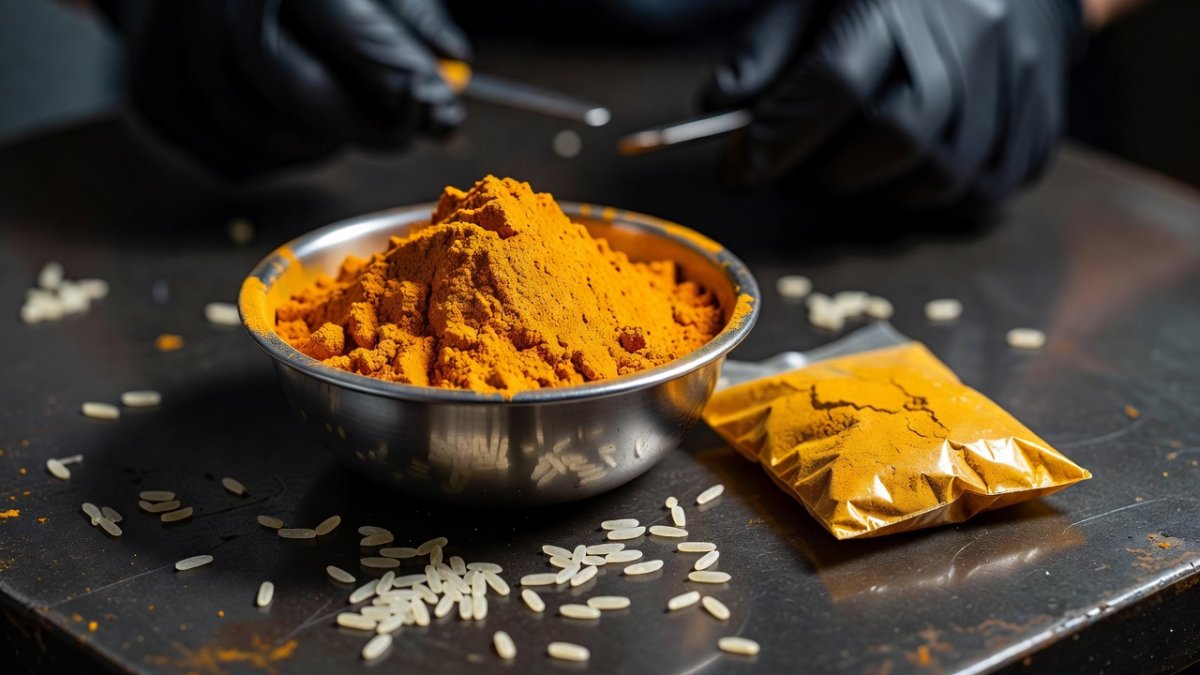
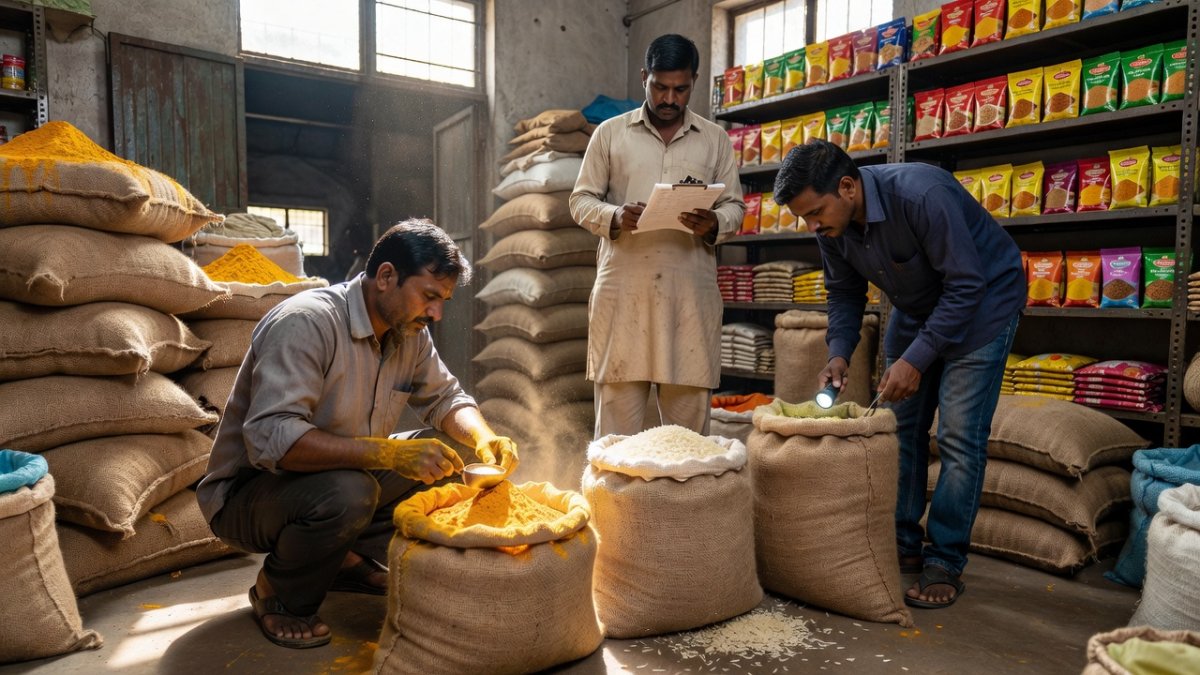
Kanpur, Uttar Pradesh – August 5, 2026 — The Food Safety and Drug Administration (FSDA) of Uttar Pradesh conducted raids on a suspected fake spice manufacturing unit at Ispat Nagar in Panki, Kanpur, Uttar Pradesh, on August 4-5, 2026. Officials discovered turmeric powder being produced by mixing rice fragments with artificial coloring agents, with no whole turmeric present on the premises. Large quantities of rice fragments, liquid colour, and other raw materials were recovered instead.
Seizure Details and Laboratory Sampling — Analytical Framing
The raiding team, led by Assistant Commissioner (Food) II Sanjay Pratap Singh along with Food Safety Officers Sanjay Verma, Umashankar Singh and Rajnish Rai, collected six samples for laboratory testing. These included turmeric powder, liquid colour used in turmeric, rice fragments, chilli powder, colour mixed in chilli, and coriander powder, all sent to the food analyst. Seized stock comprised 77 bags of rice fragments, 42 bags of turmeric powder, 30 kg coriander powder, 30 kg chilli powder and 20 kg turmeric adulterant mix, with a total value of Rs 5,86,200. Authorities have begun the process to suspend the factory's license, identified locally as Pitambara Enterprises. If laboratory reports confirm adulteration, legal action will proceed under the Food Safety and Standards Act, 2006.
The six samples collected during the August 4-5 2026 Kanpur raid will undergo analysis to determine whether the turmeric powder and related products meet the baseline requirements of the Food Safety and Standards Act 2006, particularly regarding the presence of permitted versus non-permitted substances. With rice fragments confirmed as the sole base material and liquid colour identified as the additive, testing will focus on verifying the absence of any natural spice content and the use of industrial dyes such as metanil yellow, which FSSAI regulations explicitly exclude from food applications. The complete lack of whole turmeric on the premises underscores a manufacturing process designed entirely around substitution, allowing authorities to quantify how such operations bypass standard quality thresholds that normally require measurable natural curcumin levels in genuine turmeric.
Economically, the substitution of low-cost rice fragments for turmeric creates substantial margins because rice by-products are far cheaper to procure and process than actual spice rhizomes, enabling the production of large volumes at minimal input cost while selling at near-market rates for authentic turmeric. The seized inventory of 77 bags of rice fragments alongside 42 bags of turmeric powder and the 20 kg adulterant mix, valued collectively at Rs 5,86,200, illustrates the scale at which these savings accumulate before distribution. When scaled across similar units, the profit differential directly incentivises repeated violations, as the low raw-material expense offsets risks until enforcement actions like license suspension intervene.
Health implications arise from chronic ingestion of metanil yellow and similar artificial colours, which FSSAI and ICMR assessments classify as non-permitted industrial azo dyes capable of contributing to long-term organ stress and metabolic disruption. In households where turmeric forms a daily dietary staple, even low-level exposure through adulterated batches compounds over time, increasing the likelihood of cumulative effects that public health monitoring systems must track. The parallel Hyderabad seizure of over 25,300 kg of similarly dyed spices on August 4 2026 demonstrates that such contaminants are not isolated, amplifying the need for consistent laboratory confirmation before products reach consumers.
What This Means for India
This Kanpur operation directly impacts Indian patients, taxpayers and the broader healthcare framework by exposing how adulterated turmeric enters markets nationwide, potentially increasing long-term costs for treating dye-related illnesses through public health systems. The seizure connects to the August 4, 2026 Hyderabad raid where GHMC food safety and H-FAST teams recovered 89,150 kg of raw adulteration material and arrested three individuals, showing a pattern that strains state resources from Uttar Pradesh to Telangana. For taxpayers, repeated enforcement campaigns under FSSAI guidelines divert funds that could otherwise strengthen primary healthcare in districts like Kanpur Nagar. India's spice exports, a key economic sector, face reputational damage that could reduce foreign revenue and affect employment in processing hubs across the country.
Daily turmeric consumption in Indian households means that adulterated batches reach millions of kitchens through routine purchases, directly elevating household exposure to non-permitted dyes and raising the probability of chronic health burdens that fall on public systems. When state food safety departments must repeatedly divert resources to raids and testing, the cumulative cost affects taxpayer-funded healthcare capacity, particularly in districts where primary care already manages high volumes of diet-related conditions. The Kanpur and Hyderabad operations within 24 hours highlight how enforcement cycles strain budgets that could otherwise support preventive nutrition programmes under FSSAI's Eat Right India framework.
India's position as a leading spice exporter faces measurable risk when repeated domestic adulteration cases surface in major markets such as the US, EU and Middle East, where buyers apply strict residue limits and can impose import restrictions or heightened scrutiny. Reduced export volumes would translate into lower foreign exchange earnings and downstream employment losses in processing regions that depend on consistent international demand. Farmers supplying genuine turmeric also experience indirect pressure, as reputational damage depresses overall market confidence and pricing for unadulterated produce.
State-level coordination between FSDA units and FSSAI becomes essential to close gaps that allow adulterated stock to move across state lines, protecting both domestic consumers and the broader agricultural economy from sustained erosion of trust in Indian spices.
Historical Context and National Regulatory Trends — Deeper Analysis
Turmeric ranks among the most-adulterated spices in India, with common adulterants including rice flour or starch and metanil yellow, an industrial azo dye not permitted for food use and recognised as a health hazard. The Food Safety and Standards Act, 2006 consolidated earlier fragmented laws, yet enforcement gaps persist as evidenced by FSSAI's 2018 proposal for amendments recommending life imprisonment and fines up to Rs 10 lakh for food adulteration. The current Kanpur case, occurring alongside the Hyderabad seizure of over 25,300 kg of spices laced with industrial dyes and talcum powder, illustrates how these historical weaknesses continue to challenge the regulator's ability to protect domestic consumers and maintain export standards.
The Food Safety and Standards Act 2006 replaced the earlier Prevention of Food Adulteration Act with a unified regulatory structure under FSSAI, yet surveillance data from FSSAI surveys between 2017 and 2020 revealed persistent adulteration rates in spices exceeding acceptable thresholds in multiple states. Those crackdowns documented widespread substitution practices similar to the rice-fragment method uncovered in Kanpur, prompting FSSAI's 2018 proposal to introduce life imprisonment and fines up to Rs 10 lakh for severe violations. The current case, occurring alongside the Hyderabad recovery of 89,150 kg of raw adulteration material, shows that enforcement intensity has not fully deterred operators despite the consolidated legal framework.
Penalties outlined in Sections 59-60 of the FSS Act provide for prosecution, compounding and adjudication once laboratory confirmation is obtained, yet the frequency of high-profile incidents in 2024-2025, including the MDH and Everest contamination allegations, indicates that detection lags continue to allow contaminated products to circulate before action. FSSAI's surveillance surveys have consistently flagged turmeric as among the most-adulterated categories, with metanil yellow and starch-based fillers appearing repeatedly in sampled batches across regions.
These patterns underscore the regulator's ongoing challenge in scaling laboratory capacity and field inspections to match the volume of small and medium spice processors operating nationwide.
Official Statements and Stakeholder Views — Expert Perspectives
Assistant Commissioner Sanjay Pratap Singh stated that a continuous campaign is being run against the manufacture and sale of adulterated food. He appealed to citizens to immediately inform the department about adulterated food products. The FSDA's actions align with FSSAI oversight, while the involvement of named officers such as Sanjay Verma, Umashankar Singh and Rajnish Rai demonstrates coordinated state-level implementation of the Food Safety and Standards Act, 2006. Local reports on Pitambara Enterprises highlight the firm's exposure to potential license suspension pending lab confirmation.
Citizens can report suspected adulteration through FSSAI's established helpline and state-level toll-free numbers, after which food safety officers initiate preliminary inquiries and, where warranted, collect samples for testing at accredited laboratories. Once results confirm violations, the designated officer under the FSS Act framework reviews evidence to determine whether prosecution, compounding of offences or adjudication proceedings should follow, ensuring procedural consistency across states. This channel directly supports the continuous campaign described by Assistant Commissioner Sanjay Pratap Singh and enables timely intervention before adulterated stock reaches wider distribution.
After laboratory confirmation, officers coordinate with the designated officer to execute license suspension or cancellation and pursue penalties available under the Act, creating a documented chain from complaint to enforcement that strengthens overall compliance. Public awareness of these mechanisms remains critical, as increased reporting volumes can help FSSAI and state departments allocate inspection resources more effectively against repeat offenders operating in industrial areas such as Panki.
The involvement of multiple Food Safety Officers in the Kanpur raid illustrates how field teams implement these procedures on the ground, linking citizen alerts to concrete regulatory outcomes that protect both domestic supply chains and export integrity.
The Bottom Line
With Rs 5.86 lakh in suspicious stock seized in Kanpur and over 25,300 kg recovered in Hyderabad within 24 hours, the data underscore the scale of adulteration risks under the Food Safety and Standards Act, 2006. Sustained FSDA campaigns and citizen reporting remain essential to safeguard public health and protect India's spice export economy from further erosion.
— By Dr. Raj Patel, Staff Writer
This article was produced with AI-assisted research and editorial support. Reporting is based on sources cited in the article.
What's Your Reaction?
 Like
0
Like
0
 Dislike
0
Dislike
0
 Love
0
Love
0
 Funny
0
Funny
0
 Wow
0
Wow
0
 Sad
0
Sad
0
 Angry
0
Angry
0

India/South Asia Correspondent at Global1.News. Analytical voice with a background in science and health journalism. Based in New Delhi, covering Indian politics, education, healthcare, technology, and policy. Breaks down complex data into clear, actionable reporting.















Comments (0)