
Israeli airstrike destroys medical warehouses near hospital in central Gaza
Israeli fighter jets conducted an airstrike on medical warehouses near Al-Aqsa Martyrs Hospital in Deir al-Balah early Saturday, resulting in the destruction of critical facilities and widespread panic among displaced residents. The Gaza Health Ministry has condemned the attack as part of a systematic effort to dismantle the region's health infrastructure, highlighting violations of international law.
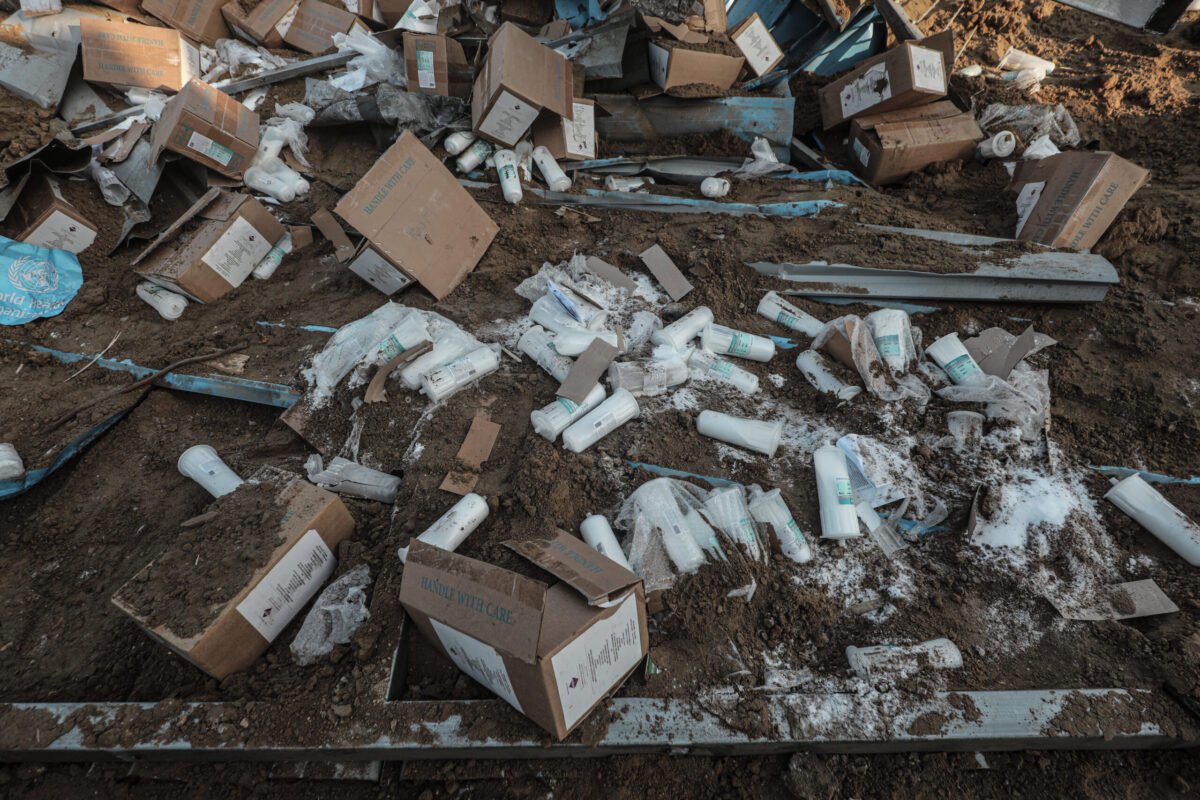
Israeli fighter jets conducted an airstrike on medical warehouses near Al-Aqsa Martyrs Hospital in Deir al-Balah early Saturday, resulting in the destruction of critical facilities and widespread panic among displaced residents. The Gaza Health Ministry has condemned the attack as part of a systematic effort to dismantle the region's health infrastructure, highlighting violations of international law. This incident exacerbates the ongoing collapse of Gaza's medical system, which has already lost half its capacity, while underscoring the humanitarian crisis faced by civilians repeatedly displaced from their shelters.
The Airstrike on the Medical Warehouses
Israeli fighter jets struck medical warehouses near Al-Aqsa Martyrs Hospital in Deir al-Balah early Saturday, according to witnesses speaking to Anadolu. The attack destroyed at least two of four warehouses and set fire to dozens of nearby tents sheltering displaced Palestinians. Witnesses reported that an evacuation warning was issued only minutes before the strike, leaving little time for residents to respond.
The warehouses stored critical medical supplies including intravenous solutions, medicines, and consumables for dialysis and intensive care units. The structures were temporary metal-sheet buildings erected because Israel's blockade has long restricted construction materials from entering Gaza. No casualties were reported immediately, though the strike caused widespread panic among patients and residents.
Regional actors have repeatedly highlighted the cumulative effect of such strikes on central Gaza's ability to sustain basic care. Neighboring states and international bodies have called for unimpeded access to medical goods, noting that repeated targeting of support infrastructure compounds existing shortages.
The Destruction at Al-Aqsa Martyrs Hospital
Hospital spokesperson Khalil al-Daqran described extensive damage to the facility's adjacent outpatient clinic building and surrounding structures. A crater more than 20 meters deep was left at the site. The attack also damaged the hospital wall and nearby buildings, compounding existing strains on the medical complex.
Al-Daqran noted that all medicines and supplies inside the targeted warehouse were lost. The destruction eliminated vital quantities of materials used in key departments. Figures on the financial value of the losses were not immediately available.
International reactions have focused on the implications for medical functionality in central Gaza. Statements from global health bodies emphasize that repeated strikes on facilities and their support elements contribute to the documented 50 percent decline in sector capacity. Regional governments have urged de-escalation measures that would permit repair work and resupply.
The Gaza Health Ministry's Condemnation
The Gaza Health Ministry described the strike as a direct and systematic attack on remaining medical infrastructure. It stated that the missiles completely erased two of the four warehouses and caused extensive damage to the other two. The ministry accused Israeli forces of continuing to dismantle Gaza's health system while blocking the entry of medicines and preventing patients from traveling abroad for treatment.
The ministry called on the international community, the United Nations, and humanitarian organizations to intervene immediately to halt attacks on medical facilities and protect personnel. It emphasized that such actions violate protections afforded to health infrastructure under international agreements.
Officials have pointed to the blockade's impact on medicine imports and patient movement, factors that predate the current conflict and have left facilities operating with minimal reserves.
The Humanitarian Impact on Displaced Families
Umm Mohammed Wadi, a displaced woman living in a tent camp beside the hospital since the war began, recounted waking residents after hearing the warning. She and others rushed out carrying children, only for the strike to destroy their tents minutes later. Wadi stated this was the 13th time her family had survived such an incident and lost their shelter.
Displaced residents remained outdoors until dawn, uncertain where to relocate. Children in the camp experience repeated awakenings from evacuation warnings and attacks, living in ongoing fear. Wadi expressed the desire for safety comparable to that of people elsewhere, noting the absence of a ceasefire and the daily toll on civilians.
“I started screaming to wake people up after hearing the warning. We rushed out carrying our children, and only minutes later the strike occurred and the tents were completely destroyed,” Umm Mohammed Wadi told Anadolu. “This is the 13th time my children and I have survived since the war began. Every time, we lose our tents and start again.” She added that children in the camp live in constant fear and wake at night to the sound of attacks and evacuation warnings, while older people and patients struggle to flee.
“All we want is to live safely like the rest of the world's people. Where should we go? There is no ceasefire. Every day, young people are killed, and children, women and older people die,” Umm Mohammed Wadi said. The intersection of shelter destruction and health service decline leaves families navigating shortages that affect both housing durability and treatment access, with the blockade limiting construction materials alongside medical supplies.
The Collapse of Gaza's Health System
Around 50 percent of Gaza's health sector operating capacity has been lost due to destruction and persistent shortages of supplies. The strike on the warehouses near Al-Aqsa Martyrs Hospital further reduced available resources for treating patients in central Gaza. The ministry highlighted ongoing restrictions on medicine imports as a compounding factor.
Local health workers have documented repeated targeting of facilities, which has left many departments unable to function at full capacity. This pattern has forced reliance on limited remaining stocks and makeshift arrangements for care.
The blockade's long-standing restrictions on medical imports have created chronic shortfalls that predate recent strikes, leaving hospitals with minimal reserves even before additional losses occur. International observers including the World Health Organization have repeatedly warned of progressive health-system collapse under sustained pressure from both destruction and supply constraints.
International Humanitarian Law and Medical Neutrality
Al-Daqran stated that targeting health facilities contravenes rules of international humanitarian law and the Geneva Conventions, which require protection of medical sites during conflicts. The attack on warehouses storing supplies for vital departments illustrates the erosion of these protections in practice.
Medical neutrality requires that hospitals and their support infrastructure remain off-limits regardless of surrounding conditions. Witnesses and officials noted that the proximity of the warehouses to the hospital did not alter their status as medical assets under these standards.
The Geneva Conventions explicitly stipulate protection of medical facilities and their supplies during conflicts, a principle invoked by health officials to underscore that warehouses linked to hospitals fall under the same safeguards. United Nations statements have consistently reinforced that deliberate impairment of medical capacity through strikes or blockades contravenes these established rules.
What This Means for Patients and Displaced Palestinians
Patients at Al-Aqsa Martyrs Hospital now face reduced access to essential medicines and consumables for dialysis and intensive care. The loss of the warehouses limits the hospital's ability to maintain routine and emergency services amid already constrained conditions.
Displaced families living adjacent to the site have lost shelter and must again seek new locations while facing repeated warnings and strikes. The combination of damaged medical capacity and destroyed tents deepens the daily challenges for residents in Deir al-Balah, where options for safe relocation remain limited.
Health officials continue to document the cumulative effect on the broader system, with shortages preventing treatment for thousands. The strike adds to the documented pattern of attacks that have reduced overall health sector functionality by half.
The destruction of intravenous solutions, medicines, and supplies for dialysis and intensive care directly threatens patients already reliant on scarce resources, amplifying risks in a system operating at half capacity. Displaced Palestinians must contend with both the loss of medical access and the repeated cycle of shelter destruction, leaving them with few viable paths to stable conditions.
By Fatima Al-Rashid, Staff Writer
This article was produced with AI-assisted research and editorial support. Reporting is based on sources cited in the article.
What's Your Reaction?
 Like
0
Like
0
 Dislike
0
Dislike
0
 Love
0
Love
0
 Funny
0
Funny
0
 Wow
0
Wow
0
 Sad
0
Sad
0
 Angry
0
Angry
0

Gulf/MENA Correspondent at Global1.News. Based in Doha, covering Gulf politics, energy markets, diplomacy, and development across the Middle East and North Africa. Tracks the economic transformation of the Gulf states.














Comments (0)