
Seeking impunity to keep killing Palestinians, Israel objects to Trump Gaza roadmap
Israel objects to the US-backed Gaza roadmap, seeking freedom to continue military operations in Gaza and rejecting Qatari and Turkish roles in verification. With more than 74,000 Palestinians killed and 1,200 killed since the October 2025 ceasefire, the disputes threaten to derail the phased disarmament plan.
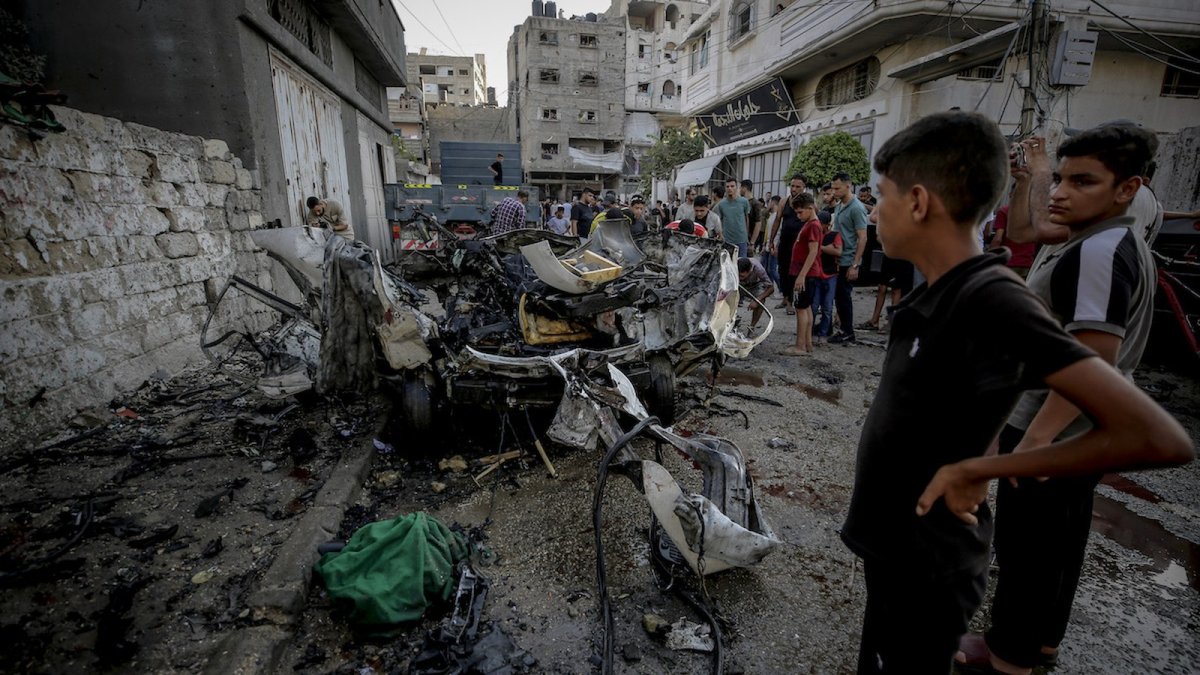
Israel has objected to the US-backed roadmap for the disarmament of Palestinian factions and the withdrawal of Israeli forces from Gaza, seeking the right to continue military operations in the enclave even as the agreement is implemented. The objections, reported by two sources familiar with the discussions to The Associated Press, come as fresh Israeli strikes continue to kill Palestinian civilians, including children, despite the ceasefire that took effect on 10 October 2025.
Seeking Impunity to Keep Killing Palestinians, Israel Objects to Trump Gaza Roadmap
Gaza City, Occupied Palestinian Territories — Israel has raised objections to the US-backed roadmap for the disarmament of Palestinian factions and the withdrawal of Israeli forces from Gaza. The occupation state is seeking the right to continue military operations in the enclave while the agreement is implemented. Two sources familiar with the discussions told The Associated Press that Israel had communicated its objections to former UK prime minister Tony Blair, who sits on the Board of Peace. Israel is seeking "freedom to conduct military operations in Gaza" under the proposed arrangement.
What the Roadmap Proposes
The roadmap, announced by US President Donald Trump and his Board of Peace, calls for weapons held by Palestinians to be decommissioned gradually as Israeli forces withdraw from Gaza in corresponding phases. Under the plan, Hamas and other Palestinian factions would surrender their heavy weapons to the Palestinian-led National Committee for the Administration of Gaza. Weapons would then be decommissioned and stored, while tunnels, production facilities and arms depots would be dismantled.
The disarmament process is expected to be "gradual, sequential and time-bound" and linked to the phased withdrawal of Israeli troops from the areas they control. An International Stabilisation Force would deploy between Palestinian-administered territory and areas still occupied by Israel. US officials said Israel had been consulted during the negotiations and maintained that the roadmap did not require it to undertake measures beyond those already included in the October ceasefire agreement.
Sequencing Disputes Between Israel and Hamas
There is disagreement over the sequencing, with Hamas insisting that disarmament should proceed alongside a phased Israeli withdrawal, while Israel says it will not withdraw until the Palestinian group has fully disarmed. Doron Spielman, a spokesperson for Israeli Prime Minister Benjamin Netanyahu's office, claimed that Hamas continued to recruit fighters and rebuild its capabilities. He insisted that Israel would not withdraw before Hamas had surrendered its weapons fully.
"Disarming means physically giving up the weapons. Nothing less," Spielman said.
Hamas has maintained that disarmament must occur in tandem with a phased Israeli withdrawal, consistent with the commitments in the October 2025 ceasefire agreement. This position has not changed since the March 2026 proposal, according to Palestinian analyst Muhammad Shehada, who noted that Hamas's acceptance remains conditional on Israel ending military operations, allowing humanitarian aid, and withdrawing forces. The earlier proposal presented to Hamas in March required Palestinian factions to surrender all their weapons and dismantle their military infrastructure before any Israeli withdrawal; the latest roadmap instead links the two processes, with implementation by each party subject to international verification.
These sequencing disputes risk stalling the entire process. While the new roadmap links the two actions through international verification, Israel's objections suggest it seeks to retain operational freedom in Gaza during implementation, potentially undermining the phased approach that distinguishes the current plan from the earlier March 2026 version.
Objections to International Verification and Weapon Storage
Israel has also objected to Qatar and Turkiye taking part in a committee responsible for verifying compliance with the roadmap. It wants confiscated Palestinian weapons destroyed rather than stored inside Gaza under the supervision of the new Palestinian administration and international monitors. Officials communicated these concerns to former UK prime minister Tony Blair, who serves on the Board of Peace, while seeking continued latitude for military operations even as the agreement advances.
Israel prefers that confiscated weapons be destroyed rather than stored locally. This objection ties into broader demands for complete disarmament upfront, contrasting with the roadmap's structure that connects each phase of Palestinian compliance to corresponding Israeli withdrawals. By rejecting storage under Palestinian and international supervision, Israel appears focused on preventing any residual Palestinian military capacity, even as the plan aims to transfer governing responsibilities to a technocratic committee that Hamas has expressed willingness to support.
Phased Implementation and the International Stabilisation Force
The roadmap envisions disarmament unfolding gradually alongside Israeli withdrawals, with an International Stabilisation Force positioned between Palestinian-administered areas and those still under Israeli control. This mechanism is intended to provide verification and separation during the transition, differing from the March 2026 proposal that required full disarmament and infrastructure dismantling before any Israeli movement.
Hamas has signaled readiness to hand over weapons in stages, beginning with those held by police, followed by heavy weapons, while transferring administrative burdens to the new Palestinian technocratic committee. This approach aligns with the movement's stated desire to shed governing responsibilities amid the ongoing costs of paying tens of thousands of public employees.
Yet Israel's insistence on retaining operational freedom during this period could complicate the stabilisation force's role, particularly given continued strikes that have killed at least 18 Palestinians, including children, in recent incidents.
Ongoing Israeli Control and Displacement in Gaza
Israel continues to control more than 60 per cent of Gaza. Much of the territory under Israeli control has been destroyed and depopulated, while around two million Palestinians have been pushed into the remaining areas of what was already one of the most densely populated regions in the world. Under the roadmap, Israel would have to suspend its attacks, permit the entry of increased humanitarian assistance and withdraw to the ceasefire line agreed in October before the broader disarmament process could advance.
The sustained control and displacement create a reality where Palestinian factions face pressure to comply while living under active threat. This imbalance risks derailing the phased process, as Hamas conditions its participation on Israel meeting prior commitments, leaving the broader stabilisation and verification mechanisms in doubt.
Recent Strikes and Rising Death Toll Since the Ceasefire
Israeli attacks have also continued during the ceasefire. At least 18 Palestinians, including children, were killed in recent strikes, according to hospitals in Gaza. One strike on an apartment in southern Gaza killed three members of one family, including a four-year-old child. Israel has killed more than 1,200 Palestinians in the Gaza Strip since the ceasefire took effect on 10 October 2025, bringing the overall death toll to more than 74,000.
Palestinian Analyst Views on Hamas Acceptance
Palestinian analyst Muhammad Shehada said Hamas's acceptance of the roadmap did not represent a new position by the movement. "What Hamas has agreed to is what they agreed to already in March this year. It's been the same position ever since," Shehada told Le Monde. Shehada said Hamas's agreement remained conditional on Israel fulfilling the commitments contained in the US-led ceasefire plan signed in October, including ending military operations, allowing humanitarian aid into Gaza and withdrawing its forces.
Shehada also said Hamas wanted to transfer responsibility for governing Gaza to the new Palestinian technocratic committee. "Hamas is eager to get rid of the governing burden of Gaza," he explained, adding that the movement remained responsible for paying tens of thousands of public employees.
Israeli Political Opposition and Coalition Pressures
Far-right Israeli National Security Minister Itamar Ben-Gvir has rejected the roadmap and called for Israel to continue assassinating Hamas officials. Other members of Netanyahu's governing coalition have also opposed an Israeli withdrawal from Gaza. It is thought that Netanyahu's government is likely to view taking those steps before Israel's October election as "political suicide."
Under the roadmap, Israel would have to suspend its attacks, permit the entry of increased humanitarian assistance and withdraw to the ceasefire line agreed in October before the broader disarmament process could advance. For a government facing an October election, with far-right coalition partners demanding continued military operations, those steps carry immediate political risk — even as the human cost of the status quo continues to mount for Palestinian families.
Human Impact on Palestinian Families and Daily Life
The continued strikes have compounded the suffering of families already displaced multiple times. Palestinians in the remaining areas face severe restrictions on movement and access to basic services amid the destruction. Hospitals report ongoing challenges in treating the wounded while managing limited resources. The roadmap's verification mechanisms aim to link each phase of withdrawal to reduced violence, yet recent incidents show the fragility of the current situation for civilians.
For families in Gaza, the diplomatic disputes unfolding in Washington and Tel Aviv carry life-or-death consequences. Every phase of the roadmap that stalls means more nights of strikes, more children killed, and more families forced to flee the wreckage of homes that no longer exist. The gap between the agreement on paper and the reality on the ground remains the central test of whether this plan can deliver what it promises: an end to the killing.
By Fatima Al-Rashid, Staff Writer
This article was produced with AI-assisted research and editorial support. Reporting is based on sources cited in the article.
What's Your Reaction?
 Like
0
Like
0
 Dislike
0
Dislike
0
 Love
0
Love
0
 Funny
0
Funny
0
 Wow
0
Wow
0
 Sad
0
Sad
0
 Angry
0
Angry
0

Gulf/MENA Correspondent at Global1.News. Based in Doha, covering Gulf politics, energy markets, diplomacy, and development across the Middle East and North Africa. Tracks the economic transformation of the Gulf states.













Comments (0)