
Over 600 Palestinians Detained by Israel in West Bank Raids in July, Advocacy Group Says
Israeli forces detained 630 Palestinians in West Bank raids in July, bringing totals since October 2023 above 25,000. The Palestinian Prisoner Society documented widespread violations including night raids and property destruction. Around 9,500 prisoners remain held, including 92 women and 370 children, amid reports of overcrowding and neglect. The 2002 Unlawful Combatant Law enables indefinite detention without charge, disrupting families and communities amid settlement expansion.
Over 600 Palestinians Detained by Israel in West Bank Raids in July, Advocacy Group Says
Ramallah, occupied West Bank — August 4, 2026
Israeli Forces Detain 630 Palestinians in West Bank Raids During July
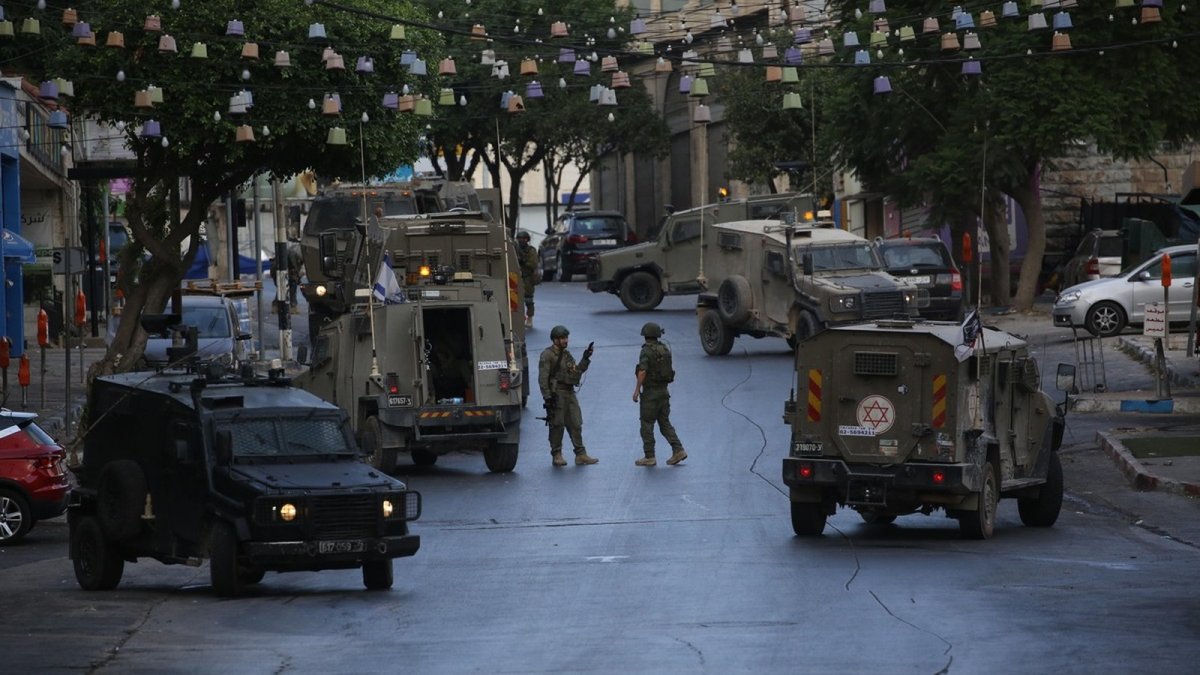
The Palestinian Prisoner Society reported that Israeli military operations across the occupied West Bank resulted in the detention of 630 individuals throughout July. These operations formed part of intensified arrest campaigns that have continued since October 2023. The group documented that women, children and former prisoners were included among those taken into custody during the raids.
Patterns of Violence Accompanying Arrest Operations
The Palestinian Prisoner Society detailed a range of violations that accompanied the raids. These included field interrogations, violent night raids on homes, systematic destruction of property, assaults on detainees and their families through beatings, threats and humiliation, holding family members hostage, stealing money and belongings, and carrying out field executions. Such practices were reported in multiple locations, with Anadolu Agency documenting one raid in Nablus on July 26, 2026.
Cumulative Detention Totals Since October 2023
According to the Palestinian Prisoner Society, the July detentions brought the total number of Palestinians detained since the start of the Gaza war in October 2023 to more than 25,000. The organization stated that these figures reflect a sustained campaign of arrests that has affected communities throughout the West Bank.
The cumulative figure of more than 25,000 detentions since October 2023 reflects a systematic intensification of military operations across the West Bank that has touched nearly every major city and refugee camp. Palestinian Prisoner Society records show that these arrests often target individuals with prior records alongside first-time detainees, creating a revolving door that strains community resources and leaves gaps in local leadership structures. The pattern demonstrates how arrest campaigns function as a tool of collective pressure rather than isolated security measures.
West Bank residents describe how repeated raids in places like Jenin and Tulkarem have altered daily rhythms, with families preparing for possible nighttime incursions by keeping essential documents and medicines accessible. This scale of detention disrupts agricultural work and small businesses that rely on young men and women who form the backbone of household economies. The sustained volume of arrests since late 2023 has produced a generation of children who witness or experience direct encounters with soldiers during home entries.
Human rights monitors note that the geographic spread of operations coincides with areas under heightened settlement activity, suggesting an overlap between arrest waves and efforts to secure territorial control. Communities report that the psychological toll extends beyond those taken into custody, as neighbors and extended family members adjust to the absence of breadwinners and community organizers. Such numbers indicate a policy approach that treats large-scale detention as a routine governance mechanism in the occupied territory.
Current Prison Population and Reported Conditions
Palestinian and Israeli rights organizations estimate that approximately 9,500 Palestinian prisoners are currently held in Israeli prisons. This total includes 92 women and 370 children. Dozens of prisoners have been reported to have died as a result of starvation, torture and medical neglect while in custody.
Reports from Palestinian and Israeli rights groups document that the roughly 9,500 Palestinians held in Israeli facilities face overcrowding, restricted access to medical care, and limited family visits that compound existing health vulnerabilities. The inclusion of 92 women and 370 children among the prison population raises particular concerns about age-appropriate treatment and gender-specific needs within a system designed primarily for adult male detainees. Families receive minimal updates on the status of loved ones, leaving them to navigate uncertainty through informal networks of former prisoners.
Accounts from released detainees describe instances of prolonged solitary confinement and denial of adequate nutrition that have contributed to documented deaths attributed to starvation, torture, and medical neglect. These conditions affect not only physical health but also the mental resilience of individuals held without clear timelines for release. Children as young as twelve have been subjected to the same interrogation environments as adults, according to monitoring organizations, raising questions about compliance with international standards on juvenile detention.
The deaths recorded in custody have prompted calls from Palestinian families for independent investigations, yet access for external observers remains restricted. Women prisoners report additional layers of isolation due to the smaller numbers held, which limits peer support during periods of illness or distress. These prison realities extend the impact of detention far beyond the initial arrest, shaping long-term health outcomes for thousands of individuals and their households across the West Bank.
Legal Mechanisms Supporting Indefinite Detention
The Al Mezan Center for Human Rights has noted that Israel’s Knesset passed the Unlawful Combatant Law in 2002. This legislation permits Palestinians to be held for indefinite periods without indictment or sufficient evidence being presented to a court. The center has described how this framework enables prolonged detention without standard judicial oversight.
Israel’s 2002 Unlawful Combatant Law provides a legal pathway for holding Palestinians without charge or trial for renewable periods, a mechanism that the Al Mezan Center for Human Rights has tracked as enabling extended isolation from legal representation. This framework operates alongside military orders that permit administrative detention orders lasting up to six months at a time, often renewed without new evidence presented to the detainee or their family. The law’s application creates a parallel system where standard criminal procedures are bypassed in favor of security classifications that remain opaque to those affected.
Legal advocates note that the legislation allows authorities to withhold the basis for detention even from the courts in certain cases, limiting the ability of lawyers to mount effective challenges. Palestinian families experience this as a form of ongoing disappearance, where loved ones vanish into a system with no fixed endpoint. The law’s continued use since 2002 has normalized indefinite holding as an accepted practice within the occupation’s legal architecture, affecting thousands who never face formal accusations.
Human rights documentation shows that the framework intersects with broader policies of movement restriction and land access, reinforcing a sense among West Bank communities that detention serves territorial and demographic objectives. Detainees held under these provisions often return to find their homes or businesses altered by prolonged absence, illustrating how legal tools translate into tangible disruptions of daily existence. The absence of judicial oversight mechanisms leaves families reliant on advocacy groups for any information about release prospects.
Effects on Daily Life in West Bank Villages and Towns
Detentions disrupt family structures and local economies in Palestinian communities. Night raids often occur in villages and towns experiencing pressure from illegal settlement expansion, where residents report increased military presence and settler attacks conducted under army protection. Families face sudden loss of income earners, while children and women experience direct involvement in the arrest process.
Detention waves reshape family structures in villages and towns already navigating settlement expansion and movement restrictions, as the sudden removal of parents or siblings forces older children into caregiving roles and alters household income patterns. Night raids documented in areas like Nablus leave visible traces in the form of damaged doors and scattered belongings, reminders that compound the emotional strain on remaining family members. Local economies suffer when skilled workers or small business owners are held for months without trial, creating ripple effects that reach neighboring communities through shared markets and family ties.
Women in affected households frequently assume additional responsibilities while managing the logistics of prison visits and legal appeals, often under conditions of restricted travel permits. Children who witness arrests report heightened anxiety during routine military patrols, affecting school attendance and social development in environments already marked by frequent checkpoints. The cumulative effect across multiple districts produces a shared experience of vulnerability that influences decisions about marriage, education, and future planning.
Community organizations respond by establishing support networks for families of detainees, yet these efforts operate against a backdrop of limited resources and ongoing military presence. The intersection of arrest policies with settler violence in the same regions intensifies pressure on residents to maintain presence on their land despite the risk of further detentions. These dynamics illustrate how large-scale imprisonment functions as a persistent feature of life under occupation, influencing generational outlooks and community cohesion in measurable ways.
Connection Between Settlement Expansion and Arrest Waves
The Palestinian Prisoner Society linked rising attacks by settlers to an expansion of arrest operations. Dozens of Palestinians were detained during incidents in areas targeted for settlement growth. These events have compounded existing restrictions on movement and access to land that shape daily routines in affected districts.
Broader Context of Prisoner Rights Monitoring
Organizations such as the Palestinian Prisoner Society continue to track arrest patterns and prison conditions across the West Bank. Their statements provide detailed accounts of how military operations intersect with settlement policies and legal provisions that affect thousands of individuals and their extended families.
By Fatima Al-Rashid, Staff Writer
This article was produced with AI-assisted research and editorial support. Reporting is based on sources cited in the article.
What's Your Reaction?
 Like
0
Like
0
 Dislike
0
Dislike
0
 Love
0
Love
0
 Funny
0
Funny
0
 Wow
0
Wow
0
 Sad
0
Sad
0
 Angry
0
Angry
0

Gulf/MENA Correspondent at Global1.News. Based in Doha, covering Gulf politics, energy markets, diplomacy, and development across the Middle East and North Africa. Tracks the economic transformation of the Gulf states.













Comments (0)