
Iran's Bagheri confirms top officials from Mecca Pact countries' visit to Tehran
Iran’s deputy secretary of the Supreme National Security Council, Ali Bagheri, announced on 26 October 2026 that senior officials from Saudi Arabia, Pakistan and Turkey will travel to Tehran for a high‑level security dialogue.
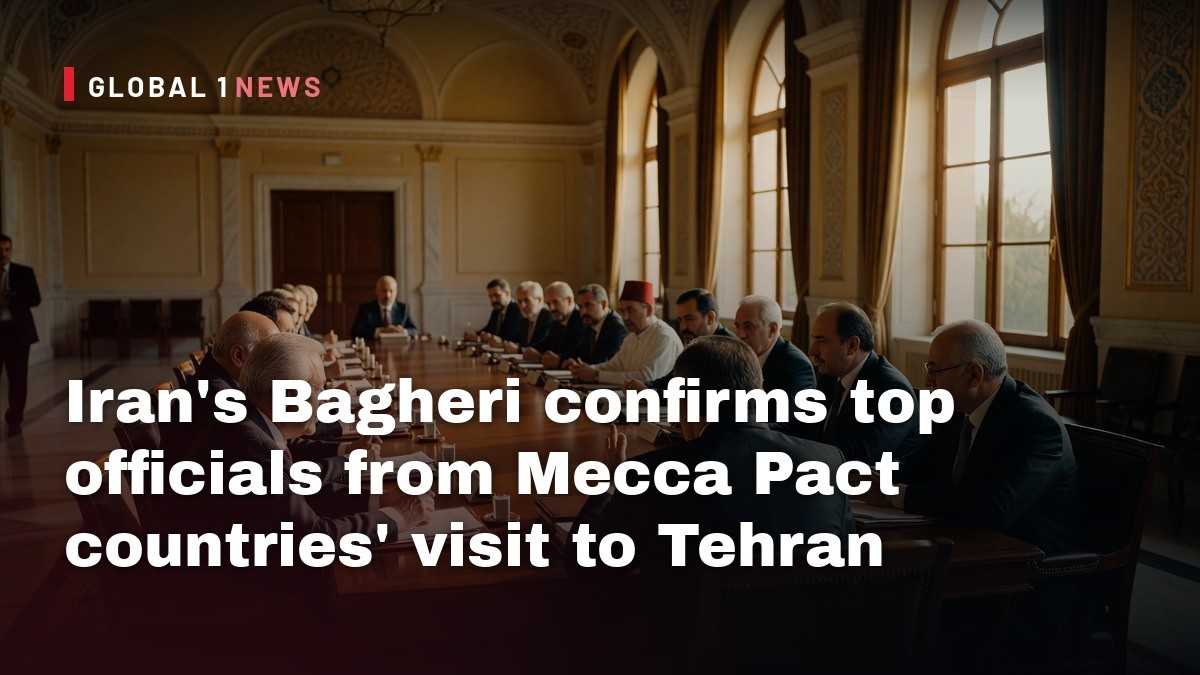
Iran’s deputy secretary of the Supreme National Security Council, Ali Bagheri, announced on 26 October 2026 that senior officials from Saudi Arabia, Pakistan and Turkey will travel to Tehran for a high‑level security dialogue. The delegation, which includes Saudi Defence Minister Khalid bin Salman, Pakistani Army Commander General Asim Munir and Turkish Intelligence Chief Ibrahim Kalin, is set to meet Iranian officials in a series of talks aimed at addressing regional security challenges. Bagheri framed the meeting as a continuation of Iran’s “model of defence based on internal and domestic capabilities” and emphasized a broader strategic vision that seeks stability through cooperation with neighboring states while resisting what he described as foreign interference led by the United States and “Zionist regimes.”
Context of the Mecca Pact and Tehran’s Invitation
The gathering in Tehran follows a series of informal contacts among the three “Mecca Pact” countries—Saudi Arabia, Pakistan and Turkey—whose leaders have been exploring deeper security coordination in recent months. While the term “Mecca Pact” is not an official alliance, it reflects a shared interest in counterbalancing external powers and managing cross‑border threats ranging from terrorism to maritime security in the Red Sea and the Gulf of Oman. Bagheri’s statement signals Iran’s desire to position itself as a central interlocutor in this emerging regional framework.
Bagheri highlighted Iran’s own defence model, which he described as “based on internal and domestic capabilities.” This narrative underscores Tehran’s long‑standing emphasis on self‑reliance in defence production, a policy that has shaped the country’s domestic arms industry and its approach to strategic partnerships. By inviting the Mecca Pact officials, Iran is extending an olive branch that aligns with its stated goal of “ensuring regional security through regional countries,” suggesting a willingness to cooperate on shared security concerns while maintaining a clear stance against perceived foreign meddling.
Key Participants and Their Portfolios
Saudi Defence Minister Khalid bin Salman brings to the table a portfolio that includes oversight of Saudi Arabia’s massive defence procurement programmes and its ongoing modernization of the armed forces. His presence indicates Riyadh’s interest in discussing joint security mechanisms, especially in light of recent tensions along the Red Sea corridor where Iranian‑aligned Houthi attacks have disrupted commercial shipping.
General Asim Munir, as commander of the Pakistani Army, represents a nation that has long balanced its strategic partnership with the United States against deepening ties with Iran and other regional actors. Pakistan’s security concerns—particularly along its western border and in the contested Kashmir region—make it a natural participant in any dialogue aimed at stabilising the broader neighbourhood.
Ibrahim Kalin, Turkey’s intelligence chief, oversees a network that has been active in monitoring extremist groups and managing Turkey’s complex relationships with both Iran and the West. His role in the Tehran talks is likely to focus on intelligence sharing, counter‑terrorism coordination, and the management of cross‑border movements that affect both nations.
Iran’s Strategic Narrative: Domestic Defence and Regional Security
Bagheri’s remarks underscored a dual narrative that has become a hallmark of Iranian diplomatic messaging. First, he praised Iran’s “successful model for building national security” rooted in domestic production capabilities. This reflects Tehran’s continued investment in indigenous missile technology, drone manufacturing and cyber‑defence capacities, which it positions as a deterrent against external threats.
Second, Bagheri framed Iran’s broader foreign policy as a defensive posture aimed at “confront[ing] any foreign interference and influence, led by the American and Zionist regimes.” By casting the United States and Israel as the primary sources of destabilisation, Iran seeks to rally regional partners around a shared perception of external pressure, thereby strengthening its diplomatic leverage.
Potential Areas of Cooperation
While the exact agenda of the Tehran meeting remains undisclosed, several thematic areas are likely to dominate the discussions. Maritime security in the Red Sea and the Gulf of Oman, where Iranian‑aligned proxy groups have targeted commercial vessels, is a pressing concern for Saudi Arabia and Turkey, both of which rely heavily on maritime trade routes.
Counter‑terrorism coordination is another probable focus. All three Mecca Pact countries have faced threats from extremist organisations that operate across borders. Intelligence sharing, joint training exercises and coordinated border patrols could emerge as practical outcomes of the talks.
Finally, the participants may explore mechanisms for crisis de‑escalation in contested zones such as the Syrian borderlands and the broader Persian Gulf theatre. By establishing communication channels, Tehran, Riyadh, Islamabad and Ankara could reduce the risk of inadvertent escalation, a goal that aligns with Bagheri’s hope for “a region with stability and peace and on the path of progress.”
Implications for Israel’s Security Calculus
From an Israeli perspective, the convergence of Saudi, Pakistani and Turkish officials in Tehran warrants close monitoring. Israel has cultivated a covert security partnership with Saudi Arabia and maintains strategic ties with Turkey, albeit strained at times. Any formalised security arrangement that includes Iran could alter the regional balance of power.
Israel’s Ministry of Foreign Affairs and the Israel Innovation Authority have been tracking developments in Iranian defence technology, particularly in drone and missile capabilities. The emphasis on “internal and domestic capabilities” suggests Tehran will continue to advance its own indigenous systems, which could pose new challenges for Israel’s missile defence architecture.
Moreover, the rhetoric of confronting “American and Zionist regimes” underscores Tehran’s perception of Israel as a central adversary. This framing may translate into heightened diplomatic activity by Israel to reinforce its own alliances, including deepening ties with the United States and seeking broader regional security cooperation that excludes Iran.
Economic and Diplomatic Repercussions
The diplomatic overture by Iran could have ripple effects on the regional economy. If the talks yield concrete security agreements, they may foster a more predictable environment for trade and investment, particularly in sectors such as energy, shipping and infrastructure. Saudi Arabia’s Vision 2030 agenda, which emphasizes diversification and foreign investment, could benefit from a more stable security climate.
Conversely, the explicit criticism of “American and Zionist regimes” may complicate relations with Western investors and multinational corporations that operate in the region. Companies from the United States and Europe often weigh geopolitical risk when allocating capital, and heightened rhetoric could reinforce risk premiums on projects linked to Iran’s sphere of influence.
For Israel’s high‑tech ecosystem, any shift in regional security dynamics could affect export markets and collaborative research initiatives. Israeli firms that supply cyber‑security solutions, defence electronics and dual‑use technologies may find new opportunities—or new constraints—depending on how the regional security architecture evolves post‑Tehran talks.
Looking Ahead: Prospects for a Regional Security Framework
Bagheri’s announcement marks a notable moment in the ongoing evolution of Middle Eastern security diplomacy. By convening senior officials from three influential states, Iran signals its readiness to engage in multilateral dialogue that could lay the groundwork for a broader regional security framework.
Whether this initiative will translate into lasting cooperation depends on several variables: the willingness of each participant to compromise on contentious issues, the ability to manage divergent strategic interests, and the broader geopolitical climate, especially the policies of the United States and Israel. As the talks progress, analysts will be watching for concrete outcomes—joint statements, memoranda of understanding or operational agreements—that could reshape the security landscape of the Middle East.
For Israeli observers, the key takeaway is the need to stay attuned to the shifting alliances and narratives that Tehran is promoting. While the immediate agenda focuses on “regional security,” the underlying strategic calculus involves positioning Iran as a central, albeit contested, player in any future regional order. The coming weeks will reveal whether the Mecca Pact delegation’s visit to Tehran will be a diplomatic footnote or a stepping stone toward a new security architecture that could redefine Israel’s strategic environment for years to come.
This article was produced with AI-assisted research and editorial support. Reporting is based on the source material cited below. Sources: Middle East Eye; middleeasteye.net; Global1.News (26 October 2026).
By Hannah Berg, Staff Writer
What's Your Reaction?
 Like
0
 Dislike
0
 Love
0
 Funny
0
 Wow
0
 Sad
0
 Angry
0
Israel Correspondent at Global1.News. Based in Tel Aviv, covering Israeli politics, security, technology, and society. Provides balanced, deeply-sourced reporting on one of the most closely-watched regions in the world.











Comments (0)