
Indonesia searches for 140 missing after passenger ship loses contact
On Sunday, 13 September 2026, the Indonesian authorities launched an urgent search for 140 individuals who vanished when the passenger vessel Virgo Transport 8 lost contact in the Java Sea.
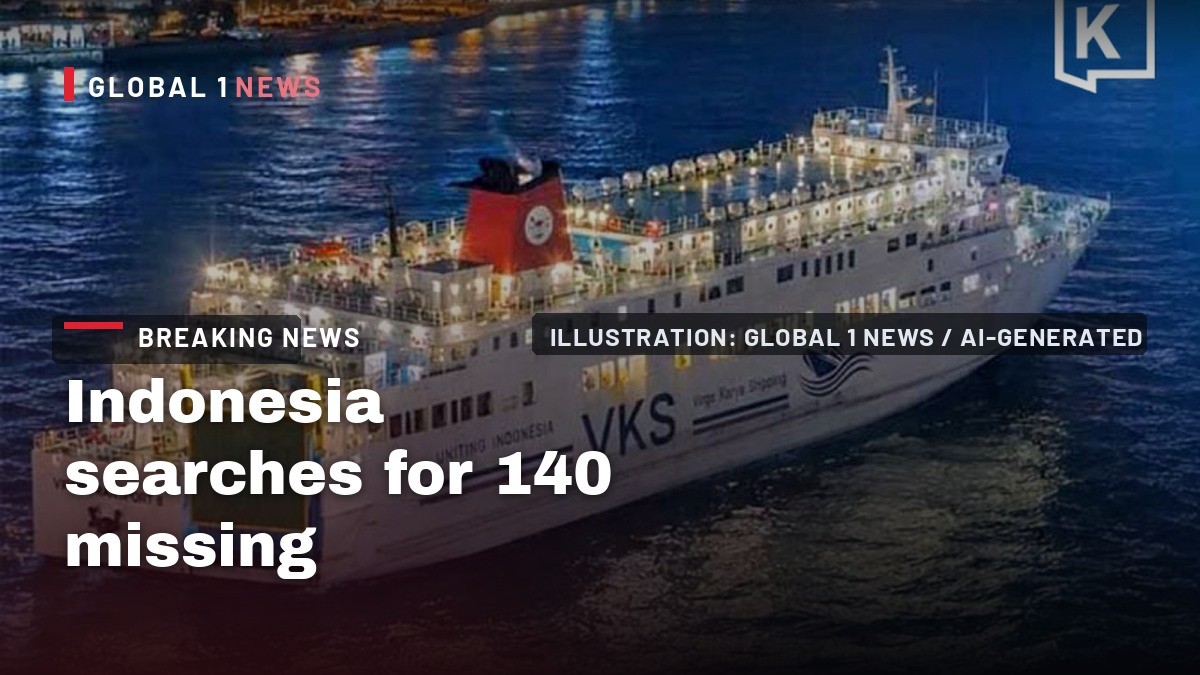
On Sunday, 13 September 2026, the Indonesian authorities launched an urgent search for 140 individuals who vanished when the passenger vessel Virgo Transport 8 lost contact in the Java Sea. The tragedy unfolded amid rough weather, prompting the evacuation of more than a hundred people and the heartbreaking loss of one life among those rescued. While the incident is still shrouded in uncertainty, it raises pressing questions about maritime safety in a region where sea travel is a lifeline for millions.
What happened to the Virgo Transport 8?
The Virgo Transport 8 set sail from Surabaya, a bustling port city in East Java, on Saturday, 12 September, bound for Banjarmasin in South Kalimantan. At the time of departure, the ship carried a total of 243 passengers and crew members. Early Sunday morning, as the vessel traversed the Java Sea, it fell silent. The exact cause of the loss of contact has not been confirmed by Indonesian officials, but the timing coincided with deteriorating weather conditions, which likely contributed to the vessel’s distress.
In response, Indonesia’s search and rescue agency mobilised a fleet of vessels to assist. At least 103 people were successfully evacuated using several other ships, and many of those rescued were taken to a port in East Java for medical attention and further assistance. Tragically, one of the evacuees later died, underscoring the perilous nature of the incident.
The scale of the search effort
Following the disappearance, Indonesian search and rescue teams intensified their operations across the Java Sea, focusing on locating the remaining 140 individuals still aboard the missing vessel. The coordination involved multiple agencies, including the national SAR (search and rescue) command, local coast guard units, and civilian vessels that responded to the emergency call. The urgency of the operation reflects Indonesia’s commitment to safeguarding its seafarers, even as the archipelago’s vast maritime domain presents logistical challenges.
Survivors who were rescued earlier were transported to a port in East Java, where they received basic medical care and were debriefed by authorities. Their testimonies, though still being collected, are expected to provide crucial clues about the vessel’s condition before it vanished, the exact moment of the emergency, and any possible mechanical or structural failures that may have occurred.
Maritime travel in Indonesia: a vital yet vulnerable link
Indonesia spans more than 17,000 islands, making sea transport an essential component of daily life. Ferries and passenger ships like the Virgo Transport 8 connect remote communities, support commerce, and enable families to stay in touch across great distances. For many Indonesians, especially those in rural or island regions, sea travel remains far more affordable and accessible than air travel.
However, the reliance on maritime routes also exposes a systemic vulnerability. Accidents at sea are not uncommon, and the safety standards governing vessels vary widely. While the government has made strides in regulating the industry, enforcement remains uneven, particularly for smaller operators or older ships that may not meet the latest safety criteria. The recent incident highlights how weather, vessel condition, and regulatory oversight intersect to create risk.
Weather’s role in maritime incidents
Bad weather was a notable factor on the day the Virgo Transport 8 lost contact. The Java Sea, a busy shipping lane, can quickly become treacherous when monsoon patterns shift or sudden storms arise. In such conditions, even well-maintained vessels can face reduced visibility, rough seas, and heightened stress on hulls and engines.
For Indonesian mariners, weather forecasting is a critical tool, yet the rapid development of storms can outpace the ability to communicate warnings to all vessels in real time. The loss of contact in this instance suggests that the ship may have been overwhelmed before a distress signal could be sent, a scenario that has prompted calls for improved real‑time monitoring and communication technologies across the archipelago’s fleet.
Human stories behind the numbers
Beyond the statistics of 243 passengers and crew, the tragedy touches the lives of families spread across Java, Kalimantan, and beyond. In coastal towns, the departure of a ferry often marks a communal event, with relatives gathering at docks to bid farewell. When a vessel fails to arrive, the anxiety ripples through entire neighborhoods, echoing the deep cultural ties that bind Indonesian communities to the sea.
Survivors who were rescued have begun to share their experiences, describing the frantic evacuation and the fear that accompanied the sudden silence of the ship’s engines. Their accounts will not only aid investigators but also provide solace to those waiting at home, offering a glimpse of hope amid uncertainty.
Regional implications and Thailand’s perspective
Thailand, like Indonesia, depends heavily on maritime routes for trade and tourism within Southeast Asia. The loss of the Virgo Transport 8 reverberates across the region, reminding neighboring nations of shared challenges in ensuring safe sea travel. Thai maritime authorities have previously collaborated with Indonesian counterparts on joint training exercises and information sharing, emphasizing the importance of regional cooperation.
From a cultural standpoint, both Thailand and Indonesia view the ocean as a source of livelihood and spiritual significance. Buddhist teachings on compassion and the sanctity of life resonate strongly when disasters strike at sea, prompting community prayers and charitable efforts. Thai NGOs and Buddhist temples often extend support to affected families in neighboring countries, reflecting a regional ethic of mutual aid.
Looking ahead: safety reforms and community resilience
The incident involving the Virgo Transport 8 is likely to spark renewed dialogue about maritime safety standards in Indonesia. Experts suggest that stricter enforcement of vessel inspections, mandatory installation of modern communication equipment, and better weather forecasting integration could reduce the likelihood of similar tragedies.
For the Indonesian people, the sea remains both a conduit of connection and a source of vulnerability. Community resilience, rooted in shared cultural practices and mutual support, will continue to be a vital asset as the nation navigates the complexities of an archipelagic life. As families await news of their loved ones, the hope is that lessons learned from this sorrowful episode will translate into stronger safeguards, ensuring that future journeys across the Java Sea are safer for all who depend on them.
This article was produced with AI-assisted research and editorial support. Reporting is based on the source material cited below. Sources: Khaosod English; khaosodenglish.com; Global1.News (13 September 2026).
By Ann Srisawat, Staff Writer
What's Your Reaction?
 Like
0
Like
0
 Dislike
0
Dislike
0
 Love
0
Love
0
 Funny
0
Funny
0
 Wow
0
Wow
0
 Sad
0
Sad
0
 Angry
0
Angry
0

Southeast Asia Correspondent at Global1.News. Based in Bangkok, covering Thai and Southeast Asian politics, economy, technology, and culture. Deep regional perspective on one of the world's most dynamic regions.













Comments (0)