
DR Congo and M23 Rebels Agree Roadmap for Peace Talks After Swiss Negotiations
After five days of intense negotiations in Switzerland, the Democratic Republic of Congo government and the Rwanda-backed M23 rebel group have agreed on a roadmap for peace talks, marking a fragile but significant step forward in a conflict that has scarred eastern Africa for decades.
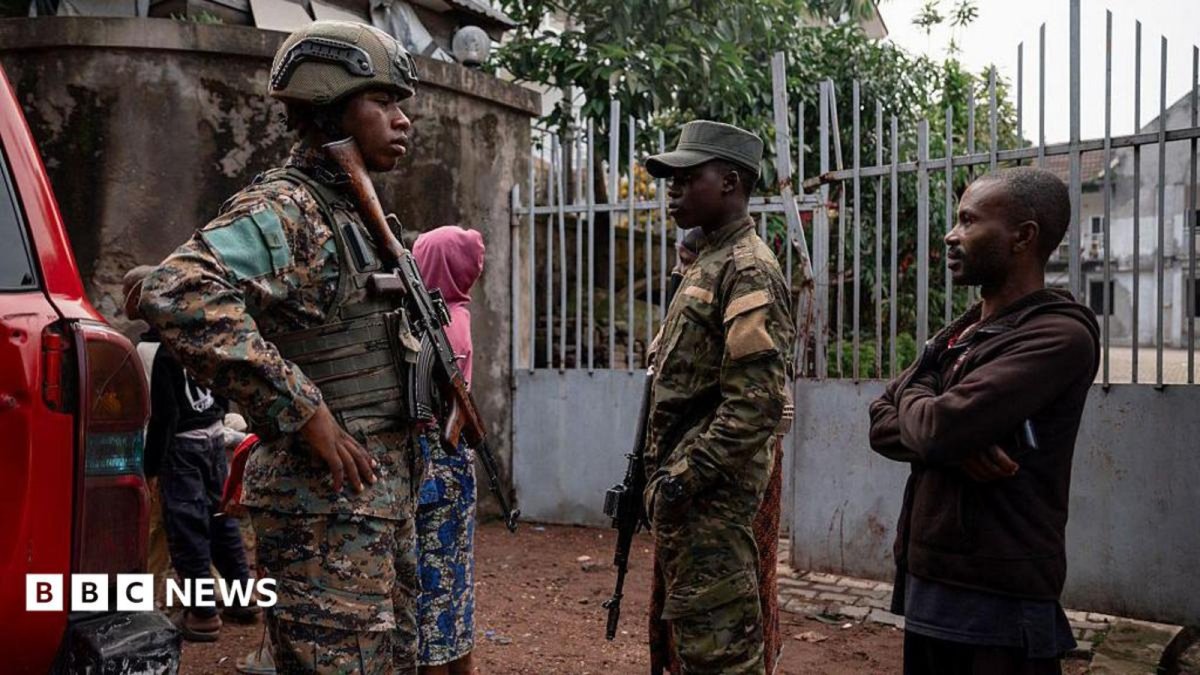
After five days of intense negotiations in Switzerland, the Democratic Republic of Congo government and the Rwanda-backed M23 rebel group have agreed on a roadmap for peace talks, marking a fragile but significant step forward in a conflict that has scarred eastern Africa for decades. In a joint statement issued this week, both parties pledged to "pursue negotiations towards comprehensive peace and conflict resolution" and established a mechanism to monitor the long-violated ceasefire.
The agreement, brokered under the US-supported Doha Framework Agreement signed in 2025, sets out a timeline for continued dialogue. However, the joint statement was candid about the hurdles that remain, acknowledging deep disagreements over sanctions against M23 leaders, the release of detainees, and the timing of political reforms in Kinshasa. For the millions of civilians caught in the crossfire of North and South Kivu, this roadmap represents a glimmer of hope, but the memory of past broken promises looms large.
A Delicate Diplomatic Dance in the Alps
The Swiss talks brought together an unusual coalition of stakeholders, reflecting the complex web of interests entangled in the Congolese crisis. According to the joint statement, the negotiations were attended by the M23 delegation, the DR Congo government, and representatives from Qatar, the United States, the Republic of Togo, the African Union Commission, and the host nation, Switzerland. This diverse assembly underscores how the conflict has transcended national borders to become a continental—and indeed global—concern.
The presence of the African Union Commission is particularly notable, signaling a broader continental push for stability in the Great Lakes region. Togo's involvement, alongside Qatar and the US, highlights the international community's recognition that the status quo is untenable. The parties agreed to establish a mechanism tasked with "reviewing progress and addressing challenges in implementation of obligations and commitments under the Doha Framework Agreement," the statement read. They developed "sequenced steps and timelines" while also committing to "flexibility and creativity"—diplomatic language that hints at the difficult compromises still required.
Yet, the roadmap is not a peace treaty. It is a framework for continued negotiation, a promise to keep talking rather than a resolution of the underlying grievances. The joint statement carefully avoided declaring victory, instead focusing on process and verification—a tacit admission that trust between Kinshasa and the M23 remains virtually nonexistent.
Verification and the Minembwe Test
Perhaps the most concrete outcome of the Swiss talks is the agreement to implement a mechanism to monitor ceasefire violations. The secretariat for this body has already been established, and the first verification mission is scheduled to take place on Monday in Minembwe, a town in South Kivu that has been heavily affected by the fighting. This is a critical test: Minembwe has been a flashpoint for clashes, and the ability of monitors to operate there safely will determine whether the ceasefire mechanism has any real teeth.
Fighting has continued in both North and South Kivu despite repeated ceasefire commitments, with the government and M23 routinely accusing each other of violations. The new monitoring mechanism aims to cut through the blame game by providing independent verification of incidents on the ground. However, the roadmap does not specify the composition of the verification teams, their rules of engagement, or what consequences would follow a confirmed violation. These details, so crucial to the mechanism's credibility, remain to be worked out in subsequent rounds of talks.
For the people of Minembwe, Monday's mission is more than a diplomatic formality. It is a signal that the international community is watching, and that their suffering may finally be receiving the attention it deserves. But they have seen verification missions before, and they know that presence alone does not stop bullets.
The Shadow of Kigali and the FDLR Impasse
At the heart of the conflict lies the fraught relationship between the Democratic Republic of Congo and its smaller, but militarily formidable, neighbor Rwanda. The M23 rebellion cannot be understood without reference to Kigali's strategic interests in eastern Congo. Rwanda has always denied supporting the M23, despite overwhelming evidence to the contrary, and has consistently maintained that its military presence in the region is defensive—only there to counter threats posed by other armed groups.
Specifically, Kigali points to the Democratic Forces for the Liberation of Rwanda (FDLR), an armed group operating in eastern Congo that Rwanda considers a direct security threat. The FDLR was founded by ethnic Hutus implicated in the 1994 Rwandan genocide, and its continued presence across the border has long been a casus belli for Rwandan intervention. Rwanda says DR Congo has failed to dismantle the FDLR, a charge that Kinshasa denies. The Congolese government, in turn, accuses Rwanda of backing M23 with troops and weapons, a claim supported by numerous UN reports and international investigations.
This mutual distrust is the engine of the conflict. Without addressing the FDLR issue to Rwanda's satisfaction, and without Rwanda withdrawing its support for M23, any peace agreement remains vulnerable to collapse. The Swiss roadmap acknowledges this reality by including both issues in the broader negotiation framework, but it does not resolve them. The parties have agreed to keep talking, but the fundamental security dilemma that drives the violence remains intact.
A Humanitarian Catastrophe with Global Connections
The human cost of this conflict is staggering. In January 2025, the situation deteriorated dramatically when M23 seized large parts of eastern DR Congo, including the city of Goma and two airports. Thousands of people have been killed and hundreds of thousands of civilians have been forced from their homes during the decades of fighting. The displacement crisis has created a humanitarian emergency, with camps overflowing and aid agencies struggling to reach vulnerable populations in areas controlled by various armed groups.
Eastern DR Congo is rich in coltan and other resources vital to the global electronics industry. Coltan, a key mineral used in smartphones, laptops, and other electronic devices, is mined in conditions that are often dangerous and exploitative. The competition for control over these mineral wealth has fueled the conflict, with armed groups using resource extraction to finance their operations. This connection between the violence in Congo and the global supply chain means that consumers around the world are indirectly linked to the suffering of Congolese civilians.
For ordinary people in North and South Kivu, the roadmap's success will be measured not in diplomatic statements but in tangible improvements to their daily lives. Will they be able to return to their farms? Will their children be able to go to school without fear of abduction? Will the roads be safe to travel? These are the questions that matter, and they remain unanswered. The ceasefire monitoring mechanism is a start, but it is only a start.
African Diplomacy and the Road Ahead
The involvement of the African Union Commission and Togo in the Swiss talks reflects a broader trend of African-led mediation efforts on the continent. From the Sahel to the Horn of Africa, African institutions and individual states are increasingly taking the lead in conflict resolution, often in partnership with international actors. The Doha Framework Agreement, despite its name, is a product of this collaborative approach, with the US providing support but African and Gulf states playing central roles.
This is significant because it signals a shift away from purely Western-led peace processes toward a more inclusive model that recognizes African agency. The choice of Switzerland as a venue, neutral and far from the region, provided a safe space for difficult conversations. But the real work will happen in the coming weeks and months, as the verification missions deploy and the parties return to the negotiating table.
The roadmap agreed this week is not a solution. It is a process—a commitment to pursue negotiations towards comprehensive peace and conflict resolution. The parties have pledged to be flexible and creative, but they have also demonstrated, through years of broken ceasefires, that words alone are insufficient. The international community, which has invested significant political capital in this process, must now hold both sides accountable for their commitments.
For the people of eastern Congo, who have known little but war for generations, this roadmap offers a fragile hope. They deserve more than promises; they deserve peace. The road ahead is long and uncertain, but for the first time in a long while, there is a path forward. Whether the parties have the will to walk it together remains to be seen.
This article was produced with AI-assisted research and editorial support. Sources: BBC News.
By Amara Diop, Staff Writer
What's Your Reaction?
 Like
0
Like
0
 Dislike
0
Dislike
0
 Love
0
Love
0
 Funny
0
Funny
0
 Wow
0
Wow
0
 Sad
0
Sad
0
 Angry
0
Angry
0

West Africa/Sahel Correspondent at Global1.News. Dakar-based journalist covering politics, security, climate, and development across Francophone and Anglophone West Africa. Tells the stories of a region undergoing profound transformation.












Comments (0)