
France Hits Back at Reform UK's Operation Fortress Plan to Use Navy in the Channel
France has condemned Reform UK's proposal to deploy Royal Navy vessels to intercept and return Channel migrant boats, labelling the plan a direct violation of French sovereignty and international maritime law on the day Nigel Farage unveiled it as party policy.
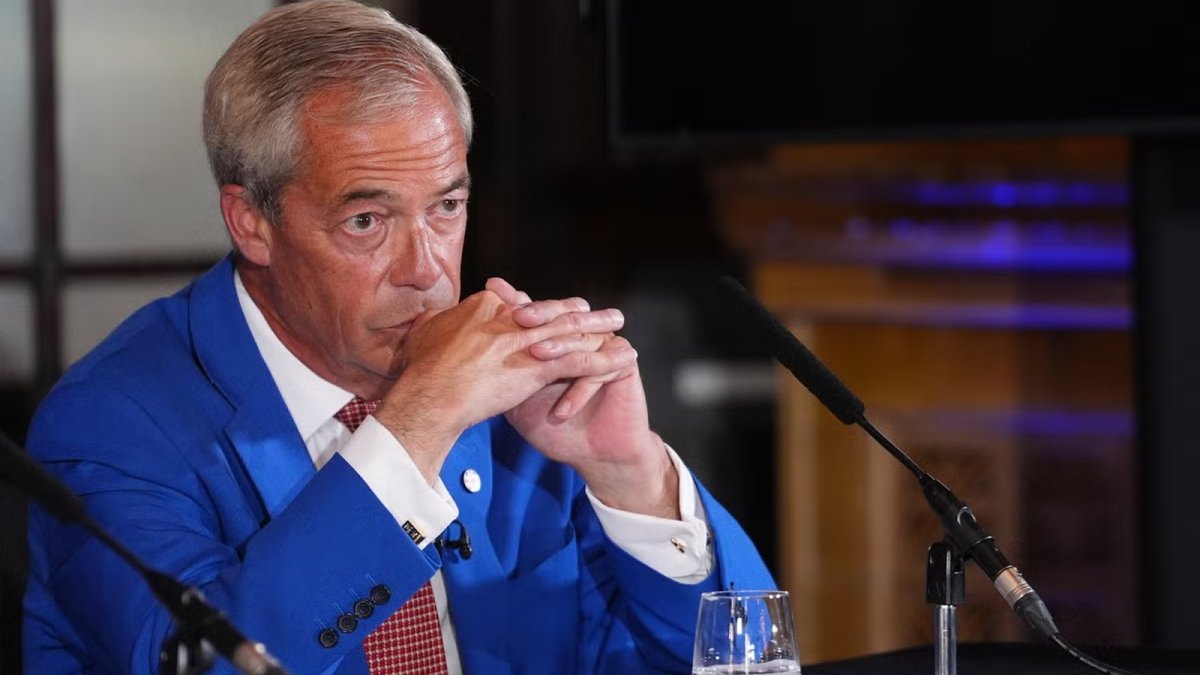
France has condemned Reform UK's proposal to deploy Royal Navy vessels to intercept and return Channel migrant boats, labelling the plan a direct violation of French sovereignty and international maritime law on the day Nigel Farage unveiled it as party policy.
The Plan
Reform UK leader Nigel Farage announced Operation Fortress at a press conference on Monday, outlining a joint military command that would draw on the Royal Navy, Royal Marines, Royal Air Force and British Army alongside a dedicated surveillance unit. The operation would track small boats crossing the English Channel and intercept those carrying unauthorised migrants before providing water, food and medical assessments on board UK vessels.
Under the proposals, which Farage said would only be enacted if Reform won the next general election, occupants would then be returned to France or Belgium under escort. He described the scheme as the largest military operation in the English Channel since the Second World War and insisted it would deter crossings while fulfilling the navy's core purpose of protecting the country from invasion.
Farage defended the scheme by questioning the navy's fundamental role. "When you think about it, what is the Royal Navy for? If the Royal Navy is not there to protect this country from invasion, then, frankly, I can't see what its purpose is," he said.
"It will save lives, it will help the French in fulfilling their job of stopping the boats and it will save a huge amount of money," Farage stated. "We are very confident that our policy of securely picking people up and safely taking them back to France — we are entirely confident that that falls within other conventions of international law."
Whitehall observers note that the proposals mark a shift from previous Conservative efforts under Boris Johnson, when home secretary Priti Patel sought to authorise pushbacks but withdrew the policy after legal challenges and without Royal Navy backing. Reform has stressed that Operation Fortress would involve rescue followed by escorted return rather than direct pushback, and the announcement comes as the party positions the plan at the centre of its platform ahead of the by-election Farage faces next week.
A Diplomatic Rebuke
France's interior ministry responded swiftly on Monday, stating that the use of British vessels to return migrants to French shores would constitute a violation of French sovereignty as well as a breach of the law of the sea and international law.
"This would constitute a violation of French sovereignty, as well as a violation of the law of the sea and international law," the ministry said, highlighting that existing UK-France cooperation measures had already produced a "decline in the number of crossings in 2026".
Officials in Paris emphasised that any such operation would require explicit French consent, which has not been forthcoming. The statement underscored that unilateral action by the United Kingdom would undermine bilateral arrangements developed over recent years between the Home Office and its French counterparts — a position reinforced through successive negotiations on cross-Channel cooperation.
Reform's announcement comes against a backdrop of heightened migrant pressure at the Spain-Morocco border in Ceuta, though French authorities have focused their criticism on the legal and diplomatic implications for the Channel route rather than broader European movements. Analysts in Westminster suggest the rebuke could complicate Reform's messaging during the by-election campaign, as voters weigh the party's emphasis on sovereignty against the practical constraints of cross-Channel diplomacy.
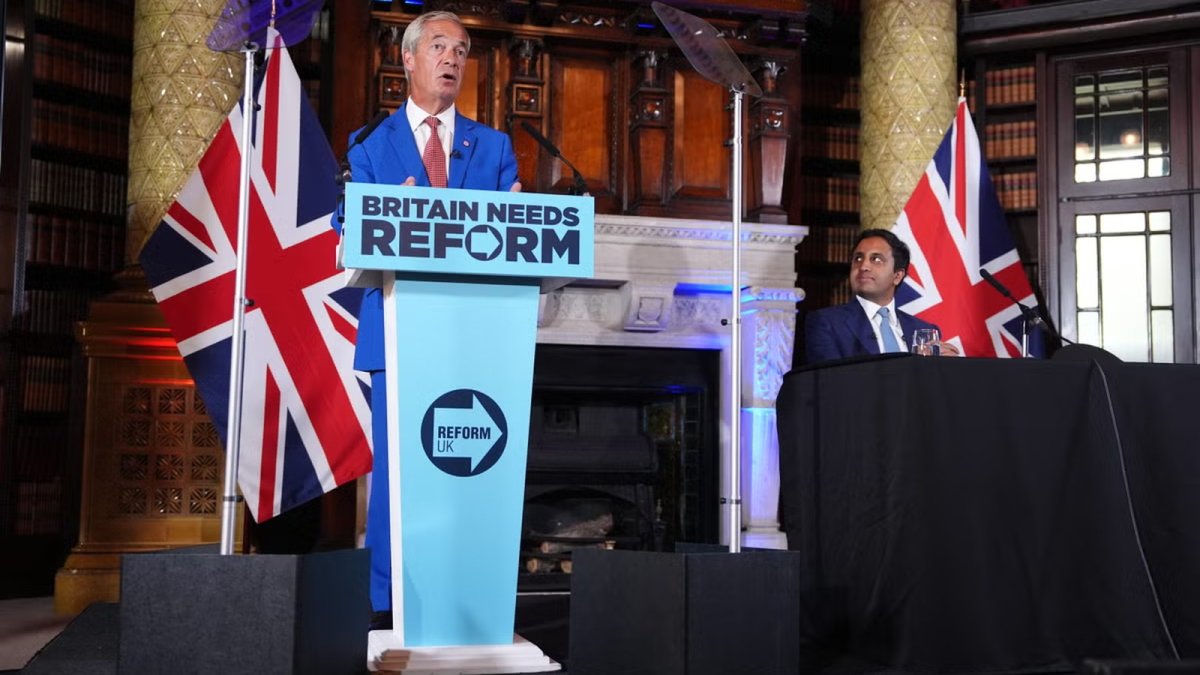
(The Independent)
The Legal Wall
Maritime law barrister James M Turner KC of Quadrant Chambers explained that British vessels would require France's explicit agreement before disembarking any migrants on French territory. Without that permission, such returns would breach Article 19.2(g) of the UN Convention on the Law of the Sea, disqualifying the passage from being considered innocent.
Turner KC was unequivocal about the legal barriers. "The long and short of it is this — you can't as a state go and do stuff in another state's territory without its permission. It would create a huge diplomatic stink. So even if you could sweep up everyone on a rubber boat, you can't just drop them in another state," he said.
He elaborated on the implications under UNCLOS. "Unloading any person in contravention of the receiving state's immigration laws would disqualify the passage from being innocent, under Article 19.2(g) of UNCLOS. If it is against the wishes of that country, it would also offend its territorial integrity and sovereignty," Turner KC added.
The barrister also stressed the operational risks involved in any forced transfer at sea. "The reason asylum seekers will climb onto Border Force vessels is because they know they will come to the UK. If instead they know they will be returned to France, they will resist getting onto the vessels, and you will create a situation of real danger. It is extremely dangerous," he warned. "It is practically impossible to push someone back over a line in a safe manner without endangering them."
Military and Political Doubts
Retired Royal Navy commander Tom Sharpe told BBC Radio 4's Today programme that the service lacks spare vessels for migrant interdiction duties. "A billion-pound warship that's configured for anti-air warfare or anti-submarine warfare, which are both threats to the UK, is not best used ferrying people around. You're better off using an actual ferry," he said.
Downing Street, under Prime Minister Andy Burnham, stated that Border Force officers remain the most appropriate personnel for small boat interceptions. Officials recalled that when the Royal Navy held primacy for Channel crossings in 2022, the number of arrivals did not fall, and they pointed to the navy's existing commitments monitoring Russian warships and protecting critical national infrastructure.
Shadow home secretary Chris Philp dismissed the plan as a gimmick lacking detailed funding or operational planning. "They can't explain how they will properly fund the military and they can't explain how they would disembark illegal immigrants in France without French cooperation," he stated.
Conservative MP Ben Obese-Jecty, a former British Army officer, noted the proposal's history: "Reform have announced this ridiculous idea before, except now it's party policy." Labour accused Reform of "reheating" last summer's Channel announcement, arguing that "anger and easy answers won't bring crossings down".
The Human Cost
Libby Kane, spokesperson for the Joint Council for the Welfare of Immigrants, condemned the plan as a dangerous and militarised response that would increase violence and deaths at the border and in the Channel. "Successive governments have all attempted this approach of increasing securitisation, policing and posturing rhetoric, and this has only resulted in injury and death while doing nothing to stop people from trying to come to the UK," she said.
Jon Featonby, chief policy analyst at the Refugee Council, warned that the proposals risk further loss of life and lack any guarantee that France or Belgium would accept returned migrants. "The last thing anyone should be proposing is anything that would risk more loss of life, as this plan inevitably would. It's also not clear that this plan is even deliverable, as there's no guarantee France or Belgium would take people back," he said.
Legal experts have echoed these concerns, pointing out that the distinction Farage draws between rescue and return would prove difficult to maintain in practice. Migrants facing forced return could resist boarding UK vessels, recreating the safety problems that led previous pushback proposals to be abandoned after legal challenges.
What Happens Next
Reform UK will now seek to advance Operation Fortress as a central plank of its platform ahead of the by-election Farage faces next week. The party has yet to publish detailed costings or command structures for the proposed joint military operation, and has not outlined how the joint command would coordinate with existing Border Force operations.
Whitehall sources expect continued emphasis on existing bilateral arrangements with France, which the interior ministry credits for the reduction in crossings observed this year. Any attempt to implement returns without French agreement would face immediate legal and diplomatic obstacles under UNCLOS and domestic French law.
Opposition parties and military analysts have indicated they will press Reform for clarification on funding, rules of engagement and the practical mechanics of disembarkation during the coming campaign. The episode has once again placed Channel migration policy at the centre of Westminster debate, with all sides acknowledging that unilateral military action remains constrained by international obligations.
By Erica Thornton, Staff Writer
This article was produced with AI-assisted research and editorial support. Reporting is based on sources cited in the article.
What's Your Reaction?
 Like
0
Like
0
 Dislike
0
Dislike
0
 Love
0
Love
0
 Funny
0
Funny
0
 Wow
0
Wow
0
 Sad
0
Sad
0
 Angry
0
Angry
0

US Politics and Policy Correspondent at Global1.News. Based in Washington DC, covering American politics, policy, elections, and the courts. Knows how the system works and tells you what it actually means.















Comments (0)