
The 'Fentanyl King': How a Chinese Graduate Became Sinaloa's Precursor Broker
Zhang Zhidong, aka Brother Wang, allegedly supplied Sinaloa cartel with Chinese fentanyl precursors until his 2024 arrest in Mexico, escape, and 2025 U.S. extradition. Cartel members in Culiacán describe immediate disruptions but expect new brokers. The case highlights Latin American precursor flows and regional enforcement challenges.
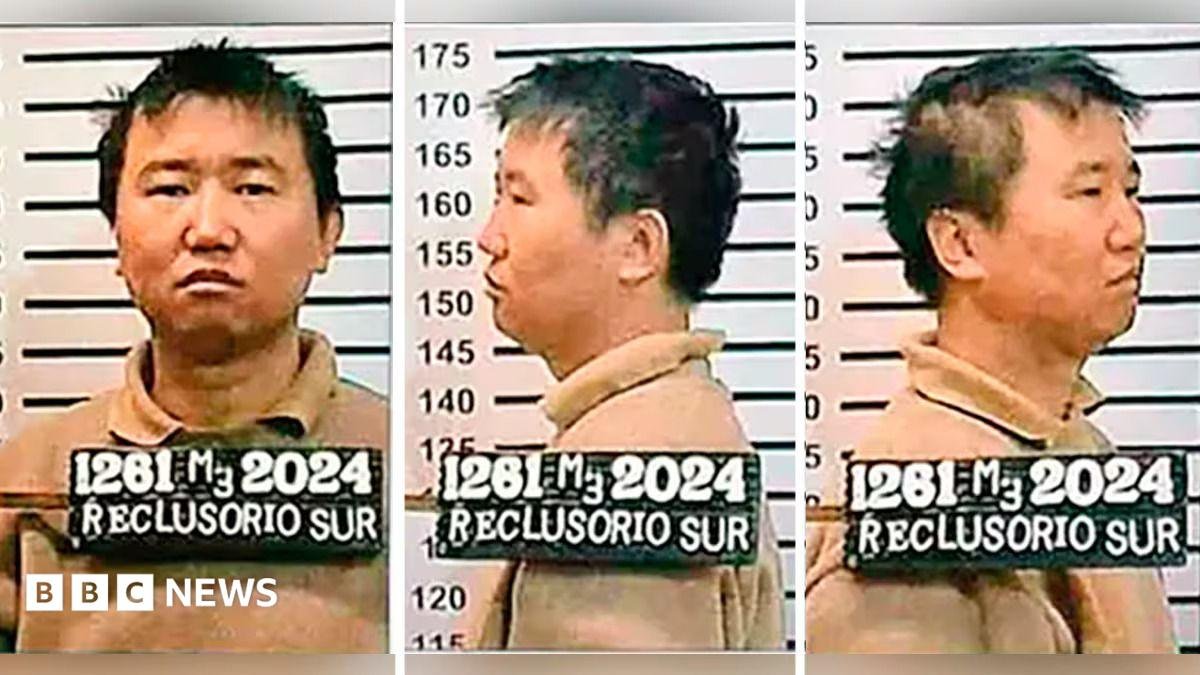
Mexico's Sinaloa cartel has long relied on international networks to fuel its operations, but one Chinese national stood out as the linchpin for fentanyl precursors. Zhang Zhidong, known as Brother Wang, built connections that moved chemicals from factories in China to hidden labs near Culiacán. His arrest and extradition exposed vulnerabilities in that chain while highlighting how such brokers sustain deadly flows across borders. Cartel members describe his role as irreplaceable at the time, yet the trade shows signs of adaptation.
Mexico City, Mexico — Zhang Zhidong, a 39-year-old graduate of Peking University, allegedly became a central figure linking Chinese chemical suppliers to Sinaloa cartel laboratories, according to court records and interviews with cartel associates.
From Mining Executive to Alleged Trafficking Broker
Zhang arrived in Mexico in 2011 after earning a Spanish degree from Peking University in 2010 and took a senior role at a Chinese-owned iron ore mining firm.
Colleagues at the time viewed him as resourceful and fluent in Spanish, with a talent for navigating both official and unofficial networks in Sinaloa state.
After the mining company collapsed in 2013, Zhang remained in Mexico while others returned to China, according to a former university classmate who worked alongside him.
By 2016, U.S. court filings allege he had begun operating a narcotics trafficking and money laundering organization that spanned multiple continents.
Precursor Chemicals Flow from China to Culiacán Labs
Cartel coordinator Enrique, who spoke on condition of anonymity, described Zhang as the number one contact for ordering fentanyl precursors from Chinese factories.
These chemicals traveled by air or sea to Mexico, where Sinaloa networks distributed them to cooks in clandestine sites on the outskirts of Culiacán.
Precursor chemicals used to make fentanyl remain regulated but not fully banned in China because they serve legitimate industries such as pharmaceuticals and plastics. Orders typically flow through trusted contacts like those maintained by Zhang, who connected cartel buyers with factory suppliers. Once placed, the ingredients travel thousands of miles by air or sea before reaching Mexican ports.
Analysts say customs evasion often relies on mislabeling shipments or routing them through multiple countries to obscure their origin. Brokers like Zhang coordinated these movements so the chemicals arrived without triggering full inspections. The long supply lines give traffickers time to adjust when one route faces extra scrutiny.
Experts note that the same networks can quickly shift to new ports or carriers when authorities increase checks. This flexibility keeps the flow steady even after individual arrests.
Former errand runner Luis recalled a 2019 meeting where Zhang offered the precursors that launched his group's fentanyl production line.
Lab workers like Luis reported handling substances so toxic that multiple cooks passed out or died when protective gear failed, underscoring the human cost inside these operations.
Arrest, Escape, and Extradition to the United States
Mexican authorities detained Zhang on 31 October 2024, charging him with exporting over 1,000 kilograms of cocaine, 1,800 kilograms of fentanyl, and 600 kilograms of methamphetamine while laundering more than 150 million dollars annually.
A judge placed him under house arrest, but Zhang escaped through a reported hole in a wall, fled by private jet to Cuba then Russia, only to be returned and ultimately extradited to the U.S. in 2025.
U.S. Deputy Attorney General Todd Blanche at the time called him one of the world's most dangerous traffickers running a global enterprise that moved cocaine, fentanyl, and methamphetamine into American markets.
Zhang has pleaded not guilty and awaits trial in New York; his lawyer declined comment on the ongoing case.
Disruption in Sinaloa and Signs of Adaptation
Enrique and Luis said Zhang's removal immediately complicated precursor orders, forcing the cartel to rebuild routes from scratch.
The U.S. Drug Enforcement Administration noted a drop in fentanyl purity around the same period, consistent with cooks struggling to obtain key chemicals.
Researcher Victoria Dittmar of InSight Crime described brokers like Zhang as unique connectors between Chinese suppliers and Mexican trafficking groups, a role hard for outsiders to replicate quickly.
Yet cartel members indicated another Chinese contact is already positioned to step in, suggesting the supply chain may recover despite the loss.
Cartel cooks face extreme risks when handling the toxic precursors. Luis described rooms where workers passed out from fumes and had to be carried out, with five cooks dying in incidents tied to failed protective gear. These accounts reveal the hidden human cost inside the labs that turn raw chemicals into finished fentanyl.
Cartel members reported immediate disruptions after Zhang's arrest, as orders slowed and purity levels dropped while new routes were built. The loss of a single broker exposed how fragile the supply chain can become when key links are removed.
His case now tests whether removing individual brokers can produce lasting cuts in the precursor trade.
Resonance Across Latin America and Beyond
The synthetic opioid trade reaches beyond Mexico's Policia Federal and SEDENA operations in Sinaloa, affecting port cities like Manzanillo where precursor shipments have historically arrived.
In Brazil, authorities with the Policia Civil monitor similar chemical flows that could feed regional labs, as the same Chinese export networks supply multiple countries.
According to reports, Mexican cartel methods developed by groups such as Sinaloa and CJNG now shape trafficking patterns across Latin America. Precursor chemicals and finished synthetics move along routes that extend from Pacific ports into South American markets, where local groups adapt the same production and distribution tactics. Analysts say this spread raises the risk that remote labs will appear in countries far from Mexico.
Agencies from Mexico’s Fiscalia to Brazil’s Policia Federal face the same core challenge of intercepting chemicals before they reach hidden sites. Shipments often arrive mixed with legal cargo, making detection difficult without broad cooperation. Regional authorities report growing pressure to monitor both incoming containers and domestic chemical suppliers.
The result, analysts say, is a widening market for synthetic drugs inside South America as production knowledge travels with the chemicals. Brazilian investigators track flows that could feed labs serving both local users and export networks.
Enrique noted personal loss when a relative died from fentanyl, yet described the work as the only livelihood available in areas dominated by cartel economies.
U.S. President Donald Trump has labeled such dealers narco-terrorists and classified components as weapons of mass destruction, linking the issue to tariffs on China, Mexico, and Canada. Fentanyl stands out as a synthetic opioid roughly fifty times stronger than heroin. Doses as small as grains of salt can kill, and the substance now claims tens of thousands of lives each year, mostly inside the United States. Its rapid spread has turned a once niche chemical into a dominant driver of overdose deaths across North America. Officials argue that economic pressure can force better cooperation from countries that host precursor factories or serve as transit points.
At stake is the ability to slow a trade that moves easily across borders and overwhelms public health systems. Without tighter controls on the chemicals and the brokers who move them, the death toll shows little sign of falling.
China's embassy in Washington stated the country scheduled all fentanyl-related substances in 2019 and maintains extensive cooperation with the United States, though oversight of its 160,000 chemical firms remains limited according to a 2025 U.S. State Department report.
Future of the Precursor Trade
Zhang's case illustrates how one individual with language skills, university ties, and cross-border relationships can sustain massive flows until removed.
Cartel associates expect replacements to emerge, continuing the cycle of adaptation that has defined precursor sourcing for years.
Regional agencies from Mexico's Fiscalia to Brazilian counterparts face the same challenge of intercepting chemicals before they reach labs in remote areas like those around Culiacán.
The trade's persistence shows that while high-profile arrests create temporary setbacks, the underlying demand and supply networks remain resilient across the Americas.
By Elena Vasquez, Staff WriterThis article was produced with AI-assisted research and editorial support. Reporting is based on sources cited in the article.
What's Your Reaction?
 Like
0
Like
0
 Dislike
0
Dislike
0
 Love
0
Love
0
 Funny
0
Funny
0
 Wow
0
Wow
0
 Sad
0
Sad
0
 Angry
0
Angry
0

Latin America Correspondent at Global1.News. Based in Mexico City, covering politics, economics, energy, and culture across the region. Brings an on-the-ground perspective to stories spanning from the Rio Grande to Patagonia.












Comments (0)